




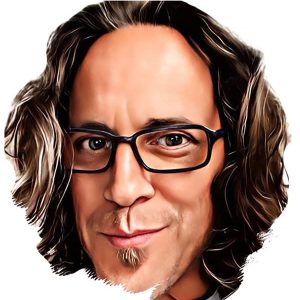

D.C. Hip-Hop legend Priest Da Nomad educates Nestor about some Washington and Baltimore club and music history and his featured film “I Was The Weirdo” for the International Black Film Festival coming to the Pikes on October 10th.
The conversation explored Washington, D.C.’s hip-hop history and promoted the Baltimore International Black Film Festival screening of I Was the Weirdo.
Hip-Hop Roots
- Priest described how D.C.’s Go-Go culture initially overshadowed hip-hop in the 1980s and 1990s.
- Independent artists embraced rapping, DJing, b-boying, and related styles while drawing from D.C.’s jazz, punk, and live-music history.
- Artists and students gathered around U Street, helping revive the Black Broadway corridor through open mics, ciphers, and other cultural events.
Film And Context
- I Was the Weirdo uses Priest’s story to examine D.C. as an incubator for music, theater, and diverse creative communities.
- The discussion connected U Street’s revitalization with artists creating spaces before broader investment and gentrification followed.
- Open question: How can the film and festival continue documenting these local cultural histories for audiences who did not experience them firsthand?
- Host the Baltimore Positive show at Pizza John’s in Essex on Friday, with Kevin Benson from Rosedale Bank joining. (@Nestor Aparicio)
- Screen the documentary I Was the Weirdo at the Baltimore International Black Film Festival on Saturday, October 10, at 7:00 p.m. at Pikes Studio Cinema.
Event Promotion
- The Baltimore International Black Film Festival was discussed as the venue for the screening of I Was the Weirdo at Pikes Studio Cinema.
- Priest shared where audiences can find his music, documentary, and social media work.
D.C. Music History
- Go-Go was identified as D.C.’s foundational indigenous music, with Chuck Brown cited as a major influence.
- Hip-hop, house, reggae, jazz, punk, and hip-hop theater were discussed as interconnected parts of the city’s creative history.
- Howard University, U Street, and nearby universities helped bring artists and communities together.
Cultural Revitalization
- U Street’s history was traced from Black Broadway and the 1968 riots through the crack era and later artistic revival.
- Artists created community spaces through open mics, ciphers, performances, and visual art before commercial development arrived.
Nestor Aparicio 0:01
Welcome home. We are WNST AM 1570 Towson, Baltimore. We call this thing Baltimore positive. This is going to be a fun one. We’re doing the Maryland Crab Cake Tour this week at Pizza John’s in Essex. I’m going to have the Ravens kiss face bird and kiss, of course, number 28 on our musical memory bank countdown. Brought to you by Rosedale Bank. I’ll be doing the the show on Friday. Some pizza, some French fries, some gravies, maybe maybe a crab cake on Friday. Kevin Benson from Rosedale Bank will be joining us. Also, our friends at GBMC and Farnan and Dermer putting us out on the road. Any of you know we’re doing football, we’re doing baseball, we’re doing the baseball labor, we’re doing all that stuff. The election next month, but it’s a big music year here for me. It’s our 28th year owning WNST. And instead of eating crab cakes or eating food or running around eating oysters, I decided this year to share the fact that I was 40 years ago the music critic at the Baltimore Sun in the late 80s. I I did do some hip hop. I did some early raps, some Africa Bambada. When Run D M C got together with Aerosmith and sort of blew the cover off a walk this way at that time, but I’m a rocker at heart. Everybody knows that. So anytime I can get any hip hop, any rap, anything like that in here, where I can learn something, including having Kwame, who wrote the nasty theme song 30 years ago here. Nice, yeah, I had Kwame last time. So Priest and Nomad is the local rapper. He is a writer and director, and they’re doing a really special thing right here in Baltimore. It’s the Baltimore International Black Film Festival. It happens next week. There’s a screening of this film. I was the weirdo, and no, it’s not about me. It’s Saturday, October 10th. It’s at the Pikes right here in beautiful Pikesville, I want to welcome Priest the Nomad onto the program. Hey, man, how are you, man? Music guys, it’s a perfect year to have us all. Yes, indeed, yes,
Priest Da Nomad 1:48
indeed, man. Music runs the world, bro. Yeah, I’m glad to. Thanks for having me.
Nestor Aparicio 1:52
Well, I want to learn about being a weirdo, and I want to learn about early sort of hip hop culture in D.C. Sort of post Go Go, which is something that I’m still exploring, and the Rolling Stones explored it and dug it all, even in the early parts of my rock and roll phase. But you know, I look and I see Biz Markie and your background, and I just got to say, like, there’s never a point where that song comes on where it doesn’t make people happy.

 8





Priest Da Nomad 2:17
Yes, yes, yes. Right, and and I think
Nestor Aparicio 2:20
Biz did that, right? And I, I would say that you are. I can’t bring you on without talking about Biz because that is sort of your link to all of this. But really, the link is this Baltimore, Washington thing, and the Redskins, and the the Ravens, and the Colts, and but there was a whole music thing going on as well in your town, DC, that really sort of maybe mirror was going on New York, L.A. and other places for hip hop, and clearly in a city that had a lot of African and African American culture as well. You came from a real authentic space, didn’t you?
Priest Da Nomad 2:52
Yeah, absolutely, man. Yeah, man. So shout shout out to D.C. and Baltimore cousins. You know what I’m saying? So music cities in both places. DC is live music, man. So people who know us, Nation’s Capital, man, we known for our indigenous music of GoGo. You know what I’m saying? So shout to Chuck Brown and all the spawned all the bands after that. But yeah, man, we were you know the the weird kids. It was called I was the weirdo because you know hip hop was not the thing here, right? Back in the ’90s when we were coming up, you know, I’m saying the popular rap songs were were liked and they were covered by go-go bands, but they wasn’t, you know, the hip hop culture. It was kind of looked at as outside, you know, and was from New York and everything. But we embraced the culture and the elements of the craft of ramen and really getting into the the meat of things and DJing and all that, and we wanted to represent our city. We wanted to represent our area, just like you know hip hop and and other areas down over in California, you know L.A. Oakland, down south. You know what I’m saying? So we we wanted to you know take that craft, that art form, and represent our city. And it wasn’t you know it wasn’t widely received received as well back then but we in and in it we all migrated together on the U Street corridor northwest known as Black Broadway we kind of revitalized unwittingly revitalized that whole corridor doing so
Nestor Aparicio 4:16
what years is and give me just I’m turning 58 in a couple of weeks, and you know, a couple of years, three to five years in music is a generation. You know, I’ve talked about that with some of my buddies. You know, one of my buddies that came on last week, we camped out for concert tickets in the early ’80s, but he wasn’t a kiss guy. He wasn’t a hairspray Hammer Jackson. And Baltimore has a Hammerjacks thing. My, you know, that that I’m from. That’s where I. That’s that was my thing, right? Yeah. But five years before that, it was more like Zeppelin and Pink Floyd and Peter Frampton, and that wasn’t Kiss. And so people say, “Oh, this long hair, rock and roll, it’s all the same. Completely not. In the same way that just because it came from black culture doesn’t make Sugar Hill Gang anything. Like Jay Z or anything like even what the ladies were doing, which was where I guess it came to me with like Salt and Pepper and TLC and those kind of acts, they were the female part of that. But it was much more easy for them, I think, to get played on the radio than it was for male black rappers at that point when violence was associated with it, and I think in the 80s and 90s the dance part of it, and I’ve had Ultra on and her running her her dance parties up here all those years. That there was a real mix of that kind of music to say, is it dance? Is it rap? Is it hip hop? Is it East Coast? Is it West Coast? I’ve never understood any of that other than I like the songs I like, and I think that was more where the mainstream was. But for those of you in the soup of making the music, it was a whole different thing. Of what kind of music are we going to make?
Priest Da Nomad 5:50
Yeah, I mean you have to differentiate between the industry and the culture, right? So a lot of the stuff that made it on the radio that was industry, that was record labels pushing particular artists, and it was male and female. I mean, you had Salt and Pepper, but you had big male artists as well. You know, I’m saying for each for each era, right? So, so just like you have same same thing in rock, man. You have the the popular bands, and then the real thrash, the underground bands, and the light spots that you could go see, right? So it was and the British
Nestor Aparicio 6:16
bands and the American bands, you know, literally, yeah, and
Priest Da Nomad 6:19
generations and stuff. So is the the different styles of of rock styles, different styles of hip hop. You know, I’m saying you had the more the street stuff, the conscious stuff, the more club based stuff. And of course, there was an era in the late ’80s and early ’90s, man. Especially in Baltimore, I know because we used to go up to Baltimore and party. I was in the house music too, man. So we used to go up to Baltimore when they had Club Fantasy, you know what I’m saying on Howard Street. So I know about that. I know about the paradox, you know what I’m saying. So shout out alternates Sam the Man Burns is my people’s rest in peace. So we, I was a househead as well, man. So and so we was the real weirdos being in D.C. in this go-go, you know, scene and doing the stuff in the clubs, but it was a it was a period where hip hop and house music kind of had a blending called hip house, and it was a lot of dancers and stuff like that that were both because they didn’t rock hip hop in the clubs back then. They were only college parties. They rocked hip hop. It was usually a house and reggae. If you was going to the clubs back in the 90s, especially the early 90s, they wasn’t rocking hip hop in the clubs. They was rocking house music and reggae. So a lot of the hip hop dancers used to dance the house, and they had a blending. If you notice, a lot of old hip hop records had house records on it. Jungle Brothers had “Girl Our House You, right? And then the Queen Latifah had coming to my house, “Don’t Make Me Way” coming to so you know Heavy D like that was the thing. That was the commercial record. Was a house record, right? So there was a blending of those the the music and those cultures and stuff back then. So again, we was into all of that. You know what I’m saying? And we just love music, man. In DC, we’re live music city, but we love music. We had a history before Gogo of jazz, right? Of U Street. You know, I’m saying Duke Ellington, Cab Calloway, all of that stuff. We had Bad Brains on the punk rocking, right? So we have all of this history of all this amazing music, and we just wanted to carve our little corridor out. You know what I’m saying? So, see,
8Nestor Aparicio 8:12
this is late ’80s, early ’90s. Is that what we’re talking about, Priest? But when, when, when U Street’s coming on, and when, you know, I
Priest Da Nomad 8:20
no, it’s a little later. I’m saying so you gotta remember. So U Street was, of course, the original U Street was established the post Reconstruction period after slavery, right? This is when you had the the you know the segregation in D.C. and this is you know kind of leading to Jim Crow and all that. So this is the the the black businesses on U Street, the Lincoln Theater, the Howard Theater, all of these places, Crystal Caverns, which later became Bohemian Caverns, all of these places were having all of these incredible jazz folks: Ella Fitzgerald, Donna Washington, Duke Ellington, Miles Davis, all of that. So that established Black Broadway, right? Then the then the riots came in the 60s, 1968. We had the riots when King got assassinated, right? And that was all over the country and and cities. So DC had jumped off on 14th Street and U Street, right? So it jumped. The riots in DC jumped off on U Street. So it got decimated, man. Decimated that whole corridor, and it took a long time for the bill back. Then you had the crack era, right? In 80s and early 90s was the crack era. So in poverty and disenfranchisement, so it took a while to rebuild that up. So in the early to mid ’90s is when a couple of shop owners, cafe owners, wanted to open up small businesses, and they started inviting the artists to come do open mics and ciphers and stuff like that. And we all we from these neighborhoods, Slim, so we don’t care where we going. We just want to do our art, right? We from Northeast, Southeast, even PG County, whatever. We all flock into where wherever there’s stuff happening, and that’s where we went to, and we found each other across the city in this U Street corridor, man. And like I said, unwittingly, just started doing a lot of activity. Howard University students. A lot of my folks that went to Howard would come on our scene and stuff. Well, the 930
Nestor Aparicio 10:04
was right there with bad brains. Later,
Priest Da Nomad 10:06
later they was. They were originally on F Street downtown. I rocked in the original location when it was 930 F Street Northwest down on Ninth and F downtown. Then they moved to V Street uptown in Shaw. So they where they are now feels like
Nestor Aparicio 10:22
a minute ago that they moved up over like literally to me, but it’s 30 years ago now for sure. Maybe more than that, yeah, yeah,
Priest Da Nomad 10:28
absolutely, yeah.
Nestor Aparicio 10:29
But during that period when I would go to the new 930, not the old one, the one in your neighborhood, the one by Howard.
8Priest Da Nomad 10:36
Yep,
Nestor Aparicio 10:36
it was dodgy as hell 30. It was a Baltimore guy. I’m from Dun. I’m from Baltimore. You know, like to drive down there. I’m like, man, there are streetlights down here. Where the hell am I parking? And now when I go down there, it’s the hot, the hospital, the university. Just it’s an it’s it’s a story for. And I talk about my town in Baltimore and the good, the bad, and the and the really ugly. That’s a part of Washington that was really ugly 3035 years ago, it’s become this unbelievable thing, and it all was begat by I guess you you all going in there and saying we’re going to turn this into an arts place. We’re going to welcome people here. It’s not the burned out place it was in 1968 anymore. And when I go down there now, I’m I am blown away. It’s that one place I get in the car and drive three times a year, and I show up. I’m like, man, I remember when this was just not a place that was friendly. This was not a place you would want to come or think that it could ever become what y’all made it down there.
Priest Da Nomad 11:32
Well, yeah, gentrification happened all over the country. I mean, every every like major city has gone through its own plight of gentrification and stuff like that. Again, we as artists, man, we didn’t, we didn’t, you know, we weren’t intentional in any of that. We just wanted a place to do art, right? And what it was is that we, by doing that, we were in different scenes, and it was university kids that started coming to our scene. You had people from GW and Georgetown and other, you know, universities and stuff that started coming to our scene as fans, they were fans of us, and then you know, and then once start once start people start saying, “Oh, it’s kind of safe being down here, and then things start to get you know start to happen, and different people start buying businesses and things like that. That’s what happens. My friend of mine from the dock said, you know, artists are always the first to gentrify. Oh, every city in America.
Nestor Aparicio 12:23
Yeah, what? What? I mean, what becomes? I guess the spray paint on the wall that looks like graffiti. Once that moves to art, the coffee shops come in and the artists come, and I don’t think you believe you’re doing community building at that moment. To your point, you’re just trying to find a place where your people are, and the community springs from that.
Priest Da Nomad 12:40
Yeah, and it’s all art. The thing is, is that the thing, the thing, hip hop comes just like go go. Hip hop comes from disenfranchisement, right, of communities, right. So we all, by the way, exactly, we we all did the art. It was just that we didn’t have no place to do art. We did it on the buildings. We did it wherever we could find it. Whether it was graphing, whether it was b-boying on a corner, you ain’t had no place to go to. You could rent no place, right? You on a corner, so we did it where we could do it. And then when once we got spaces, we did it in those spaces, right? But they had to see the value. We always valued it, and other people started catching up. That’s what it was. So
Nestor Aparicio 13:15
I am enjoying my chat with Priest and Nomad. He’s one of pioneers of independent hip hop in Washington D.C. which is not Baltimore, but he did spend some time here. He will be here next week on the 10th. They are screening this film, and I I got it here, but I was the weirdo. This is going to be on the 10th, this next Saturday at the Pikes Studio Cinema Theater Number One, right down Road, Pikesville. Everybody knows where it is. 7o’clock is an evening event. Is the Baltimore International Black Film Festival? Let’s first talk talk about the festival and your film. And I was a weirdo, and I’m assuming some of this education you’re giving me right now is also involved in the documentary in order to tell your story. Because I don’t know that you know CNN or CBS or 60 Minutes is coming to run and tell a you know a black rap story from 30 years ago about how it all came together. You know, not yeah, but I mean, so you have to tell your own story, and I think this is this is wonderful.
Priest Da Nomad 14:10
Yeah, the thing is about this movie is that we, my story is only a narrative. It’s only kind of a narration, so to speak. I’m I’m really pointing out a number of things. One is again the revitalization of the U Street corridor, known as Black Broadway in the ’90s, but also the incubation, the city, the the space that DC is as an incubation center, right? Being the nation’s capital, everybody want to come here, man. You know, I’m saying everybody comes here. They people go to school here, universities, or they come here after they, you know, graduate because of all the opportunities here, right? It’s the epicenter of the country and the world. So you get all of these blending of people and cultures and diversities and everything, and then people that would never, you would think, would never connect with other people. It happens in D.C. Even if they’re not from this area, they get the. Start here. Their career starts here. So I have author like author Tanaha Ko’s and the doc. You know, I did hip hop theater with Chadwick Boseman. Rest in peace. You know, I’m saying we we when he was at Howard. You know, we kicked off this hip hop theater thing with you know the sister Camilla Forbes, who was director. You know, produced at the Apollo Theater in New York. So Howard’s really become
8Nestor Aparicio 15:22
an episode. Howard’s become the Harvard of of that culture, correct? Like literally for anyone. That’s
Priest Da Nomad 15:28
historic. I mean, oh, 100%
Nestor Aparicio 15:30
And the fact that U Street was right there.
Priest Da Nomad 15:33
Yep. Yep. It all comes
Nestor Aparicio 15:35
together with education as well as ours, right?
Priest Da Nomad 15:37
That was a there’s a a whole thing with native Washingtonians and Howard University students and our relationships, right? That we have blended because Howard University was is amazing, but Howard University wouldn’t be Howard if it wasn’t in D.C. right in the Shaw neighborhood. So that’s part of its fabric as well, and and it was people from all over. You know, I’m saying Tana Hasi is from Baltimore, right? So you got people that are from all over that maybe come to the city. If it’s not Howard, they could be going to GW, American, you know, I’m saying Georgetown, wherever, or right outside at Maryland or Bowie State or whatever, and come into the city, you know. And we’re all meeting each other in the city, so there’s an unlikelihood of people that are blending together in this space, in this soup, so to speak, of the nation’s capital. So the doc represents that as well.
Nestor Aparicio 16:26
What about the screening? And I was a weirdo. I was the weirdo. Excuse me. Is that you, or is that anybody that was?
8Priest Da Nomad 16:35
I was one of them. So is grabbing
Nestor Aparicio 16:37
onto this music and sort of. And I always think of a sort of punk rockish and sort of CBGBs and sort of like the the outcast, you know. I mean, the Sex Pistols, anything sort of on the edge is sort of like
Priest Da Nomad 16:50
avant garde. You know, I’m saying that was basically as you know, cutting edge. It’s like as you say, you like we were we were the people that were doing things that weren’t. We had the foresight to understand how incredible this culture and this art was that we were doing, and we just got with like-minded people, right? And it was different when every time you’re doing something different that goes against the norm, right? You’re looked at as weird, right? So I didn’t call myself that. We were called that, right? For people who didn’t understand the vision, right? You know, I said the I said in the song, you know, said these these cats. Ray Charles can’t see my vision, you know what I’m saying? So you know that’s that’s what it was. So I embraced that, and now there’s no boundaries into anything anymore. I have younger generations in the dock that are like we’re the new weirdos now. You know what I’m saying? There’s no limitations. It’s boundaryless now, but we had to pave the way for that. So yeah.
Nestor Aparicio 17:44
Well, you you got what I need. The Black Film Festival, Baltimore International Black Film Festival, is next weekend, Saturday the 10th. Get on out, check it out. Um, finding you online, different things. I’m sure there’s still things going on in and around U Street that you’re involved with above and beyond the film, but where’s your musical taste these days? What’s what gets you moving these days, man?
Priest Da Nomad 18:08
Oh man, I listen to a lot of stuff, man. I mean, mostly you know, you know anything that catches my ear. There’s so much music out, you know. I’m saying, I’m right now. I’m listening to Erykah Badu, what Alchemists do, new album, you know. What am I else listening to? I’m actually working on an album right now. So when I get in album mode, I don’t like to listen to a whole bunch of other stuff. Well, yeah, you’re
Nestor Aparicio 18:31
creating, not consuming, right?
Priest Da Nomad 18:33
Exactly. I’m in creative mode right now. There’s a time
8Nestor Aparicio 18:35
to dance and there’s a time to sing, right?
Priest Da Nomad 18:37
Exactly, exactly. I try not to get too much influence, but I think that’s the last thing I that I was listening to was another group, Ashback R&B group called Season or whatever. So I was listening to them as well. So my wife put me on to them. So you know, but that’s that’s that’s I kind of like limit my limit my thing. But but yeah, as far as where to find me, the best way to find me and what I’m doing. I’m on all platforms. My Bandcamp YouTube channel. It’s Google Priest P R I E S T D A Nomad N O M A D Priest to Nomad. I’m at Priest the Nomad on Instagram, so definitely follow me there. I was the weirdo. Doc is the Instagram page. I was the weirdo.com. You can check that site out as well.
Nestor Aparicio 19:20
Hey, I really appreciate the visit and you educating me a little bit because I go down there and I see the half smokes and I see the chili bowls and I see all the. I’ve been to the Lincoln. I’ve been, you know, I I get down get down there and there’s there’s definitely a lot of history there. And if anybody wants to learn more, you can certainly show yourself next weekend over at the Baltimore International Black Film Festival. That is Saturday the 10th 7o’clock. I was the weirdo. We’ll be screening right there at the Pikes, and my appreciation to Karen for setting this up, as well as Freese the Nomad and the man. I got to get down to the museum in D.C. Right? I mean, I haven’t done that yet.
Priest Da Nomad 19:54
Oh yeah, get down there. There’s tons, tons of stuff down there. Tons of history. All the museums. But definitely the African American History Museum is-it’s amazing.
Nestor Aparicio 20:03
I appreciate you, man. DC and Baltimore-we’re sort of connected, but don’t you know that DMV? It’s because we’re not sure if I’m DMV or not. I think that that stops right around Bowie or Columbia. I am Nestor. We are WNST AM 1570 Towson, Baltimore, and we never stop talking. Baltimore positive, even when it is a Washington guy.
Transcribed by https://otter.ai