

Perhaps the Orioles hiring a dynamic new manager and coaching staff will make a huge difference.
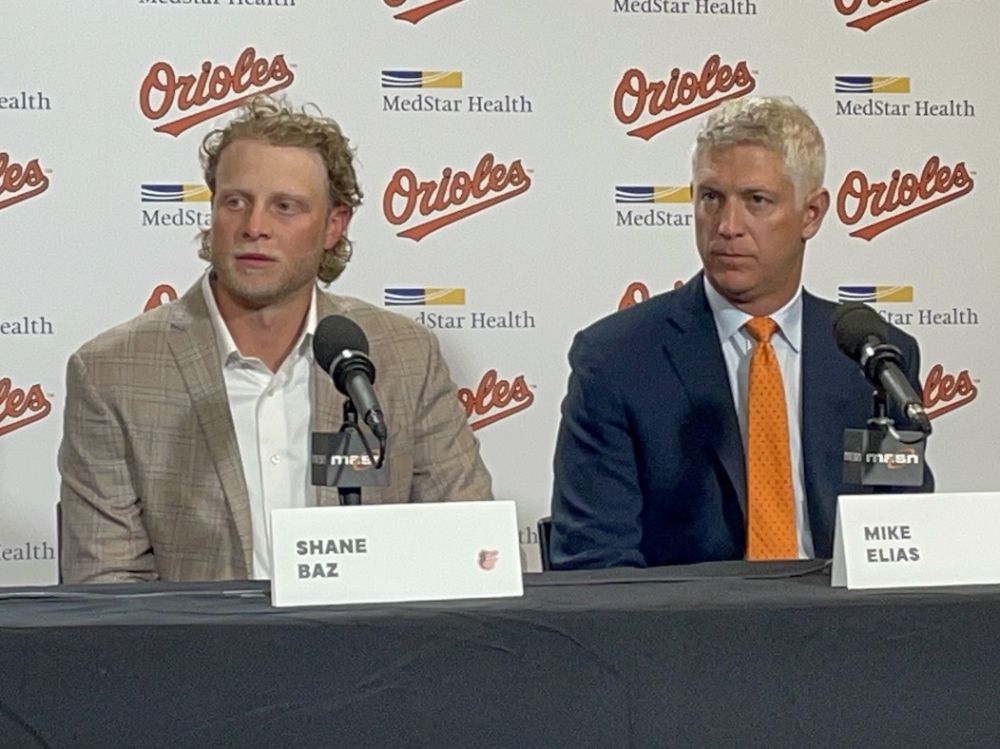
General manager Mike Elias adding to the starting rotation and rebuilding an unrecognizable bullpen are obvious musts.
You hope acquiring at least one high-impact bat is in the plans to boost both the offense and the clubhouse leadership.
The root of the inordinate number of injuries must be examined closely beyond simply chalking it up to bad luck.
Still, none of those factors fully explain or forgive the most concerning truth about a 2025 season that will mercifully come to an end in less than a month.
The talented young position core™ — the group for which the Orioles deliberately remained terrible over multiple seasons to assemble — has played uninspiring and mediocre baseball this season. And while there’s certainly nuance that goes into that proclamation, there aren’t enough arrows pointing upward in the group’s totality to feel overly confident about the future right now, regardless of how much these names were hyped on top 100 prospect lists over the last few years.
It obviously isn’t all bad, nor is the full story close to being written on these individuals, but some hard truths are warranted, especially when this is supposed to be the foundation of a championship-caliber club.


 8
8

Consider what’s happened since the trade deadline when Baltimore’s decimated pitching staff was supposed to be the biggest deterrent to winning games the rest of the way. The Orioles entered Friday ranked a surprising third in the American League in ERA and a semi-respectable ninth in bullpen ERA in August despite a cast of mostly unrecognizable arms working in relief. Meanwhile, Baltimore ranks 14th out of 15 AL clubs in on-base plus slugging percentage (.645) and 13th in runs scored in August, which has led to a 10-15 record in which the Orioles have averaged just 3.68 runs per contest.
Not nearly good enough.
Despite being in danger of not reaching 20 home runs a year after setting the franchise’s single-season record for home runs by a shortstop (37), Gunnar Henderson is the least of Baltimore’s worries. His MVP-caliber first half of 2024 may prove to be more of the outlier than a sign of greater things to come, but we’re still talking about an All-Star shortstop who is very valuable at the plate and has steadied his defense. However, Henderson being only three years away from free agency only elevates the Orioles’ urgency to reverse their decline.
Already understanding super agent Scott Boras represents him, reaction to Henderson’s recent comments about an extension was overblown, but the 24-year-old certainly wants to win in addition to receiving a lucrative nine-figure contract in a few years. The Orioles failing to do the former would be a nonstarter to any hope of making the latter remotely possible when big-market teams come calling.
The 2025 season has only added durability concerns to the extremely disappointing production we’ve seen from two-time All-Star catcher Adley Rutschman going back to July of last season. Nobody seems willing or able — at least publicly — to pinpoint exactly what’s gone wrong, but the face of the club’s turnaround becoming the face of its decline has been difficult to watch. And while Rutschman’s defense has rebounded and his offense has at least been better than it was in his alarming 2024 second half, a sub-.700 on-base plus slugging percentage in his age-27 season isn’t close to what anyone envisioned when he was selected over Bobby Witt Jr. with the first overall pick in the 2019 draft.
Rutschman returning to a state where you’d even want to give him a lucrative contract extension would be a breath of fresh air.
Jordan Westburg has put up better offensive numbers than he did as a 2024 All-Star selection, but multiple stints on the injured list have led to the 26-year-old playing just 73 games this season. You’d love to put Westburg in the same minimal-concern category as Henderson, but a good player can’t help his club when he’s on the IL.
8Speaking of injuries, a fractured thumb in the opening series of the season in Toronto cost Colton Cowser more than two months, but the 2024 Rookie of the Year runner-up enters Friday with a sub-.700 OPS and is striking out more and walking less than he did last season, which is a bad combination. Cowser, 25, looking capable of playing center field on a everyday basis would be helpful to Elias’ offseason agenda, but a .555 OPS against lefties and a .284 on-base percentage overall aren’t indicative of someone headlining your outfield on a daily basis.
While Jackson Holliday seemed on his way to at least a solid age-21 season after garnering All-Star consideration in the first half, a .225/.293/.339 slash line since June 1 and a brutal August have put a damper on those vibes. Arguably as disappointing is his defense with most metrics painting the former shortstop as a below-average second baseman at best.
Make no mistake, Holliday is still very young, but you’d really like to see more evidence that reflects the 2022 first overall pick being on his way to becoming a truly dynamic player sooner than later. There’s certainly middle ground between looking like a 21-year-old Juan Soto and posting a .680 OPS.
Many pointed to the silver lining of the Ryan O’Hearn trade creating a clear runway for Coby Mayo to play every day, but his season OPS has plummeted from .724 on July 28 to .589 entering Friday as the 23-year-old has looked lost at the plate this month. And while we’re still talking about someone with fewer than 250 career plate appearances in the majors, Mayo’s not exactly screaming that he’s deserving or ready of a starting role on a club with designs of contending next season.
In the extremely small sample size department, 24-year-old outfielder Dylan Beavers has been a very pleasant surprise over his first two weeks in the majors. Meanwhile, Samuel Basallo, 21, has a ton on his plate facing major league pitching for the first time while catching much more than expected after Rutschman’s latest oblique injury. Other than the encouraging news of the talented Basallo signing a team-friendly contract extension last week, jumping to any conclusions — good or bad — about either rookie would be entirely premature at this point.
As for Heston Kjerstad, considering the very private and quiet manner in which the Orioles have handled his Triple-A absence since late July because of “fatigue,” it’s best to refrain from commenting beyond the 2020 first-round pick’s on-field struggles being no secret. Whatever the problem is and regardless of what it means in baseball terms, one certainly hopes for the best for Kjerstad.
You’re really hoping September brings more optimism pertaining to this group, especially with Elias and ownership already needing a grand slam of an offseason. Realistically speaking, there aren’t enough moves to be made or dollars to be spent this winter that will set the Orioles up to contend without a bigger portion of this young position core being markedly better than what we’ve watched in 2025.
8The Orioles are going to sink or swim with these guys.
One only hopes what Kyle Stowers — who was perceived by many to be a Quad-A player when he was traded — has become in Miami is in line with what a new coaching staff and player development tweaks can do for a greater portion of this group. It was never realistic to expect every prospect to become a star, of course, but what we’ve seen from the collective this year isn’t good enough, especially when recognizing how many contributors from the 2023 and 2024 postseason clubs are no longer in Baltimore.
Elias leaning so hard on these young position players for 2025 was surely a mistake, but they still need to shoulder their share of the blame and finish strong to carry some positive mojo into the winter. If that’s an unreasonable ask, then this nucleus isn’t nearly as special as so many still hope it will be.