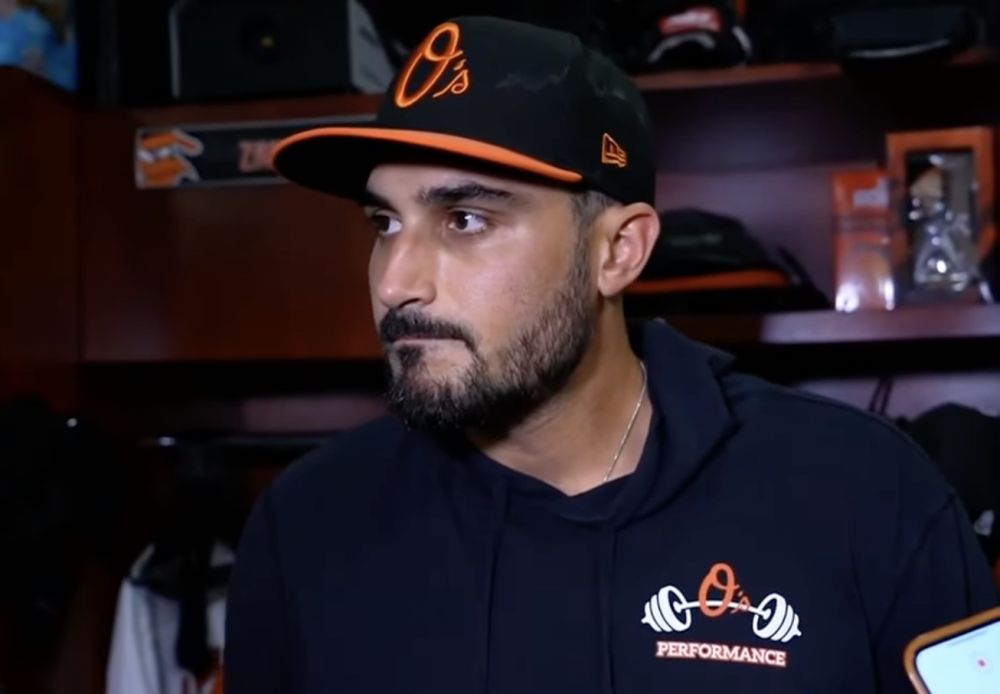
Longtime columnist Dan Rodricks returns to the Maryland Crab Cake Tour at Zeke’s Coffee in Lauraville to tell Nestor about his third and latest stage production about what life was like in Baltimore, Maryland in the summer of 1966. Coming in March 2026 to The BMA…
Dan Rodricks discussed his third stage production about Baltimore life in 1966 and his upcoming solo act. He reflected on his 48-year career at the Baltimore Sun, highlighting his transition from hard news to columnist. Rodricks shared insights on Baltimore’s history, including the 1966 Orioles and Mayor McKeldin. He also addressed the challenges of modern journalism, the impact of immigration on local economies, and the moral dilemmas faced by ICE agents. Rodricks emphasized the importance of integrity and the evolving role of journalists in society, advocating for a balanced approach to immigration and media accountability.
SUMMARY KEYWORDS
Baltimore life, 1966 production, solo act, Maryland lottery, neighborhood gathering, Baltimore Sun, columnist, newspaper world, political leadership, civil rights, Orioles, immigration, ICE agents, moral injury, journalism integrity.
SPEAKERS
Dan Rodricks, Nestor Aparicio
Nestor Aparicio 00:00
Welcome home. We are W, N, S, T. Am 1570 task of Baltimore. We are Baltimore positive. We’re positively in the middle of Baltimore right now. We are here at beautiful Zeke’s coffee. We’re on Harford road. I believe they call this lauraville. I call it resigville. Mike resigliano lives in the neighborhood. This whole thing sort of started with our friends at the Maryland lottery, and I have brand new Lucky Seven doublers. I Dan Rogers is about to press his luck right now on the program, but we were not at Coco’s last year, and Thomas Rhodes, who served a lot of coffee before a lot of ravens road trips, said you ought to come up here have some coffee. One Friday morning, we had this group that sits at the middle table racing. Tells me about it. So I came up, had some coffee with them, and they’re all going to gather here, because they gather every Friday the neighborhood. And they do. I you would call it a gripe session, a kibitz, a neighborhood thing. What is? Andy Harris doesn’t have those. What are they called? Town Hall. We’re here in Baltimore, Maryland, Dan Rodricks. It needs no introduction. He has man who needs no internet. I don’t know what, yeah, I mean, my, okay, I don’t even know how what to call you people ask me about you. I’m like, he’s sort of like the last crazy uncle I have Jackman’s dad. You gotta mean heavy, you know, you’re still my
Dan Rodricks 01:16
alive. Me avuncular. That means uncle like, but people in
Nestor Aparicio 01:21
my life that are your age, that are like celebrity TV people, or people that I knew, or whatever, like, I don’t think of Marty bass is an uncle that’s more like a cousin. But you, I grew up with you. You took me when I was a young man, and you don’t remember this, that little cafe on Calvert Street, maybe the four, 300 block of Calvert street. You took the bridge, the bridge, the bridge restaurant. You took me in there for lunch one day, yeah. And you were the guy on TV, and you were the columnist, and you were everything I wanted to be. I wanted to, like, figure out how to navigate this newspaper world and be great. I didn’t want to be Menkin. I wanted to be Stedman. You know what I mean, yeah. But you all right, sports at first, right? Yeah. That’s all I ever wanted to do was write. But then Jack Gibbons pulled me up and said, No, no, no, we’re gonna learn business. We’re gonna and I’m like, Who would want to read about that? And I’m like, Well, do you want to get a football team back? You better understand bonding and money in the State House and government and like, so I’ve learned a lot of that through trying to steal a football team. And also, like, when I had a pier six story, a pier six was going broke, and I was on the music beat and, you know, but I didn’t do scandalous sports stuff, except when Rob deer got in a bar fight over at the Four Seasons. Writing
Dan Rodricks 02:27
about rock and roll the best I like
Nestor Aparicio 02:32
writing, man. I just like writing for a newspaper. I am that guy like when I saw your stage show, that’s all I ever wanted to do was get a byline and have mine. It’s all I dreamed of. You mean this show? Vol this year? You have no idea. Yes, this show. Well, what are you working on? Man, other than democracy, which I could take you in a million different directions, because since the last time you got together, you got a new stage show coming. You’re writing a column. You’re sub stacking your very relevant social media in the way that a deposed columnist from a newspaper would be Cal is going to be here a little later on. We all try to make our own land. We were talking about Mickey Coachella before you came on doing his podcast, because we’re all figuring out what our value is and where it is and what we want to do. But we all have incredible value from having served in this media thing over the last five decades, I know that that’s the value you bring to the table. I call it wisdom and trust and integrity, and that that is the value.
Dan Rodricks 03:31
Well, first of all, I wasn’t deposed. You walked away. I walked out of the Baltimore Sun after 48 years and the last year of David Smith Sinclair ownership kind of threw me off, and I thought it’s good time to leave. I’ve had 48 years here, and 48 good years. I mean, I I had a charmed life at the Baltimore Sun. Got to write a column. I got to write whatever I wanted to write about since I was 24 years old.
Nestor Aparicio 04:00
And yeah, you in your stage show, you still were shocked that they ever I mean, was sort of like when and when Henneman died. I talked a lot about this, because I was a kid at the paper. Ken Rosenthal was coming in, and Jack Gibbons brought him in to be on the baseball Henneman graduated, sort of the national beat. I don’t think Henneman loved that in the beginning, because it was a beat thing or whatever. And he’s such a young guy. I mean, Kenny was 20. Kenny was 23 years old, and like he’s gonna be the Oriole beat writer, and he’s this big, and he looked like he was 12. But I think there’s a point where I think of you in that way, where they was it Jack Lemmon, who was the person there was a man named Philip Heisler, and he was the wonderful Managing Editor, yeah, did he go to Chicago maybe, or something after that, or no,
Dan Rodricks 04:42
no. Phil Heisler was a longtime Baltimore Sun reporting editor. He had been a world war two correspondent, and he was this sort of flincy Talk about avuncular uncle, like guy in the newsroom. Hard guy to get to know for some people, but for me, I mean, I took to him. Right away, and he he liked me, and I was 24 and he asked me if I wanted to be a calm No. He didn’t ask me if I wanted to be a columnist. He had made me
Nestor Aparicio 05:08
a columnist. And what do you think that’s okay based on what do you think
Dan Rodricks 05:12
happened? Well, when I was let’s see, I got to the sun when I was 21 and I spent three years covering federal court and City Hall, general assignment, crime, fires, anything you know, that they threw at me, especially federal court. So I proved myself as a hard news reporter, and then I would write feature stories. And I guess he liked the feature stories, so he thought the combination of somebody who could, you know, cares about the news and understands what news is, and also can write in a features style, which makes your
Nestor Aparicio 05:45
sense of humor to some degree. Yeah. I mean, when you’re covering hard news, there’s none of that, right? Well, it
Dan Rodricks 05:50
depends what you cover, if you’re covering up, like a political corruption trial or something that that can lend itself to humor. Well, this
Nestor Aparicio 05:56
really strikes to where Jon Stewart and, you know, Keith Olbermann, just people that are in the space of Al Franken, you know, even Colbert. Stephen Colbert, yeah, we’ll get to him in a minute. We’ll be getting him probably all day as received walks in the door. But there is, and we were even talking about Mickey Coachella comedy, sort of the other part of this that you do have a perspective and a point of view at 24 be good, bad or ugly,
Dan Rodricks 06:24
except one thing, I didn’t think anybody kid what I had to say at 24 so I did not have, I had not formed a lot of opinions about Baltimore. You had only been in town for three years. I was still a kid, right? So I took it easy. I went I decided to just write really good sort of like feature, kind of columns, you know, offbeat stories that other people didn’t have. Man about town, right? Yeah, that kind of, yeah. And then I slowly developed a voice, you know, still breaking. I slowly developed a voice in the column so people understood where I was coming from. And I’ll tell you what, if you want to learn about a city quickly become a newspaper reporter or any kind of reporter. I mean, every day is different. Every day you’re in a different part of town, meeting new people, in my case, trying to get over the language barrier, you know. So it’s not the heat, it’s the humility, of course. So yeah. So I learned, I learned fast. I learned quickly about the city, and then people started calling me with stories, you know, but over time, I developed stronger opinions about things, and then I felt more confident in expressing them. But I wasn’t that way at
Nestor Aparicio 07:34
20, okay, so 48 years you did 45 as a columnist, right?
Dan Rodricks 07:38
No, I did. How many you do? I’m sorry, I started in 79 and ended in 2025 camp. So that’s 4746 years. 46 years. And
Nestor Aparicio 07:49
I 43 is a columnist, that, or whatever the number was, right? No,
Dan Rodricks 07:53
it’s 46 years as a columnist. So, Geez, 48 years right as a you got here at
Nestor Aparicio 07:57
76 it became a columnist. 7976
Dan Rodricks 08:00
almost 49 years of the sun. Yeah. Almost 50. I
Nestor Aparicio 08:03
don’t even know what to say like you. If you sit here and do this all weekend, we would do a marathon Baltimore thing, just talking about what you found with Schaefer and how harbor place has come and gone. Yeah. Camden Yards is coming now. They’re going to try to wreck it again. And new scoreboards going up, and they’re putting money in, yeah, and we didn’t have the Colts, and then they were culture great. When you got here’s Burt Jones, it was like all that, right, right? And then that’s gone. And that went, there’s a whole different but not only that, leadership, political leadership, corruption, just all of the bridge falling.
Dan Rodricks 08:35
So many stories. There’s so many stories. But to encompass all of that’s why I never left, because there’s never been a dull moment in Baltimore, as far as I concern, as far as news goes, as far as talking about what’s happening politically, in the government and in the community with sports, come on, really. I
Nestor Aparicio 08:51
mean, it’s, there’s something going on every there’s something all the time. Yeah, really,
Dan Rodricks 08:56
yeah. And you know, this, this play that I did, we talked about before on your show,
Nestor Aparicio 09:00
which I
Dan Rodricks 09:01
love, by the way, I appreciate your support of it. It’s a play based on stories that I wrote over the years at the sun. And then the second play we did, Baltimore docket was based on all the court trials that I not all of them, but several court trials that I covered and observed and wrote about. And now, but now I just, I started. I just finished working on a third play, which would make it the my plays of Baltimore trilogy, about something that occurred before I got here. So I was very curious about what Baltimore was like in the 60s. You know, before the 68 riots, the death of Dr King and the riots that broke out about those years just before that, the year the Orioles won the World Series 66 that seemed like a good year to focus on. What was the city like in that year, you know, I really didn’t know, you know. And then there’s this mayor, Mayor McKeldin, Theodore Roosevelt. McKeldin, the last Republican. Was mayor of Baltimore. What was he like? What was going on here? So that’s what got me into the third play. So the third play is different than the first two, and then it’s not about my experience, it’s about what I discovered about Baltimore as a researcher. Are you the narrator? Yeah, I narrate the I serve as a narrator in the play. But the play is more of a conventional play with, you know, someone playing Frank Robinson, someone playing Brooks, someone playing,
Nestor Aparicio 10:27
can I play Louie? Yeah, let me make a cameo.
Dan Rodricks 10:31
Louie Aparicio is mentioned, but he’s not. Oh, he’s definitely mentioned. I like that played. I already liked the play. Yeah, it deals with the 66 Orioles and what was going on in the city politically, in terms of racial politics and the civil rights movement. And this guy, McKeldin, which I don’t know how much you know about him. I didn’t know
Nestor Aparicio 10:53
very much. I know Peter Angelos ran for mayor that year, and I have the placard for it. Angelo’s for mayor. Angelo’s for what? Whatever, for freedom. It said for freedom on it. I tried to put it up on your thing, but your Facebook didn’t take pictures. But What
Dan Rodricks 11:07
year do you think that was? He ran 6263 6063 All right, yeah, that was the twice. So, yeah. So he must have run on the Democratic
Nestor Aparicio 11:17
crime, 6367 then he ran twice, but go ahead.
Dan Rodricks 11:21
Okay, so he ran in the Democratic primary, and he lost. Yo, yeah, he Yeah. So mayor. So Theodore McKeldin, who had been governor of Maryland, came back to become mayor again. He was a mayor in the 40s, governor in the 50s, and then he made a comeback.
Nestor Aparicio 11:35
So that would been like Schaefer coming back and running the city again. Yeah, controller, yeah,
Dan Rodricks 11:39
yeah. And, he ran against a guy named Philip Goodman. And he beat Goodman in 63 he was the last Republican mayor of Baltimore theater. And this guy was, he was not like any Republican you see today, unlike any Republican you see today, he was a moderate liberal and progressive on civil rights, when in the 50s, when he
Nestor Aparicio 12:01
was against redlining, in the 60s, really, or just here radically, was for open
Dan Rodricks 12:06
house. Said he was No, you’ll see. You’ll okay. That’s the neat thing about the play, is you’re gonna learn
Nestor Aparicio 12:12
I love that’s why I bring Dan Rodricks here. We’re doing a Maryland crab cake tour today at Zeke’s coffee, and Dan is enjoying some seeks coffee. So I’m brought to you by the Maryland lottery. I got some leftover back to futures. I got some Lucky Seven. These are the new ones. Pressure luck. So we’re giving these out all day long. Here having coffee. We’ve delicious apple Danish. We’ve had already
Dan Rodricks 12:32
just shared it. Apple Danish. You had a little bit more than I told
Nestor Aparicio 12:37
you to give me a third. You gave me 40% because you’re very generous. I come from a Portuguese family. You want to feed me? You want pasta, nada is what you want here, 66 let’s finish up on the 66 in your play work, we haven’t been fishing together lately. We haven’t caught. I mean, last time I saw you was Christmas time with Gertrude, with John shields, before,
Dan Rodricks 12:56
yeah, before, before you ran it. We’ve done this three times. Now
Speaker 1 12:59
this play. Are you doing it again? Christmas? Okay, so the schedule, yeah, give me that where we are. So the new play is called, we have one other
Nestor Aparicio 13:05
one. You had a second one? Hold on. You had a quarter one? Dot, Baltimore, that’s dark right now, yeah, okay, I’m just, I’m just checking all right, that needs some revision. You’ve done three plays now this they’re just starting to get we’ve done this one original
Dan Rodricks 13:19
three times. We did doc at once. So we’ve done four, four performances at the Baltimore Museum of Art, of two plays, and in the theater
Nestor Aparicio 13:28
I didn’t even know existed. It’s beautiful.
Dan Rodricks 13:30
What is it really nice right above Gertrude, My God, what a great you can go to museum we did and walk around the museum. I brought everybody I knew to your show. I know I
Nestor Aparicio 13:38
really had crab cakes from fade leaves. It was our Christmas party, holiday event for all my crew and my Yeah, my a list, because I said to all of them, you’re gonna learn. That’s what I said. You’re gonna learn about my town. Yeah. I brought John Martin, Executive Director of the Maryland lottery, that night, because he’s from Ohio. And I said, You got to come see this show, because he loves sports. He likes, you know, he likes to learn about Baltimore. Yeah? And I said, You’ll learn more. And we all laugh. We all cried. We cried too much. I cried the second time. I didn’t see docket. It was on a weird timing you only read it for like, a minute and a half or something,
Dan Rodricks 14:10
right? We did six performances in February,
Nestor Aparicio 14:14
24 six performances. That’s six nights, and I got to figure one of them out. And for whatever reason I wasn’t around, I was figuring, well, he’ll just bring it back, and instead,
Dan Rodricks 14:22
well, he might. But I moved on to a third idea. Well, right? You
Nestor Aparicio 14:26
told me that a year ago. Yeah, Christmas, you were like, I got this 66 ideas. So it’s done, it’s written, yeah, we’re casting
Dan Rodricks 14:33
it now, and this will run in when March, next March, are you doing this at Christmas? Again? We’re not doing this this year. We’re skipping this year because I need to focus on the march play. So there’s no December play, no, but there will be December of 26 we bring this back, all right, so
Nestor Aparicio 14:51
you’ve got the next year. You’re like, yeah, you’re like, Cold Play. You got to get your tour
Dan Rodricks 14:55
dates, yeah, year ahead, yeah, okay, yeah. And then there’s one more thing. Okay, so I can slip it on the show. What’s did you tell
Nestor Aparicio 15:03
Mickey this?
Dan Rodricks 15:04
No, this. Okay, Mickey, this hasn’t been announced yet. It hasn’t been finalized yet. All right, but a professional theater in Baltimore is sort of, I don’t know if they commissioning me, but I’m writing a one man play. Separate from this and separate from the March, is this like Springsteen, like a one man sort of like that, except without a
Nestor Aparicio 15:27
guitar, and you’re right, right? Patty did come out and sing with him? Yeah.
Dan Rodricks 15:31
So we’re talking with every man theater in downtown Baltimore about doing a one man show separate from the play that I did that might incorporate some elements of Baltimore. You have no idea, but it’ll be in the summer of so I have a busy year next year and 26
Nestor Aparicio 15:51
All right, so year from now, have gone out of this column, this lane, yeah, into what
Dan Rodricks 15:56
you’re still writing. Yeah, you still missed right? As much as you ever write, right? I feel like I’m writing more than I did. I feel that way I write for Baltimore fishbowl.
Nestor Aparicio 16:07
I feel like a Lester writes more than he ever did when he was at the paper. I mean, it stuff shows up and it’s it’s nice.
Dan Rodricks 16:14
I mean, we did write three times a week, you know, but
Nestor Aparicio 16:18
your social state, you put pictures up 10 times a week of just things that inspire that purple building over there. You’ll see it. You’ll be like, Hey, I like the way that looks. I like the color composition. You put picture your fish up. World
Dan Rodricks 16:30
is interesting. Absolutely, journalists, aren’t we? Generally, you observe. You tell people the story.
Nestor Aparicio 16:34
People tell me, stay in my lane, stick to sports and, you know, I, you know, I just say that’s not gonna
Dan Rodricks 16:39
happen around here, you know, yeah, I would get that sometimes from
Nestor Aparicio 16:43
because I’m not human. I’m not a citizen democracy in a minute. I mean, I yeah, I wanted to, like, get all of Dan out first, yeah. And then I want to get into Colbert journalism, my FCC license, you know, just basic things that, like, I’m in business with the with Donald Trump, whether I want to be or not, apparently. So just what happened with CBS, I find to be appalled. What happened at the Baltimore Sun, like, what’s Cal’s gonna come in here in a little while? And the two of you are the most decorated Baltimore Sun walking billboards for the Baltimore Sun who walked through the city? I, I can’t trust it anymore, right? You know, and when you can’t trust it, when you get to be this age, and you don’t trust it in your instinct, not my instinct, my facts, it’s this isn’t about do I think he’s a good guy or a bad guy? Is the information true or not? Well here? And we never, we never sweated that on Calvert Street.
Dan Rodricks 17:36
No, no, that’s gonna say I never remember reading my newspaper the sun or the evening sun, when we published an evening sun, and thinking, I don’t trust this story, having a question about the motive behind the story, like, Why? Why are we publishing this story? We had a it struck me. I think it was this past spring, a story about, even though crime is down in Baltimore, significantly, you know, there’s still this perception of crime. So we have this story about it. I say we, because even though I’m not at the Sun anymore, I still say we a story about a perception of crime, quoting a store owner in Fells Point on a Wednesday afternoon in spring complaining that there was no traffic for her souvenir shop on a Wednesday in Fells Point in the afternoon, and using this as an example of how business is down in Fells Point and people are afraid to come downtown. I said, What is the this? This is this seems like a stretch story to prove some point. And I don’t remember thinking that about stories that appeared in our paper in the past, reading a story and saying, what? Why did we do this story? What’s the motive behind this? And when you have an ownership that has a certain agenda of viewpoint and imposing it on the news department. That’s when I say,
Nestor Aparicio 19:09
Well, I tell you what, it’s bled into my world, not just being thrown out after 35 years of dedicating my life to covering Baltimore sports professionally and owning an FCC license and employing half the city. But it’s really the last year the Justin Tucker thing, and how that’s been handled by other media organizations, you know, like the banner reported seven and then five or 16 women. Yeah, I went up on the W Jay Z’s website. I went up on the W B, A L’s website. No mention, after the first story, the secondary and tertiary stories, no mention. They did, however, put a headline up. Tucker denies everything and smeared the journalists within moments. Oh, Tucker smeared the journalists within five minutes of the story coming
Dan Rodricks 19:56
in. I didn’t pay attention. You mean the local TV stations, these two stations.
Nestor Aparicio 20:00
You mentioned, I’m talking about their websites, not just a television station, just
Dan Rodricks 20:03
like ignored the story, except for the denial and then, and then
Nestor Aparicio 20:07
there was a first story, and then the follow up was five more. The follow up was seven more women coming forward from the banner, right? Yeah, the follow up stories never appeared on Bal or Jay Z because the Ravens tightened the grip on journalism. And I know this because I’ve been on the inside. Yeah, I know what that intimidation looks and feels like. Yeah, you know, I get it from the current governor’s office right now, even though I supported him, because I had some things to say about the Maryland stadium authority, that these games, that they all play, that I don’t know, that you would tell me differently about Schaefer or Harry Hughes or Marvin Mandel, you know, 50 years ago to how it was supposed to be played with communications. But Trump has turned the whole world upside down as far as what fake news, what people believe that walk by
Dan Rodricks 20:56
before you even get to that, though, I found the corporations that run football and baseball, MLB and the NFL and then the ravens and the Orioles very tightly control access to players. For instance, if you want to interview players, it used to be sort of wide open. You just show up and interview somebody. And now, and especially in football, it became very controlled, so you had to sort of play ball, play nice to get what to get an interview. How do you
Nestor Aparicio 21:29
play nice with the kicker has been a sexual predator in the city 15, you know? How do you play nice with that story? No, I mean playing nice in general. How do you play nice when they get $600 million yeah, you know, and then say, we’re a private company, no $1.2 billion of civic money. Have a real press conference. Have a real press conference. Did
Dan Rodricks 21:49
you, I mean, I know you had problems with access. I thought sometimes it was too controlling. It’s hard. Like We’re journalists, we just want to talk to people and get stories.
Nestor Aparicio 22:00
Dan, I had the Baltimore CEO club guy named Doug Strauss. I’ve actually been a speaker for them last year, told me I wasn’t allowed to come to a luncheon and pay because Sashi Brown and Chad Steele said he’s media, and I’m like, I’m not media, they threw me out. I’m not even real media. So I’m not media. I’m not citizen. I’m not allowed to buy a ticket on a golf course to do a public event where the president of the Baltimore Ravens, who’s making $2 million a year speed, where are we? I mean, I’m a 35 year journalist that that’s, that’s so you wonder where Colbert is, or wonder where Dan Rodricks is not in the Baltimore Sun anymore, or how Cal became deposed right on my own, like, but they would have thrown you out, right? No, you don’t think so. No. Well, seriously,
Dan Rodricks 22:48
if I was writing every day like I’m writing on subject now, about national affairs, about Trump, I may not have laughed if
Nestor Aparicio 22:56
you wrote about how your own paper was screwed up, you would have been gone, right? Yes, that’s what Colbert did. Colbert said, I thought my bosses were bribed. Blake
Dan Rodricks 23:07
Colbert was saying, I he knew he was going to get fired. He wanted to go out in a blaze of integrity. Oh, okay, I think that. I think he knew that was going to happen. I would well
Nestor Aparicio 23:19
after 60 minutes, right? Yeah, yeah. Where are we? We can’t trust 60 Minutes, dude. I mean, what about what have we done if we can’t trust 60 minutes?
Dan Rodricks 23:30
I mean, CBS that you know, Edward R Murrow is the on the Mount Rushmore of journalism. So, yeah, it’s not a good thing. It looks to me, it’s a combination of a Hobbs Act violation by Trump, which is extortion or a bribe. You know those, those things are different. Extortion means, you know, you squeeze somebody for for a bribe. A bribe means they are you just offer it to somebody to get what you want. That’s
Nestor Aparicio 23:54
why I bring a real journalist here, because we need to decide whether the President’s bribing, or whether, you know, whether he’s extorting, extorting. Sorry,
Dan Rodricks 24:01
I thought he extorted money from law firms. That whole thing with the, you know, the law firm, it’s
Nestor Aparicio 24:05
created an insurrection, and people died on this. It kind of put wind into that, wouldn’t you say. But
Dan Rodricks 24:11
some of the law firms paid paying for the library or whatever they’re paying into in order to get federal contracts, in order to get access, as lobbyists. A lot of attorneys are lobbyists to the federal government. Otherwise they were going to block them out unless they paid money. You know, so to me, it looked like extortion. And then the CBS Paramount thing looked like extortion again, get $16 million at a Trump library or you don’t get your merger. I mean, what the hell is this? It’s like, open it’s just like, it’s like, street crime, yes, it
Nestor Aparicio 24:45
comes from though, right? I mean, oh,
Dan Rodricks 24:47
it’s so more blatant about it because he’s controls the Justice Department. He has an attorney general. He just pushes her
Nestor Aparicio 24:55
this week as we sit here last week, it was last month. Was Elon Musk, two weeks. You know, every week there’s, it’s, it’s a reality show. This week, it’s Epstein, right, right? Yeah, so, so, like, there’s no question he was on that island. There’s no question that he was on planes. There’s sexual predator. There’s no doubt about any of this. Oh, you mean, you mean Jimmy Trump. I mean Trump’s involvement in this friend
Dan Rodricks 25:19
of Jeffrey. They were best friends and pals for 10 years. And yeah,
Nestor Aparicio 25:23
yeah. So there’s what are we? So we prove it. Great, you prove that. So what does that mean to the electorate? He’s been impeached twice the last time around. Nobody’s even gonna bother to impeach him. I mean, we’ve really created a very ugly monster you’re dead. It’s
Dan Rodricks 25:41
a lawless administration. It’s terrible. There’s two. The two things that really bother me the most are the cut off of money to or the destruction of the US Agency for International Development USA, ID, where we’re actually committing. I don’t want to call it homicide, but we’re, I mean, people are dying as a result of the sudden, cut off of the foreign aid to some of the poorest countries in the world, the poorest people in the world that were relying on USAID, food and medical assistance. And it wasn’t that much money when you look at the whole federal budget, but Elon Musk
Nestor Aparicio 26:22
did that. But when you have no moral compass, I mean, these are people without a moral compass. I mean, that’s really at the base of it. That’s the thing that the Red Hat people running around spouting nonsense that they read on the internet that they trust more than Dan Rodricks, right? Like it’s insane to me, but the ideology when I speak to these people, or when they hit my facebook page with the election was fixed in 20 just outlandish.
Dan Rodricks 26:48
What’s the ideology behind cutting off medicine to keep people from dying of AIDS, millions of people and food for children in in Sub Saharan Africa who would die otherwise, what’s, what are the Red Hats say about that we have to take care of our question. The answer would be, this thing troubles me so much because, of the sudden, cut off and musk did it. It must did it, I guess, with the approval of Trump. Well, Stephen Miller, he’s another one that gets us over to the immigration story, which is the other thing that really, really should bother people. Now, you know a man wrote to me this morning, son of immigrants, son of immigrants, yeah, son of a grandson of immigrants. A man wrote to me this morning and said, Why do you make ICE agents the bad guys when they’re just trying to enforce a law against people who enter the country illegally? I don’t, I don’t dispute that they enter the country unauthorized, right? We’ve got like 11 million people living in the country who came in without documentation, right? They’re living. They’ve been living among us, working out here. I’ve seen them working on the median strip in Hartford. I
Nestor Aparicio 28:07
said to one of these creating my facebook page this week, I said, you haven’t had a meal. A meal, yeah, this century wasn’t touch. That wasn’t touched by immigrant, either documented or probably undocumented.
Dan Rodricks 28:21
So we’ve abided this for years, right? Okay, we just know they’re there and they’re doing their work. Not only doing their work, they’re paying taxes that pay into the Social Security Trust Fund. There was a year when the former Fed, Fed Chairman Alan Greenspan said, if not for undocumented immigrants paying into the Social Security trust fund. It would have been insolvent in a particular year. That was, like 1012, years ago. But ever since then, they still pay in. They get tax ID numbers, tins and pay they have everything. Got the right to vote right. They can’t vote right, and they’re not citizens. So the thing, the smart thing to do is just acknowledge that, like, you get 11 million people here instead of going through this whole process of deporting and I’m not against deporting people who break the law. I mean, that’s what Obama did that, and all the presidents have done that. There’s a process for doing that. But what we’re doing now is mask thugs going around and grabbing people who are not breaking any laws, the
Nestor Aparicio 29:23
people they’re grabbing could have been me in 1975 because my old man was Venezuela. He knows speaking no good. You coming here in 1966 and he already all play shortstop, yeah? Don Rogers, right. Play about this, you know? Yeah. So, I mean, I would have been, my father would have been the one getting picked up at pantry pride, you know, he had a green card, right? You know, at that point, my father, you know, my brother, however, did not, you know when he came years and years ago, lived here 30 years. He’s now a citizen, went about things the way he could when he got here. But
Dan Rodricks 29:57
so what’s the solution for this? So some of. Say, Okay, well, what are you supposed to do with these people are in the country illegally, illegal aliens, all right. Well, I say, okay, here you could do this to settle this whole thing. You could do what Ronald Reagan did in 1987 88 and 89 not in 89 I’m sorry, in 8687 88 amnesty. You offer amnesty to people who are in the country without authorization. You say you come forward, come to an immigration office. We’re not going to arrest you. We’re going to process you. We’re going to put you on a path to citizenship. Every economist you talk to says that these 11 million people who are in the country have, can’t run the country without. No, you need you. Yeah. Let’s start with depict the lettuce.
Nestor Aparicio 30:47
Any aliens out there that want to play the rhetoric and play the Rush Limbaugh game and play the racist game and all of that, it is race the we can’t run the country without. Yeah?
Dan Rodricks 30:59
Every economist, well, almost every economist will tell you that, well, one’s not employed by Trump, and that you can’t expect more than 2% growth in a year without more immigrants. You
Nestor Aparicio 31:10
know, I have conversations with people too. Last week, Bill Cole and I were having a coffee off the air, not even on the air, just about youth in a society that immigration brings younger people. And without that, you you become Japan, and every you become an Orioles game. Literally, you become old, white, tired, yeah,
Dan Rodricks 31:28
anyone to take care of you? I mean, in Spain, they, they brought in young women from Brazil to take care of the elderly of Spain because of the, you know, the birth rate. And there weren’t enough. Weren’t enough immigrants.
Nestor Aparicio 31:43
Every woman that worked and they were all went well. A couple of men that worked in my mother’s facility at the end of my mother’s life were African or some version of Haitian, you know, Caribbean. They were, yeah, they were black. They were, you know, dark skinned people with an accent that bordered on French or Caribbean or creole or African in some way. Every person I met who cared for my mother at the end of her life was from that part of the world. And all decorated nurses in their culture and came here just to be care providers, even though they were a registered nurse in Sierra Leone, where, you know places that Trump is literally killing people right now,
Dan Rodricks 32:24
those are shithole countries, right? Exactly. Well, they look past all of that, all this logic to just get rid of brown and black people who you know, whose status, right,
Nestor Aparicio 32:36
and all the rest of them. Well, it’s very the real story, Colgate the other day. Cruelty is the whole point. My son lives in Colgate, by the way, the video you shared of the man standing in the garden was sort of the Buddhist vibe about him talking about the psychology of what’s allowed Trump to work. Oh, yeah. Video. I watched it yesterday. I wanted to watch it, and I’ll share it.
Dan Rodricks 33:02
He was dealing with a question of, why is Maga so cruel? Why are they into the alligator Alcatraz thing? Why? What’s with all this cruelty? I
Nestor Aparicio 33:12
want to say something about my son. We were down at Costas and Dundalk about eight weeks ago, having a delicious heat. We ran into Congressman Olszewski there while we were there, who did the show last week, and we had a long conversation about the same topics. And my son went to Amsterdam two years ago. My son likes to travel, and they did the Anne Frank House. Aside from me, I had been to Amsterdam five times, you know, having fun doing Amsterdam stuff in Europe, went to soccer, and I’d never gone to Anne Frank until three years ago, I went to the Anne Frank House, and I went up in that house. I got trapped in that room, and I came out. I was a mess for six hours. I was a mess for six weeks. When I got back, my son sat at the bar at Costas, as it closed about eight weeks ago, and he said, Dad, everybody in our neighborhood is Hispanic. My elementary school was 72% Hispanic. Now, the one I went to that I was 1% Hispanic me and Spanish is the language spoken in the neighborhood of Colgate that I grew up in, right where Mickey Coachella does his podcast East Point mall, and my son said it’s like Anne Frank in our neighborhood, dad, everybody’s got the shades pulled down. Yeah, everybody’s afraid that I’m the gringo that might rat them out, that may that’s going to call ice. And what the rednecks do to torture the Hispanic people is say, I want to call ice on you. That’s that is the all the not stay in your lane, not stick to sports, not I’m calling the FCC, which, I’ve had all of that, right? But I’m gonna call ice on you. That’s what they would have threatened my father with in 1975 Yeah, with his little seven year old Nestor running around like that’s such dog shit that I
Dan Rodricks 34:52
can’t I don’t know how you can be an American and feel like this is be comfortable with this. I don’t get it. What? What? What skin off your nose. Is it if a guy from Guatemala who has a wife and a couple of kids is is mulching the lawns at Towson University, I mean, and
Nestor Aparicio 35:12
his children are going to school with your children?
35:14
I mean, what? What do you care? Why does this
Nestor Aparicio 35:17
bother and he’s come here to make a better life for his daughter and his son. Oh, no. So
Dan Rodricks 35:21
this gets me. Do you mind? I wanted to go. I wanted to tell you one of the things, what you soliloquy, man, one thing about immigration that maybe people don’t think about, that you could, you could think about, I I’ve spoken several times with a economist from University of California named Giovanni Perry, who does a lot of field investigations on immigration. He looks at regional labor markets and looks at trends in them, and one of them were farming communities like that, yeah. Wherever he looked at, where are the jobs? He looked at the eastern shore of Maryland.
Nestor Aparicio 35:54
Someone comes across the border, where are they going to
Dan Rodricks 35:56
go work? Where do they go to work? But the question is, do they displace American workers, okay? And where you have a lot of immigrants in a economy, a regional economy, like, you know, the Greater Baltimore area or the Eastern Shore. Does that help the economy? Or is it just, you know, is it a neutral result? And this is an interesting thing. He looked at the crab pickers on the eastern shore. He said, In the earlier generation, the crab pickers were white, because that’s the poor, poorer whites who picked crabs and crab houses in the eastern shore or shucked oysters. And then the next generation, they were black, and black women especially would pick crabs and crab houses. Well, he said, When you have a influx of immigrants from Central America, for instance, who come into crab houses and pick the crab, the daughters of those black women who work there are now like teaching, or they’ve got a professional job someplace else, or they, you know, they’ve elevated up. They’re actually making more money than their mothers did picking crabs. And their mother picked
Nestor Aparicio 37:03
crabs so they could go to school, yeah, yeah,
Dan Rodricks 37:07
educated, go to college. American dream of every immigrant, yeah, yeah, or the or develop a trade or craft and move on, have your own small business, right? Well, so in that sense, the immigrants, I use crab picking as an example, but there are other examples around the country where we’re actually salaries have grown. There’s increased prosperity among people already established citizens, because you have a immigrant class that’s moved in to take jobs that the previous generation, your parents did, or your grandparents did, still exist
Nestor Aparicio 37:40
where the factory job in alaquipa or Bethlehem, those are gone. That’s gone. Yeah, yeah. And there was the coal mines, right? Like those places didn’t have crabs coming out of the water. So let’s cut down trees. Let’s do the, you know, let’s do the next thing we can do here, right? And in a lot of places, I mean, Dan, you drive out to Western Maryland, there’s just a lot of places where it’s not the city, it’s the farm. And, yeah,
Dan Rodricks 38:05
yeah, it’s agricultural. The mining has gone away, but so people have to find but, you know, a tourist economy developed out there. So it’s agriculture and tourism. That’s something that tourism is. The last half a century or so, it’s been big, right? Where coal mining has been on the way out so, and they were, you know, immigrants who worked in the coal mines where were their kids today, they moved away from there. They moved up. They they they left because they didn’t want to work. And it was also about
Nestor Aparicio 38:33
the train too, right? Was all that, that whole part of the world living near a train, working at a factory where there was a train to take things, right? The B and O and like, the whole thing,
Speaker 1 38:42
oh, yeah, 100 years ago, industrial age, yeah, sure, yeah. That’s how
Nestor Aparicio 38:46
those things, why those towns existed, though, right? Yeah, because they were on the water or they were on the rail, right? And then when there’s no need for whatever, or a thing not there anymore, yeah,
Dan Rodricks 38:56
yeah. Well, then it gets it gets something else, takes its place, usually, right? Oh,
Nestor Aparicio 39:01
see. So taking my place. Here is the chicken sandwich. Thank you sir. Chicken biscuit. Yeah, I told him to send it over at 845 and it’s 846 Wow. So I wanted you to finish your soliloquy on immigration. Well, that’s and then I’m gonna amazing. My
Dan Rodricks 39:15
God, I just don’t understand why we’re going through all this. Hello, Michael, over six here. Here we go. You can put that down there. I’ve said my piece here. I wrote a piece on sub stack yesterday, really, just for the hell of it. I don’t know that it will do any good. I don’t know that anything I write does any good, but it was an appeal to ICE agents because I watched
Nestor Aparicio 39:41
that you might be Nazis in the end. In the end, you might be committing crimes, not you are committing crimes. Yeah, I looked at if not, yeah, psychological crime. To yourself, that was your point, right? Somebody
Dan Rodricks 39:53
told me, that’s right. I read you. Somebody told me about this thing called moral injury, and I’d never thought about it before. Or soldiers suffer from PTSD, you know, post traumatic stress disorder, and some of them, it results in suicide, depression. Some actually kill themselves. It’s terrible. It’s been a real, serious problem for a long time. It was more of it, more more, more veterans are being treated for it, which is good, right? But right alongside that, according to these clinicians who studied these guys who have been in war zones and seen atrocities, either didn’t commit them, but saw them, in some cases committed, did commit them. Yes, there’s this thing called moral injury, where you sort of lost your guidance system. You don’t know what’s right, what’s wrong anymore. You don’t know who to trust. You feel betrayed by, say, a military leader who sent you out to do something,
Nestor Aparicio 40:51
or I did this for that flag, and what that flag stands for, in many
Dan Rodricks 40:55
cases, yeah. And now it doesn’t make sense to me, or it seemed, it seems morally reprehensible to me, the betrayal thing is a big thing, like, apparently, with guys who have this problem in the military too, it’s part of you feel betrayed by an officer who sent you to do something you shouldn’t have done, that he should not have sent you to do. And I’m looking at some of these ICE agents now, just following
Nestor Aparicio 41:17
orders, right? That’s what it well. I mean, they’re
Dan Rodricks 41:21
making good money walking around with the balaclava, you know, the mask on, and they’re not fully identified. They don’t have warrants. They’re doing they’re doing warrantless arrests. There’s a lack
Nestor Aparicio 41:33
bounty hunter thugs at this point
Dan Rodricks 41:35
by the governor. What does it look like to you? That’s what it looks like to me. There’s due process. Well, that’s being challenged in court, fortunately, but a lot of those guys, originally the Venezuelans, they sent them to that’s my people. They sent them to El Salvador without any due process, right? And then Stephen Miller says that he’s thinking of asking Congress to suspend due process. What? Suspend the constitution so you can just purge immigrants out of the country, little gerbils
Nestor Aparicio 42:04
in it, a little, little, it’s, you know, yeah, Dan Rogers is here. Weird seeks coffee. We’re about to eat whatever this delicious thing that America allows us to eat, which is looks like an egg, a biscuit. It looks like some chicken going on here, yeah. And it looks like might be some hot honey. I’m gonna have to hold on, let me see.
Speaker 1 42:24
Yeah, there’s some honey on there. It’s got a kick. Ah,
Nestor Aparicio 42:27
it’s got a kick. Oh, I got a kick. Oh, I got some hot coffee. Here. We’re gonna come back. It’s all brought to you by the Maryland lottery. Dan’s gonna press his luck with another segment. We have the lucky sevens doublers as well. Receive is here. Thomas Rhodes is here. Cal Can I call him deposed? Is that Is he gonna take umbrage? Yeah? Well, he
Dan Rodricks 42:44
was deposed. He was fired. Yeah, okay, yeah, I I walked out.
Nestor Aparicio 42:49
I just because you have a moral whatever, what was your last calm yesterday? Said the moral you didn’t want to do
Speaker 1 42:54
things moral injury, yeah, you didn’t want moral injury, yeah, yeah, that
Nestor Aparicio 42:58
would have been moral injury for them to come in and tell you, you you need to become a conservative or pretend to be one, right? Oh, I
Dan Rodricks 43:04
wouldn’t have done that right now, right? I had a good life. Hit the sun. I’m, you know, I had a lot of 47 great years there.
Nestor Aparicio 43:11
And he’s at 47 great minutes. Here we were here at Zeke’s coffee. We’re on Harford Road, beautiful lauroville, it is. It’s become the front it’s got loud here said, so sat down. Yeah, we had our first Apple Danish. Back for more. We’re going to talk, I don’t know, about Baltimore, and how much we love it. Stay with us. You.