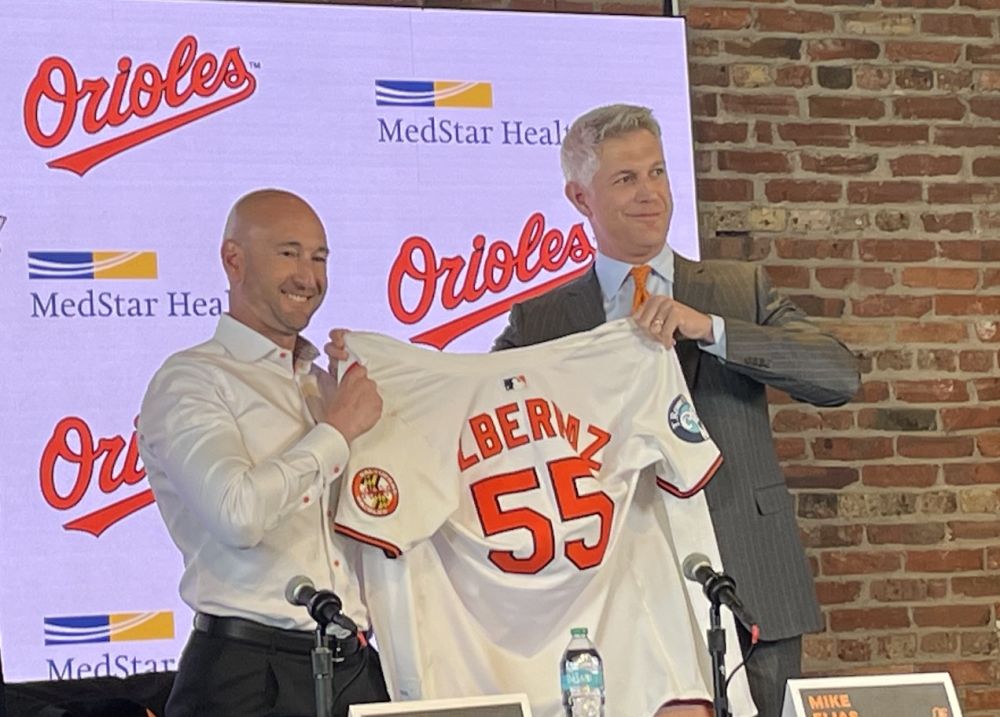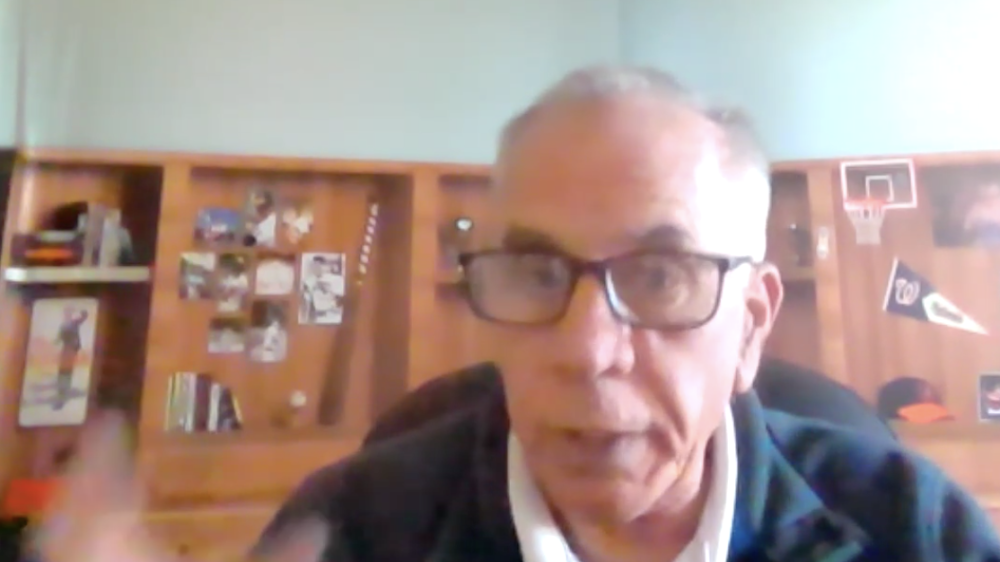


Longtime MLB insider Ken Davidoff tells Nestor about his new baseball book on 101 life lessons to teach and learn through the sport’s wisdom and joy on – and off – the field. And what makes the Orioles better with Pete Alonso, too!
Nestor Aparicio interviews Ken Davidoff about his new book, “101 Lessons from the Dugout,” aimed at young adults. Davidoff, a former baseball columnist for 25 years, now teaches at Endicott College. The book, co-written with pediatrician Harley Rothbart, focuses on life lessons from baseball, such as handling adversity and teamwork. Davidoff emphasizes the joy and values of the game, despite the challenges faced by modern baseball, including payroll disparities and labor issues. He shares a personal memory of Cal Ripken’s record-breaking game in 1998. The book is available for pre-order on Bloomsbury and Amazon.
- [ ] @Nestor Aparicio – Attend and host Super Bowl week community events beginning Feb 2 at the listed venues (Faid Lee’s in Lexington Market, Koco’s, Pizza John’s in Essex, and Costa Simonium) as part of the show’s on‑the‑road schedule
- [ ] @Nestor Aparicio – Raise awareness and support for the Maryland Food Bank during the Super Bowl week community events and the show’s on‑the‑road appearances
Ken Davidoff’s Career and Current Activities
- Nestor Aparicio introduces the show and mentions upcoming Super Bowl events in Baltimore.
- Nestor reminisces about his long career covering baseball and mentions Ken Davidoff, a former baseball columnist.
- Ken Davidoff confirms he covered baseball for 25 years, primarily focusing on the Mets and Yankees.
- Ken mentions his current role as an adjunct professor at Endicott College in Beverly, Massachusetts, where he teaches a hybrid model of in-person and Zoom classes.
Ken Davidoff’s Book on Baseball
- Nestor Aparicio discusses Ken’s new book, “101 Lessons from the Dugout,” which is aimed at young adults.
- Ken explains that the book focuses on the joy and life lessons derived from playing baseball and softball.
- Ken emphasizes that the book is not about his professional writing but about the basic joys and lessons of the game.
- Nestor shares a personal anecdote about Rick Down, a mentor who advised him to keep his love for the game.
Challenges and Changes in Journalism
- Nestor and Ken discuss the challenges and changes in journalism, particularly in sports writing.
- Ken notes that independent media is less needed by teams and players, who now have their own media arms and social media outlets.
- Nestor reflects on the decline of traditional journalism and the impact on access and relationships with athletes and teams.
- Ken mentions that building relationships with sources is becoming harder for the next generation of journalists.
The State of Major League Baseball
- Nestor and Ken discuss the current state of Major League Baseball, including labor issues and payroll disparities.
- Ken highlights positive developments like the pitch clock and the global influence of Japanese players.
- Nestor expresses concern about the future of smaller market teams like the Baltimore Orioles and the Pittsburgh Pirates.
- Ken acknowledges the payroll disparities but notes that there are still compelling reasons to follow the game.
Personal Reflections and Favorite Memories
- Nestor shares his personal connection to baseball and his favorite baseball memories.
- Ken recalls his vivid memory of Cal Ripken ending his streak in 1998, noting the respect and tribute from the Yankees.
- Nestor and Ken discuss the importance of teaching kids the values of teamwork and sportsmanship through baseball and softball.
- Ken emphasizes that the book aims to help young people navigate life’s challenges through the lessons learned from playing sports.
Final Thoughts and Book Promotion
- Nestor praises Ken’s book and mentions that his father would have loved it.
- Ken provides details about the book’s availability for pre-order and where it can be purchased.
- Nestor expresses his admiration for Ken’s work and his continued contributions to educating young people.
- The conversation concludes with Nestor promoting upcoming events and community stories on WNST.
SUMMARY KEYWORDS
Baseball book, life lessons, Ken Davidoff, Baltimore Orioles, youth education, baseball columnist, Major League Baseball, payroll disparities, teamwork, adversity, baseball memories, Cal Ripken, David Wright, Harley Rothbart, Endicott College.


 8
8


SPEAKERS
Nestor Aparicio, Ken Davidoff
Nestor Aparicio 00:01
Welcome home. We are W, N, S, T, am 1570 Towson, Baltimore. We are Baltimore, positive, positively, getting through snowstorms winter hiring cycles in the National Football League, and there will be baseball around the corner. Before we do that, we’re doing a cup of soup or bowl. That’ll be Super Bowl week beginning February 2, we’ll be at faid Lee’s in Lexington market on day one state fair. Then we’re going to Koco’s. Then we’re going to be at Pizza John’s in Essex. Yes, they have a crab cake, and it’s delicious. And then on Friday, we’re going to be in the Costa simonium. All brought to you by the Maryland lottery candy cane cash giveaways had $100 winner cost us last month down at Dundalk, which was a lot of fun. And our friends at GBMC, not sure if Luke and I are going to Sarasota next month or not. I think the Orioles might get some more pitching. But I love hearing from my old baseball pals. I covered baseball for a long, long time. Still covered baseball pretty well around here for being an excommunicated Aparicio. This guy here was a part of my show many years ago. I was syndicated Sporting News Radio at the turn of the century. I spent time in New York and Mickey Mantle’s and one on one sports and all of that stuff. Kent. David off, covered baseball for how many years? KEN I mean, I want to say 3035 but I don’t want to be disrespectful, because you still look like you’re
Ken Davidoff 01:13
3035 You’re too kind. Nestor, good to see you. Yeah. I covered it full time from 97 to 22 I’m still on the periphery a little bit. I do a little bit of writing.
Nestor Aparicio 01:21
825 years you covered, yeah, and Mets and Yankees, but in lots of different ways, publications in New York on the beat. You weren’t the Billy Martin era, but you were definitely the Joe Torre era.
Ken Davidoff 01:34
Correct? That is correct. Yeah, I was, for most of that run. I was a baseball columnist for different New York publications, which meant that, let’s call it, 80% of my time was Yankees and Mets. But then, you know, I had relationships all over the league and All Star Game World Series, no matter who was playing. So you know all that too.
Nestor Aparicio 01:53
Are you in Red Sox country now, somehow, some way, or you, I hear you’re educating the youth of America. Is that true?
Ken Davidoff 01:59
I’m trying. I’m trying. I’m an adjunct professor at Endicott College in Beverly, Massachusetts, so I still live in New York City, and I do like a hybrid model for my classes. You know, half in person, half zoom. So as I’m zooming with you this morning, I’m in Boston, and today will be my first day of class up in Beverly mass. All right, so
8Nestor Aparicio 02:18
if you’re in New York, you still get better pizza, and you got John Harbaugh too. So things will get fixed there. You’re writing a book on baseball, and I just want to give full color to this, because you were one of the very acclaimed baseball writers in this country at the turn of the century, and baseball was based and where we are here, we’ve had some playoff games with buck a decade ago, we went into the dark ages of the rebuild era, we’ve now fired a manager and hired a manager after another last place year here last year, the baseball thing, and I come at it honest as an Aparicio. It’s a lifelong thing for me. I can’t shake it, no matter what. I’ll be buried with it, whether Mr. Rubenstein and Eric Getty or Craig Albernaz knows that, or anybody associated with the Orioles, but I watch it from here, and I watch it in a different way than maybe I did, give me where you are. And in writing a book about baseball, because I’ve loved baseball my whole life, I would tell you right now, Ken, I don’t think I’ll ever write a book about baseball at this point in my life. I just think it’s sort of once you get out, a lot of people are just sort of like, Man, I did that every night in my life for 25 years. I like it. Game comes on, playoff game or whatever, but a Tuesday night between, let’s say the Rockies and the Diamondbacks is not what any of us look to do after we’ve done it professionally. I think,
Ken Davidoff 03:32
well, that’s a great leading question, Nestor, because my book is it’s not about anything I wrote on per se, with the exception of David Wright, who wrote the forward and some some blurbs I got. But the actual book, 101 lessons from the dugout, is written for young adults, and it’s about the joy of baseball and softball, the games themselves and the playing the game, playing the game, playing the game, playing the game, and the life lessons that you can derive from playing the game. So what I kind of did by getting off the hamster wheel and not having to worry about, okay, what do I have to write today? What I have to say today? Oh, the Yankees have lost four of six. You know what? How do I have to assess that situation? Who are the best training for I stripped that all down and just went through the basic joys of this and the beauty of this game, which is a beautiful game, Nestor, like, if I would encourage you to, you know, someday you’ll get off the hamster wheel, and I think you’ll you’ll appreciate it more, because you won’t be in work mode.
Nestor Aparicio 04:34
And well, Rick down grabbed me when he was alive and he came back to Baltimore, I think, as the Yankees hitting coach at one point. I loved Rick. Rick was a real mentor to me in the 90s when he coached here, and Rick pulled me up at the cage. This is after Angelos and, you know, had wrecked the team, but I was still in the I didn’t have my press pass taken. I was in oh six. They took my press pass. It’s probably like Oh 304, or five, and Rick’s at the batty cage. He said to me, Hey, man, just make sure they don’t take your love for the game. Away from you, man, make sure they’ll take that away from you. You’re an Aparicio. He said, You know, I don’t know. I do. I love, I don’t love baseball anymore. I mean, I’ll be the first admitted. I know a lot about it. I like it. I’m into I like it when it’s good, you know, you know. But I don’t like it when it’s not good and when it’s in. We’ve had a lot of not good here. So I think it’s Look, I told Cal Ripken this, you know, on the back end, I’m like, Angelos is going to destroy baseball in the region. We’re a La Crosse community here, lots and lots and lots of people here grab a lacrosse stick, and they’ve never played baseball because it’s not in the neighborhood anymore. There’s not It’s not stick ball in the corner the way it was for you and me. And there is a different game, let alone soccer, basketball. You know, those kinds of sports that are easy, one ball in a neighborhood for poor people, but lacrosse in my community, lots and most of the people I know, their kids, play lacrosse, and if they have any money at all, and they and they’re in the private area, that’s where they now, the places where they still vote for Trump, and Harford County, Middle River, where I’m from, they play baseball. They do. And that being said, baseball to me, I It’s a far better game than lacrosse, as I see it.
Ken Davidoff 06:14
8I agree with you on bias, and it’s interesting, Nestor, all those years I covered baseball, people say, Oh, you must love baseball so much I would say, hey, like, I don’t love baseball. I love journalism, because that’s I’m practicing journalism here, you know. And if I Sunday, I got the information that would destroy baseball, you know, let’s say that every game since 1901 had been fixed. You know, like, it would have been my job to report that and not worry about the consequences, right? But I think by stepping away and not having to worry about the narratives and the storylines and chasing down news, I have regained the love for baseball. I mean, I’ve, I don’t watch too many games on TV anymore, but, you know, come playoff time, like all right, it’s time to watch some baseball. And I really enjoy watching those games. I usually buy a Yankee strip and just go to the games and sit quietly in the stands and watch those games, and I really enjoy them.
Nestor Aparicio 07:05
Well, I covered softball in the late 1980s I covered girls high school softball. And there was a guy down in Anne Arundel County named Jack Crandall who had in his basement. He would bring the girls in, and they would learn how to really bring it to get scholarships, right? So, and only the Anne Arundel County, those girls through 75 miles an hour, and the girls at Patterson were throwing underhanded like slow pitch, you know what I mean, like. And I watched that, and when I covered those games, they were so competitive, and they were so good. And high school softball late 1980s 40 years ago, being at those games. It was and my dad, my dad, we were the neighborhood. My dad had the all the equipment in the shed. My dad was the manager. My dad had a clicker. My dad was the umpire. You know, in the neighborhood. My dad loved baseball, and he wasn’t even an Aparicio. So I was adopted, so, but I was, I was in my dad loved baseball. So baseball my whole life, the games, the strategy, picking up sides, playing the game, hitting the home run, like all of Little League, all that stuff that I did, it had nothing to do with the Orioles or Brooks Robinson or Mike Messina or my job, or my journalism or my radio station, or any of that stuff. But there is a point for me when I see people my age, who have kids in high school who play ball, that when there’s a high school game somewhere, and they go to that game, that can be eminently more enjoyable than going to Camden Yards and paying $20 for a beer and doing different things that like a good high school baseball game, a good Legion ball game, a good beer league softball game on a Sunday can be fun because the strategy is fun. And if you pick up fair sides, which baseball doesn’t even pick up fair sides Major League Baseball, so, but the game itself like that’s what I’m thinking about. The times I love the game. I love the game when it’s not about pomp and circumstance and $500 to get in and $20 for a beer and where do I park, but more like teaching kids how to play the game and letting them have fun run the first base instead of
Ken Davidoff 09:02
third base. Yeah, I’m with you, Nestor. And again. So this book, I co wrote, it with a gentleman named Harley rodbart, and he’s a pediatrician, and so he’s spent his life working with kids and helping kids and their parents navigate life, right? And and the book was really his baby. He came to me to work with him on it, but this whole idea of like, here’s something that can help you navigate the terrain of childhood and teamwork.
Nestor Aparicio 09:30
Get the cut off. Man, sacrifice bunt, keep going. What am I missing? Well, there’s
8Ken Davidoff 09:36
101 chapters like that. You need help. You need a bullpen. So there’s 98 more. And, yeah, just really, like chapter two is just, you’re not in the starting lineup today. You know, how do you deal with that adversity? You know, when you put your head down, you keep working and and you don’t lose faith in yourself. And the same thing, let’s say you’re in school, and it’s a school play, and you don’t get the lead role, but you get the. The role with two lines, all right? Well, if you, you know, hit the heck out of those two lines, maybe next time you’ll get the lead role. You know, don’t let it get you down. So is that kind of trans making the team, just making the team, making the team from the field to life itself. So that’s, that’s what we’re trying to convey here.
Nestor Aparicio 10:15
Ken David, also, my dude, he’s covered major league baseball for a long, long time, but a columnist pissed off a lot of PR people. I hope you know through the course of time up there in the steroid era, amongst others, he has written a book on life lessons. And so give me the background of writing the book. I mean, you, you got off the hamster wheel, as you said to me before we came on in 2022 and look, man, I’m all my friends are guys like you. All my friends are washed up sports writers. I mean, John Eisenberg, when he comes on, he always says to me, I wrote during the glory era of sports writing, you know. And I’m thinking the same thing for me, I worked at the Baltimore Sun in the late 80s. I was Ken Rosenthal’s assistant in the late 80s at the evening sun. So, I mean, for and Richard justice and just all of these people that went through Baltimore to make a name for themselves covering the Orioles went on to also Tom Keegan, just all the rich Strauss, like, great, so I mean, Joe Strauss, I’m sorry, in St Louis. Bernie Nicholas was here. You know all of these different people that covered the Orioles, Cal Ripken, Brooks, Robinson, like all the legend of all of that, and we’re still have it going on here with Simon Pete Alonso from the Mets, which is the, you know, going to become the biggest story here once the Ravens get a coach, I would say for you to get off the hamster wheel, give me your career thing and becoming a writer, because the end’s nigh for everybody who worked for a newspaper, right? Like my dad was pissed at me in 92 he thought if I stayed at the Baltimore Sun, I was going to get a gold watch, and when I left to go do this crazy radio thing. And it is astonishing in our lifetime, what has happened to journalism, newspapers, sports writing, and more than that, Luke still has a press pass and covers the games. It’s astonishing to see how little access you even have to have any humanity that I would ever meet Craig Albernaz or sit in his office the way I did with Lou Pinnell and Sparky Anderson 35 years ago, while they eat post game food and explain baseball is life. To me, there’s not a whole lot of that that goes on anymore for guys like us, the next generation of Ken Rosenthal’s and Ken David offs, right?
Ken Davidoff 12:20
Yeah, Nestor. I mean, you covered a lot of ground there, and we could probably have a three hour discussion just on that question, right? That’s a lot of stuff behind that, but yeah, bottom line is, I agree with you, it’s always going to change and evolve, and I think, I think it’s more challenging than ever, because first of all, the clubs in the leagues don’t need independent media as much as they used to, right? Because they have their own media arms and entities where they can get their message out without having to worry about how it’s filtered and interpreted. Second of all, the players themselves have their own outlets. If they choose to do that through their social media, and if they really wanted to blog or what have you. They could do that too. Obviously, the financial state of independent media has is weak relative to what it used to be. So all you put all those ingredients in this recipe, and it’s more challenging than ever. I you know, I know you obviously have a lot of relationships that you built over your career, and I do too, and I think it’s getting harder and harder to build those kind of relationships with the people that you cover, because of all these different factors. Like I covered David Wright for his entire career. So when I reached out to him, said, Hey, I have this kid friendly book, I actually think you’d be a nice fit for it to write the forward for us, he agreed, and I think that’s going to be harder for that next generation to really build those relationships, which I think strengthens your journals Well, it
Nestor Aparicio 13:50
8just it provides an insight into someone that it just can’t be done any other way. And I think it’s making me lose a little interest in sports and the and the ATM part of being a fan. Even last week, the Ravens owner had a really flipping sort of good fellows press conference and said, the fans don’t matter that much. Okay, you know, literally just said that. Said what we all know out loud, right? Like we know that, so you’re stepping away from it and watching it from afar. What do you make of Major League Baseball right now? What do you because obviously, the labor situation was always at the heart of what we covered, going back to Marvin Miller and Don fear, you know, back in my day, because I went on the air in 91 I was here for the strike in 9093 9495 and all that bad period of time, then steroids, all the bad things that came for baseball. I have new ownership here. After bad ownership, the owner thought the first thing he was going to do is build a bobble head of himself. Now, this offseason, they’re throwing money at it, which the Mets have been doing for since Darryl Strawberry, right? So the state of Major League Baseball began. That’s like playground ball, and who wants to play and who your heroes are, and Daddy, I want a baseball glove, not a lacrosse stick or a hockey glove or a soccer ball. Or I just don’t want sports at all. I want my my mobile device and my VR headset, and I’ll go play video games or whatever stuff that I play Donkey Kong, but I play second base too, and shortstop. So for you, with writing this for kids and saying life lessons for a parent to say, why I want my kid in baseball, I don’t know you look at major league baseball for examples of that. If, even if you could find the game on Apple TV on a Friday night.
Ken Davidoff 15:34
Well, look, I think there’s a again, a lot with what you were saying there, Nestor, and it’s a nuanced answer. It’s funny you talk about looking to Major League Baseball, for example. So chapter 92 of our book is, clean up after yourself. You know, clean up your mess. So it, it didn’t get it got some attention last October, not a ton, but Yoshi Nobu Yamamoto, World Series, MVP, dominant performance, right? The whole postseason. He he beats the Blue Jays in game two up in Toronto, complete game. And before he goes into the clubhouse, he cleaned up the dugout, cleaned up the visiting dugout at Rogers Center. It went viral. You can, you can
Nestor Aparicio 16:13
Google that very Japanese thing, by the way, if you ever been to Japan. But you know,
Ken Davidoff 16:17
they’re big Japanese influence in Major League Baseball, right with, obviously, between Yamamoto and Otani, and now, you know, three or four new guys coming over every year. It’s hard to deny the positive impact of that, you know, financially and globally and all that. So that’s a so I do think there’s some positive look. I think the pitch clock has been huge, a hugely positive development. And I know TV ratings were up last year, attendance was essentially flat. The very up, very tiny way you mentioned the labor thing, there’s, that’s the that’s the elephant in the room that has to be improved somehow, right? Like it’s just, you have Kyle Tucker signing this monster contract. Well, it’s
8Nestor Aparicio 17:00
not a fair fight. It never was. I mean, it wasn’t a fair fight. A fair fight when the Orioles were losing Reggie Jackson in 1976 like, literally, it the football and the hockey, and hockey people went out for a year to figure it out. Basketball has figured out this global phenomenon that I don’t care about, but they’re making a boatload of money, and baseball’s got their World Baseball Classic coming up here in a couple of weeks. I’m Venezuelan. You know, there’s going to be the whole Venezuela getting people here to play ball and all that. Yeah, baseball and growth and catching up to football. It reminds me of what my dad went through with boxing and horse racing. And just every year, it feels like it falls a little further behind in some way, and it felt that way in Baltimore for 20 years when the Ravens were winning and Angelos was destroying the Orioles. But it feels like here in Baltimore, there’s at least an opportunity with the stadium, with a new owner, with some decent players and some young players, that if they charge it right, do it right, get back out in the community. I don’t think they’re doing that now. I’m watching it all here, and I watched their attendance go down a half a million last year. But the the power of Major League Baseball in these smaller markets to sort of become a dominant thing for six months and sort of own it all summer long, that’s been missing here. And I think that part of where your book is in reaching the people and saying, Do your kids want to play ball? Do they want to play softball? Is there a league around the corner? Is there a place to extol the virtues of baseball ideology as becoming a good citizen and becoming a good human, becoming a good teammate, and all of those things, I just worry for where baseball is, and if they would be stupid enough to shut the thing down a year from now, there’s always been haves and have nots. There’s so much money in New York and LA and probably Toronto now in Canada that I don’t know what that means for the Pittsburgh Pirates of the Minnesota Twins or the Baltimore Orioles, but I know they better figure it out. And they’ve been our lifetime saying, Yeah, but we have enough winners. Everybody gets to win. The Yankees don’t win every year. The Dodgers don’t win every year, yeah, but when they’re spending $300 million every year, it’s not a fair fight. It’s not fair teams.
Ken Davidoff 19:11
Yeah, that’s undeniable, Nestor, that’s the payroll disparities speak for themselves. So there’s no getting around that. And that’s, you know, we’ll see whether they shut down the sport for a year in 20 Do you have any do you have any thought
Nestor Aparicio 19:24
that we’re going to live long enough that there, that it won’t be Adam and Eve in the Garden of Eden? For them, like literally, the original sin. The original sin for them is agency, no not having fair teams, having some teams play with 30 million. Another play with 300 million. To me, that’s the thing that no, well, college football deals with that college basketball, which is another reason I’m not all that interested in that, is that, can my team win? Will my team ever win? It’s been 42 years here. Been a lot of mismanagement, I’ll give you that. But when you’re playing with the Yankees and the red. Socks and the Blue Jays every year. You don’t have a fair sport in the way that explaining it to a 12 year old that you could explain hockey, football, basketball, say they all have the same amount of money the draft. Things that make you a fan for life. I think it’s way harder to be an Orioles fan when you’re 30 years old and you got a lacrosse stick in the ravens are across the street, and I think that that’s in a baseball, football market. I see that in a big, big way, as far as kids wanting to play it, because you’re writing a book for kids wanting to play it. I’m an Aparicio. I’m a baseball guy. If I try two minutes from here, all I see are lacrosse fields. And it’s weird to me,
Ken Davidoff 20:36
8yeah, so I’m not sure where to go with that,
Nestor Aparicio 20:41
but Major League Baseball fixing itself, so people care more about baseball, period.
Ken Davidoff 20:45
Yeah, look, Nestor, I think there are many reasons why people care and don’t care about anything, right? So I’m not disputing that the payroll disparity is a huge issue that needs to be resolved, but I think there are some people that don’t follow it, because, you know, the players aren’t as compelling as the NBA players. You know, there some people fall off because even with the pitch clock, they still think it’s too slow. So again, I just, I don’t want to do universal explanations and theories, you know, like, again, I agree with you. This is the payroll disparities is a huge problem that needs to be addressed,
Nestor Aparicio 21:20
and this is their year to do it, though. You know if they’re ever gonna get anywhere, but it’s gonna take a war to do it, right? I mean, historically,
8Ken Davidoff 21:28
historically, yeah, yeah. But, you know, it’s a matter of can is there, are there half measures that can be taken that will allow them to stay on the field while making it markedly better for the Baltimore Orioles and Pittsburgh Pirates and the Milwaukee Brewers,
Nestor Aparicio 21:42
are we gonna like Pete Alonso here? Oh yeah, yeah.
Ken Davidoff 21:45
I mean, Pete, Pete posts, you know, he plays every day. You know, he’s accessible to the media, you know. And he cares, you know, he really cares. So, yeah, I think that was a huge, huge signing for the Orioles, and
Nestor Aparicio 21:57
8it feels generational to me. It feels like they signed somebody else’s Cal Ripken in some sort of weird way.
Ken Davidoff 22:02
Weird way. Yeah. I mean, he just, he became the Mets all time home run leader last season, you know. And so that’s
Nestor Aparicio 22:10
why, why did the Mets just give them the money? And, I mean, why?
Ken Davidoff 22:14
I think the Mets thought, you know, first of all, he’s not a strong defender, you know, he’s at first base, so he’ll be a bh eventually. And second of all, the Mets clearly thought like they had to blow up their clubhouse. You know that the clubhouse was an issue, and that doesn’t mean that pizza they get rid of their best guy. Well, he’s not their best guy. I mean, Juan Soto is their best guy, and Francisco Lindor assigned to a long term contract as a Soto. So those are the two guys to build the roster around moving forward.
8Nestor Aparicio 22:44
No, I meant best person, you and you say a good club, like they’re a great guy, you
Ken Davidoff 22:50
know, a great guy. Yeah. I mean, that’s, you know, it is what
Nestor Aparicio 22:54
it is. In my lifetime, I don’t find many great guys. So when you get rid of great guys, you know, you don’t usually replace them with other great guys. Chad, David, almost a great guy. He’s been covering sports and baseball primarily for, oh, man, three decades. I’ve been reading his work. He’s been on the show. He’s now has a book to designed to help young people. So hold your book up. Let’s talk about the book and the the most important thing, Pete, what’s the most important lesson out of the 101
Ken Davidoff 23:19
8Gosh, hard to rank them. But I, you know, I think Nestor, there’s that just the very first, you know, Chapter One is sort of an introduction, but then chapter two, like I talked about, not in the starting lineup. Like, you know, you come, you start your day by getting knocked down, right? Like, how are you going to respond to getting knocked down? You know, when that lineup card goes up, when that the play cast goes up when you get a bad grade in a class. You know, whatever it is, how are you going to respond to that? So I do think that’s, that’s why we have that at chapter two, is because it’s the foundation for everything that follows, because that that’s life hits you in the in the, you know, what’s a lot, right? You got to deal with a lot of adversity in life, no matter what kind of life you’re leading. So how do you respond to that? I think
Nestor Aparicio 24:04
my favorite baseball thing, you know, my dad was a guy who studied the science of hitting. My dad had, like, the Ted Williams book in the nine zone. So, you know, like all of that, right? You know. So my dad laughed because he loved baseball so much. But I would say failure, the fact that you’re going to fail seven out of 10 times in order to go to the Hall of Fame, that that’s probably my face favorite baseball axiom. Also, life’s like a can of corn, but but for me, I think the failure part of baseball allowed some level of humility for most players, not Reggie Jackson, certain guys, but my favorite people in baseball would that would say that that would be their character builder, was that you lost a lot. Even if you were great, you lost a lot.
Ken Davidoff 24:56
Yeah, Reggie wrote a blurb for my book, so that’s what he write. Yeah. He wrote, This is a book that needs to be on the shelf of every young player and fan, every coach and every school library.
Nestor Aparicio 25:05
All right, I won’t forgive him for being mean to me, but that’s okay. I was a kid, and he was a veteran who had struck out the Don Ossie late, late on a Saturday afternoon at Memorial Stadium. Ken David Austin, so let me just ask you this, because I never have you on. I hope you write 10 more books and come back anytime you want to talk baseball. What’s your favorite baseball memory of all the years you did stuff? I mean, I think about this, because every year the World Series comes and I’ve been thrown out for 20 years. But I’m not really thrown out, because Major League Baseball still credentials me at all star games and whatever I would want to do, right? But I think about all of the games. I mean, I was at the Cal Ripken 2131 game. I watched the World Series. I was at the Joe Carter home run game at Sky Dome. I mean, you I was when labor it’s hit the home run at Fulton County. You could hear a rat piss on cotton in Atlanta. You could throughout the South that night. Um, so, I mean, I was at all of these George Bush throwing out the first pitch. Um, you know when the Red Sox won. I was there. So I have all of these memories kind of like you that did it professionally. What’s, what’s your favorite baseball memory?
8Ken Davidoff 26:07
Well, gosh, Nestor, I’m going to localize it for you and your audience, because it’s really hard for me to pick just one, but, but given who you are and who you represent, I do have a very vivid Baltimore memory, and that’s the night Cal ended his streak. Sunday night in September 1998
Nestor Aparicio 26:24
I was at a Ravens game, and somewhere else that night, I think I was in Tennessee or something crazy, yes,
Ken Davidoff 26:29
yeah, yeah. So I was there covering, you know, as a Yankees beat writer 1998 and, oh, my god, Cal isn’t playing. And because of who Cal was and the attributes he represented. That was a huge story, even, you know, for the New York readership. So that was a rare night, a very rare night when you blow off the New York Yankees to write about the opponent. And I always remember Cal came out first, second, third inning, you know, after it was the game had started, and he waved to the crowd, and all the Yankees came out onto the field and applauded for him.
Nestor Aparicio 27:05
8And that was quite a Yankees team. Now you’re talking about Clemens. Tino. No, that Clements yet? No, wasn’t there yet
Ken Davidoff 27:14
99 but 90 is when they won 114
Nestor Aparicio 27:18
plus 11. Bernie Williams, Mariano was fielder in box. Those guys were gone by then, right? Like I’m thinking, yeah, yeah, yeah, but that was a Tory was managing that team, right?
Ken Davidoff 27:28
Yeah, Vanessa, this was the historic team. This is 114 wins, and then the 11 win. No team has were won 125 games combined, regular season, postseason, the day. That’s first teams you covered too. Then, right, yeah, yeah, so. But seeing that group tribute Cal like that just spoke to the kind of guy Cal is, and the respect he had throughout the industry. And so just, and I was just honored to be there, you know, to cover that story.
8Nestor Aparicio 27:54
All right, dude. Well, I’m honored to have you on the show. Hold your book up. Tell everybody about the book. Not out this minute, but coming out right now, you can get
Ken Davidoff 28:01
it 100 it’s available for pre order right now on so the publisher is Bloomsbury, E, B, l, o, M, S, b, u, R, Y, and it’s also available on Amazon 101 lessons from the dugout, written by myself and Harley Rothbart, pediatrician, parenting expert, with a forward by David Wright.
Nestor Aparicio 28:19
I’m gonna pay you the highest tribute I can pay you that my dad would love your book, you know, he would have it right next to the Bronx Zoo and right next to, you know, ball four. And, you know, all the other baseball books
Ken Davidoff 28:30
8little different read than those books. Yeah, I’m Wait, you know, I’ve written
Nestor Aparicio 28:33
some books on football because we’ve won championships here, right? My baseball books have not have had happy endings, you know, they’ve involved Peter Angelos and, you know, bad vibes around here. So I’m waiting for our happy ending here and a championship here. Ken, you know, keep, keep up the great work educating folks up there in Endicott, right? As you said, right? Endicott, Endicott, you okay, yes, all right. I don’t know how to pronounce it. You know, it’s, I know it’s a New York place. I had an Endicott shoes when I was a kid. Ken, David, off coverage baseball, and it’s covered baseball for a lifetime. He’s written a book of that will help your children about baseball and softball and life lessons. My life lesson is that Luke is following all things Raven’s head coaching. When the purple plumes of smoke come out of the warehouse, you’ll get the wnst tech service First all, brought to you by friends at cold roofing and Gordian energy. We’re getting a cup of Super Bowl out on the road two weeks from now, at five sponsor locations. We’re gonna be telling community stories, charity stories, good stuff happening here, and raising some awareness for our friends at the Maryland Food Bank, and feeding some people who need to be fed here this winter. I am well fed right now. We’re doing the tastiness 27th anniversary as well, out on Facebook and yeah, no baseball right now, no football right now. We’re gonna get a new head coach, and we’re gonna get down to Sarasota and pretend we have a chance to win the World Series. I am Nestor. We are W NSD. Am 1570 Towson, Baltimore. We never stop talking Baltimore positive. You.