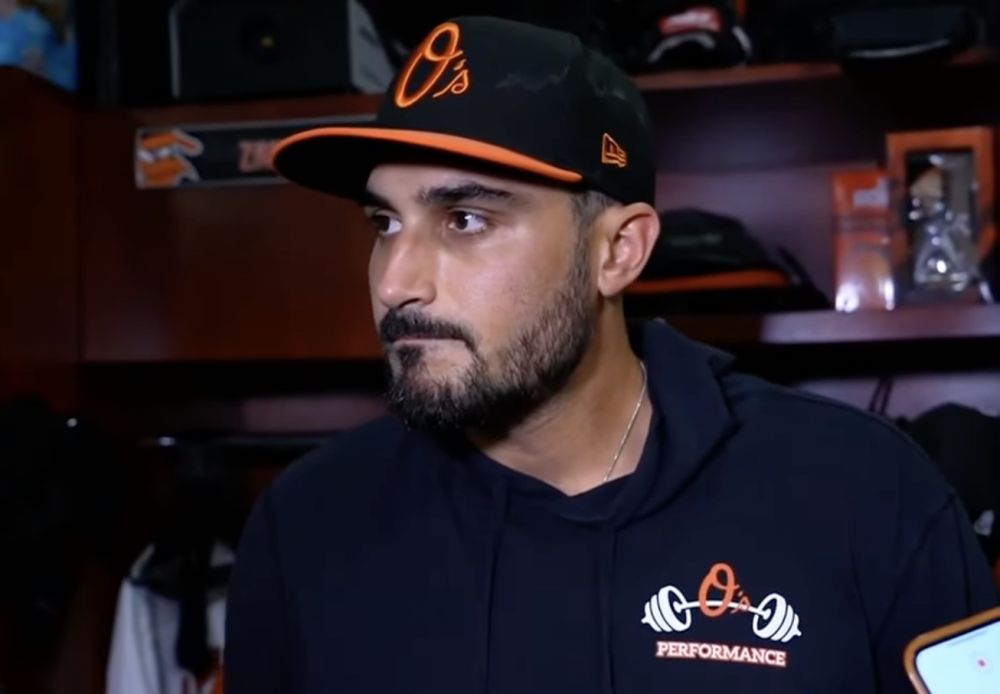


There are some fresh faces in Baltimore City government. In his first extended visit, Councilman Zac Blanchard tells Nestor the ways his new energy is sponsoring bills aimed at getting more families invested in an affordable, vibrant, safe downtown life by helping housing near downtown in his busy 11th district, in and around Federal Hill and South Baltimore.
Zac Blanchard, City Councilman for District 11 in Baltimore, discussed his background, including his service in the Marine Corps and his move to Baltimore. He highlighted his housing package, which includes five bills aimed at making home ownership more affordable, reducing homelessness, and addressing the vacant housing crisis. Blanchard emphasized the need to repeal minimum parking requirements and ease zoning laws to allow for more housing density. He also mentioned the introduction of a vacant lot tax to incentivize property owners to rehabilitate or sell their properties. The conversation also touched on broader issues like public safety and the impact of federal policies on local communities.
- [ ] Introduce legislation to implement a vacant lot tax.
- [ ] Co-sponsor Councilwoman Ramos’ legislation on the vacant lot tax.
Introduction and Background of Zach Blanchard
- Nestor Aparicio introduces the show and mentions the 27th anniversary celebration.
- Nestor Aparicio introduces Zach Blanchard, the city councilman for District 11, and mentions his previous interactions with Blanchard.
- Blanchard shares his background, including attending the Naval Academy, serving as a marine, and his move to Baltimore.
- Blanchard discusses his wife’s background and their decision to move to Baltimore for community and social connections.
District 11 and Its Characteristics
- Nestor Aparicio and Blanchard discuss the diversity and challenges of District 11, including its urban nature and proximity to the harbor.
- Blanchard mentions the redistricting that affected the boundaries of District 11, including the loss of parts of South Baltimore.
- They discuss the population density and the importance of the district due to its central location and significant business areas.
- Nestor Aparicio shares his familiarity with the district and its urban characteristics.
Zach Blanchard’s Motivation and Involvement in Politics
- Blanchard explains his motivation to run for office, including his involvement in neighborhood activities and frustrations with previous decisions.
- He emphasizes the importance of making home ownership attainable and reducing the cost of rent.
- Blanchard introduces the housing options and opportunities package, a set of five bills aimed at making it easier for people to live in the city.
- He shares personal anecdotes about the rising cost of housing and rent, and its impact on affordability and homelessness.
Details of the Housing Package
- Blanchard explains the specific bills in the housing package, including his bill to repeal minimum parking requirements.
- He discusses the impact of parking requirements on housing costs and the benefits of allowing the market to determine parking needs.
- Blanchard mentions another bill that makes it easier to build slightly more property onto a parcel of land, benefiting row home neighborhoods.
- They discuss the historical context of these policies in other cities and their success in making housing more affordable.
Public Safety and Political Issues
- Nestor Aparicio and Blanchard discuss the recent military presence in Washington, D.C., and its implications for the military’s role in domestic politics.
- Blanchard emphasizes the importance of service members’ oath to the Constitution and their duty to support it.
- They express concern about the Trump administration’s actions and the impact on public perception of the military.
- Nestor Aparicio shares his perspective on the importance of educating the public about these issues and the role of media in raising awareness.
Immigration and Political Activism
- Blanchard discusses the importance of keeping the heat on the Trump administration’s immigration policies and their impact on families and communities.
- He emphasizes the need for continued activism and public awareness to counteract the administration’s actions.
- Nestor Aparicio shares his personal experiences and the importance of standing up against inhumane treatment of immigrants.
- They discuss the role of the media in educating the public and the importance of maintaining a strong democratic voice.
Public Safety and Crime Trends in Baltimore
- Blanchard and Nestor Aparicio discuss the current state of public safety in Baltimore, noting improvements in crime rates over the past few years.
- They acknowledge the need for continued efforts to address perceived safety issues and the importance of healthy neighborhoods.
- Blanchard emphasizes the importance of tackling the vacant housing crisis and its impact on the city’s overall well-being.
- They discuss the introduction of legislation to address vacant lots and the potential benefits for the city.
Conclusion and Future Plans
- Nestor Aparicio expresses his appreciation for Blanchard’s work and his commitment to improving the 11th district.
- They discuss the importance of community engagement and the role of local leaders in addressing urban challenges.
- Blanchard shares his plans for future legislation and his continued focus on housing and public safety issues.
- Nestor Aparicio wraps up the conversation, highlighting the importance of community involvement and the role of local media in keeping the public informed.
SUMMARY KEYWORDS
Baltimore City Council, Zac Blanchard, housing package, home ownership, rent affordability, homelessness, vacant housing, property taxes, neighborhood associations, parking requirements, row homes, public safety, immigration policy, military oath, community engagement.
SPEAKERS


 8
8


Nestor Aparicio, Zac Blanchard
Nestor Aparicio 00:00
Welcome home. We are W, N, S, T, am 1570 task Baltimore. We are Baltimore positive. We are Ocean City positive. Right now we’re down here at Mako in the Ocean City Convention Center, the fish Powell Hall. Fish pal was the mayor down here. We have the lucky sevens, doublers. We have the pressure luck Maryland, Maryland lottery tickets to give away. We’re gonna have Raven scratch off soon. I’m in the middle of our 27th anniversary. Celebrating 27 my favorite things to eat, some of them are actually in district 11 in Baltimore City. We’ll get the moment tasty things absolutely going on. We’re down in our city for a couple days doing a lot of good stuff, including getting together with people back at home. Zach Blanchard is the city councilman for district 11, which I paid taxes in for 19 years and two months. I gave that about three and a half years ago when I moved to the county. But since I left, Eric Costello left office, Zach Blanchard has taken over, and I think I had you on once in the running process, I’ve been in a room with you once or twice you were doing all sorts of sort of Federal Hill South Baltimore Town Halls and all that. What it took to run. But this is your first Mako, right? Literally,
Zac Blanchard 01:10
yeah, yeah. It’s my, was my first kind of political conference thing, right? So
Nestor Aparicio 01:14
that’s what’s your background. I mean, political science at school. What I
8Zac Blanchard 01:17
went to the Naval Academy for college. It was marine active duty. Basically got out two years ago in the rim
Nestor Aparicio 01:24
when you ate from around here, right? Where are you from? Louisiana, right? Yeah, I knew that a bit.
Zac Blanchard 01:29
Yeah, my wife, my wife’s from montgomery county. She went to college in North Carolina. We met when I was a midshipman. She moved to Baltimore after college. So that’s how I you wound up in Baltimore, because your wife, I kept asking the Marine Corps, like, Hey, could you all, like, put me in the same state as my wife? That’d be sweet. Why Baltimore? Yeah, so I got stationed back in Annapolis as an instructor, and I’m a huge community social connecting this guy. We wanted to live in Rome neighborhood. We wanted to live like, near people and be able to walk to stuff like, so that was, that was big. Obviously, Baltimore’s place for that thing. Yeah, want to live in a city, and where did grow up? In Louisiana, Southwest. So, education, city, yeah. I mean, two of my mom’s on my dad’s dad’s first language was French, so,
Nestor Aparicio 02:11
8so you could do the coon ass thing. You could do all that. I can talk a
Zac Blanchard 02:14
little bit like that, but it’s been so long since, yeah, you know
Nestor Aparicio 02:17
Brandon Stokely from that part of the world, so back when he played, he’s a raging, yeah, his dad was coach there, Norman, so at Stokes. And I still friends to this day. He’s at Colorado. He comes on. He does Sports Radio Colorado. Nice. It caught that first Super Bowl touchdown passing in 2001 but when he was young, and I was young, and he would come in the studio, he had the accent going on. He just brought it with him. And my favorite, of course, was, was just on Wilson, the kg cook, you know, I guarantee you know. I mean, so when I think of that accent, that’s where I come from, but you don’t even like, I would never place you in Louisiana, you know, never. I just wouldn’t, I wouldn’t get
Zac Blanchard 02:56
that yeah, my wife says my accent comes out when I talk to my mom on the phone. It’s kind of the yeah,
8Nestor Aparicio 03:02
my wife’s in New Hampshire, so about the third drink all the R’s go. Sounds like she’s from Cape Cod.
Zac Blanchard 03:08
Yeah, yeah, normally
Nestor Aparicio 03:10
use it’s alcohol related, all right, so 11th district, yep, I am intimately familiar with this. You know, I knew Eric well enough to he was in my home and talk to them. I wouldn’t say we were like friends, but I was thinking about running for mayor, yeah, and at that point, eight years ago, I talked to anybody that was in a political space. So I mean, a couple times, Eric and I met that at cross street or whatever, but I’m real familiar with the district and how incredibly diverse and challenge, and if how urban it is, in regard to the harbor, in regard to all of those pieces just west of the harbor, Camden Yards, that’s all you dude, right? I mean, it’s, you know, it’s, it’s a big piece of a lot of residents in your council,
Zac Blanchard 03:54
8right? Yep, Locust Point at the south, all of Federal Hill, you know, all of downtown, about half of Upton, half of Bolton Hill, Half Mount Vernon.
Nestor Aparicio 04:02
Is it the most populated councilmanic district? It might
Zac Blanchard 04:05
be. Well, when they redistricted, we lost part of South Baltimore, Ridgeley is delight, and then parts of Upton and Bolton Hill. So it’s not they redistricted
Nestor Aparicio 04:16
the density, the population density wise, yeah, yeah. Well, I just like for being a small you’re thinking size.
8Zac Blanchard 04:23
I mean, like homes, yeah,
Nestor Aparicio 04:25
yeah, I would think there are more people in your district. May probably I should look at the voter, right? I could see how many people voted. You know, more people voted for you than voted for Felicia, let’s say, or any of the rest of them, because you just have more people in our district, right, right? And our district goes up where we live, there people that live on top of each other in big buildings, right? That doesn’t exist in other
Zac Blanchard 04:43
places, right? Yeah, they do. The districts are proportioned out by population, so it’s they’re roughly about the same, but, yeah, but it is density wise, right? Because it’s downtown, because it’s Mount Vernon, because a lot
Nestor Aparicio 04:56
8of important business, I would say not that every place in the city is an important. And, but I think the phone can ring more,
Zac Blanchard 05:02
yeah, it’s definitely the best district. So that’s where you get totally agree I live there.
Nestor Aparicio 05:08
I’d argue that, why did you run and what was important to you in regard to maybe things that were important to Eric before that, or just important? Yeah, yeah,
Zac Blanchard 05:18
yeah. So, I mean, I was super involved the neighborhood stuff, very big, like one in my neighborhood, to be a place that, you know, we would feel connected to, the place we could rely on our neighbors like our kids will feel like this part of where you live is part of who you are. So got involved in a whole bunch of neighborhood stuff. You know, had had some, some real frustrations, some of them with some of Eric’s decisions. Would not decided to run, you know, all that’s in the past now, of course, but, you know, that was important, motivating things. But, yeah, I do want to talk about you guys, like, what you know, what are you working on and everything. I definitely want to take the chance over the housing package today. I don’t know if,
8Nestor Aparicio 05:56
well, you’re kind of new, right? I mean, you know, you’re coming in, and the first big idea for you is that this is what you’re putting forth for the citizens of the city. And, yeah,
Zac Blanchard 06:06
yeah. So, yeah. So we have, if for folks who haven’t heard. You know, I had the opportunity back in middle of May, along with the mayor, the council president, a couple other members of council, to introduce some legislation called the housing options and opportunities package. There’s five bills in the package. And the whole idea is we want to make it easier for people to live wherever they want in the city, and be able to afford to live where they want the city, whether that’s near where you work or your kids go to school, right? All that type of stuff, the way I’ve been barnstorming the neighborhood association district, have a couple left, but a pretty gone to almost all of them. And the way that I talk about it, when I go to neighborhood associations, I give the handout, and I say, Look, when my wife and I moved next grocery market six years ago, we bought our house for $230,000 right? Same house today, about 300,000
Nestor Aparicio 06:54
you know, good for you. I bought mine for 439 and sold it for 380
Zac Blanchard 06:58
8Yeah, right. Well, 20 years later, it’s it’s good, it’s good from, you know, an owner, right? Like, you’re, you’re making money off it, right? But if you think from the perspective of, like, hey, if we were moving in today, like, I don’t know where we would live in the city, but, but we probably most certainly wouldn’t have been able to buy, right, where we were thinking about living. And so that’s not, you know, that’s not good, right? So making home ownership attainable is incredibly important. Incredibly important, along with that, right? If you look over the last five years, the price of rent, average rent in the city, has gone up per month over somewhere over $200 depends on what data sets you’re using, but it’s a very real spike in the cost of rent, and when you see that. So one that’s tough for everyone, right? Every cost, energy, food, everything, right, but, but the cost of housing and rent, particular, has shot up, right? And so that’s that’s tough for families everywhere. But then specifically, when you look at that’s driving up our homeless population, which has increased really substantially in the last five years. Because it makes sense, if you if housing prices go up, then more people are no longer able to pay right, and so. And people who are homeless right, it’s harder for them to get back into homes and so. And that’s a nationwide, very established like fact, that when rent goes up, right, people lose their homes. And so you have increasing in homelessness. We obviously have them the massive vacant, vacant housing crisis in the city that we’ve talked about a lot, and I think people are very aware of, right? That’s an incredibly important thing for us to tackle. You have our population, right, the population loss that we’ve seen over the last 80 years, with a couple of small exceptions, like 2024 so you have, and then we have these high property tax rates, right? So you have all these massively important, big problems. So and I say, all
Nestor Aparicio 08:43
connected, we have less people, yeah, right, fewer
Zac Blanchard 08:46
people to pay taxes, right? Like, you have all, you have all these challenges. And so I, what I say is, like, I’ve gone through that. And I say, All right, hey, what if I had a package of legislation that effectively addressed all of these problems, and it was free, we would do it for free. What people would say is, well, of course, that’s not a real thing. You’re a charlatan, like, I don’t believe you. If that was a thing people did already wrong, like we haven’t done already right. And so that’s that’s the bills in the housing package. The goals of them are to make home ownership more attainable, rent more affordable, reduce homelessness, reduce vacant housing, grow our population and put us in a stronger position to reduce people’s property taxes. I just think it’s massively important. I’m so excited to be a co sponsor of the package
Nestor Aparicio 09:29
of the bills. What does that mean, though, you said it does all these things. How does it do How
8Zac Blanchard 09:33
does it do it? Yeah, appreciate it. So there’s several different things that there’s, there’s five bills in the package for ones in particular. So my bill, for example, all of it are things that make it easier to get more homes in the city on, like the small scale for the most part, right? Not building large multi families, but like gentle density, density increases across the city. So for example, i. My bill fully repeals the minimum parking requirements in the city. So we’ve had for a long time, we’ve had different requirements over if you build this, you have to build this many parking spaces. You build this, you have to build this many parking spaces. Right now, we know that that makes it hard to build the types of things we’ve want. So over the last 20 years or so, we’ve taken a bunch of bite of the app, bunch of bites out of the apple, so that so many different exemptions for parking requirements in the city. But this is like a full repeal of that, of that bill, right? Because we’re prioritizing making it easy for people to have housing, right? And that’s at the these are real trade offs that had to be had, right? So there’s, there’s some another bill that makes it easier to have to build slightly more property onto a parcel of land, right? So like all of the row home neighborhoods, basically every row home in the city would be illegal per the current zoning code. And so we’re making it easier to do that type of stuff again, right?
Nestor Aparicio 10:56
There’s so in other words, you couldn’t build row homes right now in the way that they were built. Yeah,
Zac Blanchard 11:01
yeah. Like, the entire 11th district is illegal per the current zoning code, because the how much, how much of the property has a row has a building on
Nestor Aparicio 11:10
8it, and there’s not enough parking for it, correct? Well, well, so actually
Zac Blanchard 11:14
you can build in the current zoning code, you can build up to three residential units without requiring parking. But there was a point when that didn’t exist, right, right, right, yeah, so for probably 60 years or so, like, row homes were illegal from both the bulk and yard and a parking requirement perspective, yeah, which, well, because we’re row home, we’re row home city, right? So it’s like, we made our whole city
Nestor Aparicio 11:37
illegal row homes when we were horse and buggy, right? And then you had to put cars out, and you have a car, and your wife had wife has a car, and they have a car and their kid has car. All of a sudden, I grew up in row house. I lived in row houses. Long parts of my life in Dundalk, where is maybe a little wider and more suburban for lack but I also, you know, I’ve been down every tight Street and change your district, sure, and one of the reasons my wife and I bought in harbor court is we weren’t going to live in South Baltimore and fight the park every day of our lives.
Zac Blanchard 12:06
That’s right. And you have the and you have the whole package is about giving people choices, right? Because the thing to remember Nestor is 30% of residents of homes, of homes in the city, don’t have a single car. 40% only have one car. So 70% of 70% of house, no of households, of households in the city have either no car or one car. So why would you mandate that they have to spend another $170 a month or per their rent on a parking space, or add another $20,000 to their to the cost of their their house, right? For something that is not the most pressing thing that we have to deal with, right? So make give people the options. And here’s the cool thing about it, right? And I get it like, I look for parking too, and I don’t love it, right? But the important thing to the important thing to know from all the other cities, from Birmingham to Buffalo that have done this, like common sense, blue collar cities. I’m not just talking about the sort of like white collar, high end cities with great transportation systems, like regular blue collar cities who have worse transit than we have have done this because, and what they’ve seen is that 80% of the parking that would have been built under the previous requirements are being built now, right? Because think about it, like, if you’re building, if you’re building 100 unit apart, building like you gonna want some parking, because most of your tenants are probably gonna park, right? And so, and you want to make money off that, and that’s fine, right? The tenants want it. You’re gonna want it, but if you don’t, but if only 80 of your tenants want parking, then why would you make it harder to build all that? Right? And that drives up the cost for the tenants. That makes it harder to build, fit it within all the small
8Nestor Aparicio 13:46
lots that we have, more restrictive in a modern way. It doesn’t need to be like,
Zac Blanchard 13:49
let the mark like, build housing for people, let the market sort out the parking. And it’s something that, like, I’ve said is like, this is not a this is not radical. This is like, literally, Birmingham, Alabama has had this on the books for like, a decade. So buffalo sat on books for a decade, Birmingham a couple years. But the point is, is, like, this is things that we’ve seen across the country, and it’s getting the outcomes people it’s, it’s making, it’s making housing more affordable, which is the, the big driving thing. It’s allowing making it easier to build things, helps with population, all that type of
Nestor Aparicio 14:20
stuff. Um, how long you been in Baltimore? What did you like, physically, right? So you really knew, yeah. So you weren’t in Baltimore when the tanks came to town after Freddie Gray and took
Zac Blanchard 14:30
8over the I was, I was a midshipman during Freddie, so I was, I was just, just out there, yeah,
Nestor Aparicio 14:34
but I lived at the harbor on the 23rd floor, yeah. And I watched the tanks circle the city. I watched them play that baseball game nobody was at, you know, I walked down when there were guys with machine guns on every corner, you know, I know I saw that police state.
Zac Blanchard 14:48
I think the President’s trying to do that now. Well, I was gonna get to
Nestor Aparicio 14:52
that, yeah, so, like, I can’t think if I live in DC to have that happen at a point where there wasn’t a Freddy. I mean, Freddie Gray was a serious thing, you know, like I I didn’t question about the Federales coming in at that point when there were riots going on down at Camden Yards, you know, in the middle of the baseball game. Sure, on, I saw the fireballs in the sky, literally from my place. But what’s going on DC from a military perspective, and I know West was pissed off about this the other day, just saying, look, a military guy, you’re calling me in to do something stupid that that doesn’t Yeah, that. Where are you on, on what this is, and what military people could look to this sloth, felon, Mafia creep, and say, Yes, sir. I mean, I, I cannot imagine it. I give my gave my life to the military. I mean, I got a father in law turning 80 that fought in Vietnam, yeah, I can’t fathom I mean, as a citizen, I’m pissed. But if, if the military is being misused by the military’s leader, that should be unacceptable to every American. So,
8Zac Blanchard 15:59
so the important thing here, and what we’re talking what is being been proposed by President Trump, is
Nestor Aparicio 16:07
a, don’t call him a president, please, not what
Zac Blanchard 16:10
he is, right? The point is, the President can federalize the National Guard constitutionally, right? And as a military member, whether you’re in the regular armed services or in the National Guard, like you are. You swear an oath to the Constitution, right? That that is your you don’t swear an oath to a leader. This isn’t, you know, this is Nazi Germany, then some kingdom, or whatever. You’re not swearing religion. You’re not swearing that. Right? You swear an oath to support in the event the Constitution of the United States gets all enemies, foreign and domestic, right? And so domestic, which is an extreme, yeah, no, that’s a that isn’t the President’s
Nestor Aparicio 16:47
8a threat. He’s domestic. Well,
Zac Blanchard 16:51
the the, the, the point being right is that your oath is to the Constitution, and so if the president you mentioned Vietnam, right? Like the example of probably a war we shouldn’t have fought and but it was constitutionally executed, right? And so it’s the obligation of the service members to do their duty on the political side. That’s our jobs, to fight these types of bad things from happening, right? And it’s of the Populate of the citizenry, of all that, right? As a service member, your job, that’s, that’s why people thank you for your service is because you’re swearing an oath to support them in the constitution. So what he has proposed for Baltimore is constitutional. I think it’s a terrible idea, and hope it
Nestor Aparicio 17:37
doesn’t happen, but you don’t think it’s unlawful?
Zac Blanchard 17:42
No? I mean it. There’s a, there’s actually direct, like, title 10 powers to do that so
8Nestor Aparicio 17:48
without unwarranted just because he feels like it. I mean, I really right. Well, there’s not another human being in the world that would look at DC and say, we didn’t send the federal troops in there, including any of the
Zac Blanchard 18:02
citizens. Well, mostly the citizens, right? Yeah, of DC, like, you’re, you’re
Nestor Aparicio 18:06
also the state. They don’t have representation,
Zac Blanchard 18:08
8yeah? Like, like, I just want to make super clear, I am in no ways like advocating for this. What I’m saying is, like, you’re talking about what service members have an obligation to do, support the Constitution, and it’s not to be a not to come up with some like legal theory of how things can be interpreted as whatever, right? And so the problem is not with service members. The problem is with leadership, right? Of course,
Nestor Aparicio 18:35
well, and I think it speaks also to the difference between being a sworn in military member and being a thug with a mask and an ice badge, right? I mean, you know that that’s there’s a different level of accountability that we’ve just I’m Hispanic man, I’m Venezuelan. You know, my people are being thrown in cages. Yeah? Dig that at all, not even a little bit. So I’ve been outspoken about it, but I don’t know as a citizen what you do other than vote, pay your taxes, all that. But what I try to do is educate people better through my medium, because the things I hear from the cult followers on that side of things, it boggles my mind. It really does.
Zac Blanchard 19:14
Let me give you my sense of what we need to do on the immigration fight, like, if you keep the heat up, right? Like, what they’re doing, what, what the Trump administration is doing is things that, when people understand what’s going on, like they’re deporting kids out of high schools, right? Like people are scared to go to work. They’re scared to go to church. Like you’re ripping families apart, like this. You saying this, this stuff about, like, Oh, I’m going to, you know, we’re getting rid of all the criminals, whatever, and you see what you’re actually doing, and you say, Oh, well, you know they were here illegally. So it’s like, no, this is bogus. Like it is bogus. It is bogus in the way that a regular American, when they see it, they know it’s bogus. And so the way, this is a democracy, we have to win power through elections. And. The important ways that, as, like, people who have an opportunity have a platform, like you, I do like, or like the activists who are, like, leading and like standing out on corners and, like, we have no kings, yeah, well, not just, I’m talking about, like, what cost has been the great work they’ve been doing to, like, keep the heat up on, like, may we have to keep it in people’s faces, like, to be angry about this, right? Like people can’t just and when regular Americans, like, see this stuff, they’re going to be turned off by and they already are, like, we see what’s and it’s going to get worse. It’s the same thing that happened with him first term, right? Like he had the whole kids in cages thing like that made people recognize, like, the human scale of what that administration was doing then. And it’s worse now, right? And so it’s going to get we have to make sure that regular Americans see how inhumane is the right? I think the most specific, these are humans being treated like animals,
Nestor Aparicio 20:51
right? And by a Christian nation, I mean, yeah,
8Zac Blanchard 20:57
you know, whatever the it’s, it’s a, it’s a, yeah, I mean, it’s whatever they want to call themselves, whatever they want to frame their religious beliefs, to be on that side of the house, so that
Nestor Aparicio 21:06
that’s my way. I was taught as Christian as a kid. But you know that for me,
Zac Blanchard 21:10
it’s Yeah, I don’t. I don’t know how, yeah, I don’t. It’s tough. I don’t know how to
Nestor Aparicio 21:19
8interpret the thing that sits behind it for me is also everything’s a distraction, yeah, from a guy who’s a criminal. So I don’t you know that, being said, our city better run than it’s been run, and all the stuff that he’s talked about in regard to usurping the baltimores and the Chicagos and all of that crime’s down in our city, right? I mean, and all of you should be crowing about that, right? I know Brandon is as well, but that is a reality. The reality is, if you’re going into the city right now, it is safer than it’s been, and that’s all I can ask of any of you who try to help with public safety and around on the front lines. I
Zac Blanchard 21:53
mean, yeah, and and to totally get away from like, the Trump conversation around this and just talk like public safety in the city, right? Like, there is, there is like, statistical, like, the crimes that are happening, and then there’s like, perceived sense of safety, and like, just sort of, like having like, like healthy neighborhoods and all that type of stuff. Like, there’s, there’s plenty of work that needs to be continued, to be done, right on, there’s difference between crime moving the right direction and and this being like an area, we’re accepting right but, but the fact is, to your point, it is, it is moving the right direction, and has been for the last two years, three years, for homicide, shootings, and so, yeah, there’s, there’s reason to be optimistic, and there’s still so much work to be done. So
Nestor Aparicio 22:39
what’s the most important thing for the city right now, other than your bill,
Zac Blanchard 22:43
package of bills
8Nestor Aparicio 22:45
and your package of bills are about housing primarily, yeah?
Zac Blanchard 22:48
Well, they’re all focused on housing. Whatever they do, like, that’s the goal. Is we want more homes in the city, right? And we want yeah, so that’s a good that’s a good question. I’ve been focused on Yeah. And I mean, I think that outside of the the vague, the housing package as a whole, I think that tackling the vacant the vacant house, the vacant housing crisis, what we had, like if we tackled that in the like, it’s
Nestor Aparicio 23:13
tackling it rehabbing them or destroying them in your mind.
Zac Blanchard 23:17
8I mean, go, ideally, they’d all be rehabbed, right? Like I want, I want a city full of row home
Nestor Aparicio 23:22
neighborhoods, right, like, and I but not ones with lead paint or asbestos, right? You know what
Zac Blanchard 23:27
I mean, and they need roofs in AC and things like that, right, right? But, like, yeah, not all of them are gonna be salvageable. And I think we know that, but so I think, I mean, I think that with the impact on both the neighborhoods that have a high concentration of vacant, and the $200 million we lose from having the vacant, and the way that kneecaps us as a city from being able to do important stuff for our citizenry like that, is that’s something, I mean, that was like, my number one listed priority on the campaign trail. I think that is like, city wide
Nestor Aparicio 23:59
tomorrow talking about it too. She’s always talking, yeah, yeah. And
8Zac Blanchard 24:02
she’s such a Yeah. Ask her, ask her, who, Which of her colleagues ask her the most questions about this. I’d be curious. It’s probably me. I bug her a ton about it, and I have so much respect for what you did. We
Nestor Aparicio 24:12
actually come by. He talked about being a Guilford and at a community meeting at a school and couldn’t drink the water because the water had lead in it. And I’m like, you know, that’s it’s one of the reasons he ran. He said, So, I mean, I think all of you identify these problems, and including me, when I was gonna run, to say, I, I want to make it better. I’m a citizen who wants to make it better.
Zac Blanchard 24:31
Hey, can I plug speaking, speaking of Councilman Ramos, I just want to plug something I’m sure she’ll talk about tomorrow. She’s introducing legislation on Monday. I am super excited to be co sponsoring it, been helping out a little bit on it. That will we had the vacant building tax that the council, the variant of last term was able to pass, which said that, you have a you have a blighted building, you are now going to pay more in property taxes for it, right? We are about to introduce legislation on Monday to do the same thing for vacant lots. Is because you have these vacant lots who just sit there for forever, right? Could be holes in the ground, like what we have in the mechanics theater site could be just, you know, grass growing over them, like all these things that we cross city, they pay nothing in property taxes, so having
Nestor Aparicio 25:14
8having a way for them to keep it an eyesore,
Zac Blanchard 25:16
yeah, which is a terror. It’s the private interest is totally at odds with, like, the public good here, and so we’re trying to shift that. I think that’s And what’s nice is, like, you don’t have to put extra work in, like, once you get it passed, like, the market will fix it, right? And so, okay, and so it’ll help, it’ll help
Nestor Aparicio 25:32
things move. Piss off the people that own the land, but they should, you know, they come on if you’re not doing anything with this land in the middle of the mechanic being, yeah. I mean, that’s the greatest example, yeah.
Zac Blanchard 25:42
And they and they should pay more. They should pay more in property taxes to distance, to incentivize them to do something. I mean, how
8Nestor Aparicio 25:49
does it hurt the Lord Baltimore, how does it hurt the CFG,
Zac Blanchard 25:53
everything, I won’t miss you. Like, well, some people would piss off. Like, look like, I didn’t run for office to not piss anybody off, right, like, and so I just like, if you if your property is hurting your neighbors or the city, or the neighborhood or the city,
Nestor Aparicio 26:09
right, like rats or ice or not shoveling, or whatever it is, right, yeah,
Zac Blanchard 26:13
8well, I mean, like, within limits, right? But like, but like, particularly when it comes these, like, large scale blight type things, like, we have to get we have to change the incentives so that the property owners are working in the best sense of everyone, so
Nestor Aparicio 26:27
forward, not backward, 100% Zach Blanchard is here. He runs the 11th district. Is the councilman in Baltimore City, my former district, I guess you know I was gonna say artist, you know, like I was gonna call ours in my I don’t check you on it. I lost money in your district owning my place to feel still invested. Yeah, I’m invested, whether I want to be. Hey, look, I spent the best years of my life there. My wife and I would tell you, we loved living in the city. We miss living in the city in the walking around kind of way. You know, I’m looking forward to getting back and and walking the mean streets of the 11th district and going north to south, and walking over to Patterson Park and walking down to, you know, even just down to Ford Avenue, you know, I got friends that live in that neighborhood. I mean, walking the city was a joy to me. When you live in a county to walk anywhere, yeah, no, you can’t. I mean, I’m getting old, but I’m not getting fat. But, I mean, tell you, man, I mean, walking in the city kept me young, and I, you know, a lot of times I go back to the city and I will intentionally park blocks away from where I’m going, just to, like, get a walk in, you know. But, I mean, I’m in a city. All are our veterinarian is in the 11th district. Hi Jill at City pets. So right that street from you probably, yeah. So I’m in a city three, four days a week, and I appreciate you. Hold somebody’s got to run the 11th. I’m glad you’re there. I appreciate you, Nestor, Louisiana, I’m going to work on your accent. When you bring you back, you have a Baltimore accent, yet you had nothing you could do. You know, you try.
Zac Blanchard 27:53
I would not. I would. I would make some people very disappointed me if I tried. If so, I’m going to pass on that one I
Nestor Aparicio 27:59
keep threatening to do, like, a whole week or a month in my Baltimore accent, yeah, do it. I poured on from time to time when it happens, yeah. But some people say I never run away from it anyway. My appreciation is that everybody that’s been here, we’re in Ocean City, Maryland. We are at Mako. It’s all brought to you by the Maryland lottery. Your friends, a curio wellness as well as GBMC putting our 27th anniversary on we’re doing 27 of my favorite things to eat. I think how many I’m earning? 11th two. So there you go. You’ll find out. Still on the list, pressure, Lucky giveaways, as well as the Lucky Seven doublers. We begin in your district. We’re going to be in a fadely. So on Thursday at Lexington market. We are also going to be on Friday, moving the show back to Essex and Peter Johns. We’re going to be on Monday the 25th at Costas and Timonium. Tuesday, we will be back downtown, not your district, but the east side. We’re going to be at cilantro over in Fells Point, and then we are going to be on the final day at Cocos. Maybe I get Ryan out for that. Finally, we’ll be over in laraville On Wednesday the 27th it has been, it’s been quite a journey. 27 years doing this thing here at W, N, S T, we’re back for more in Ocean City at Mako. Stay with us for Baltimo