





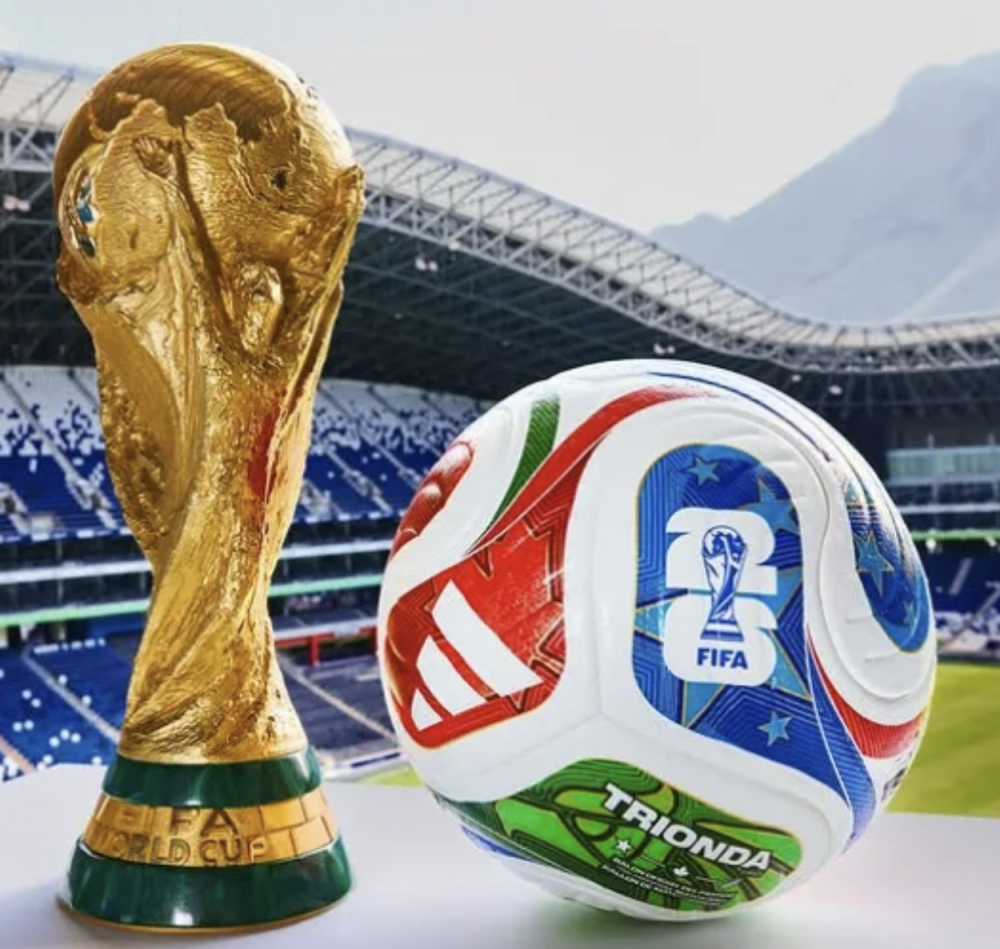
The World Cup came to the United States of America for the first time in 32 years this summer. Sports business professor Marty Conway tells Nestor, it won’t be that long before the world’s biggest sports tournament returns to our shores. And, of course, Professor Conway brings the heat for MLB as the labor wars start to heat up in a familiar refrain of billionaires vs. millionaires with the fans paying the freight.
Nestor Aparicio and Marty Conway discussed the recent World Cup, highlighting its success in the U.S. despite initial concerns about ticket prices and logistics. They noted the expansion to a 48-team tournament and the global fan engagement. The conversation shifted to MLB labor strife, predicting a December lockout, delayed spring training, and potential game cancellations. They debated the fairness of baseball’s economic structure, noting the disparity between big-market and small-market teams. The discussion also covered the Orioles’ trade deadline strategy, emphasizing the importance of making the playoffs to boost attendance and revenue, amidst the backdrop of a potential labor stoppage.
World Cup Reflections and Opening Remarks
- Nestor Aparicio welcomes listeners to WNST AM 1570 Towson, Baltimore, and mentions various upcoming events and guests.
- Nestor introduces Marty Conway, a professor of sports business at Georgetown University, who has experience working in Major League Baseball and with the Texas Rangers.
- Nestor and Marty discuss the World Cup, reflecting on its conclusion and the positive aspects of hosting it in the United States.
- They touch on the impact of the World Cup on American soccer fans and the overall success of the tournament despite initial concerns about ticket prices and logistics.
World Cup Success and Global Impact
- Marty Conway explains the pattern of negative news surrounding major events like the World Cup and Olympics before they begin, but how the focus shifts to the competition once the event starts.
- They discuss the global enthusiasm for the World Cup, with fans from various countries traveling to the U.S. to support their teams.
- Marty highlights the expansion of the World Cup to 48 teams and the positive impact on smaller countries, similar to the NCAA men’s basketball tournament.
- They talk about the importance of hosting events in the U.S. due to the country’s infrastructure and the potential for future World Cups in other regions like Spain, Portugal, and Northern Africa.
World Cup Legacy and Future Hosting
- Nestor and Marty speculate on future World Cup hosts, mentioning potential locations like Morocco, Portugal, and Spain.
- They discuss the likelihood of another World Cup in the U.S. within the next 20 years and the impact of hosting the event on American soccer culture.
- Marty emphasizes the importance of having the best players in the world participate in the tournament, which helps inspire young American soccer players.
- They touch on the challenges faced by American soccer players who aspire to play at the highest level, often needing to leave the country for development.
MLB Labor Strife and Trade Deadline
- Nestor shifts the conversation to the upcoming MLB trade deadline and the potential impact of a labor stoppage on the Orioles and baseball in general.
- Marty Conway outlines the three phases of a potential labor stoppage: a lockout in December, delayed spring training, and delayed or interrupted games at the start of the season.
- They discuss the potential financial impact on teams and the likelihood of a reduced season if a labor stoppage occurs.
- Marty mentions the upcoming retirement of Rob Manfred as commissioner and the potential for long-term changes to the economic structure of MLB.
Impact of Ownership and Management on MLB
- Nestor and Marty discuss the role of new owners like David Rubenstein and Michael Arigetti in the Orioles’ management and their understanding of labor issues.
- They talk about the challenges faced by small-market teams like the Orioles in competing with larger market teams like the Yankees and Dodgers.
- Marty argues that the salary cap argument is not practical for MLB due to the unique nature of the sport and the historical success of small-market teams.
- They touch on the importance of having experienced leadership in both management and on-field staff to ensure long-term success.
Orioles’ Trade Deadline Strategy and Business Impact
- Nestor and Marty discuss the Orioles’ trade deadline strategy and the importance of making the right moves to improve their chances of making the playoffs.
- They talk about the potential impact of trades on the team’s performance and the need to balance future talent with current needs.
- Marty emphasizes the critical nature of the upcoming games for the Orioles’ business success, given the importance of attendance and ticket sales.
- They discuss the challenges faced by the Orioles in attracting fans and the need to create excitement and momentum to boost attendance and revenue.
Media and Rights in Sports Business
- Nestor and Marty briefly touch on the changing landscape of media and rights in sports, including the impact of streaming services and the decline of traditional cable networks.
- They discuss the financial challenges faced by teams and leagues due to the loss of revenue from regional sports networks (RSNs).
- Marty highlights the importance of having a strong media and mobile strategy for long-term success in sports business.
- They mention the potential impact of these changes on the financial stability and operations of various sports teams and leagues.
Nestor Aparicio 0:01
Welcome home. We are WNST. AM 1570 Towson, Baltimore. We are Baltimore positive. I’m wearing the gear. I’m getting everything out. We’re doing the Maryland Crab Cake Tour, and I have the Kiss Face Burb Maryland Lottery tickets. We’ll have those on Thursday. Acosta’s Intimonium. Don’t come there looking for the crabs, but the crab cakes are delicious. We’ll be there all afternoon. Luke and Allen are coming by. Trading deadline. A lot of baseball this week. Buster Olney stopping by. Tim Kerchard stopping by. Evan Drelik stopping by. Janet Marie Smith is stopping by. And it’s like old home week for the business because nothing affects a trade deadline quite like an ownership group that might have a labor stoppage coming our way. Fortunately or unfortunately, this guy knows a little bit about that because he worked in Major League Baseball back during the war period that’s about to begin again. Marty Conway is the longtime professor of all things sports business, not just around here, but at that little institution called Georgetown University down in D.C. He worked for Major League Baseball in the prime office and also helped run the Texas Rangers for former President George W. Bush. I think that’s correct. HWS before, and he is always fun to come on, dude. I want. I hit you like two months ago. Talk World Cup summertime. I hit you like two months. Let’s talk about this or that. And I don’t even know where to begin with you because I want to do World Cup for because it’s over with and we can’t do it. I certainly want to do Orioles and labor and all that. And they’re about to kick off this pigskin thing, and we’re playing in Brazil and all that, dude. How have you been? Happy summer! We missed a whole Springsteen tour together, you and me, man. I know,
Marty Conway 1:32
I know, and that’s disappointing. But if we if we’re all lucky, there’ll be another one coming around at some point. I’ll sing Bobby Jean at the
Nestor Aparicio 1:40
end for you if you. Why wouldn’t
Marty Conway 1:41
you? I mean, right now it’s you gotta you gotta satisfy with Bon Jovi. So there’s that.

 8
8













Nestor Aparicio 1:46
There was really little promised land. I mean, Getty Lee’s here, so we have musical things. Let’s start with World Cup for $200, and then we’ll work our way into the heavy categories, which are like baseball labor and trade deadlines, and a team that’s under 500, and a team that’s underperforming in virtually every statistical category, including the box office, World Cup. Man, you and I have been at this a long, long time to the point where I still have my Terry Hazeltine robe in here with the World Cup dreams. It didn’t happen here. They didn’t play games in D.C. They didn’t play games in Baltimore. It all went off. No bombs went off. Nothing awful really happened, despite Trump and the the the the immigration. There were things that happened, but in a general sense, no one died building the stadiums like in Brazil or Greece or any of the the Olympics and like all that. I don’t know. They’re corrupt. They’re criminals. The first two weeks I didn’t watch. Then the games got good, and I started watching. Then I started moving my schedule around. Next thing you know, it’s 103, and I’m in Richmond watching Argentina play one of the greatest games I’ve ever seen. I mean, it’s still-I tell you what, man-he’s corrupt people that get their fist into money, whether it’s golf or you know whatever they’re into. They at least pick good stuff because soccer’s such a great game. I mean, it’s just a beautiful thing to watch the world come together and play. I’ll start with that.
Marty Conway 3:03
Yeah. No. Look, it falls into a pattern, which is this happens around World Cups. It certainly happens with the Olympics. We saw it, you know, in in London in 2012, and in you know every other World Cup and and Olympics since then. In the lead up to the event, the stories are generally, you know, negative, questionable, exploitive-all those different elements. Once the first event or match begins, the focus is on the tournament, the you know the event, the match, and all these other things tend to now take a back seat because it’s about the competition, and I think what Americans saw this time around is that despite all the buzz about ticket prices and parking and transportation and all that, the world does not care about that. The world wants to come and watch their football team in this case, and they’re willing to do and spend virtually whatever it takes of their life savings to do that. Whether it’s the English or the Norwegians or the Colombians, I think Colombia played as far south as maybe Atlanta or Miami, if I’m not mistaken. Played a
Nestor Aparicio 4:18
Miami game was insane,
Marty Conway 4:20
and as far north as Vancouver, and fans were present. You could see the yellow shirts in each of those venues to to to a certain extent, and so you just question. Like, there’s no question about the amount of wealth in the world, the amount of the ability to to use it and exploit it, whether it was the English, the Scottish, the Colombians, you know, on and on, the Spanish fans, Argentina fans, you name it. I think we saw that, and then Kate Verde
Nestor Aparicio 4:51
gives him another story, right? And DR
Marty Conway 4:53
Congo,
Nestor Aparicio 4:53
yeah, I mean, all
8Marty Conway 4:54
those elements. So the expansion to a 48 team tournament as. Much as it was questioned and derided, I think turned out to be sort of like when they expand in this country the NCAA men’s basketball tournament. You open up to get these new stories in teams 32 through 48 that would not have been in the World Cup in previous cycles, and so that’s number one. Number two, I think the world understands now from the Olympics, the World Cup, any other world rugby tournaments, different things like that. If you want to come and monetize your event, you need to come to the United States, North America for sure, but the United States in particular, because all the stadiums are early here, the infrastructure is in place, transportation, all those different things. The only thing they couldn’t control is the weather, and they came up with this artificial hydration break. You know, to try to make that work. So, all in all, yes, I think you have to balance this. If we’re going through this in class, you have to balance the questionable behavior. But yeah, look, FIFA is we teach FIFA in our global games class almost like a principality, right? It’s sort of like Monaco. They they have a you know they have this place in the in the in the world ecosystem, world governance that is just below a country but above a sports federation, and FIFA clearly believes that. That’s how they act. There’s all sorts of protocol routes. Every shot that you saw, cutaway of of guests and VIPs watching, you saw the way that the VIPs are organized and how they sit and all that. So there’s very much that component. The World Cup was here in 1994, stripping
Nestor Aparicio 6:41
all the corporate names off the stadiums was something. Exactly. Exactly. Yeah. I just throw. I’m just thinking of the things I saw about the presentation that made it feel like, to your point. Yeah. It’s it’s sanctioned by something other than
Marty Conway 6:54
yes,
Nestor Aparicio 6:55
a government or even Fox Television, really.
Marty Conway 6:57
Yeah. Exactly. And so Americans got to see it. It was all in their proper time zone. The previous World Cups, the games, the matches were played in disparate times for you to follow. So it was right there, like it was in your front yard. You missed that
Nestor Aparicio 7:12
pajama party down at Kiss Cafe in 2002, Marty. It was something. They played Mexico at 2:25 in the morning. It was something, man.
Marty Conway 7:18
I suspect that it won’t be another whatever 32 years before it comes back. As as a 48 team tournament, the number of places in the world that can are in a position to host it. But again, I think this is FIFA’s dream: is you get multiple countries to combine together to host this event. This is their dream world of sort of the combination of culture. Well,
8Nestor Aparicio 7:40
they have Spain and Portugal and like Northern Africa next time, right? Yeah, mains are going to be in Morocco, Portugal, and Spain, right? Yeah, and
Marty Conway 7:47
then following that, it goes to Saudi Arabia, which I think it will only be in Saudi Arabia. I think after that, it’s logically going to be in in the UK or Scotland, England, and and maybe by the time they get to
Nestor Aparicio 7:59
Saudi Arabia, every journalist in the world will be dead, so they can they can do whatever they want. So as
Marty Conway 8:04
it moves from continent to continent again, maybe maybe there’ll be another Japan South Korea host, but I don’t think it’s going to take another 32 years for it to get back to the U S. It may not be 20 years, but I don’t think it’ll be 32.
Nestor Aparicio 8:18
Well, look, I’ll get Kenny Cooper on four years from now and Carinji, like I always do, and do that mating call. We don’t have to worry about it coming to Baltimore anymore, or screwing it up, or getting the bid, or how it’s going to go, or hosting it. All we got to do now is it’ll be on television, you know, four years and eight years from now, and I can call them criminals from this point off because they’re off our shore. Marty Conway is here. It was fun though. I love the World Cup. I mean, I’m down with it, and it certainly has pushed the ball forward to the United States of America in a massive way as we celebrate 28 years of having the radio station here this week and 35 years of me being on the air. It has, it is what we said in the 90s when we said one day your grandkids will love this. They do, right? I mean, they they literally do, right, Marty?
Marty Conway 9:00
Yep. Yeah, and then also you had the benefit this year’s this cycle of World Cup, the very best players in the world played at the highest level during the tournament. Right, that always doesn’t happen whether it’s Messe or Mbappe or Harry Kane or or Haland. They all came. They all scored. They all competed for the Golden Boot. That’s what really people because those are the players that young soccer players in this country, young people watching, that’s who they aspire to. They watch them in the Premier League. They watch them in La Liga. They know who those names are, and for them to come here and perform at that level, that’s what American teenagers and young kids right now are interested in being. And I think they recognize, in order to be at that level, they’re going to have to leave like Pulisic did and play in Europe at 14, 1516, because the gap between the European and South American clubs and the United States-you saw-it’s just enormous. Like the style of play, the competence of play, not only tactical. But technical, they’re just several steps above where the U.S. is when they came up against Belgium. It was very clear, and that’s what’s going to have to happen. The best players coming up in this country are going to have to go offshore, finish their development, and then be selected for U.S. teams coming back in the future. So, love MLS. I think it has a lot of benefits to it, but as a development or or where it stands, clearly I think we can see now that the top five or six leagues in the world are head and shoulders above where the American competition
Nestor Aparicio 10:34
is. Marty Conway’s here. Is it a shame we never had an MLS team here?
8Marty Conway 10:39
I don’t. Yeah, for sure. From a standpoint of soccer, I I just question the ability to support it on a on an every day, every year basis. Look, DC United has had its struggles of late, and they started out as one of the premier franchises in MLS when Bruce Arena was running it. But how many times do you think that DC United right now is relevant in the conversation? And so. that’s that’s why I question the one city that I would point out, and I pointed out to other people that Baltimore could have aspired to to be in the World Cup was Kansas City. You saw what Kansas City did with hosting Argentina, hosting a number of matches there. I think they have a men’s and a women’s team. They really have embraced soccer holistically and collectively. Seattle
Nestor Aparicio 11:24
as well, by the way. Yeah, to get those premier games.
Marty Conway 11:26
And so, for a market the size of Kansas City, which is around the size of of Baltimore and the surrounding area, I think you saw what what could could happen if you really make investments in the sport, make investments in the facilities, and really make a commitment to it. So, yeah, I think that was all good for Americans to to witness and embrace and certainly appreciate. I think overall,
Nestor Aparicio 11:51
I got Kurt Bowdenhausen coming on. Marty Conway is my guest right now, but Kurt Kurt and I are going to talk about 9.6 billion for the Seahawks. So I I get into that, but I want to do baseball because baseball’s at your heart. You worked in baseball a long, long time. You were part of the ’93 All Star Game here and getting that. Janet Marie’s coming on as well this week. I went up to Philadelphia, Marty, and I spent two days there with a real press pass. You know this. I I went to the the the village, which used to be the Fan Fest. I attended the home run derby. I attended the game. I attended all the press conferences, all the hullabaloo. There is no real gala. The way that Getty Lee came up to me over crab cakes at the harbor in 1993. I see what we’re trying to get. I think it’s a very diminished version of what you and Charles Steinberg and Rick Vaughn and you know and and Larry Laquino got here 35 years ago, but also the labor part of this, the trade deadline, the baseball ecosystem, the media, money, massing locally, money bags here going in for another player with Bradish. Lots happened, man. I don’t think I’ve had you on in like four months since the season really started. The Orioles world and the Major League Baseball world are going to collide at the end of this season for labor, one way or another. And I know the All Star Game, having been there, they’re worried about the Olympics and they’re worried about the strike next year and the games getting pushed back. And if there’s a labor stoppage, because they are literally planning this like it’s a root canal that’s coming next year that they can’t avoid.
Marty Conway 13:21
Yeah, that’s an interesting picture. Yeah, I think there’s three phases to generally when you get to these kind of in baseball. Having experienced it several different times, I can speak to it. I think which is the first level is a lockout in December. I would put 100% I would put, you know, I put the mortgage on a lockout in December. I think for a few reasons. Number one, really doesn’t cost anybody anything, right? It’s the end of the CBA. They don’t have a new one. What are you going to do? Okay, we’re going to lock out. It freezes things in place. You know, it freezes season ticket sales and different things like that. But it really doesn’t cost either side a tremendous amount. Then you move to the second level, which is: Are we opening spring training camps in mid to late, you know, mid February? Let’s say, okay, we can pause that again. Not a lot of cost to anybody to not be opening training camps six weeks prior to the season. I would put more of like a 75% probability on spring training being delayed in some way, and now you start to look at getting closer to the season and how much spring training do we need? I think we’ve seen over time you can get by with three weeks, two weeks of spring training, and then you can regulate players in the first you know three weeks of the season for pitchers. I know Florida
Nestor Aparicio 14:42
and Arizona are screwed right away, right? Like all those towns, all that preparation, all that Sarasota, Sarasota, all of that, right?
Marty Conway 14:48
And then I would put probably a 60% percentage on beginning of the season being chipped away, interrupted, you know, missing some early. Season games or pushing it back, and that’s something. So if
8Nestor Aparicio 15:02
you could bet on it, not that you’re a betting guy, you you would bet on the fact that opening day won’t be opening day.
Marty Conway 15:08
Yeah, well, right now opening day is you know late March, and again, whether it’s 162 games versus 154 or 152 or 148 or whatever those numbers are, look, that’s that’s important to both players and owners, but in the larger question, the bigger numbers about salary levels, draft number of draft picks, bonus pools-that’s a much larger number than six, 810, games at the beginning of the season. And so, I think from the owner standpoint, they’re willing to arbitrage what are the long-term gains of our new collective economic system versus a few gains in 2027 in March or April or in Japan or in Australia or wherever they would be potentially opening? I think I think that’s probably the calculus going on. The other thing I would add is this is you know Rob Manford, the commissioner, has already announced this is his last term as commissioner. I think if he has, you know, Rob is one of the people, other than Bud Seelig, who probably has had the most time and knowledge in the collective bargaining system on the side of baseball. Because I remember him
Nestor Aparicio 16:17
as a very young man back in the Don Fair days, literally. Right?
Marty Conway 16:20
He started on the management side on the on the management council as a labor lawyer, and he’s worked his way, you know, into the game that way. I I think he sees this as an opportunity for his legacy to change the economic structure again, potentially for what they believe is more long term stability, more long term cost certainty, as opposed to a salary cap. You know, if you were to ask me now, do you think that a salary cap occurs in Major League Baseball? Again, I would put a super low percentage on that for a lot of reasons. I think Marvin Miller and Don Fear are still the ghost that hangs Over MLB affairs, but and it’s
Nestor Aparicio 17:04
sort of their nature to fight these ball players in a general sense are f. Exactly,
Marty Conway 17:08
exactly. I mean, and more
Nestor Aparicio 17:10
fu than ever when Adley Rutschman. I’m sitting in front of Adley Ruchman two weeks ago, and if you saw the little video, you make whatever however weird it was. He’s made $27 million playing baseball. I never stood next to Cal Rip. Cal Ripken finally got the 27 million by the time he was going at like literally. There’s a different mindset amongst these young guys to say like I’m going to fight. Well, they’re just going to go fishing. They don’t have to get second jobs. This isn’t this isn’t Boogal in 1973 at the end of his road, slugging beer in the off season to make 10 grand. You know, later, right? The
8Marty Conway 17:47
young guys have the money to fight, and there’s still a Max Scherzer in the game, a couple older people like that, or like, let me tell you how this actually works. The other thing too is, look, I think from a just pull back and look at labor and management discussions, whether they’re with you know, you know, automobile workers or or baseball players, when you’re talking about a salary cap in public a lot, I think it makes it very difficult for you to accept something less, right? Because you’ve staked yourself to the most extreme position. I I have just a feeling, and it’s just that that the discussion about the salary cap allows baseball management to come in and accept something less in other areas that give them as much or more cost certainty, maybe as a salary cap does. What does that mean? That means shrinking the draft again, pulling the number of player pool, maybe getting international players into the draft instead of having to sign international players outside of the draft. There are a number of areas where, if they’re not going to get a salary cap, then I think they can get some other cost certainties from the players. And so I’m sure there’s some strategy around what we talk about and what we actually negotiate for, because I don’t think you know they they ran some media during the All Star Game, at least it was on digital about fan engagement, and and it was kind of a a look at you know management from a salary cap standpoint. Fans do not care about a salary cap. They don’t care about it in the NFL. They don’t care about it in the NBA, any other sport. But it creates a much more fair
Nestor Aparicio 19:24
game, I must say, Marty. You know, like when I talked to Steve Bashati about why he didn’t want to buy the Orioles 20 years ago, he didn’t want to buy the Orioles because he didn’t think the game was fair. As a businessman, he didn’t think it was fair. He was never going to have a fair fight if he got. He would be he would own a second tier team, and the notion that the fans accept that is idiotic. Like I’m sitting here watching it, I’m thinking anywhere else now, not college sports, which where it’s always been imbalanced, but anytime we would pick teams up in a little league, we would try to make them fair so that we have fair games. Baseball has never. Worked under that, and football’s been working on it most of you know your daughter covers the NFL. Like most of the last 35 or 40 years, it’s been that way. The NBA and the NHL have lost seasons, and you know and brawled it out. And the NBA is just kind of wacky because there’s only 12 players, and it’s a you know it’s more of a person league than these other sports that take more of an ensemble than just Lamar Jackson, but baseball’s never been fair, and it’s been acceptable to all the people that buy in that the Yankees and the Dodgers are always going to be a bigger gorilla. And I’ve never like that feels weird to me. And I guess my jumping-off point-you can answer to that-is all this is great, but what do David Rubenstein and Michael Araghetti know about labor and labor fights, and where are they going to be in this? And how is that going to affect my franchise?
Marty Conway 20:46
Yeah, so it is. It’s a it’s a fair conversation, but I think there’s a lot of misinterpretation when you pull back and look at the last 25 years. And I did this research a little bit ago, and you look back at the last 25 years, all all 30 Major League Baseball teams. have made the playoffs. The minimum is three times, right? Seattle finally got in; they’ve got some more. Minimum is three times now. So the opportunity to be in the playoffs for a major league baseball team, everybody gets that opportunity, no matter whether you’re a high spender, low low spender. Is there a higher propensity for the Dodgers or Yankees or Red Sox to be in, answer is yes for sure. Have they been in more times? I think the Dodgers are 21 out of that 25 or six years that I studied. The Yankees were at 20 or 19 or something like that. But what it doesn’t account for is the Tampa Bay Rays getting to the World Series a few years ago, the Oakland A’s getting to the ALCS a few years ago. There’s, you know, back in the day, the Miami Marlins. There are methodologies. I always throw up Houston. Who would have thought the Houston Astros are a quote big market team, right? They had their run, they did player development, they did scouting, they did those other things extremely well, and they supplemented. So it’s it’s a false narrative to just suggest that well, only the big market teams are only do they have a higher propensity to win? Of course, but every team, even in the NFL, with a salary cap, they spent. Look at what the Packers just said. I agree with all of that,
Nestor Aparicio 22:18
but I think it’s such a lousy argument, Marty, because it’s just not a fair fight. It’s just not when you have 100 million every year, and they have 300 every year all the time. Like I can’t argue for that system. Like, and I certainly can’t argue for it if I’m Rubenstein and Araghetti, even though I signed up for it. And to your point, they’re not going to get what they want. I mean, they’re bean counter guys and saying, “Well, in every other industry, we just shove it down the union’s ass, let’s do it here. That’s the way we do things, and I think the modern people think that. I don’t think the Steinbrenner family thinks that, and I think Angelos had no idea what he was getting into 35 years ago. I this is baseball. It’s special. It’s different. It’s weird. I don’t think I’m ever going to get what I want. I agree with you, but I I think that that is it’s a little bit of a original sin for me that the premise of going into this if I’m rooting for Towson State is I’ll will this never be Maryland will this never be that and I think that that’s poor for Major League Baseball that that that’s been that’s been part of the problem with Major League Baseball for why people aren’t as engaged and also aren’t at the games because they just know it ain’t a fair fight, especially here where our team stunk and the owner stunk, everything stunk for years and years. You woke up in March and knew you’re gonna be last place. There is a mind frame of that that a Yankee fan and a Dodger fan have never had to think about that because they spent $300 million. So it’s I don’t know, man. I mean, I’m I’m I’m chasing my tail, but I don’t, I don’t love the. Let’s look at the last. That’s the Bud Selig argument, and that still doesn’t help the Orioles or the Pirates or the Royals. Be all yeah. No,
Marty Conway 23:47
look, let me just pivot to football just for a minute because there is a salary cap in football. If you read what the Packers president said at the release of their because they have to release their as a publicly held organization, he said now the team took in every NFL team took in around 450 million dollars, give or take, of national money from the NFL. Right? Every team gets that. There is a salary cap. That salary cap is below 300 million dollars or in the 200 million dollar range. Right? But he said specifically, we are having a trouble competing, right? We are having trouble competing because we don’t have private ownership that can go out and sell a piece of the team to a private equity holder and take those dollars and invest them in. I can assure you that NFL teams, even though they have a salary cap, it’s not a fair fight. Why? Some owners are putting in extensive training facilities, hiring nutritionists, hiring many more coaches than any other teams have. More scouts. The Bengals have six or seven scouts. Other teams have, you know, 10x that. So it’s never going to be a fair situation. And so the pleading and begging for a salary cap. Major League Baseball just falls on deaf ears because the NBA has a salary cap, but there are so many provisions for you to go above the second apron, all different things like that. If you choose that you want to compete with your organization, you are free to go do that salary cap or not, and you’re going to spend in areas that you think other organizations can’t spend in, because you want to hold the trophy, and that’s ultimately what you have to have in leadership. It doesn’t matter whether you’re General Man or General Motors or Ford or Tesla. You’re looking to be the best and to take the most share. It applies in business. It applies in sports. And so the salary cap for me has always been in baseball an argument that it’s just there’s a lot of fallacy to it. I think it’s entertaining, but I don’t think a it’s ever going to happen. And I think even if you get it, you’ll have organizations like the Dodgers or Yankees who will spend excessively in areas that are not capped in order to find a competitive way to win,
Nestor Aparicio 26:00
or they’ll bang on trash cans, Marty Conway, and they’ll put you in the Hall of Fame if you’re Carlos Beltran. Marty Conway, sir. I want to get to the Orioles because I got about 10 minutes left with you, and it’s in the window. Got it. I um the Rubenstein Arigatti thing. You just said the key thing. They want to win. Rubenstein wants to be famous. He wants to be loved. He wants to be understood, but he doesn’t give a rat’s ass about baseball or learning baseball or you know time he’s got married he’s off doing this he’s writing a book on ownership and he’s been an owner five minutes made a bobblehead how do you think they react in all of this how does this organization react in all of this they’ve already sent out their books to the Birdland people pissing them off further wanting money they’re clearly going to go in this week right I mean, feels like they’re going to trade into the pennant race instead of out of it because they need to. I mean, that’s for time. If you’re working there, you throwing the talent is not Don Rovak can’t hear that right now, right? Like literally. Where where do you stand on these 90 days for this organization? And clearly, the importance of being that last wild card team and at least having a chance, and that’s the goal. That they keep looking for that brass ring and they’re two games behind or whatever, even though they stink. But they’re going to go in right, and this is going to they’re going to you and I are going to have to talk about baseball here as we talk football. When I call you a month from now and say let’s do our football piece before the season, we’ll still be talking about the Orioles in a pennant race, I believe that.
Marty Conway 27:22
Yeah, no, look, I think so. If you just do the calculations, since I think they expanded to 12 teams in the playoffs in 2022, since that’s happened, there’s been five teams that are in the Orioles situation two games back, 55 ish games to play. There’s been five teams that have jumped that shark and gotten into the playoffs as a result of it. In some cases, they’ve gone pretty far. I think the Diamondbacks were an example of that a couple years ago. They rode that hot streak to get into the playoffs as a fifth or sixth seed and rode it all the way to the World Series. So there are case studies where that can occur, right? But there’s going to have to be a catalyst, and whether that catalyst is the trade deadline and bringing in talent, whether that catalyst is through the organization bringing up players, you know they’ve just brought up a player in Christian in Carsonan Strand where he’s lighting it up, right? So you have to have that catalyst at this point with 50 to 55 games to go, but I did I do think they will go in. Here’s the challenge for where they are, which is with the number of other teams who are in that realm of either hanging into the wild card or just adrift of the wild card. You’ve got across the National and American League six to 10 teams that are probably in that there’s a selection in terms of whoever’s trading where I can get the most value. Do the Orioles have enough value to return back to get the kind of players that can be the catalyst for them? That’s not the question. Will they be in the market? Yes. Will they have the most competitive offers? I think that’s the biggest question. How much are they willing to accede future talent to to like you said for this final 60 day 90 day stretch to be an opportunity? I happen to think it’s a crucial time for this current management structure, whether it’s make or break into the playoffs, not just to get into the playoffs, but they still
8Nestor Aparicio 29:19
have a chance to create excitement, right? They they still could do that, and you say for sure. And if you work there, and if you’re if you’re a fan, they want you to believe. And like I said, the Luke, the Ravens aren’t doing anything until September 13th. A lot of baseball between now and then, and they just don’t catch the ball. And for you know, and on the field observation is, I think it’s hard to win like that. I think they pitched a little bit over their heads, certainly hitting below their knees from what they could do. But I do think that they’re really they’re desperate in a lot of ways because of the strike and where they are. They spent all of this money now. Baz, Alonzo, you know, Brad. I mean, Basio. They’ve spent money, right? So I don’t believe in in them in general, or any of the people that have worked for them, based on what I’ve seen, including Elias. So what I would have fired a year and a half ago when he fired, and I don’t believe in this manager either. I’ve said that, but it feels to me like three, four weeks from now we’re going to be talking about them a game up, a game back. I don’t know that they’re going to go into the can and lose 10 in a row to really end it and go. You know, be be be on death watch for them on august 23. I don’t think that, and and I think they need that. They need to sell some tickets. They need to create some enthusiasm. They need to do something that wakes people up before Lamar throws his first pass in Indianapolis.
Marty Conway 30:41
Yeah, look, they’re sitting right now at 22 and a half 1000 fans per game on average, right? That’s going to get you into the 1.8 million, maybe 1.9 million, whatever, roughly per the season. That’s not the 2.4 that they did just a few years ago, 2023, I guess it was when they had that sort of run, so that’s a substantial, you know, that’s 500,000, you know, fans, give or take, times tickets, parking, concessions, you know, all that. So, like I said, it’s it’s critical. You have the top 10 teams in Major League Baseball in terms of attendance are all averaging in the low 30,000 average and above, right? Toronto is at 40,000. Why? They were in the World Series last year. They were competitive. They haven’t been anything this year. All those tickets were bought in advance. All those people made that decision. So, for the long term stability of the franchise, this is a critical time. These are all critical times. But I think you have to pull back and say in in such a critical year. Everybody knew going in this was a critical year for for the general manager on down to bring in an entirely new on-field staff. I just I and put them together as they’ve never been together before. I it’s no wonder why they are you know struggling defensively, struggling offensively. I I just think it wasn’t realistic to bring in a rookie manager with a lot of other young coaches, including a third base coach and bench coach and everybody else. I I don’t think that’s what you would have said now? Would you have brought in Buck Showalter? I don’t know if he would have taken the job or not. But when you’re in a time like that, when your contract is sort of on the line, I think you want to look at more experienced people, and I think that’s probably in retrospect one of the areas that they’ve struggled in. And fundamentally, yes, the team fundamentally from getting picked off on the other night on first base on a line drive, they’ve struggled defensively. There’s probably been 10 or 12 games where they’ve been decided based on a few plays here or there in the field, and if you do that, you’re five or six games over 500 instead of being two games under 500. So, all of that plays in, but yes, from a business standpoint, this is really critical because, as you said, the countdown begins. When do people start sending their money and sending their attention across the parking lot to football? You probably have about another six weeks before that happens. This is this is go time for the baseball team and for a lot of the management and leadership in the warehouse.
Nestor Aparicio 33:21
Marty Conway and I will gather again, hopefully sometime before the fall when football begins, because I didn’t get any football in here at all, and Lord knows that’s the biggest business around here. And we’ve had the Max Crosby, we have a new head coach, we have a new offense, a new defense, on and on and on, and plenty of time to study that. Marty Conway will be studying all things sports business at Georgetown University, educating young people like myself about all of these things. Anything else on your mind that over the hill to look at? I mean, clearly media and and rights and like all of that is the biggest thing. But we went through the baseball problems, but just in a global sense, the ESPN firings. Just the world’s changing. Certainly the streaming side, and that’s where sports is trying to catch up for sure.
Marty Conway 34:03
Yeah, if your strategy in business and in sports in particular doesn’t include a media and a mobile strategy, then you probably don’t have a strategy. And right now, there’s so much churn, particularly in the media world. Look, we’re seeing it. You’re not. We’re not reporting on it because it hasn’t been sourced that well, but teams are losing dollars in their RSN every year. Whether here locally in Masson, people are cutting the cord. There’s all sorts of other things that are happening. Peacock’s not doing that well. Netflix is now struggling. So all of those things have a down a downstream effect on teams and leagues, and so those local dollars that are no longer there. I think you could look at the nationals as an example. They lost their RSN basically. That’s $40 million a year. Had they replaced some of it? Maybe some 10, 20 million, perhaps at the most. But it. Have an impact, and why they can only field a team with a $90 million payroll instead of you know 140 or $150 million in other places.
Nestor Aparicio 35:09
I hear the ghost of Peter Angelos. I just like I told you, you split those franchises, you’ll have two struggling. Like I hear him. Marty Conway is here. He’s doing the well. He might he might not have been wrong, but especially when they’re poorly run too. You know, I I do think that there’s a strength part of this where the White Sox have been what the White Sox are for all these years because they’re poorly run. So I, you know, I I think there’s plenty of money here and plenty of love of baseball, but they need to go find that, and you know, I hope to have that happen on the backside of the trade deadline next week. Philly’s in town this week. Luke is in Owings Mills. We’re going to be out through the Maryland Crab Cake Door, and I’ve threatened to get Marty Conway back out. I mean, the only place I could ever get him was to Amici, so I got to go back to Amici’s, get him back there. We’re going to be at Towson, or excuse me, Timonium at Costas on Thursday. I will have the Raven scratch offs. They’re really good looking, so I’m holding them up. They’re fun. Also, our friends at GBMC and Farnham and Dermer, they are the comfort guys. My appreciation to Marty Conway and all of our incredible baseball guests that are going to be coming on this week in the front end of the major league. You’re going to think we’re just like an old sports radio station around here this week talking baseball. But hey, you know it’s baseball week, trade deadline. What else do we got to do other than talk democracy? I’m Nestor. We are WNST AM 1570 Towson Baltimore. We never stop talking. Baltimore positive.