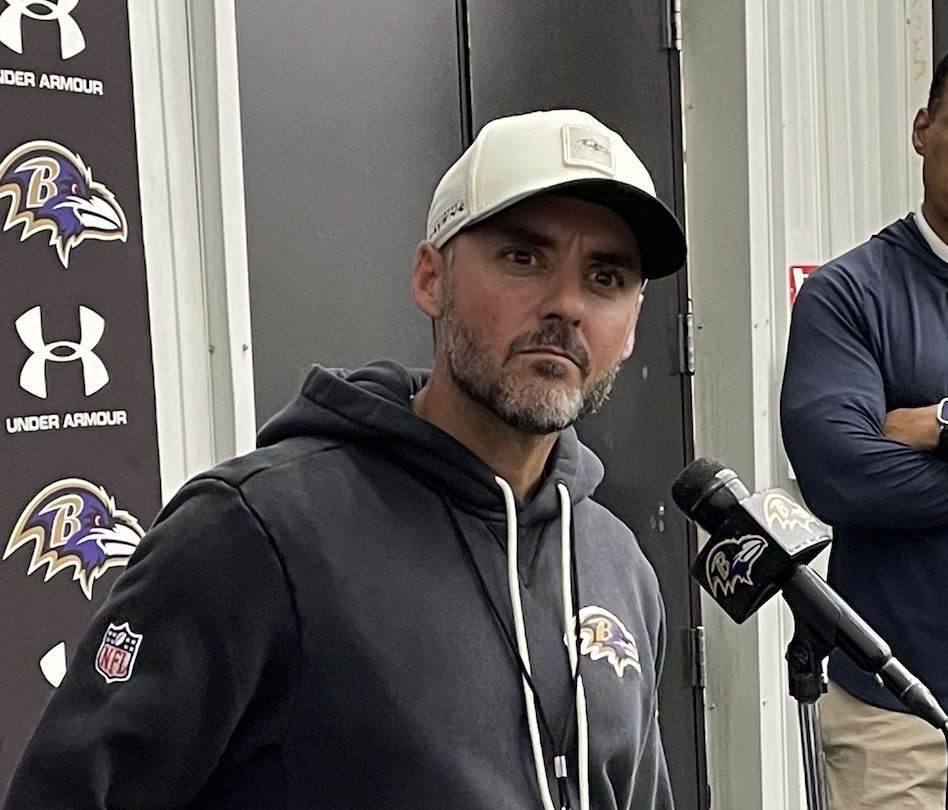


Former Towson Tigers baseball player, who played in the big leagues with five different MLB teams, now represents Heller Kowitz Insurance here in Baltimore and joined Nestor for a lengthy and spirited chat about the game they love at Koco’s Pub on the Maryland Crab Cake Tour. He’s also running for LLS Visionary of The Year and we hope you support all of the folks supporting cancer victims on June 6th at the Pendry.
Nestor Aparicio and former MLB outfielder Casper Wells discuss the challenges of hitting in the big leagues and the impact of technology on baseball, such as the Automated Ball-Strike System (ABS). Casper shares his journey from upstate New York to Towson University and his professional baseball career. They also touch on the importance of community involvement, with Casper supporting LLS (Leukemia & Lymphoma Society) and participating in local events. Casper reflects on the evolution of baseball, the role of data in modern coaching, and the mental aspects of playing professional sports. They conclude with plans for upcoming LLS events and community engagements.
- [ ] @Nestor Aparicio – Arrange for Casper Wells to receive a bowl of cream and crab soup and Maryland Lottery Maryland Treasure scratch-off tickets when he visits Koco’s.
- [ ] @Nestor Aparicio – Attend the scheduled physical/doctor’s appointment next week at GBMC as planned.
- [ ] @Nestor Aparicio – Invite Gary Adorno to come by Koco’s to talk about high school sports on the show.
Casper Wells’ Introduction and Background
- Nestor Aparicio introduces Casper Wells, a former MLB outfielder and Towson graduate.
- Casper Wells discusses his background, including his upbringing in upstate New York and his journey to Towson University.
- Nestor and Casper share light-hearted banter about Maryland crab cakes and Maryland lottery scratch-offs.
- Casper mentions his daughter’s involvement in Maryland lottery promotions.
Casper Wells’ Career and Personal Life
- Casper Wells talks about his time with the Orioles and his current role selling insurance in Baltimore.
- Nestor and Casper discuss their mutual connections, including Brian Kowitz and his son’s job with the Orioles.
- Casper shares his experiences of playing baseball in upstate New York and his early days at Towson University.
- Nestor and Casper reminisce about their shared love for baseball and the challenges of playing in different climates.
Challenges of Playing Professional Baseball
- Casper Wells discusses the challenges of transitioning from pitching to hitting in professional baseball.
- Nestor and Casper talk about the pressures of playing baseball at a high level and the importance of consistency.
- Casper shares his experiences of dealing with injuries and the mental challenges of professional sports.
- They discuss the evolution of baseball, including the impact of technology and data on modern players.
Casper Wells’ Involvement with LLS
- Casper Wells explains his involvement with LLS (Leukemia & Lymphoma Society) and his role as a visionary of the year.
- Nestor shares his personal story about his wife’s battle with cancer and the importance of LLS in their lives.
- Casper talks about the impact of childhood cancer and the importance of research and support for families.
- They discuss upcoming events and fundraising efforts for LLS, including a gala on June 6.
The Impact of Technology on Baseball
- Nestor and Casper discuss the impact of technology on baseball, including the introduction of the ABS (Automated Ball-Strike System).
- Casper shares his thoughts on the benefits and challenges of the ABS system, including its potential to increase accountability for umpires.
- They talk about the evolution of baseball rules and the impact of technology on the game.
- Casper reflects on his experiences with umpires and the challenges of playing in different ballparks.
The Future of Baseball and the Orioles
- Nestor and Casper discuss the future of the Orioles and the potential of the team’s young players.
- Casper shares his optimism about the team’s prospects and the importance of patience and consistency.
- They talk about the challenges of playing in the modern era, including the impact of social media and media scrutiny.
- Casper reflects on his own experiences as a player and the importance of staying focused and consistent.
Casper Wells’ Personal Reflections
- Casper Wells shares personal anecdotes about his time in the MLB and the lessons he learned from his experiences.
- Nestor and Casper discuss the importance of family and community in their lives.
- Casper talks about his involvement in local events and his commitment to giving back to the community.
- They reflect on the importance of perseverance and resilience in both sports and life.
The Role of Coaches and Mentors
- Casper Wells discusses the role of coaches and mentors in his career and the importance of their guidance.
- Nestor and Casper talk about the challenges of finding the right balance between listening to coaches and trusting one’s own instincts.
- Casper reflects on the impact of different coaches on his development as a player and a person.
- They discuss the importance of mentorship and the role of experienced players in supporting younger talent.
The Importance of Community and Giving Back
- Casper Wells talks about his involvement in local community events and his commitment to giving back.
- Nestor and Casper discuss the importance of supporting local organizations and causes.
- Casper shares his experiences of working with LLS and the impact of his involvement on his personal and professional life.
- They reflect on the importance of community and the role of sports in bringing people together.
Final Thoughts and Future Plans
- Nestor and Casper wrap up their conversation, reflecting on the importance of baseball and the impact of the game on their lives.
- Casper shares his plans for upcoming events and his commitment to supporting LLS and other local causes.
- They discuss the importance of staying connected with the community and the role of sports in fostering positive relationships.
- Nestor thanks Casper for his time and insights, and they look forward to future conversations and collaborations.
SUMMARY KEYWORDS
MLB, Casper Wells, Baltimore, baseball, Towson, LLS, visionary of the year, childhood cancer, insurance, Heller Koco, umpires, ABS, strike zone, player development, community involvement.

 8
8


SPEAKERS
Nestor Aparicio, Casper Wells
Nestor Aparicio 00:00
Welcome home. We are W N, S T am 1570 task of Baltimore. We are Baltimore positive. I thought I was gonna need my little light here. I have, like, a little light that would light us up a little bit more. Well, your star. I got. There we go. Casper wells and I are here together where Koco’s gonna hold that? No, I’m not gonna do that. I was just goofing around. I’m just trying to see if it actually worked or not. I think the battery run low. It’s all brought to you by the Maryland lottery. You know, I always get like, a bowl of soup and a cereal when I get here. I didn’t do it, and I think my sugar is getting low, and I’m gonna have to get, like, a bowl of cream and crab soup. Casper has never been over here to Koco, so we’re gonna send him in with some crab cakes, as well as Maryland treasures scratch offs with Maryland lottery, also our friends at GBMC put me out on the road and getting me full physical. Next Thursday, I’m having like, a real doctor’s appointment for the first time since I was like 30 I’m like 57 that’s
Casper Wells 00:57
when you’re on the Orioles, right?
Nestor Aparicio 00:58
8I should go to the doctors more often. I know I got my my chart out, I’ll be there next week. Also our friends at foreign and Dermer, they do HVAC as well as plumbing. They do it better than anybody. And I mean, on the spot. When I had a leak two weeks ago, Sean came out, fixed it all up. We had a soft spot in our pipe. Don’t ask me how or why, but we did. Are you acid tea courses? Are you boardwalk, Ocean City? Are you crab, Heron, mollusk, or are you Bay Bridge? Because you’re like, you’re not even from around here, like an
01:30
upstate New York dude, right? Yeah, not a lot of
01:33
water. Which one you think you want?
Casper Wells 01:35
I’ll probably crab. Probably go the crab. My daughter’s gonna be scratching number 42 what number 42 What
801:41
number did you wear in the big leagues?
01:42
Jackie Robinson. Can’t go wrong, right? Jackie Robinson, number
Nestor Aparicio 01:45
42 that’s gonna be a winner there. Casper Wells was a Towson graduate who went on to star in Major League Baseball, former major league baseball player here, as he said, I asked you if you were nervous, and you’re like, Dude, I stood in the I stood in the box at Yankee Stadium. I don’t get nervous about talking about LLS and talking some baseball with me and insurance. You work for Heller kowitz, my friends, Brian kowitz, who I saw he was doing something cool last night. Was he a ball game or something like that? I don’t know where he was.
Casper Wells 02:14
8His son. His son got a job city now, so the Orioles are in town, right? Yeah. It’s a good, it’s good upgrade. I mean, I spent some time in Scottsdale, so I know Tucson is a little different than there. So going to Kansas City, that’s a good
Nestor Aparicio 02:29
that’s I always give ko it’s a hard time saying tonight he won the World Series. I was in the locker room that night. I got him the Atlanta Journal Constitution front page for him for it. So I owe you, Brian, what can I say? You know, but Casper wells, is here that you came on at Christmas time with me and my cousin John shields over Gertrude. And I felt like we talked a lot about, like, holidays and hams and Thanksgiving and Christmas and all that, sure, and you’re not like, a Baltimore guy, like, how did you get the Towson give me in like, and then the big league path. We want to talk baseball. I didn’t do any of that with you last time. Yeah, but you’re back in Baltimore. You sell insurance here, local made a life here. We talked about upstate New York, but like this is special for you to be in a baseball town during a baseball season, right? Raising a family? Right? No, absolutely,
Casper Wells 03:17
first foremost. Thanks for having me on. Appreciate always, always great to talk with you. Obviously, get to talk baseball a
Speaker 1 03:22
little bit. He wants to talk baseball. So I’m like, we’ll do it.
8Casper Wells 03:26
Let’s do it well, occupy pretty much my entire life. So, you know, leading up to going to Towson. So let’s get back to, you know, what you’re asking about, you know, upstate New York. It was really you’re kind of limited in your options, right? It gets cold. I mean, there are some games we’re showing off the three. Shoveling off the field before we get started and up, you know, in high school, so we’re kind of late to the ball, and it’s
Nestor Aparicio 03:47
like Mike Borg being from Maine, that’s tough to
Casper Wells 03:49
do, yeah? So you really got to stand out, I think, or at least get scouted, like a year prior. So, you know, for me, I was kind of limited my options. I know Towson was something I had a good relationship with my summer baseball coach. Had a good relationship with Mike Gottlieb, who was the head coach at Towson. So honestly, it’s funny story. I went down to visit Towson. Did you
Nestor Aparicio 04:04
8know to pronounce it? Did you call it Towson?
Casper Wells 04:07
No, Towson. You knew? Yeah, yeah. Elaine Ben, I guess just, I just called No, no. All right. Well, she’s from there.
Nestor Aparicio 04:15
She she went to Towson. Yeah, she’s from Towson. That that was her mother. That’s why she had the Oriole hat on when she went to the game. Right? She went to the Yankee Stadium, right? She wore an Oreo another. But she was from Towson.
Casper Wells 04:28
So she was Towson State, probably one of the state,
8Nestor Aparicio 04:33
I don’t know. She allegedly went to Towson. She’s from Towson. Elaine Bennett, okay,
Casper Wells 04:39
well, she’ll character. Feels good. You learn something new every day. But, I
Nestor Aparicio 04:43
mean, I’ve heard it pronounced the wrong way by people out of town. Oh, sure, yeah. Tosin, yeah.
Casper Wells 04:49
8Well, my hometown is pronounced wrong by Schenectady.
Nestor Aparicio 04:52
Schenectady, I gotta say, it takes practice.
Casper Wells 04:57
Might I tell you how we learn how to say it? Because it’s not, it’s not a. It’s PG, little PG, three, seven things
Nestor Aparicio 05:03
we we try not to say here, sometimes
8Casper Wells 05:05
we get away with it. Yeah. So, I mean, like, they just had a relationship. So I ended up going to Towson end up playing. There actually was just a coach Gottlieb was pretty hard pressed on me just being a pitcher, and I kept bugging him every day to let me hit. So one day, let me take BP with some of the catchers group, and I was put him in the trees, and he’s like, okay, cuz swing a little bit. Well, this new year, well,
Nestor Aparicio 05:23
this Nunez guy’s crazy, right? I mean to go the other way to become a pitcher and actually make it Adam Lowen was a guy that was drafted here that did, like, but that that’s really hard to do once you not to mention Shohei Ohtani, right? Like, you know, crazy part of that, yeah. But like, being able to throw the ball well, and being a pitcher is different than or being able to hit the ball well enough to say, I deserve to be in the lineup every day, even though I can pitch a little bit. I don’t know. I mean, everybody gives that up in high school, Little League. Your dad was a manager. You play third base in pitch or play shortstop and pitch. We all did that, right? Yeah. But then there comes a point where, like, you’re one or the other for the most
Casper Wells 06:05
part, yeah, for the most part, I think it was just a combination of, like, I threw hard, had some good stuff, and I hit home run. So it’s like, well, we got it. We got to figure out how to do it. I DH a lot when I was pitching and started, made more
Nestor Aparicio 06:14
8money hitting, if you’re my if I You were my kid. How old are you? 41 yeah, my son’s 41 so you’re my kid. Was born September 22 84 you
06:22
older, younger than November 23
Nestor Aparicio 06:25
84 so you’re younger than my son. That’s totally weird. But, like, it’s totally weird. I don’t think of you as being like, that young, no. But like, you could be my my son’s age right at that point. If you were my kid, I’d say, hit the ball, dude, your arm will fall off. Like, it’s like, if you could play football or baseball, play baseball, because you don’t, right, get hit in the head.
Casper Wells 06:49
Well, that’s what happened. My dad was a football player, and he steered me towards baseball. He’s like, don’t play football because he got hurt. He went to Colgate and played and ended up getting hurt. So he just steered me towards baseball.
8Nestor Aparicio 07:01
Yeah. So it worked out great.
Casper Wells 07:02
You played out. Yeah. I just, I mean, you know, I always play my friends, all my friends played too growing up. And you know, you’re, you were back in the day, back back in when I was growing up, there wasn’t cell phones and distractions. So people go, actually went outside
Nestor Aparicio 07:15
and played. But you played three sport you’re a normal kid. Um, yeah, basketball or No,
Casper Wells 07:19
8I did up to a certain point. Then I was pretty much playing. I was kind of playing, like I played football after varsity blues came out. So my sophomore year high school, I played one year, and I was like, I’m way too far behind basketball’s really competitive. Where I where I go and, like, in the, yeah, like schematic High School, Pat Riley Sports Center. Pat Riley went to my high school, so it’s really, it’s really popular, especially around the era I was we had great basketball teams, like state champion basketball teams. So like those guys, a lot of those guys came up together and the systems, right? I tried out my my junior year, and they were like, where do you come from? You’re just starting out for the basketball team. All of a sudden, I’m like, yeah, Want to play basketball now, you know? And I wouldn’t say political, but I wasn’t coming up with those guys are like, Oh, you try out next year my senior year. And I’m like, No,
Nestor Aparicio 07:59
you weren’t a baseball baby, where you were 13 months a year, and your parents are taking you to Florida and doing
Casper Wells 08:07
no snowboard and skiing at a certain point, but not in high school. I mean, I was just
Nestor Aparicio 08:10
guys in your part of the world played hockey, like the Tom glavines that played baseball. They played hockey New England pub. You’re only
8Casper Wells 08:16
throwing it hitting inside so much. It’s like, I need to get outside, do some things, you know, go up a mountain or do something that’s not the way it is for kids these days, right? Yeah, not. I mean, I don’t know. We’ll figure out my son’s two and a half, and then my daughter’s just turning five this weekend, so we’ll see what the what the landscapes like for kids, like playing sports,
Nestor Aparicio 08:35
and what coming by later. Gary been doing high school sports over 40 years. I can’t wait to get his observation, because that Chris Corman on last week, the editor of the banner, he coaches, literally get his little league hat on, and I know it’s important to him and his kids. And he’s like, Yeah, my kid plays soccer and I’m coaching little league because that’s what I want to do, you know? And man, if your kids into soccer, and they’re gonna, like, go to these academies, or they play lacrosse, they’re never gonna pick up a baseball glove. It’s a little foreign to me because, like, we played all sports. Yeah, I’m a half a generation older than you, but I can’t imagine, like, being from. I don’t consider Schenectady the farm, but it’s not the big city. And like, I would think of your era, most of the kids in your neighborhood were either your soccer, football or baseball wrestling, or maybe lacrosse in your community at that point, maybe. But Lacrosse has come on to be a thing here, where, between that and soccer, these other things, kids aren’t playing baseball the way I play
Casper Wells 09:32
baseball, sure, sure. I mean, lacrosse originated upstate New York,
Nestor Aparicio 09:36
8sure. Syracuse,
Casper Wells 09:37
yeah. And so, I mean, it’s still there’s some areas, like my high school specifically, wasn’t like my buddies. They didn’t make the baseball team play lacrosse, just to put it in perspective, so it’s a
Nestor Aparicio 09:49
lot different than the never held a lacrosse stick in my life. It just didn’t come to me. Played baseball. That’s what we played. Yeah. Everybody played baseball.
Casper Wells 09:55
Yeah. So it’s just different times. I mean, there’s so many distractions, so but we just Yeah. We went out and played base. All, and I just found that I was was good at it when we played with my friends, and just kept kind of transpiring into, you know, in Little League, was hitting home runs, and just kind of kind of kept going with it. I was like, Oh, I’m good at this, and it’s fun because I’m good Yankees kid, yeah, oh yeah. Pub say New York in the 90s, yeah, Albany colony. Yankees were like, right there to see Jeter and, like, Bernie come up through there. So did you
8Speaker 1 10:18
get to go to Yankee Stadium he’s a kid on a trip a year, yeah, of course. So you went to games
Casper Wells 10:23
every year when the mariners come in towns. Big Griffey fan. So I would always go, go down, oh, wow.
10:27
So you wound up playing for a team you loved, right? Yeah, that’s kind of neat,
Casper Wells 10:32
8yeah, but never asked him for anything. I just said, hi. I didn’t like he was someone. I was like, like, no one really is a, you know, shocking from a celebrity standpoint. Maybe some, some actors, actresses. If I see them, I’ll be like, oh wow. Okay, look at, you know, so and so, we can’t be starstruck
Nestor Aparicio 10:45
when you’re getting in the batter’s box. No, I mean, you
Casper Wells 10:47
can’t be in the big list. But like, Griffey, obviously, his posters are all my room growing up, he was like, you know, idolize them, and played his video games and so on so forth. So seeing Griffey is like, Oh, wow. Okay, so I just said, Hey Griffey, you know, Hey Ken. Nice to meet you. Like, Hey, wellsy, I’m that’s a basically, I didn’t ask him for an autograph. I didn’t want to give him a reason to, like, be weird, yeah. I was just like, oh, it’s cool. I said, hide on That’s it. That’s all I need. You know, Casper
Nestor Aparicio 11:09
Wells is here. He played in the big leagues. He sells insurance now, but more than that, like, I hit you to come out, sure, and you’re like, Hey, I’m doing this LLS thing. And I kind of like, had forgotten it. Andy hit me to bring Katie Grasmick out, who I’ve met through the by the by and Kate Paris and I have done yoga recently. She’s better at yoga than me. Made me angry, because I think I’m pretty decent, but she’s better at it. So I’ve been doing this visionary thing for years. My wife attended in 2014 when she was in peril. My wife said, Two bone marrow transplants. We’ve been very involved with LLS, and there goes my hero and be the match, and DK, MS, who were involved in her donor. So mean, I you said, you want to talk baseball. I could sit here and cry talking about the LLS part of this, but you have been recruited through your Heller Koco’s Association and your major league baseball alum celebrity and your Towson celebrity, and the fact that you’re out networking, selling insurance and Heller Coach, you’ve got something on your mind with this too, right? So, I mean, this is something where, when you’re running for visionary of the year, you’re putting together some events here the next couple of weeks, getting before January or June 6. June 6, the big night at the pension, right?
8Casper Wells 12:21
Yeah, absolutely, yeah. I do have a couple events coming up. Just get together. Is where some of the proceeds will go. Back to my specific campaign. I mean, I guess just saying, how my reason for getting involved. So Nick, Nick Schultz, who I work with over at Heller Koco’s. He won visionary the year last year, so I had
12:40
him on the show. Was good karma, yeah?
Casper Wells 12:42
So obviously he asked me to be involved, kind of passing the torch, if you will, over at Heller ko it’s but at the gala last year that Nick, I heard Nick speak at you went to the gala last year, yeah? Guilford Hall brewery, there was a girl there named Sophia, and I saw her story where she was on set with leukemia at the age of four. Me and my wife are there, you know, and obviously overcame. And I get to see all these pictures that are very, very tough to see, with the tubes tied up and everything else going through it, hearing the story, seeing the family, our daughter’s four at the time, me and my wife. So it’s like, you know, everything for us just to feel that. And you know, when Nick asked me, I was like, Absolutely, and I was part of, you know, part of organizations back in Arizona when me and my wife were out there before, you know, and everything always centered around kids and just being blessed and fortunate to, first of all, be able to have kids, you know. But secondly, you know, healthy, and anything I could do to give back, given my platform, and just things I experience, I feel like this is the least I can do, is be part of this, part of this journey. I mean, look, it’s number one child, childhood cancer, child and and teens is leukemia, and these funds actually go to the research that helps provide cures and helps family be able to afford medicines that’ll that ultimately make them whole again. And, you know, we’ve already seen a tremendous impact, and and Katie and everyone else that’s on the visionary team is really, you know, doing something special here. So I’m happy to be a part of it. Yeah, my wife
Nestor Aparicio 14:13
8spent 155 nights in Hopkins fighting for life. Two different bone marrow transplants, two different journeys, one in 14, one in late 15, that led into 16 and seeing people that didn’t have the insurance. They needed help. They needed I tell the story about my wife had this patch that would make her not nauseous. And the girl on the next bed had three little children coming every weekend from Northern Virginia, had a different insurance. This patches were $400 apiece, some outrageous amount of money. And my wife was just sneaking her patches, you know, so she she wouldn’t be throwing up. And this is what goes on in the hole there. We call it the hotel, but it was more like a prison, you know, like, literally. My wife even said, last night we were out grocery shop, and she said, My port, where she she had her buy out. See, she said it’s itching a little bit like the scars itching. And I’m like, yeah, maybe just a stretch or something like that. She’s like, now it’s a little more sensitive than it usually is, and it’s just like, at that moment, like, I almost want to change the topic, because I’m like, I don’t want her to go back into the hole of like and even like having you out talking about it. Sometimes it’s tough for me. And I had Katie and Andy had an hour ago, we were talking about here at Koco’s, yeah. And I said, you know, sometimes I well up. Sometimes it’s a mess. But like, it’s not something I go home and say to my wife, hey, I had the LLS people, and you want to talk about your cancer some more, you know? Hey, how are you feeling today? You know? So it is a little bit of a sensitive headspace topic for my wife to be like she lived through enough of that shit. You know what? I mean, I don’t know you too,
Casper Wells 15:47
a very emotional thing for you and your wife, and that’s why, like, you don’t really conjure that up. So, I mean, I’m sure when you go home you want to enjoy it’s not you want to bring up something that that was so emotionally tied for so long in it and visionary go back in the 90 days
Nestor Aparicio 16:01
of talking about it every minute of every day. And I know be really, I always say, detrimental to her, but it wouldn’t, it wouldn’t be empowering at this moment, you know where she is in life, to just get back from Italy and have her life be normal. She doesn’t like thinking about her life not being normal, because nothing was normal. So when you guys pick up the ball here and run with it, I have so much respect and time and effort to say you wanted to talk about baseball, and I’m like, Nah, let’s talk about LLS, man, let’s talk about why you did this and all that stuff. But the baseball side of this is teams, 500 got injuries, waiting on holiday, waiting on Richmond to get back. He’s back. It’s been a mess. But I think at the 50,000 foot level, I could talk to you about labor, and I could talk to you about is this the last year, and what’s going to happen with the Players Association, and they’re clearly trying to break the Union, and the Orioles have new ownership. But the ABS thing is the most interesting thing to me, sure, from a change standpoint, that you and I, you as a former major league baseball player, lived your life in that strike zone forever, and yours being maybe a little different than somebody who’s six, six and getting measured and is that a strike? Is it a ball? Do I see it the same way, measuring what umpires how they would see a strike zone in National League, in the American League, I can’t imagine what you must think of this on a night by night’s basis, to say how many times you were rung up or got a walk or would have tapped your hat or would have called for this, or whether your manager would have been pissed if you were wrong, which is part of all of it, for me, is being like, Dude, it’s a zero is your account in third inning. Don’t challenge that. Just, I don’t challenge that, you know. But we’re seeing a box of chocolates a month
Casper Wells 17:47
into this, right? Yeah. I mean, it’s, there’s so many people ask me about it. First, it was the the pitch clock, and then what I thought about ABS, I’ll just put out there that I I despised umpires from an offensive side. Yeah. Oh god, I hated them, because it’s like, and I get it, I try to humanize it and say, like, you know, they have a job to do, but we’re at the at the major league level. Especially I hate it. So Joe West, and specifically, is someone that. So I’ll tell you a story. So when I was, I was, I was in a tiger’s organization coming in, it was, like, one of the first games that I was, like, up. So I’m still nervous, like, feeling it out. You know, you’re still, like, trying to get used to the big leagues. And we’re playing the Kansas City Royals. I get in the box and I, like, heard something, and I’m like, not paying attention, because I’m like, trying to concentrate on, I think Bruce Chen was pitching. I’m trying to concentrate here on him on the mound. And I end up grinding out next at bat. I get up and Joe West stops, like, the game, and comes up and says, Son, next time you dress me when you come in the batter’s box. And I’m like, I’m like, Joe, I’m not even thinking about you, man. I’m like, trying to stay on this team. I’m trying to hit this there’s like, a runner on second, like, I mean, like, you know, so from that point on, it was a little, you know, it, I understand, like, rookies get a little bit of initiation. But I just found at some ballparks too, like Yankee Stadium, I mean, I remember a ball that Robertson threw to strike me out that was almost touching me. And I back up, and I saw it so well, and umpire, I was like, at no point did that cross the plate, so I would have been hitting my helmet. Quite a bit fairness to what you’re asking, because I just think they there’s a little bit of favoritism when it’s a pitcher or not. I think just having a concrete it’s already tough enough to hit, so I think I wouldn’t give the pitchers any advantage already throwing 105 miles an hour. Now, you know, I mean, throwing 100 mile an hour cutters is ridiculous the way they’re throwing these days. So I always say, just keep the strikes on what it is, you know, hit your spots, and that way it’s a little more feel like you have a little more offense, because pitchers, you know, battles, will have a better understanding of their zone and they don’t have to move out or in. But yeah, I’m big in in.
819:59
I. You like abs?
Casper Wells 20:01
Yeah, I do. Did you
Nestor Aparicio 20:02
know you were gonna like it or think? Because I thinking it through. For me, I thought it was, well, they’re just trying to get rid of the umpires. And I have not had a lot of experience with umpires. I’ve told stories of I wrote a bus shuttle after the Roberto Alomar spitting incident back when you were a kid, Casper wells, I remember, and I was at the Alamar home run game in Cleveland in 96 and I got on a shuttle and there was an umpire. I don’t know who it was, but I remember, as a reporter, I never interacted with umpires like they just were never even around 45 minutes for a game, like I didn’t know what Don denger looked like or Harry Wendell stat like, I just didn’t occur to me. Now, being around the players all the time in the 90s, especially guys like Messina and Sutcliffe and the guys really knew the game. They had scouting report on every umpire who’s going to call a low strike, he’s going to give you outside. What’s he going to give you tonight? Palmer would talk about that every night, like he’s calling the high strike tonight. Throw it. You know, whatever. I thought this was a movement to get rid of umpires because they’re arrogant, their union, all of that stuff. Now that I’ve seen it in action the first weekend, I’m like, no, no, no, this is American Idol without judges. They’re the judges now the umpires are the judges that you can now fight with the way Earl Weaver says, You’re here for one goddamn reason to screw us right? Like, I’m, like, they’re not gonna get rid of the umpires. This is part of the fun. This is part of the television makeup. Yeah, and I did your play Latin American balls. You’re played out in Dominican. Oh, yeah, you know
Casper Wells 21:33
8the whistle? You know I played in San Domingo, the whistles Right?
Nestor Aparicio 21:37
Like, when, when they disagree, they whistle right. And then the then the manager. It’s very peacocky in Latin America, not just flipping the bat, but I saw a game in Cuba where the manager came out when all Panella and Earl Weaver and the fans go nuts. That’s part of Simon Cowell judging the American Idol. So I’m thinking to myself, the umpires are the bad guys in the wrestling
Speaker 2 22:03
you can’t get rid of them, because then it’s just, you’re not gonna get rid of them. You’re not gonna get rid of them.
Nestor Aparicio 22:07
And it’s, I thought the ABS thing was designed originally to get rid of umpires. I’m not convinced. I think it’s more for accountability
8Casper Wells 22:13
standpoint, because they don’t talk to media. They have a strong union. They’re not talking after games, you know. But there’s some accountability for the calls they have, you know? Yeah. So I like having that accountability. I mean, like, Look, if you’re going to have this job tenure for so long and get paid what you do, I’m not sure what the average is, not, not like all players, but still. I mean, they have a comfortable I mean, look, there’s guys, there’s guys that aren’t doing well, that are that are still there year after year, last year, right? Yeah. So, I mean,
Nestor Aparicio 22:41
well, they’re all getting graded every minute of every day now on a string to whether that ball’s in the box. I’ve just found as a baseball game at home, and I went to the game last Thursday and sat in a beautiful seat in the fourth round. Bake. Thank you. Wendy curio wellness, not that kind of baking. It was hot. That was that kind of baking. She’s my curio rep, so you can’t see the strike zone. And when I watch the game on TV, even when I came in here last Tuesday night, and that’s coconut trip, watching the game on TV has become elevated because of the box and because of the challenge system. Yeah, I think it’s a much better look. You grew up in the game. You played the game at a level I dreamed of. All I’ve ever done is made my living off the game and watching the game. There have been very few freaking things in your lifetime, young man, or in my lifetime, or people older, where I could say they made the game better. Like, did the DH make the game better? Okay, different, more offensive, whatever. Did interleague play make the game better? I don’t know infield fly, roll.
23:44
I mean, I don’t know pitch clock.
23:47
8Pitch clock made the game better.
Casper Wells 23:48
Yeah, speeds, good. It’s good. It’s made the game better.
Nestor Aparicio 23:51
I would agree with that this ABS thing from a you and me sitting and watching the game, is that a ball? Is it a strike? From an entertainment standpoint, from a challenge standpoint, from I know more than the umpire standpoint, and I can challenge it. They need more challenges. I think they need, I think needs to be three, not two. Two is not enough challenges to the game. No, I think three is going to be a better number. But a month into this, I can’t think of anything in my lifetime, anything in my lifetime, that we began a season that made the game better, not the bigger bags, not I’m trying to think of things that have been this runner on second base in the 10th inning. That’s goofy softball rules to say pitching. I don’t necessarily love that lefties can’t face lefties. I prefer that part of the strategy, even though it slowed the game down. I don’t prefer the pitcher comes in as the face three back like I like the matchup the art of that better. But this is the one thing I will hang my hat on, because the shifting and all that crap that happened during your ERA screwed the game up, made the game longer, made the game less. Chris Davis is grounded out. Out every time. Now it made good players bad players. It took away bunting. It took away one. It just took away a lot of strategy. This ABS thing I am way, yeah, 35 years on the radio, it’s first time I’m effusive about something in April, especially with a former major league baseball player to say, like they finally did something to make it really a lot better to sit and watch my wife likes it better three weeks into it.
Casper Wells 25:26
Well, you could also say baseball adapted kind of the more Latin culture from a baseball perspective, as far as, like, the entertainment, the celebrating, because that’s the biggest thing I noticed when I was down. I mean, they had cheerleaders dancing in a dugout. You know, when I was at Santa Domingo, playing there for escajito. And you know, they’re hitting home runs and pimping them and, like, jumping around and doing things, and it’s fun
825:50
to party entertainment
Casper Wells 25:51
that as well. There’s a lot of old school baseball guys. I’m part of a group like on Facebook, it’s all like MLB and MLB guys, and they’ll put something about people celebrating. And I think the thing that is is missed in this, though, is the younger generations are kind of doing it. It’s like, Well, you haven’t really earned your stripes yet. You know, professionals can do it, right? But who are those kids gonna learn from and look up to? Right? They don’t, like, put your head down, hit a home run, like, celebrations in the NFL, but there’s tons now NFL here. Like, that’s, that’s just kind of how it is. So it’s kind of adapting, like, I’m in that middle generation where I’m not, like, old school, I’m still, you know, millennial. I’m still still kind of young. I mean, 41 but I’m like,
Nestor Aparicio 26:27
bat you would expect to get?
Casper Wells 26:29
8I wear it? Yeah, I never did. I could remember the times that I’ve celebrated as such, and it’s been either because I hit a home run super far, or I or I hated the pitcher. And I’m like, Okay, you knew that was coming. And once you give me something,
Nestor Aparicio 26:41
I hated pitchers throwing at guys heads. I mean, like the Pedro Martinez, like I reporters know all that air, don’t
Casper Wells 26:47
throw it ahead, throw behind them, or just
Nestor Aparicio 26:49
hit him. I just hated fights in baseball. I hated all that macho puja like I just, and I don’t know you’re ever gonna wear that part of it out of the game, but, like, just the dancing and the fights and but 99% of the stuff you ever jawed out in the dugout was the strike zone. Very rarely was a tag or the play at the plate, or the catcher block in the plate, all of these things that happened once a month in a game. The strike zone is every minute, every day, all day long, yelling at the um, both dugouts, catchers, doing it, pitchers doing it. Back up, pitchers doing it. Ball boy doing it. Everybody. I mean, you sat in those dugouts, minor league all the way up. The umpire’s the bad guy, and just got yelled at the whole game. Now we have the tennis rule of it’s on the line or it’s not on the line. That’s why I thought they were going to get rid of the umpires, but I think, no, it’s not. It’s not, it’s not in the best interest of American Idol or Dancing with the Stars to get rid of the judges. It’s just not, yeah, I never saw it that way. I saw it more like a jock, like they’re the, they’re the, you know, they’re the judge. You know, that’s what they are. But what came with that, especially at the big league level, was probably a level of air. Did you ever know an umpire? You knew who they were, but you didn’t talk to them. I did sometimes
8Casper Wells 28:09
see them out after like, if they’re saying that, sometimes the same hotels, I’m gonna see him out
Nestor Aparicio 28:14
as a player, let me interact with them about in regard to how they saw the game, because I always saw it like umpires never talked to players, and if they did, it was over beer, whatever. But even if you were to have an honest conversation about how an umpire would set up if you were a catcher or what they were looking for, I don’t know that there was dialog there, right, like in the way that you see a head coach talk to referees before and during and after a game, or even mingling a little bit the part, like I’m the effing umpire, get your ass back in the dugout. There is no negotiation about what a strike is and what is fair and safe and in and out and the ground rules right there. There is no conversation with an umpire. I always saw it that way, that there was a level of arrogance that made all of you hate each other
Casper Wells 29:01
arrogance or as much? Yeah, it’s like, there’s, there’s a chalk line that isn’t crossed, essentially, it’s it, yeah, maybe it’s not the same. That’s, that’s, that’s an interesting question. I mean, I wasn’t a catcher or a pitcher, so like I said, from the offensive side, they can do nothing. But, you know, obviously, if they give me, I’m gonna, I’ll be more excited when they give me, give me some pitches that are balls strikes, but it’s quite the contrary.
29:23
8It’s like, when, when I’m
Casper Wells 29:25
usually getting a lot of balls called strikes, and I have to just kind of wear it especially, you know, I was never a seasoned vet, right? I only played, you know, four years, so I was always kind of in the, in that rookie realm, right? Yeah, to getting to arbitration. So it was like, Yeah, I never got the benefit of the doubt would call so that’s why. And in the miners, too, it got a little better, but
Nestor Aparicio 29:45
usually Kobe mayo or Sam aside, oh, I’m trying to think of guys in your space, a Heston kerstad, guys battling. I mean, that’ll be Westbrook, that’ll be holiday. Even though he’s a one one, he still got to go do it, right? Yeah. I mean, he’s no better than you one way. You got to go the next. 100 at
Casper Wells 30:01
bats now, because it’s like, all abs, and it’s like, okay, so they lose a little bit
830:07
of their Greg Maddux, a little bit of
Casper Wells 30:09
their like, like, let’s say power, a little bit of ability to have favoritism that that gets lost a little now, because it’s all on display. So there’s a little more accountability, which is what I like. So those veteran pitchers isn’t going to get the sinker that’s down and away off the plate a little bit called on you for with two strikes, you know, because you’re a rookie and it’s like, oh yeah, that’s close enough more challenges,
Nestor Aparicio 30:29
because that way they’ll get more calls right. If you had five challenges a game, you wouldn’t in the second inning, you’re going to tap your hat to get the call right. Well, it
Casper Wells 30:40
8doesn’t take too long. It doesn’t take too long, either or
Nestor Aparicio 30:42
challenges would make it more interesting, as I see it, yeah. And then how you use those challenges? When you have more of them, it becomes more like timeouts of football. I think they’ll they’ll blend that make it look man, it’s baseball, right? Like It’s like watching paint drive for people, not like you and me, trying to get new people into baseball is not an easy thing to do, sure, right?
Casper Wells 31:05
So a lot of why these rules are implemented, right? Let’s make this younger generation. People get quick and, you know, more time. I think the clock was great because it made the game shorter. People could pay attention, you know. But I mean, the beauty of baseball is really going to the games because, you know, you’re kind of mingling. You’re in it. Maybe you haven’t drink at the bar. Watch this beautiful green canvas out there. And all the stadiums, like all the all the stadiums, people are like, what’s your favorite, if I had a ticket to
Nestor Aparicio 31:31
a game, invite you. Do you enjoy going to a baseball game as a fan? Do you? Yeah? So last week, if I had a ticket, you would have gone. I mean, probably. I mean, I
8Casper Wells 31:40
go to a baseball game with you? Yeah? I don’t know.
31:43
Yeah. Okay. I mean, do you would you want to go to
Casper Wells 31:47
baseball game with me? So you can just
Nestor Aparicio 31:49
8ask me? No, I don’t. I don’t know, because I don’t know how you perceive
Casper Wells 31:55
it or see and I don’t know how you are at a baseball game either,
Nestor Aparicio 31:58
my dude, Mark machine and Mike’s brother, right? Mark, and I’ve been taught to go into games forever. Mark sees the game as an athlete. He played ball. He didn’t play at his level, his brother, but he every pitch his brother ever through. He’s there analyzing every part of the game, sees the game, thinks of it like a manager. When I’m at a game with somebody like that, and it’s serious and it’s a good game or big game that’s different than I’m going to drink beer on opening day and network with you and Brian kowitz and say hello and take pictures with his kids. Sure, then being involved in a game sometimes i i straddle that. Am I watching the game to talk about it tomorrow when I’m home watching it on TV, I’m listening to everything. Ben saying everything, Kevin Brown saying, I’m all I’m at the mercy of what they’re willing to show me and what they’re willing to give me as a replay. I mean, I was at the game last week, and they spent all this friggin money on this television set in the outfield, right? Yeah, the left fielder had no business being a left field misplayed the ball. It was the afternoon game against the Diamondbacks. It was a guy, Weston Ward, maybe I don’t know who was, but they refused to even put it on the scoreboard. So now I’m at the game, somebody’s paid a lot of money for the tickets, and I’m not even getting to see the replay because it embarrassed the home left fielder. You make an error in left field, they don’t show it like, I’m thinking, like, what are we doing here? Like I’m at the game. I just want to see the replays to see what happened. They’re not even gonna shut after they open my phone on a sunny day, wait for it to show up onto it, like I don’t even know what they’re doing. Like there’s such a Pollyanna part about players getting their feelings hurt, but there’s Melanie Newman and Rob long in a friggin dugout after you hit a home run, sticking a microphone in your face in the third inning, in a well at a dugout, yeah, when you’re the guy who’s on the on deck circles now on your sweat and your day, you just got hosed off. You had your drink it like I don’t. I don’t recognize it in that way, because I wouldn’t want to be the one in the dugout sticking a mic in your face for any amount of money, because I think it’s a little like not a good job, and not what 35 years of being around athletes tells me is a good idea.
Casper Wells 34:05
That’s all I know. All the conversations, like the mid conversations, is something that’s very new to me, and I was thinking about that because a lot, you know, media is not in there until before and after the game, right? Sudden, you’re with your team, you’re kind of concentrating on the game, but they’re asking more in every sport. I feel like having that conversation mid it kind of takes them out of the zone. I feel like a little bit, from a coach’s perspective, it’s just there’s so many distractions. This is another distraction in the middle of being fully engaged and immersed in this sport, which supposed to be fun. I mean, you prepare mentally, physically all offseason, all when you’re outside the field, you probably visualize the game, how it’s going to go, and then you get a game. Games are supposed to be fun, you know. So when you’re there and people are and people are asking you about things, or if they go wrong or right, there’s a microphone your face, right? And it’s I’m through
8Nestor Aparicio 34:48
with that. I don’t need to hear even
Casper Wells 34:50
in football too. It’s like, I don’t know. I don’t really need to hear the coaches. Like, I’d rather just have the game play out. I’m not a big fan of it. Being an athlete, former athlete, you
Nestor Aparicio 34:58
don’t think you would be. And. And being a journalist, I’m not a big fan of it either. I like asking questions, and I like perspective. You never get any perspective in that moment, especially when you’re interviewing the coach at halftime.
Casper Wells 35:09
8You see it all the time with coaches, even through the collegiate like asking coaches at halftime, they’re like, I don’t know. I gotta assess everything you talk to my it’s like, you could tell they’re not even I’m like, I’m not thinking about an interview I have right now. I got to think about what we’re doing the next the next quarter, the next two quarters, to try and get a W here, or the, you know, going in the next inning, what I got to do? It’s just, it’s unnatural, yeah, it’s just,
Nestor Aparicio 35:28
that’s how I see it, yeah. Casper Wells is here. He sells insurance. He played baseball at a very, very high level in the big leagues. You can look him up. He went to Towson. He’s here. Why are you here locally? People say, What are you doing
Casper Wells 35:38
in Baltimore? Dude? Me, yeah. What am I doing in Baltimore? Yeah. Why are you here? Why am I here to college? Are you pub Well, yeah, my wife’s from Bel Air, so it helps. Yeah, my family’s out. So we were in Arizona. And then, you know, we went right before covid. We got married. We were down to fed Hill, das beer house, me and my wife met back in the day with Scott Bauer. It’s Scott Bauer, Scott Mel, yeah. And then we remain good friends with them to this day. But we, you know, we moved out to Arizona.
Nestor Aparicio 36:04
He’s gotten himself fit.
8Casper Wells 36:06
Scott, oh yeah, he’s on beast. Well, me and my wife and him, and him and Mel, we did High Rocks in DC together. We did a relay.
Nestor Aparicio 36:13
Well, I mean, I’ve seen his physical journey. I I’ve been able to get him on to get a crab cake over toss beer hall. So I do that? Oh, 100% Yeah. 100% make that happen. Yeah. I need to anything you want to do that? I want to hear a story. Yeah, I watch him. And when we’re Facebook friends, you know, because he had das beer hall, he would do a German fest down at Federal Hill, yeah? And my wife had her life saved by German guy. So part of our whole thing was eating some German food. Oh, wow, yeah. So we actually took Neil’s when he came to America, 2016 the das berhall used to not look like this is sort of German, but it’s not all German, yeah, you know. So we had that whole thing going on. That’s funny. I’ve learned my German accent, you know, when it’s more Austrian,
36:55
right? Arnold, when you got
Nestor Aparicio 36:57
8life, you can, you can work in a little
Casper Wells 36:59
No, that’s great. So, yeah, the German beer, just all, you know, the beer and the food that, I mean, they really probably sells on the food, they try to make it
Nestor Aparicio 37:06
very uncle. So I’m down with that.
Casper Wells 37:09
I’m good, oh yeah, we can go over there. We’re me and my wife are actually bringing a full circle and everything tied to, you know, blood cancer united, we’re doing, we’re guest bartending, where it’s Piro, yeah, May
8Nestor Aparicio 37:18
20, hold on hold, on hold on the week is at I might, it might be
Casper Wells 37:23
a way first time announcing it officially.
Nestor Aparicio 37:24
It might be a wet night for me. That’s a Wednesday. Hold on. So Wednesday, yeah, I just get back from Vegas at
Casper Wells 37:30
8night, five to eight, me and my wife, yeah, five
Nestor Aparicio 37:33
to eight on the 20th. Yep. Is there gonna be German food?
Casper Wells 37:36
German food, people, it’s gonna be a throwback from when, when we used to get to tell Scott to set
Nestor Aparicio 37:43
the karaoke machine up and I’ll sing Don cache right here. Donkey Shin,
8Casper Wells 37:51
that’s a throwback back in adoption.
Nestor Aparicio 37:53
May Casper, wells come meet a big leaguer. Are you guess bartending? Is that what?
Casper Wells 37:59
You’re me, my wife gonna Yeah, we’re gonna guess
Nestor Aparicio 38:00
8bar 10 there. Marcelius, she don’t want me behind a bar here. I mean, people say LLS, and by the way, he’s running for visionary of the year, not it used to be Man of the Year and Woman of the Year. Now it’s visionary of the year. It is June 6 down at the Pendry. It’s for LLS. That’s leukemia, lymphoma society. They were crucial in saving my wife’s life as well. Do you have a cancer story other than like you got snookered into this by Nick
Casper Wells 38:25
Schultz last year or no? Well, my aunt, at a younger age, had a multiple myeloma when I was playing in pro ball. And it was, it was pretty it was pretty traumatic for our for our family. We’re really close. Stay in touch. Survivor, no, she passed away.
Nestor Aparicio 38:39
Oh, I’m so sorry. How long was
Casper Wells 38:41
that a younger This is. This was a while ago, probably when I
838:44
was still coming up in the minor leagues.
Casper Wells 38:47
So I got you, yeah, my aunt died of breast cancer, sure.
Nestor Aparicio 38:50
But every year at the All Star game, they have stand up the cancer. Who you stand up for? I took my wife in DC in 19 she got stand up herself. Yep.
Casper Wells 38:58
8Perfect. Special. Yeah, yeah. But there’s people. I mean, the thing about this, this journey, I bet on, is I just have people reach out to me that either been affected personally or have had family members affected. So it just, you know, kind of re emphasizes, you know, why you’re doing it, and the importance around it, and the fact that it
Nestor Aparicio 39:18
really does help. So I met my wife 2003 she thought she was a Red Sox fan. She still lives in there in town right now, so she’s got a closet full. So Kurt Schilling married my best friend growing up. Okay, so Kurt was pitching on that team, and Shonda, his wife was we hooked. First, I got a D in journalism senior year because we were the Burger King Chris, on which on Merritt Boulevard, because she drove me to school every day. Sometimes she drove. Sometimes we detoured. Sometimes, you know, senior year we had senioritis back in 85 so curb was on that team, and my wife was a Red Sox fan. So we were at game seven at Yankee Stadium when they beat the Yankees the night the Damon at the home runs into the upper deck. And so. My wife got to celebrate that night in a Red Sox jersey and all that stuff. And then they won. And they won again, and they won again. Charles Steinberg and Larry the keynote, Janet Marie and I built the monster. And so, you know, I’ve been through all of that with the Red Sox thing with my wife, but in 2003 I brought her down, I proposed to her a Federal Hill tonight that Pedro pitched against the Orioles, and we were closer on Federal Hill. Yeah, right on Federal Hill, on the bench right over sky.
Casper Wells 40:27
Mel got married right up there. All right,
Nestor Aparicio 40:29
so second, it’s a good spot. Second one over above the rusty scupper, right by the cannon. I proposed her there. We were gonna go to Oriole Park that night, but it was kind of chilly. We went to Nacho mamas instead. Was scunnie and had a beer late great Scotty and had a natty bow, as I remember. And so my wife was a baseball fan, but her dad took her to see the Celtics when she was a little girl, to see like Parrish and a chief and Dennis Johnson and Larry Bird of that era, sure, and but she loved baseball, but she had never kept score. So when I met my wife, you know, I was still in the media. Then imagine that, and they would give me the press notes, and in the press box that they give to Luke Jones, and I taught her how to keep score, like scorecard. And then she got addicted to keeping score, back early in our marriage, and I caught her one night, and this is when, you know, you got to keep her for a wife. I took her to the ballpark, and I, like, would drop her off in left field, or whatever it can be. We live in downtown, and I walked in a press box to get the notes and got a pen so she could keep score. And I came back. I’m like, What the hell are you doing? And she was keeping score. You’re wearing white shoes. She was keeping score on her shoes. She had taken a pen and she said, Well, I wanted to keep score on my shoe. It’s true story my wife. So my wife likes baseball.
8Casper Wells 41:51
Well, you gotta get a new pair of shoes every time you
Nestor Aparicio 41:52
go game. I mean, she’s a little pissed about this new ownership and it being the 21st consecutive year that I don’t have a media pass for the games, but it like my wife will make fun of it sometimes. My last name is Aparicio, so it has some baseball, and her last name’s got a baseball. Aparicio is her last name, but she does like when the game’s on. She likes baseball, yeah, you know, good game, seventh inning. She likes this ABS thing, challenge that. So she’s not one that is anti baseball. She thinks crappy baseball’s crappy, and we’ve had a lot of that in Baltimore. So Casper wells, I want to ask you this Oriole team, do you have any do you feel signs of life? I mean, they don’t catch the ball. Well, they strike out a lot. They’ve had a lot of key injuries. I’m okay with the rotation of bass and bass are going to be more front of the line. I’m okay with Dean Kramer being a fist. I’m okay with the bullpen has been pretty good. I believe Alonzo and Henderson are going to hit. But for me, holiday westburg, Mayo rushman cows are aside. Oh. Fans, think of every prospect, and you were a prospect who had it hard. It’s hard to do this right? So we’re watching Kobe Mayo struggle right now. We’re watching beside struggle, watching holiday you are a poster child for 85% of the other guys who played major league baseball, who lasted a couple of years because it’s so hard. I ran into Paul Mahler last week, so I’ll use him. It’s hard to be Paul Mahler. It’s hard to be Curt Schiller, sure. It’s hard to be gunner Henderson, even when you’re four years in and you look like you’re going to the Hall of Fame, it’s hard to do, it’s hard to maintain, and it’s hard when they make adjustments to figure out your strengths and your weaknesses and then just hammer your weakness, whatever that is.
Casper Wells 43:47
Well, some of those guys, it’s a little, it’s still early, right? For a lot of those guys, I mean, besides, had a great he was blasting the ball in sprint training. Doesn’t feel that woman. He’s cracking
Nestor Aparicio 43:56
8the bat over his knee, right, though, yeah. But, I mean,
Casper Wells 43:59
it’s a little time. Look, it’s April, right? I mean, there’s, there’s time, there’s, there’s times already to have a home run on Rei, on the board, you know, till mid May. And, granted, I was a platoon player, but there’s, there’s definitely time. I mean, I’d wait till May kind of expire. So you get into June, or, really, once June kicks in, then it’s kind of, it’s time to, you know, kind of see where you’re at, right? That’s kind of like the thanksgiving for in relation to the NFL, yeah,
Nestor Aparicio 44:24
all star break, yeah.
Casper Wells 44:25
Let’s see what the team is there. Let’s wait till Memorial Day, kind of see where they’re at. But they have a lot of promise. Obviously, I agree
8Nestor Aparicio 44:31
with that. I thought they’re gonna win 92 games.
Casper Wells 44:32
So, like, I’m younger team too.
Nestor Aparicio 44:35
I just thought this is the year holidays. Gonna Come on, Westbrook, gonna come on. Might get something out of mayo. Beside is going to get enough at bats and have enough shelter. Rushman has to come back. He’s a freaking one, one like, I think of it like that. You were a well thought of player. You were probably when you get to that level, that jump from triple A to the big leagues, I’ve been hearing about it for 40 years. You experienced it. It. It, it’s just, it’s really hard to do. And being a 50 Year baseball fan, yeah, for how many great, bright prospects hit 30 home runs at Rochester back in my day and come up and struggle, this is it’s not uncommon, right? I mean, and you lived it, how hard it is to do. What is it about that that you could tell me about 15 years later and say that that adjustment that those guys are going through right now, if they were to sit and have a beer with you here, and Kobe Mayer say, Dude, I’m hitting a buck 11 right now. It’s they figured out that I can’t hit the whatever that is, and they’re gonna, they’re gonna hammer me with that until I can make that adjustment. Right? You know that as a platoon player, they had already said, we’re not gonna even let you do that. You’re gonna specialize at this right? That’s what that’s what they do to you when you get to this level, right?
Casper Wells 45:50
8There’s looking for consistency overall, right? I mean, your platoon player just means you don’t have enough consistency to be an everyday player. So and you’re gonna play against pitchers, I’m going to play against lefty pitchers because I was right handed and the vice versa. That’s something that’s big. But, you know, numbers kind of are indicative face
Nestor Aparicio 46:09
a lefty for 15 games right to start the season. Yeah? So the right handed bats sure kind of chilled a little bit, right? We saw that here, yeah?
Casper Wells 46:17
But, I mean, I think it says a consistency thing. I mean, I guarantee those players aren’t thinking like, oh, they found out my weakness and or, and if they, if they did have a weakness, and they’re going to work on an adjustment. But there’s slight adjustments in season, because you’re, you know, you got to really keep your focus simple. Otherwise it’s so overwhelming from media to what people are saying. So like, I, I would imagine a lot of guys, especially if you’re going through a struggle, kind of tune off social media, maybe even family, you know, or people close friends, like, because they’re always be like, what’s going on, you know, or kind of distance themselves, but then they’ll kind of concentrate and work with their hitting coaches on, I think approach is the biggest thing. So I know when I was off, it was my approach. Like, what was I thinking about before the pitch was coming? I mean, when I was at my best, I was looking for a fastball out over the plate, trying to drive it to drive it to right center as a righty just kept me on. And then when I would start getting into struggles, I would try to pull out, try to pull or try to get it, get on top of the ball, or do something different. And I would get real back by some of my hitting coaches to get back to that consistency, but, but I guarantee they’re not looking back on things. They’re looking kind of forward. You know, it’s always next pitch, right? Like I missed that one, you got to keep it really simple. Because there’s so many, there’s so many outside factors that will affect you in a negative way that you got to keep it simple in order to be consistent. You know, when it comes to, comes to batting, Casper
Nestor Aparicio 47:34
Wells is my guess. We’re Koco’s all brought to you by the Maryland lottery, GBMC as well as far in the door. You know, I sit here all day and talk to a baseball player about baseball, but the the era that you played in, I got thrown out in those six I was an insider for 21 years, from 85 to oh six during that period of time, I don’t know that the game changed a lot. I do know that I was very close with Tony Gwynn, and I just befriended him. My aunt lived in San Diego. I was out there chasing girls. I had a key to her house. I had, you know, Southwest airlines flying me out in the 90s. So I became friends with him, and it would watch his client. I was in his closet with his videotapes. I mean, I saw he was the only guy doing it that way. Then Cal Ripken wasn’t even doing it that way. Then right that the game came on for video, for measurement, you were a part of the game when the shift had come right and specialization of lefty, Lefty and righty, righty and Buck Showalter, hiding three pitchers out at a Best Western in Schenectady, waiting for the next night, or whatever you live through that and played into that era. Everyone I’ve talked to in the modern era, and people that have made it through all of these areas, people I still know in the game, they tell me I wouldn’t recognize it that if you were a player, if you’re Paul Molitor, the way you interacted with your batting coach in 1992 was one way. Now they have every piece of science. They have your bat, trajectory, the ball, your zone. My dad had the handed me Ted Williams a science hitting were nine zones, right? Like that. My dad was always trying to be scientific about the math of all of this, I could see where even at 41 if you went back and were 21 again, what Kobe Mayo is getting in his slump right now that you got when you were in your second slump. And you’re, you know, you’re trying to make it, you know, you have the skill set to do this, and you’ve done it successfully at every level, and big league teams believe in you, and they’re giving you at bats that whatever that thing that happens from 10 in the morning where you get up to you get in the batter’s box at 805, or 605, these days, they play earlier that whatever that coach is telling you is a lot different than me seeing Terry Crowley. With the Orioles. Or my late great friend Greg B Genie, who took me under his wing and tried to teach me hitting. Or those old time Chuck Cottier died last year, these great people Rick down who taught me hitting, but they taught me hitting ball on a tee in a in a cage in one of those little screen rooms in Fort Lauderdale. I would think so much of this has evolved where Tony Gwinn was, where you came along as a kid and had video at least, to see yourself. Where they are now it could be. And Kirk Schilling used to say this to me all the time when I was younger, paralysis by analysis. At some point, these coaches get up on you, and they’re doing this and doing that, and it’s like changing your swing. Mean, Ripken had 15 different swings at the plate. I don’t know how many, if I looked at you as a minor league player, how many times you really changed the way Casper, well, stood in the box, in the way your wrists were and what you were trying to do, but that those adjustments, my God, I can imagine, in the modern era, with the stats and all the breakdowns, how math centric you’d have to be as a baseball player to be able to survive modern coaching that. Am I right in
8Casper Wells 51:14
saying that? Yeah, and for someone that thinks over things so much, I feel like it would be a little bit of paralysis by analysis for me with getting all that information. Now, that being said, though, I think sometimes coaches, especially after doing it for so long, you got to think about, like these hitting coaches, it’s like, when’s the last time they actually got in a batter’s box and hit right? So some of the information they’re not going to really, you know, fresh off of playing, like, five years out of playing the big leagues, that’s when you could be a good coach. Like, I remember what this is like, hitting but it’s hitting, but it’s evolved so much. I feel like a lot of these coaches, maybe some of that, maybe they forgot a little bit about hitting. I mean, it’s natural, because I think about it now. People are like, come over, teach my kid. And I’m like, Well, I’m like, you know, even 10 years out, I’m like, I can prove I can provide value. But it’s tough for me to, like, draw back to those feelings exactly what I was thinking about, unless I was journaling, that I have some journals that I have, that I saw some of the things I was taking notes on when I was playing.
52:07
But just because you could do it doesn’t mean
Casper Wells 52:09
you coach it on, no But, and I think, but what that element of all the information everything does is it provides a consistency, right? If like your angle, if you use it in that sense, and not get paralyzed by some of the data and everything else there, then maybe we can think about like, okay, like you were doing something at this angle, or whatever. You can utilize it in that sense that when you notice that it’s off tilt a little, then you can adjust back to where, where your baseline, where you were having success, where that is with all that information, that’s where I think it’s benefit, where it could benefit you. Because every coach, too, has different perspectives. So my challenge coming up in the minors, playing at every different level, is that at different coaches telling me different things, you know, like, I’d hit on my front foot a lot, and the way I swung, it’s kind of like Andrew Jones, where I didn’t really rotate back. I kind of like, that’s why I have hip issues now at 41 because I just wore my hip out for my entire life because of that flexibility. And the way I hit that other coaches are like, Oh, you need to be back. And that would totally change your perspective, your swing. So really, it’s a lot of it’s indicative on the coach, and they could totally change if you’re having success. It’s like, Okay, now we’re going to change you a little bit and try to make an adjustment. It can make it better or worse. Sometimes it’s like, okay, that’s not really, you know, but they just try it, you know. And I think what the data shows is that, like, we need to, actually, we can put you in this position and work on this so there’s more consistency there, right? That’s why I think it would benefit.
Nestor Aparicio 53:27
8Well, I’ve enjoyed talking ball with you. You said we’re gonna talk baseball. And I said, Man, I love talking baseball. People who’ve done it at that level. But even to your point, like the games changed a lot, and if you went back and had to go suit up tonight and play, the information your day would be different between two o’clock and six o’clock than it was 20 years ago.
Casper Wells 53:47
Yeah, I imagine, yeah, we got a Towson guy that’s up in the big leagues, Richie Palacios. He made the team with the rays, and he’s, he’s come up and he plays, he plays with them and does well. He had a homer a couple weeks back there. I saw in the twins when it was he had his hoodie. I was probably like, 30 degrees at that game, and there’s no one there. But, yeah, I mean, he’s up in the big leagues representing Towson. So that’s it’s
Nestor Aparicio 54:05
it’s good to see that no tigers go to I’m Towson. I’m W NST. Towson, Baltimore is what I am really good to have you on. He sells insurance for Heller Koco to what you do in the real world. And of course, running for visionary of the year, LLS could be out of das beer hall may 20, pouring them, pouring them with the big head on there to Dunkle and the Pilsner and all that good stuff, right? Yeah, we’ll be alright. Nice. Koch working up a kolesh,
Casper Wells 54:28
yeah, oh yeah. They’re great. Koch was great. We’ll be a Cooper’s tavern may 5 as well. Okay, similar, similar. Cooper’s in
8Nestor Aparicio 54:34
and Cooper’s north. Cooper’s north, yeah, okay, cuz, you know, they just opened the new groupers up in aberdegrace, yeah, yeah. So they got it. So what’s that?
Casper Wells 54:42
Date again? To fifth cinco, the mayo. Okay, I know people might have other plans, but if not, you know, cover to Cooper’s North Ariba.
Nestor Aparicio 54:49
Let’s go sink at the Mayo. My thanks to Casper wells. He’s with Heller Koco’s insurance. My thanks to Steve and Brian as well. And Brian’s running around Kansas City. Brought the Orioles Good luck in the and the. The third game of that series. Gary Adorno has been my friend for 42 years. He’s gonna come by. We’ll talk some high school sports here momentarily, and I think Marcel is gonna stop by as well. It’s all brought to you by the Maryland lottery at the Maryland treasure scratch offs to give away. Also our friends at GBMC keeping me healthy and Farnon and Durbar, they are the comfort guys for H back and H AC. Get your AC you don’t want to be doing on a 98 degree day. Get it checked out now and when the weather gets hot, you’ll have nice frosty AC from our friends at the comfort guys back for more at Koco’s. I might have a nice frosty beer here and the burger of the day from yesterday. They can get them to make me a little burrata burger here with some red pepper. I’m going to do that back for more. Does sound good from Koco’s Right after this you.