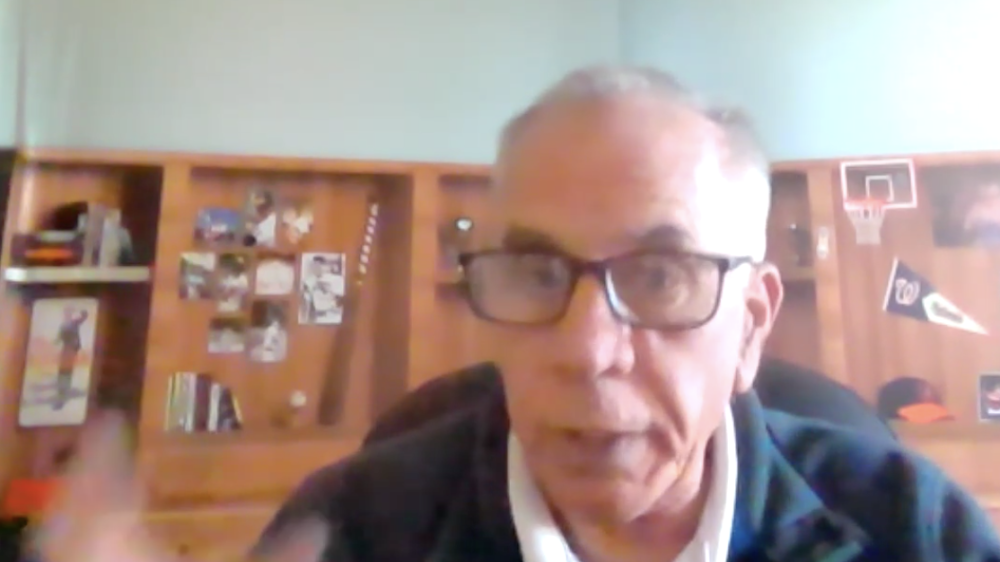


It’s been a while since we heard from legendary NFL insider Peter King so we gave him a call and found out that he’s been hard at work on a new book about the 40 years of his trail of covering the biggest stories in the sport. Let him tell you how his “retirement” from the Monday Morning Quarterback grind is going. And a few Art Modell tales you might not know…
Peter King, a longtime NFL insider, discussed his new book on 40 years of covering football, set to release in October. The book features 40 stories, one for each year, revisiting significant moments like Reggie White’s decision to join the Packers in 1993 and the Browns’ relocation to Baltimore. King expressed concerns about the NFL’s embrace of gambling and the potential risks of adding an 18th game, citing player safety. He also praised the league’s international expansion, highlighting the enthusiasm for NFL games in countries like Germany. King enjoys a more sedate life post-retirement, focusing on personal interests and family.
- [ ] @Nestor Aparicio – Schedule and book a follow-up interview appearance to discuss topical NFL issues and current topics (arrange date/time and confirm guest availability).
- [ ] Publish the book covering 40 years of NFL stories with a release scheduled for October (finalize publication and release activities by that month).
Peter King’s Retirement and New Book Project
- Nestor Aparicio introduces Peter King, noting his retirement and current life in Brooklyn.
- Peter King explains his decision to retire after 40 years of covering the NFL, citing the demanding schedule and his desire for a more balanced life.
- Peter shares his new book project, which covers his 40 years of NFL coverage, each year represented by a significant story.
- He mentions his inspiration from Jeff Pearlman and the process of revisiting and re-reporting key moments in NFL history.
Peter King’s Book and Personal Life
- Peter King discusses the book’s release date in October and his enjoyment of the writing process.
- He shares his current lifestyle, including watching NFL games and other interests like traveling and attending the Olympics.
- Nestor Aparicio praises Peter’s rich life and diverse interests, comparing him to Dick Schaap.
- Peter reflects on his love for football and his newfound freedom from the pressures of weekly deadlines.
Peter King’s Writing Style and Interests
- Peter King talks about his continued interest in fantasy baseball and his recent experience attending a World Series game.
- He shares anecdotes about his travels and experiences, including meeting family members in Italy and watching MASH reruns.
- Nestor Aparicio expresses admiration for Peter’s writing and his ability to balance various interests.
- Peter emphasizes his love for football and his gratitude for his career, despite some issues with the current state of the NFL.
Peter King’s Book: Detailed Insights
- Peter King provides a detailed example of his book’s structure, focusing on the 1993 free agency of Reggie White.
- He describes his research process, including interviews with key figures and revisiting historical events.
- Peter highlights the significance of Reggie White’s decision to join the Green Bay Packers and the factors involved.
- He explains how the book aims to provide new insights and re-reported stories from his career.
Peter King’s Coverage of NFL History
- Nestor Aparicio recalls his first meeting with Peter King during the Baltimore Browns’ relocation to Baltimore.
- Peter King reflects on the impact of Art Modell’s decision to move the team and the subsequent chaos in Cleveland.
- He shares personal anecdotes about his interactions with Art Modell and the challenges faced by the team during that time.
- Peter discusses the early days of the Baltimore Ravens and the significant draft picks that shaped the team’s success.
Peter King’s Critique of NFL Practices
- Peter King expresses his disapproval of the NFL’s embrace of gambling and the potential risks it poses.
- He criticizes the league’s push for an 18th game, citing concerns about player safety and the impact on CTE.
- Peter argues that the NFL’s focus on revenue and expansion is at odds with its stated commitment to player well-being.
- He reflects on the changes in the media landscape and the challenges faced by journalists covering the NFL today.
Peter King’s Views on International Football
- Peter King supports the NFL’s efforts to expand internationally, citing the enthusiasm of fans in countries like Germany.
- He discusses the potential for the NFL to play games in far-flung locations like Australia and the benefits for the league.
- Peter acknowledges the concerns of players about long travel times but argues that the preseason schedule provides ample rest.
- He emphasizes the economic opportunities and the potential for the NFL to develop new markets through international games.
Peter King’s Final Thoughts and Future Plans
- Peter King shares his excitement about the book’s release and the opportunity to share his experiences and insights.
- He reflects on the changes in the NFL and the media over the past 40 years and the impact on his career.
- Nestor Aparicio praises Peter’s contributions to sports journalism and expresses his admiration for the book.
- Peter King looks forward to continuing his passion for writing and sharing his stories with readers.
SUMMARY KEYWORDS
Peter King, NFL book, 40 years, football stories, Reggie White, free agency, Baltimore Ravens, Art Modell, player safety, gambling concerns, international football, media changes, fantasy baseball, Red Sox, Monday Morning Quarterback.
SPEAKERS


 8
8


Nestor Aparicio, Speaker 1, Peter King
Nestor Aparicio 00:01
Welcome home. We are W, N, S T, am 1570 Towson, Baltimore. We are Baltimore positive. We’re getting the Maryland crab cake tour out on the road all month long. I’ll have brought to you by the Maryland lottery, in conjunction with our friends at G, B, MC and our newest sponsor at foreign and in Durham are sponsoring our sports stuff. Because, you know, I don’t stick to sports here all the time, but what I do, I like to have old friends on. He’s not really old, but he is a friend. He is somewhere in retirement in Brooklyn, and I don’t know exactly what he’s doing or even why he’s coming on with me. I called him because it’s spring training and I want to beat up the Red Sox a little bit. We welcome our defending champion of all things, coffee, beer and haku’s, all of which I miss. We welcome Peter King back on the man, the myth, the legend.
Speaker 1 00:49
Where are you? What are you doing? What happened to you?
Peter King 00:53
All right, I’ll give you a little rundown on Peter King. All right, so I retired two years ago this month, and for the first and I live in Brooklyn, and for the first about six months, I said, What am I going to do? I just knew Nestor that I didn’t want to do what I was doing. Okay? And I It wasn’t that I didn’t like what I was doing. I loved what I was doing. It’s just that I created this sort of monster that, you know, if you say, well, you only write once a week. But the problem with only writing once a week is that the vast majority of what you write occurs on Sunday, and if it’s going to be in people’s hands at 530 Monday morning Eastern Time, which was our goal, sometimes it was 4am Eastern but it’s it’s hard to basically do that job and be live a normal life, because then you’re sort of ruined until probably Wednesday morning. You know when you stay up all night. I just And at age whatever, I was, 66, years old at that time, I just said, I can’t do it anymore. Could I have done it if I had to? Yes, would I have enjoyed it absolutely? But, you know, there was about a six hour period every week where I hated, hated it, you know, and that started at about midnight, because, look, Nestor, I’m 68, years old. My wife and I were in bed by quarter to nine. That’s just, that’s just the way life is, and I really enjoy sleeping. And so anyway, so I decided, after that time I had a book age, and I hadn’t done a book in a long time, but I just decided that he, he had come up with some ideas. I just decided I was going to write a book about my 40 years covering the NFL. I finished it one week ago, and the book essentially is 40 little books, and it’s one for every year that I covered the NFL, I got this idea from Jeff Pearlman, who I used to work with at Si. And Jeff obviously has written a lot of books and is great and all that. And I just called him and I said, Let’s brainstorm. And he said, You ought to pick out one story that you love from every year you worked and just go in on that story. And I said, Wow, that’s really, really smart, and that’s exactly what I ended up doing. I went back and I went down to the Florida Keys and visited jimmy johnson and sort of re reported what happened in the Jimmy Jerry era. Went out to Palo Alto and spent some time with Steve Young, because one of the most memorable games I ever covered was his six touchdown Super Bowl against the chargers, you know. So I went and visited. A lot of people went and visited Peyton Manning about a couple of memorable things with him. So anyway, bottom line is, that’s what I did. The book will be out in October, and I really had fun doing it. So that’s kind of what I’ve been doing. And I I still love the game. I watch it probably not as much as I used to, but every Sunday at at one o’clock, I got Scott Hansen in red zone on and if there’s a really good game at 425 or that night or Monday, I watch it all. But mostly I kind. Live a pretty sedate life. We’re enjoying it. Went to the Olympics, took Anne King. We went to the figure skating and Anne is Italian, and we we went and we met some of her family members who she had never met before down near Pompeii. And anyway, those are the kind of things we’re doing, and life is good.
8Nestor Aparicio 05:25
You always had such a rich life, man like I always worried if I ever had you to my house, I wouldn’t have the right beer or good enough coffee. So it would have been like royalty for but for you to take this time in your life where you traveled all the time, and not just outside the country, where you did things that were interesting to you, that you shared with us, and met military members that you befriended and crazy cousins of Hall of Fame baseball players that you went to ball games and concerts with, and you, you, you were like Dick Schaap in that you collected people and experiences in so many ways. But like, what would interest you when it’s all over with? It wouldn’t be a football game, right? Like they threw me out three and a half years ago, and I went to 27 Super Bowls. Peter, sat there with you. I saw you before, after, during all of that. When I watch it on TV now, I don’t feel left out or disinclude. I feel very grateful for time I had, but I also feel like I don’t want to go backwards, and it doesn’t. Things weren’t as much fun as the pendulum swung toward the media, toward your old publication. It’s my old publication at the Baltimore Sun. Just times change and things change, but I always saw you as like you would be the happiest retired guy, because you had interests outside of just what football players thought in a lot of ways.
Peter King 06:47
I mean, I, you know, I’m a week on our fantasy baseball draft here, coming up in a week or so, and I don’t know anything. I mean, so I got to go back and decide, wait a minute. Should I, you know, I’ve got a high draft choice, and I want to take a picture, and I’m wondering, should I take Christopher Sanchez or Hunter Brown? I mean, you know, but
Nestor Aparicio 07:13
you watch baseball when you covered football, though,
Peter King 07:17
8out of the baseball is ever I, hey, look, I got my blue jays World Series sweatshirt, I look like Getty Lee, yeah, I went to Game Six in Toronto. That was one of those things that I was so enjoying the World Series, I said to Anne, I really want to go to one of these games in Toronto, and preferably Game Six, because we don’t know if there’s going to be a game seven. And so anyway, she said, Well, I don’t want to go, so I invited a friend of mine is a huge Dodger fan who lives in Nashville, Don Bon vida, who edited my column for 12 years. Great guy, great friend. So we just went to the World Series. And I hate to it sounds so kind of elitist, but I am in this stage of my life where if I feel like going to the World Series, I am going to find a way to go to the World Series. And, you know, Ian and I went to Italy and had so much fun. And so that’s kind of and I also enjoy, you know, watching mash reruns on Tuesday night in Brooklyn. So I I’m pretty good with where life is right now and and I’m really kind of excited about this book. I have no idea if anybody will read it, but I love doing it, and I love I’m going to be able to hold in my hands the fruit of 40 years of doing this, you know, so that you know, I’ll be able to go back and tell people, Hey, listen. You want to know why Reggie White really picked the Packers in 1993 here it is. Here’s 4000 words on it. That many. A lot of these words you’re not gonna know, because it’s new and it’s re reported. So anyway, all that, it’s, you know, I You’re right. I do have a lot of interest in life so, but I do, Nestor, I’m probably like you, man, I I still love football. I have some problems with football, but I love football, and I’m grateful to have had all the years I had in it.
Nestor Aparicio 09:36
Peter King is our guest. He’s got a book coming out that I can’t wait to hear more about. I’m gonna stay in that lane, just as much as anything to make it evergreen, because I am so fascinated by this writer’s right. I think if I die tomorrow, you could put writer on my tombstone and not be far off, not radio guy or carnival guy or nasty Nestor, just writer. I mean, that’s kind of what I’ve been my whole life, and I would stand behind. Find that for myself and very inspired by you. I’ve had John Eisenberg on this week. Some of my favorite people in the world were our writers. And I would say for you to stop on that and to go into this book thing and to find something that is your passion. Because I would say to you, why’d you write a book for crying? It’s a lot of work, Peter, you know that, right? So you knew all of that, and you dove into it. And I’m going to guess that it based on what you’ve told me. The theme might be there was something unexplored about what was done or said, some unwritten ending to some of these stories where even you didn’t know and wanted to go back and get closer to what the truth or what, how it turned out in the end, to some degree,
Peter King 10:48
that’s, that’s, that’s somewhat true. But I the best way to describe the book, I think, is just to tell you, Okay, let’s, let’s go into 1993 All right. Now, that’s 1000 years ago, and I get it, but this will give you an idea of what the book is about. In 1993 the NFL begat, or free agency, you know, started in the National Football League, and the first big free agent, probably the biggest free agent, honestly, of all time, along with Drew Brees, would be Reggie White. And Reggie White in 1993 went on a tour of the country. And I went on part of that tour, on an airplane with him and his agent, Jimmy Sexton, his wife, and another player, good friend of his, a guard named Harry Galbraith. So I was on the plane with him, and I visited a couple of spots with him, and I reported it, and I wrote a huge story for sports, illustrated on it. But what I ended up doing when I went back, now, whatever, 32 years later, I basically went back Reggie White, obviously has died, but I went and talked to all the people who were involved in the chase and Jimmy sex and I went back and talked to Ron wolf of the Packers, Mike Reinfeldt, the cab guy of the Packers, who was involved heavily in this, went back and talked to Carmen policy, because the 40 Niners were deeply involved here. And I basically laid out how in the world did Reggie White choose at the time? Just remember this, the Green Bay Packers stunk, and they were just coming off the first year of Brett Favre and Mike Holmgren. And Brett Favre was no great shakes at that time. After his first year in Green Bay, nobody knew that the Packers were going to be this great, great franchise. But you know that really was a momentous thing that happened in the NFL in 1993 and I go into here’s exactly why it happened. Here’s how he almost went to San Francisco, and really wanted to go to San Francisco, but why he didn’t. So that’s that’s kind of an example of how I did this book. And look Nestor, a lot of this stuff, I didn’t know what I was going to find, because I didn’t know how close Reggie White came to going to San Francisco in 1988 I did a story on Bill Walsh’s last stand. I didn’t know how mentally fried Bill Walsh was that year, and how they were on the brink of an absolute disaster in the middle of that season, which you’ll read all about. And my point is, I didn’t know a lot of the things that I ended up finding out some of the Jimmy Johnson Jerry Jones stuff I didn’t know, for instance, how the knowing a lot of the stuff about the New England Patriots and how they were born in the early years of this century. So, you know, in terms of the greatness. But so that’s really what I tried to do. I went into these stories with an open mind, and just really had a good time going back and delving deep into, diving deep into a lot of stories. I enjoyed
Nestor Aparicio 14:45
covering what was the first Super Bowl you covered,
8Peter King 14:49
Montana Marino in the 1984 season.
Nestor Aparicio 14:52
So 84 the book is 84 to 24 to 23 Okay, so the Colts had just left, and. My history with you, by the way, by the way, Peter King is our guest here on Baltimore. Positive you’re a guy I knew from television, and I knew your name, and I’d seen you on HBO. And in November of 1995 they called a press conference in parking lot D and I went down, and that was the day that Paris Glendenning held up the glass with the Browns logo on it, and you sat next to me, and it was the day I met you. Was that day in that parking lot, and I think I told you that day, I said, I think this is going to change my life pretty dramatically, because I certainly I felt the tectonic plate shift. I was 28 at the time, and old enough to know and had worked at the newspaper from 1984 until, I mean, all of the herb Belgrade, all of the trying to get, we had earthey’s vote, trying to get a franchise, trying to get a franchise. I mean, it is amazing. We’re 30 years now, back into the league. And how by a, you know, floss, we got the team sort of kind of lot of money, John Moog, art modell, circumstances and all that, but just the fact that Baltimore has a franchise. I wrote in my first book, I felt like it was a miracle that Baltimore got a team. I don’t think you thought the first 12 years you were covering the sport that Baltimore was going to be now a venerable franchise, right? I mean, literally,
Peter King 16:21
you know, I, my 1995 chapter is on art modell and the browns, and because that was, that was, you used the word tectonic. That was a giant. That was an earthquake in the NFL. It was an absolute earthquake. And art modell shocked the world. And looking back on it now, it is so incredibly interesting. And you realize that, you know still, I think when you look at everything involved in that story, there’s so much I remember vividly because I was at the game right after modell, you know, hadn’t made the announcement. He made the announcement the next day in that parking lot in Baltimore, but on that Sunday, when they played the Houston Oilers in Cleveland, I’m Nestor. I just have these vivid memories of these people who were wandering through the stands outside the Cleveland Browns locker room with blood in their eyes looking for art modell. Where’s modell? Give us modell. It’s like Give us Barabbas. You know? It was just an incredible scene. And then the next day in the parking lot in Baltimore, you know, I remember that extremely well, and I went, and I remember, after that press conference, I told modell I had interviewed the mayor of Cleveland, Mayor White, who art, art blames a lot of people to this day. Well, not to this day, but until he died, he blamed a lot of people, including the mayor, because the the people in Cleveland, you know, who are bitter at art modell. I understand why, but I’ll also say that, you know, they had opportunities on several occasions to really try to do something for art modell and the browns, and they didn’t do it. And the one that really frosted him was when they spent the money to get the Rock and Roll Hall of Fame instead of addressing his stadium concerns. But I remember I told him, art Mayor White has just come out and said that like a thief in the night, art modell has taken our team. And when I said that to him, I thought that the top of his head was going to come off. I thought he was going to implode or explode, whatever the right word would be, because, and you
Nestor Aparicio 19:11
8knew art at that point right, he wasn’t a stranger. Art had told
Peter King 19:15
me the previous week. I mean, I’m I’m not. I won’t sit here and say that I broke the story, but I’m one of the ones who wrote about it first and talked about it first. But anyway, I knew him extremely well, and I really liked him. I thought he was fun and colorful and all that look. I mean, art modell was terrible with a budget art modell, I remember vividly, and I write about this Dan Rooney interviewing him one time around that time where I was in Dan Rooney’s office at Three Rivers Stadium in Pittsburgh, and he had a garbage can in the room. And in his office, in this big office, and obviously Dan Rooney was, you know, the guy who ran this incredibly successful franchise. And Nestor, there was a garbage can in the room taking the stream of water coming through his ceiling. And, you know, not just dripping. There was like water coming in to his office, so and it was going to get fixed in a day or two, or maybe even in a couple of hours. But Dan Rooney, we talked about it, and I talked we were talking about Cleveland. He said, you know, basically, some of us know that we have to live within our means. And, you know, that’s the thing art. Just you go, the last fateful moment where he didn’t live within his means was signing Andre Ryzen and finding a bank in Cleveland after three of them turned him down after finding a bank in Cleveland who would loan him $5 million to give Andre Rison as a signing bonus, and that’s a classic example. Instead of just saying no to Bill Belichick and Mike Lombardi. I don’t have the money. We can’t afford this. I’ll find a way. We’ll do it. And so that’s a great thing to to tell your coach, we’re going to find a way to be able to sign Andre Ryzen, and we’ll get the money to do it. But obviously that was one of those things that turned into just another abject disaster, you know, because Andre risin wasn’t what Belichick and Lombardi said he was going to be a guy who was going to come and beat the Pittsburgh Steelers and all that. But be all that as it may. That’s a great example. I could talk about that for three weeks, you know.
Nestor Aparicio 22:04
And a year later the franchise is gone from Cleveland, right?
Peter King 22:07
Literally, well, not, not a year. I mean, just Yeah, I mean less than a year. Because obviously, remember, you know that franchise in late in the fall that year, when the news leaked that they were going to Baltimore, they were as good as gone. And that was, you know, with the last home game, it’s amazing. I think the police in Cleveland didn’t police the games the way that they had been doing for years and years. Did you know that at the last home game in Cleveland, fans bought, brought chainsaws to the game.
8Nestor Aparicio 22:50
I was at that game against the Bengals. I, you know, I remember I met Kevin Byrne that day like that was an insane exit that day.
Peter King 22:58
It’s, it’s an insane day where you know. And look, you know who was, you know, there’s two guys from that team who I talked to for the book, Lewis Riddick, who was a safety on that team, Carl banks, who was a linebacker. Then the stories that they told were unbelievable about modell and about the team and Nestor. There was a week during the season that year after it was announced that they were they were leaving, and it was such mayhem in Baltimore. I mean, Bill Belichick needed police to sit outside his home in in a suburb, right not far from the football facility, needed police to sit outside his home because they were afraid that people were going to might come and do some damage or attack his home. It was just the craziest, craziest time. But in the last thing, I don’t mean to just harp on this, but the last thing that I really remember about the lead up to going to Baltimore is, quite honestly, one of the last games they had big games when they were still sort of in contention. They were going to play the chargers, and Belichick decided, because of all the mayhem in Cleveland, I’m taking the team to San Diego for three days to practice, because we just can’t get any work done here. It’s so crazy. So after a game on Sunday, he told all the players, pack up. We’re going to San Diego, whatever on what Tuesday or Wednesday, whatever it was. And the players just realized, Oh, my God, I.
Peter King 25:00
Yeah. And so when they decided that, when Belichick decided we can’t get any work done, you know, and he told the players, we’re going to San Diego and practicing this week, you know, Louis Riddick told me, he said, It’s so bad in Cleveland that we have a game that really matters this week, and we can’t even practice in our in our own facility, because the distractions are through the roof. And so Belichick, you know, got out of town, but they lost to the chargers, and things were so bad at that point that the season was a lost cause and and then obviously it was, you know, what’s crazy. Modell didn’t fire bill until what about five weeks after the season?
Nestor Aparicio 25:52
8We believe Belichick was going to be the coach here for a while.
Peter King 25:54
Yeah, yeah. Because just remember, at that time when people started relocating to Baltimore. At that time, those people believed Scott Pioli still believed that they were that Belichick was going to be running the team Ozzie Newsome, because art fiddled around a lot and thought for a while that Belichick was going to coach the Baltimore whatever they were going to be called Baltimore browns or and then, you know, whatever, I think he fired them, if I’m not mistaken, Valentine’s Day. That’s correct, 96 Yeah, and, and so at that time, Nestor, you know, what was crazy about that at that time? You know, the the new team in Baltimore was in this facility that became their first facility up in was,
Nestor Aparicio 26:58
yeah, it was the old colts facility. That was the police center, yeah,
Peter King 27:01
yeah, the old colts facility. And what I was going to say is that there, you know, in the old days, facilities could be very small because there weren’t a lot of employees, but you start to put all the employees and coaches and and scouts and everything, and they’re trying to prepare for a draft. And you know, they have, they have people working all over this building. It’s the same building that players are working out in a weight room with flimsy sheet rock. It just, you know, the stories out of the early days of what became the Ravens. And then when Ozzy Newsome, when art modell told Ozzy, listen. And I’m fast forwarding here, listen, we got to take this great running back from Nebraska named Lawrence Phillips. I mean, it’s, we got to sell some tickets. You know, we got to, we got to get the excitement going. And Ozzie basically said to him, art, I mean, I love you. I love this franchise and all that, but we’ve got a we got a historic left tackle that we could take, and we got to take him Jonathan Ogden. And so art didn’t approve, but art did not stand in the way. Art settled. Didn’t didn’t order him to take he wanted him to take Lawrence Phillips, but he didn’t order him. And then late in the round, obviously, they take Ray Lewis. It’s one of the great first rounds of any team in NFL history. And it happened to be the first rat first draft round in the history of the Baltimore Ravens. And it turned out to produce two guys with bus and Canton.
8Nestor Aparicio 28:53
Got a name for this book yet Pete the game the game the game. Peter King, 40 years of covering the National Football League. All right, so you said something earlier, and I do listen to my own show. You said something like, I don’t like a lot of things the NFL is doing, or I don’t like some of the things the NFL is doing. Give me your PB. You’re allowed to be an old guy because you’re almost one, and you’re allowed to yell, get off my lawn, because you did that professionally for a long, long time. Gambling. Throwing gambling out, you know,
Peter King 29:25
really bothers me. Yeah, it really bothers me. Because for years, like in 2016 or 17, Roger Goodell talked about the evils of gambling and how bad it was. And Nestor, you know, never mind the fact that five years from now, mark my words, there will be a lot more people in this country and gamblers anonymous than there are in Alcoholics Anonymous, a lot more. And I got a story in my book about this guy. Who, I mean, look, lives are ruined. Alcohol ruins lives. I get it, but I just think gambling is going to be awful, and there will be, I don’t know when, I don’t know what will happen, but there’s going to be some upheaval about a player or coach or official or somebody who’s going to get caught, you know, trying to influence the outcome of a game.
Nestor Aparicio 30:28
Well, you got a closer in Cleveland, right in baseball, right off the bat, we know. I mean, Ohtani, who knows what the hell was going on there?
Peter King 30:35
8Yeah, nobody knows. But you know. So, okay, I don’t like gambling. And there’s one other thing I really don’t like, and this is the NFL talks about player safety all the time, oh, we got to make it safe for the players. And then they say, oh, yeah, in 21 we added a 17th game that 6% more snaps that a starting player would play in the course of a season 6% more time that you can bang heads against somebody else. Now they want an 18th game. Okay? And history shows that what the NFL wants, the NFL gets, they’ll get an 18th game. And what really bothers me about this is, everybody is saying, okay, an 18th game. That’s great. Oh my God. Look at the TV packages. Look at how much money we’re going to make. I just will ask this one question, would Paul Tagliabue have done this? I don’t think so. Would he have pushed for more games, knowing about the scourge that is CTE among former players. Would Pete Rozelle have pushed, pushed for additional games, knowing the damage that can be and is being done to players? I doubt it. But you know Roger Goodell and the owners, I think the thing that bothers me the most is, you know, Roger Goodell was on The Today Show, I don’t know, a year or so ago, and he made the point that, hey, listen, this is what our fans want. They want more football. They don’t want preseason games. They want more real football. And well, of course they do. But you know, Nestor, I’d like to eat chocolate chip ice cream at every meal. Is that the best thing for me? Probably not. And you know, at some point you have to just say, Listen, this is not good for the human body. It’s not good for the brain to be throwing yourself around 125 more times in the course of a year, which is what you’d be doing, 19 or 2020, compared to if they get an 18th game per regular season game. And for anybody who would say, Well, wait a second, they’re cutting the preseason games. Nobody plays in the preseason. Most starters don’t play at all in the preseason. Matthew Stafford has not played a preseason snap for five years. So you know, don’t go telling me. Don’t go telling me that we’re, we’re concerned so much about player safety, and then add an 18th game. It’s, it’s, it’s faulty logic, and it shows, in my opinion, whatever it is you say you don’t really care about the players, Peter,
Nestor Aparicio 33:32
you’re the first one in the Monday morning quarterback. And I read it every week, like everybody else, but the week that you sent off the alarm bells. And you can go back and find it back in the late aughts, whenever it was that the NFL Network came online, and teams discovered their own websites, and teams discovered what Steve sable discovered, and his father before that, is people like storytelling, and that they could then control the story being told and all the bitching and complaining you just did about CTE, and if you’re writing about it all the time, and they would take your press credential away or push you out. They were going to push all of us out anyway. The players were trying to have us thrown out two years ago. I’ve been thrown out for four years now. I don’t know when a young person comes to me and says they want to make a living and be Peter King or be Luke, or be me, or be do, just cover sports, be Jamison Ensley, be whatever it is. I don’t know where the future of any of this is when the Washington Post doesn’t have a section, there is no more Sports Illustrated. There effectively is no more Baltimore Sun here of any kind, and the league has the message in the way that two decades ago, you were very concerned the day the NFL Network came online, that all of us were on borrowed time.
Peter King 34:39
Well, you know that is, that is a I didn’t write very much at all about the media and what has happened to the NFL and in to real journalism, the fact that you know. Know, 25 years ago, when I would go on my training camp tour, there would be 50 national writers in the United States. The Chicago Tribune would have a guy or woman going across country, going all the training camps, writing about different teams. Everybody would the New York Daily News The Boston global but that is that’s different, obviously, but I think one of the reasons I didn’t write very much about that is because there are so many people who cover the game now, so much more coverage of the game per se, and yes, is it different? It is one of the things that you’ll get from this book is, I think you’ll be, you’ll be shocked at, I mean, shoot, I I covered the Bengals. That was my first team, 1984 the Bengals drafted two players from the University of Maryland on day one, the only day of the draft there was it was all done in one day. They drafted two players in the first two rounds, Pete Koch, defensive end and bloomer Esaias and quarterback. I drove my two door Volkswagen Rabbit hatchback to Greater Cincinnati airport and picked them up at the airport and drove them downtown to downtown Cincinnati and dropped them at the Bengals offices. I mean, it’s a different world. Mel Kuiper, that was his first draft. And he said, Do you know how much ESPN paid me that first year I covered, you know, I did the draft? I said, No. He said, For the year ESPN paid me $400 I mean, we I, I mean, Nestor, it was the time when wooly mammoths were on the earth. It just is a different, totally different world. So there’s a lot that’s different about it. Sometimes I think that people out there don’t really care, and that’s one of the reasons why I didn’t get into it all that much. I got into a lot of stuff about Fox changing television. I wrote some about streaming. The problem is, you know, my last year 2023 we’re on the verge of a lot of different things with streaming now. But it’s like on the verge things are going to change. They could change a lot in eight months. So by the time people get the book in their hands, it could be really different. So I didn’t get into a lot of that, but you’re absolutely right. The world is is 180 degrees different than it was even 25 years ago, as far as the media goes,
Nestor Aparicio 38:03
Well, you never worked for the league, but you work for companies that were controlled by the League, for sure, and the independent part of 3040, years from now, when whoever’s 27 that’s covering the league right now, that could cover the League for the next 30 years to have the kind of vision to vote on Hall of Fames and to cover it in that way. I think a lot of that’s been taken out of it, because guys like you could get everybody on the phone, even though you were a national writer, but just relationships are Look, when the team came here 30 years ago, was about the community, the community, the community. Now we’re going to give a home game away every year to Mexico City or Beijing or Sydney, or wherever they’re going to play it, they’ve jumped the shark on that part of the revenue, part $300 million salary cap right now, what would art modell think, right? What would Jack can cook think, right?
8Peter King 38:54
But I do think, you know, one of the things i i wrote some about this. I really wanted to write more about it, but at the end of the day, you got to make choices. I’m a big fan of the NFL going international. And I’ll tell you why I’m a big fan that because, you know, with every team now, if you are going to have a 17 game schedule, which I don’t like, but if you are going to have it, that means that every other year you have nine home games, which means that every other year you can play a game overseas and still have the same Number of home games that you always had eight But the biggest reason why I’m a fan of international football is I went to two games and I saw not the it’s not the same as a playoff game, let’s say in green. A or Kansas City or whatever. But Nestor, you know, I think some people who are against sort of the globalization of football, if you actually went to one of these games, and you saw the fervor that I saw two consecutive years in Germany, I saw the Patriots and Seahawks, I’m sorry, the bucks and the Seahawks with Brady playing against Seattle. And then I saw Patrick mahomes in Kansas City play against Miami. The following year, you would see that there are people in who live in these countries and their favorite sport is the NFL.
Nestor Aparicio 40:48
The man who saved my wife’s life 12 years ago was a football fan. He thought he was a Steelers fan. I had to correct that, but, but I couldn’t believe that a 19 year old kid in Germany would love the NFL. He’s now 31 or 32 year old manager who loves the FL I like and I went to London. I agree with you. I think it’s a great thing, but at what expense to my franchise, in my community and being here, versus what was promised and What now, 30 years later, has evolved, and it’s evolved into Lamar making $75 million right?
Peter King 41:18
Literally, but I do think that the other part of international football, I thought for a while there would be a division overseas, you know, there would be, you know, however they would do it, whether they would expand to 40 teams, and I don’t think they’re ever going to expand, honestly, because owners don’t want to cut the pie into four more pieces. But it’s, it’s one of those things that people, if you want to make more money, okay, as as a league and the NFL has an insatiable avariciousness. I just it, just no amount of money is enough for the NFL. I just that’s another thing that bothers me about the league. But you can make a lot of money internationally because people love the game so much they want to be part of it, and even if it’s not to have their own team if they could have a couple of games every year. And I think at some point there’ll be two games a year in Germany, like there are now, whatever, three or four in in London. And I, you know, the last thing I’ll say about this, people are sort of criticizing the idea of playing in Australia, it’s so far away for the players. And I’m sure the players are ticked off that they have to get on a plane for 15 hours. But let me just make this point. The preseason now is comedy, you know, because none of the games matter and all that stuff. And so in essence, what’s going to happen is that they will play a game in Australia that will air in the United States on a Wednesday evening. Okay? And the players will get home to San Francisco and Los Angeles by about noon, Friday Pacific Time, and they’ll have the rest of Friday, all of Saturday, all of Sunday, all of Monday off, and then they’ll start preparing for their next game, and, you know, maybe all of Tuesday off as well. But, but this is not the tremendous in my opinion. Anyway, it’s not a tremendous hardship on the players at all. And if I were teams, I would want to develop these markets in far flung, far flung places. I think it’s good for business, and I think players are going to find it’s good for them. I think that, you know, puka nakua. I mean, he’s going to go play a game in Australia. He’s going to be a hero. It so. So all I’m saying is that I think there’s a lot of good things about international football.
Nestor Aparicio 44:16
8I think you and I should get together in the pit to see Bruce Springsteen in the E Street Band, bring America back together again. Peter King is here. He is still rising with his new book that’s coming out in October. I love you, man, I don’t I could talk baseball. I could talk Lamar. I thought all this stuff with you. You’ve been very generous. I wanted to keep the topic on the book and your stories, because I think it’s important. And I’ll have you on later, and we’ll talk about topicality. All right,
Peter King 44:40
okay, sounds great. Nestor, good to be on with you. Death to the
Nestor Aparicio 44:44
Red Sox. All right, there. I got some cheap shot in there. Gave me a kick and a nuts on the way out. Peter King, the man, the myth, the legend, the Monday morning quarterback, is the author coming to you on Baltimore positive. Stay with us.