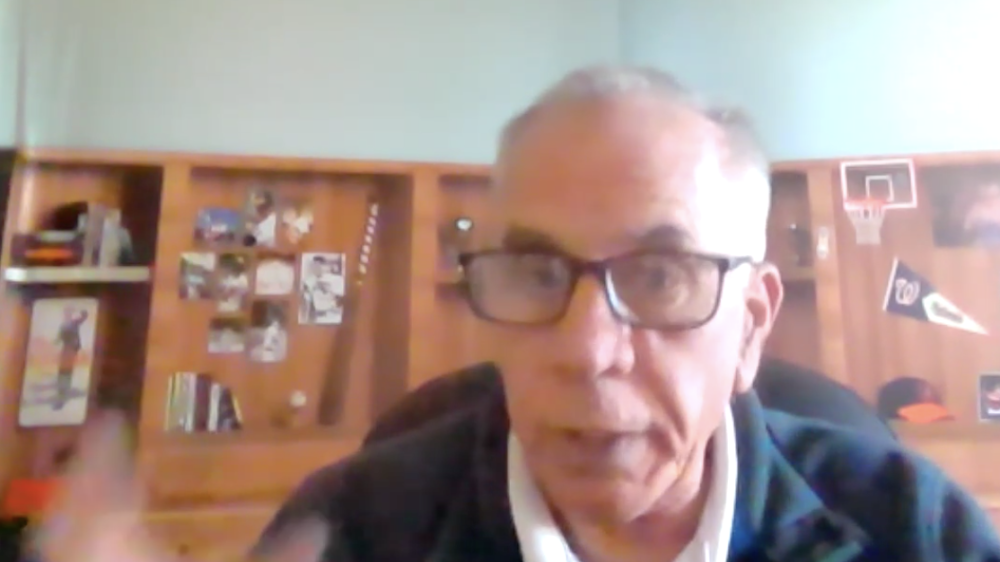


Loyola history professor Matthew Mulcahy educates Nestor about the annual Humanities Symposium featuring Pulitzer Prize winning author David Blight coming to Maguire Hall on March 12th. The theme of “Life, Liberty, and the Unfinished Work of Democracy” brings plenty of critical thinking and history into full focus in modern America. Get ready to learn…
Nestor Aparicio discusses upcoming events and the importance of education with Loyola history professor Matthew Mulcahy. They highlight the Humanities Symposium at Loyola, featuring Pulitzer Prize-winning author David Blight, who will address the theme of “Life, Liberty, and the Unfinished Work of Democracy.” Mulcahy emphasizes the significance of understanding historical context and the challenges of teaching in the modern era, particularly amidst political turmoil and technological advancements. They also touch on the importance of critical thinking and the role of education in fostering a deeper understanding of American history and contemporary issues.
- [ ] @Nestor Aparicio – Sign up for HS 423 (Disasters in American History) by registering with the professor or course enrollment process
- [ ] Ensure the Humanities Symposium webpage includes the registration link and PDFs of the Declaration of Independence and Frederick Douglass’s text so attendees can register and read materials in advance of the March 12 event
- [ ] Allow Nestor Aparicio to sit in on HS 423 (Disasters in American History) when the course is offered
- [ ] Decide whether to offer HS 423 (Disasters in American History) next fall or next spring and confirm the term of offering
Loyola Humanities Symposium Overview
- Nestor Aparicio introduces the WNST 1570 Towson, Baltimore radio show, mentioning upcoming events including a show with Dan Rodricks and a discussion with Republican Councilman David Marks.
- Nestor highlights the Loyola Humanities Symposium, which brings in world-class authors to educate students.
- Nestor introduces Matthew Mulcahy, a professor of humanities and arts, and discusses the importance of educating young people in the humanities.
- Nestor expresses admiration for educators and mentions the upcoming keynote address by Pulitzer Prize-winning author David Blight.
Challenges of Teaching in the Modern Era
- Nestor and Matthew Mulcahy discuss the challenges of teaching in the modern era, including competition with AI and the impact of digital life on students.
- Nestor mentions the political climate and the difficulty of teaching current events, especially with recent events like bombing Iraq and Iran.
- Matthew emphasizes the importance of understanding historical context and the challenges of navigating the opportunities and challenges presented by AI.
- Nestor and Matthew discuss the role of liberal arts education in preparing students for the complexities of the modern world.
Historical Context and Contemporary Relevance
- Matthew Mulcahy discusses the importance of understanding historical context and how it relates to contemporary issues.
- Nestor and Matthew talk about the significance of the Declaration of Independence and Frederick Douglass’s response to it.
- Matthew highlights the ongoing debate about American ideals and the challenges of living up to those ideals in the present day.
- Nestor and Matthew discuss the importance of teaching students about the foundational tenets of democracy and the power of their vote.
Upcoming Humanities Symposium Event
- Nestor announces the upcoming Humanities Symposium at Loyola University featuring Pulitzer Prize-winning author David Blight.
- The event will focus on the theme of “Life, Liberty, and the Unfinished Work of Democracy” and will include a keynote address by David Blight.
- Nestor and Matthew discuss the importance of the event and encourage the public to attend and engage with the discussion.
- Nestor expresses his admiration for the work of educators and the importance of events like the Humanities Symposium in promoting education and critical thinking.
Historical Perspectives and Contemporary Issues
- Nestor and Matthew discuss the historical context of American involvement in the Middle East and the importance of understanding US actions over time.
- Matthew emphasizes the need for a complex understanding of history and the challenges of providing a balanced narrative.
- Nestor and Matthew discuss the importance of teaching students about the complexity of American history and the need for a nuanced understanding of current events.
- Nestor expresses his concern about the misinterpretation of history and the impact of political ideologies on public understanding.
The Role of Education in Democracy
- Nestor and Matthew discuss the role of education in promoting democracy and critical thinking.
- Nestor emphasizes the importance of teaching students about the foundational principles of democracy and the power of their vote.
- Matthew highlights the importance of understanding historical context and the challenges of navigating the complexities of the modern world.
- Nestor and Matthew discuss the importance of events like the Humanities Symposium in promoting education and critical thinking.
Personal Reflections and Historical Insights
- Nestor and Matthew share personal reflections on their experiences and the importance of historical understanding.
- Nestor discusses his experiences traveling to Hawaii and learning about the history of US involvement in the Caribbean.
- Matthew emphasizes the importance of understanding the complexity of American history and the need for a balanced narrative.
- Nestor and Matthew discuss the importance of teaching students about the foundational principles of democracy and the challenges of living up to those ideals.
The Importance of Historical Perspective
- Nestor and Matthew discuss the importance of historical perspective in understanding contemporary issues.
- Matthew emphasizes the need for a complex understanding of history and the challenges of providing a balanced narrative.
- Nestor and Matthew discuss the importance of teaching students about the foundational principles of democracy and the challenges of living up to those ideals.
- Nestor expresses his admiration for the work of educators and the importance of events like the Humanities Symposium in promoting education and critical thinking.
Preparing for the Humanities Symposium Event
- Nestor and Matthew discuss the preparations for the upcoming Humanities Symposium event.
- Nestor encourages the public to attend the event and engage with the discussion.
- Matthew highlights the importance of reading the Declaration of Independence and Frederick Douglass’s response in advance of the event.
- Nestor and Matthew discuss the significance of the event and the importance of promoting education and critical thinking.
Final Thoughts and Encouragement
- Nestor and Matthew discuss the importance of promoting education and critical thinking.
- Nestor encourages the public to attend the Humanities Symposium event and engage with the discussion.
- Matthew highlights the importance of understanding historical context and the challenges of providing a balanced narrative.
- Nestor and Matthew discuss the significance of the event and the importance of promoting education and critical thinking.
SUMMARY KEYWORDS
Humanities Symposium, David Blight, Loyola University, Pulitzer Prize, American history, Frederick Douglass, Declaration of Independence, Civil War, racial justice, educational challenges, AI impact, historical context, contemporary America, political climate, critical thinking.


 8
8
SPEAKERS
Nestor Aparicio, Matthew Mulcahy
Nestor Aparicio 00:01
Welcome home. We are W, N, S, T, am 1570 Towson, Baltimore. We are Baltimore. Positive, positively, yeah, the Maryland crab cake a tour out on the road all week long. We got three for three. On Wednesday, we’ll be at Gertrude at the BMA, welcoming the emergence of my friend Dan Rodricks in his 1966 show, which he has promised me will say Luis Aparicio at some point during the performance, which I’m looking forward to. Friday, we’re going to be at Costas and Dundalk. I’ll be some crab stalking baseball. Luke and Allen are joining me over there, as well as Robbie Leonard. We will talk about democracy and Democrats and all sorts of things. And then on Tuesday, we’ll be at missoney’s in Perry Hall, and we moved to the right side of the table. At that point, I will have Republican Councilman David Marks joining me out in Perry Hall with Greg Masoni, who is the Republican chief of staff to Bob Ehrlich many years ago as well. So we’re gonna get on all sides of the political scope here. No one has any doubt as to which side I’m on which really makes me happy every year that I get to promote this event. Everybody knows that I’m cop and state sponsored. So I do a lot of COP and state but anytime the Loyola people call me to come over and lecture or otherwise, every single year, they do this really cool thing. It’s a humanity symposium, and they bring in World Class authors to give a keynote address and talk to the students and educate further. And I love educators. He is a doctor, although he’s not going to play one on the radio, on the podcast right now, and I’m going to call him professor or Prof. I think they say the kids. And I don’t know how you all compete with AI and all the cheating I would be doing as a writer myself in the modern era. So my hat goes off to anybody out there teaching young people, especially the important things. Matthew Mulcahy is making his debut here, but it’s not my debut for this symposium. David Blight will be the speaker this year, Yale Amherst Harvard, imagine those liberal arts being taught the liberal arts in places like that. But he’s right down here in in the village where I’m going to be having lunch later on this week at Loyola, we welcome Matthew Mulcahy, Professor of all things humanities and arts and history. And you know, I want to sign up for your HS, 423, I know that’s a senior project, disasters in American history special topic class. I think I’m in the right place professor to learn. What do you think
Matthew Mulcahy 02:27
you’ve done your research? You’ve done your homework already. You already know the classes. So points to you already? Yeah, you can. You can. You’re welcome to sit in. I might be offering it next fall or next spring. So you’re welcome to sit in
Nestor Aparicio 02:39
8whatever you want me to do except lecture in that one. I don’t think I’m ready for that one, but the peoples of early America, revolutionary America, you’ve written about climate change, and David Blight is coming in and looking at the work that he’s done on race and the Civil War and Frederick Douglass and prizes and authorships and award winning books and all of that. We’re a really weird time in America, and I would have said that before we bombed Iraq when I booked you or Iran, before I booked you last week. I don’t even know how you educate young people at this point, when it feels like we’re watching two different movies about how current America is going to enact its own thing and then write its own history. In the aftermath of all of this,
Matthew Mulcahy 03:22
it is a challenging time. There’s no doubt about that. And events are you know, as a historian, we try to make sure that people are aware of historical context and understand a little bit about how we got to where we are today, but that doesn’t necessarily tell us where we’re going tomorrow, necessarily. And it’s disconcerting and disorienting world at the moment, no doubt about it.
Nestor Aparicio 03:42
Well, I had quite seen fume on last week, and Johnny, I talked to all of them. And, you know, I go back to it was Conjunction Junction, and it was school house,
03:51
School House Rock, School House Rock, sure.
8Nestor Aparicio 03:53
And it was checks and balances. Checks and balances that’ll happen. Prof, I mean, what’s going on. I don’t even know how we teach. Well, if you’re just lawless and you bomb Iran at like, two in the morning on a Friday night, we can’t even convene Congress until Monday, and by then, oh, we’re just in a war. We just have to go fight.
Matthew Mulcahy 04:14
Well, there’s, there’s that bit about, you know, I’m just a bill sitting here on Capitol Hill as well, and questions about congressional authorization and others that are kind of circulating out there as well. To your point,
Nestor Aparicio 04:26
you teach or preach at this point. No, teach me, teach my audience, and then we’ll get into this incredible event you have coming with Dr blight, but and what you’re trying to do on a university in providing the perspective of history and the reality of contemporary America and what a 19 year old would know who was 12 during covid and has lived a far different digital life. I already joked about AI, but. But you’re old enough to be old enough to have taught in different eras and different digital eras. We’re in a whole different world right now where the President United States has his own truth network. That’s a bunch of lies where, like, money’s floating around and democracy’s being purchased and people are being lied to actively. And last week I’m the, I’m the captain of peace. This week, I’m the king of war. And we have the department. I don’t even know how, because it’s moving at a pace that I don’t recognize. And I’m 57
Matthew Mulcahy 05:32
8well, you’re you’re me too. So, well, 58 just turned 58 so we’re the same generation there. But you know, to your point about AI, there are huge challenges in terms of teaching this generation at the moment, and I don’t think we are. We’re not through it enough. We are still navigating the opportunities that it might present, but also the real challenges, particularly to a liberal arts education and in terms of the political world. Again, I’m a lowly historian, so I deal with the past, but of course, we kind of try to keep our eye on the present a little bit and but I think it’s important for students to try to get an understanding of what what had been here before, and how we got to where we are again. Where we go in the future is a different matter. But I think, you know, to the event that we’re talking about, we’re having students read the Declaration of Independence and Frederick. It’s the, obviously, the 250th anniversary of the of the Declaration of Independence this year, and then we’re pairing it with Frederick Douglass’s response, in part, because, you know, the debate about what America is, what our ideals are, how well we live up to them have been here since the day we declared independence from Great Britain, and exactly what we have meant by all men being created equal and endowed by their creator with certain inalienable rights, among which are life, liberty and the pursuit of happiness. Right the moment those words were printed, people have been debating, who’s included? What does it mean the fact that some people may not be included. Women have asked, were we included? And that was a major issue in the 19th century. And then, of course, we’re still continuing to debate, are we living up to those ideals right now in this day and age with our current actions here domestically? But there’s also a question of how the United States is acting in the world as well, and to the extent to which we’re promoting liberty and equality and happiness and safety, an open question, I think, well,
Nestor Aparicio 07:21
the big event is on Thursday, March, the 12th Pulitzer Prize winning historian David Blight is going to deliver a keynote address right over Loyola. The humanities symposium happens every year at McGuire Hall. It’s free. The title of the event. And I do love this, because you’ve already started quoting from things that I learned with Mr. Schley in seventh grade, Miss Simkins in eighth grade, and it’s crazy to me, you’re mister Metzger. After that, that you look like mister Metzger to me, because you resemble him a little bit. He was my teacher, and you and I were in middle school at the same time, learning about Jimmy Carter, learning about Vietnam, trying to figure out Reaganomics, trying to figure out, you know, gas prices and and Iran and the Ayatollah at that point. So 12 years old man, we’re contemporaries in that way. And you went often on the deep end of history. I did the history of sports in Baltimore, you know. But I have great admiration for anyone teaching this work in history, because I think, as it speaks to right now, in my world and in my vast world of sports fans, and doing this for 35 years, I am just astonished at how many people would absolutely fail seventh grade social studies right now. And have you know, you either learned it wrong, interpreted it wrong, they’re watching Fox News and thinking a different way that they just don’t understand life, liberty and the pursuit of happiness.
Matthew Mulcahy 08:47
Well, you know, you know, I was gonna say you and I also, among other things, we lived through the Bicentennial, right? You know, we were kids when the Bicentennial was happening, and here we are quarters. Did you collect the quarters? Yeah, absolutely, right. Absolutely. I mean, and you know, you think about how that how that commemoration and celebration went, and the different world we’re in right now with a very politicized America 250 movement, I think, in terms of what stories get told and what stories are no longer allowed to be told.
Nestor Aparicio 09:12
You think having cage fighting at the at the White House things, right? Yeah. But I was gonna say, you know,
8Matthew Mulcahy 09:17
you’re talking about the life, living pursuit of happiness. I think one of the really important things for people to remember, and I hope they’ll, you know, and I hope they’ll, you know, I hope they’ll take an opportunity to read or reread, hopefully reread, but if they haven’t read the entire Declaration of Independence, because there’s a lot more to it than just the kind of preamble, which we all know about life and liberty and it, you know, there’s a whole it’s a history lesson unto itself. There’s a whole list of grievances the colonists had about George the Third. And when you start to look through them, you come to recognize pretty quickly that the American Revolution was about a lot more than just taxes. There were a lot of other issues that motivated people to kind of declare independence. And I think one of the reasons this is interesting is that you. A federal judge in Texas recently cited some of the grievances in the Declaration of Independence. In his ruling that freed an asylum seeker and his five year old son from custody by ice. They had been arrested by ice, and in the ruling freeing them, he actually cited some of the grievances that colonists had listed against George the Third openly wondering whether we’re starting to see an echo of that from our own government. And I think that was here we are. The declaration, not just the grand principles, but the document itself. Is something that, you know, people may want to, we want to dig into a little bit, and I hope they will. And then, of course, there’s Frederick Douglass’s response to it in the 1850s highlighting some of the hypocrisy of American liberty in the context of the of the 19th century. So a lot of meaty things to talk about here well,
Nestor Aparicio 10:41
and we’re gonna do that. My appreciation to Matthew Mulcahy as well as Karen sagle for putting this together. We do it every year. The humanity, humanity symposium at Loyola University happens on Thursday, March 12. It’s at 630 to McGuire Hall, gonna bring in David Blight, author of Frederick Douglass, profit of freedom as well. So life, liberty and the unfinished work of democracy is the theme of the event next week, and really, the 250th anniversary of declaration of independence of Frederick Douglass’s what to the slave is the fourth of July. This is going to be a heck of a night. And certainly, there’s never a bad time to be talking about history and current events. But as we see the breakup of dei and I’m a Venezuelan descent, it’s been an interesting 60 days for me, Doc, so I would just say for me, I’m trying to rework all of this. And your challenge to me as a professor, and I do, like when I didn’t just sit back and let you, you know, give me a, you know, seventh or eighth grade level. I think reading of what people need to know, at least the basics and the foundation of our democracy and branches of government and their the power of their vote and the power to suppress their vote. All of this should be front and center, and I encourage more people to learn more things. And the good news is it’s all sitting out there for free on the internet. You don’t need to go to the library anymore to get this, but there’s so much to support this, and there’s people like you teaching it, and then events like this, and then people like a Pulitzer Prize winning historian to come in and say, this is serious this is not this is serious business. What we’re dealing with here, because we’re talking about the foundational tenants for which this, this democracy, this union, that this thing has worked for 250, years, not for all
Nestor Aparicio 12:37
people, but yeah, but an ongoing question, it’s
Nestor Aparicio 12:42
8been going better in my lifetime than I thought it was. Until recently. No offense. I call him Shitler, no offense, but that since this guy showed up, but I am blown away at the following of the ideology that really is born of ignorance, of learning all of the Schoolhouse Rock principles. Because when I talk to people, they have a very, very twisted version of a lot of history, including Christopher Columbus
Matthew Mulcahy 13:14
in some cases. Well, let me Yeah, absolutely. And let me just tell you know your listeners, it would be great. The event is free and open to the public on March 12, at 630 we do ask that you register, just so we have some sense of you know how big the crowd is going to be. And if you just go to www loyola.edu backslash symposium, you’ll be taken to the web page with information, and you can just click there and register. It’s okay to show up if you don’t register, but it’s helpful for us, if you do but the other reason to maybe go to the website is you will find there a PDF of both the Declaration of Independence and Frederick Douglass’s text. So if you’re interested, you can have a little homework and read both in advance of the Blight lecture. And he’s really one of the preeminent historians working today, as you noted, and a very engaging speaker. I think it’s going to be a great event. And hopefully a really thought provoking one as well.
Nestor Aparicio 14:05
All right, so Professor, if you’re going to give me some homework on my American Journey here, what, what? What concerns you the most, let’s have a beer, a cup of coffee or an iced tea together, or some what, when students walk into your building on Monday and we’re bombing Iran and they weren’t on Friday, and you’re the history guy, and I don’t know that that that it is a bastion of liberal people. I I would think do you probably have Trump supporters. You have people on all ends of everything on your campus. But when you talk to folks about these things. If I ran into you at a bar, we were just having a beer and I found that you were I would be talking your ear off about what you know that I don’t know that I should know that I should be teaching people in my own space, because that’s what I’ve been trying to do in my grown up experiment here is to not stick to sports. You.
Matthew Mulcahy 15:00
Yeah. I mean, I think it’s, you know, I think, I mean, there’s there. The world is a complex place at the moment, and I am no expert on the Middle East or Middle Eastern history and politics. And in a way, I think that’s place to start, right there, understanding US involvement in the middle middle east over time, understanding the peoples and cultures the Middle East, the diversity of peoples and cultures and religions in the Middle East, and that’s something that some of my colleagues can do here on campus. But I think from, you know, for as an American historian, and from an American history perspective, I think understanding our, you know, some appreciation of how we have acted in the world, maybe since George Washington’s neutrality address way back in the 1790s continuing across the 19th and 20th centuries. You know, I think students do need to have an appreciation of what the country has done at various times, and for good and often for ill in some of these adventures overseas. But we do. I mean, the first thing is to is to educate and to not just provide a one sided narrative, but try to get students to understand the complexity of the past. Because there’s, you know, there’s, it’s complicated, and I think too often, what they get, especially when they’re in kind of echo chambers, is a singular, simplified view of things, which is rarely a really way to understand anything at all in the world. So Well, if
8Nestor Aparicio 16:19
you don’t have the basis of that. How can you understand the United Nations? How can you under I mean, nobody in my generation ever understood Vietnam, not even my father in law, who went there, that if I actually sat over a dinner table 50 years later and say, Can you explain what you were thinking when you were in rice patties over there and the government sent you, and what it means to you 50 like, what what begat all of that in Afghanistan, which is more our generation of people, our age, that we’re more engaged with that, and that’s been a war that went on for 20 years, and that got played politics with Biden and Trump on the way out the door five years ago. But the notion that we just go in and bomb Venezuela and steal the leader and imprison him in our country, the notion that we just bang on people’s doors and enter them and pull them out in the middle of the night by their hair, with people with masks with no identification, and put them in unmarked wagons. And the fact that we say things to Canada like you’re the 51st state, and we throw toilet paper to the Puerto Rican people after after a natural disaster, it just that we take Russia’s side in an aggressive war against the Ukrainian people, that we would unilaterally just bomb Iran with no congressional support. I mean, it just goes on and on and on and on and on. To try to explain this to me is hard enough living through it and having read this and feel like I have a thumbnail, I don’t think I do well in your class, but I could get a C at least at this point, if I read up a little bit, but, but I do feel like I am inundated with people around me that are so factually inaccurate, and you can’t tell them they’re wrong, because no one likes to be told they’re wrong, but it’s more like what you’re telling us. Go back and read this and don’t interpret it. It’s like the Federalist
Matthew Mulcahy 17:59
Papers well and, I mean, yeah, you go, I mean, that’s my era. But you know, if you’re talking about Venezuela and that, you have some connections there. I mean, the history of US involvement in the Caribbean is a long one. You know, we’ve been invading countries in the Caribbean for a long time. This is not a new development. In a sense, there’s a new context here, and the action seemed particularly egregious in this case. But again, this is not a new event in terms of American adventurism in the in the Caribbean region and occupying nations in the Caribbean region. So you think about places like Haiti, for example. You think about the history of Puerto Rico, you know, you kind of understand a different side of the US that often is not necessarily front and center in a lot of history books. But when you start digging around, even in, even in David blight’s history book, you’ll find some of this stuff. So you know
Nestor Aparicio 18:45
what, Prof, I went to Hawaii for the first time my life in 2019 and I went back again two years ago because we loved it so much, and a good time Maui and, you know, Snowball’s doing all that. A couple months ago, I did, like, a little bit of a more Bourdain kind of deeper dive into, like, how Hawaii got there and got here, and how we and it’s, you know, we’re in Louisiana Purchase, we did bad things to the Native Americans we, you know, like the Mexico like, let’s go on and on and on. We’re not the good guys. We think we are. And we win in hockey sometimes, right? Really, right?
Matthew Mulcahy 19:18
8Well, it’s, we are an, you know, we are an imperial power in a variety of different ways, and those are some examples of it, as you just cited there.
Nestor Aparicio 19:25
So yeah, well, let’s pray for world peace and certainly a great event next week. And what can folks expect when they come to this event time, obviously, topic matter, and really a lot of Frederick Douglass in a year where, certainly locally, that has a lot of meaning, 250th and Washington being where it is. This is an important year in a lot of ways. And I know this is I bring one of you on from your staff every year. Sometimes actually get the author or get the visitor to come on to the program. This is a big. Thing and a big year. And you guys put a lot of thought into this event every year.
Matthew Mulcahy 20:04
Yeah, it’s, you know, it’s a terrific event. Again, we pick different texts every year. We have different themes. Last year was climate change and amantev Gosh was here this year, again, kind of a no brainer with the Declaration of Independence. But we also, again, wanted to, I mean, a there’s a Baltimore connection with Douglas, but we wanted to highlight some of the contradictions and challenges and complexity. This isn’t just a simple celebration, but also recognizing both the, you know, the celebration of America and also a recognition of some of our shortcomings. It’s interesting. Years and years and years ago, when I got out of college, I worked at the Smithsonian Museum of American History, and this was, you know, I was there a couple summers before I got the job, since 1988 89 and I forget the title of the exhibit, but it was in the celebration the Bicentennial the Constitution, right, 1987 and the exhibition at the Smithsonian mounted was about Japanese internment camps. And David McCullough was the narrator, and I can hear him in my head all the time as I was walking, you know, I still can hear it, because I walked by it every single morning. The recording that would play you walk by the Fonzie jacket too. That was in a different part of all the family. Yeah, that was, it was fun. That was fun to go down into the basement and see some of that stuff that’s not displayed. That was kind of fun.
Nestor Aparicio 21:15
But I don’t think that Trump should just do all of his broadcasts from Archie Bunker’s chair. That would be, I think that would, that would feel much more
8Matthew Mulcahy 21:23
he could. Yeah, he might. He might be able to commandeer that King of Queens
Nestor Aparicio 21:27
at that point, but not less. But McCullough, I digress, yeah.
Matthew Mulcahy 21:32
And you know, McCullough highlighting that, as we celebrate the Constitution, we want to recognize that there have been some times when we didn’t live up to its ideals. And I thought, What a fascinating way to celebrate the bicentennial of the Constitution. Again, noting all the, you know, the positive things, but highlighting there’s been some dark times too associated with it. And I thought that was interesting. And again, I think we were thinking about the complexity of the declaration and recognizing that, you know, what does it mean to say all men are created equal and life, liberty and happiness, when you have several million enslaved people by the 1850s in the United States, and what are those kind of contradictions? And that’s what we’re up to. I think you’ll expect a really good talk. It’ll be about, I don’t know, 40 minute talk or so. There’ll be time for question and answers after questions afterwards, some Q and A and again, I would encourage people to to read up on the text before they come. I think it’ll be and again, blight is a great speaker, and I think it’ll be a really engaging night. So all
Nestor Aparicio 22:23
8right, so 12th, it’s right over at Loyola. I would encourage everyone to use it as a march 28 pre gaming event, if you shall. Matthew McCauley, McCauley, hey, he’s I knew those ke I have a hard enough time with foreigner and Dermer, with my own sponsors and the comfort, guys, Mulcahy, my bad. Sorry about that. No problem. Like there was an actor, a Mulcahy actor as well, I think, and a baseball player at one point as well. Thanks for coming on and thanks for the work you do in trying to, like, you know, keep the light of liberty pursuit, and we’ll do all of that next Thursday. It’s all out. You can find it on our website at Baltimore positive as well. It is Thursday, March 12. It’s at 630 it’s at McGuire Hall, right at Loyola University. It is the humanity symposium. It is life, liberty, the pursuit of happiness, and the unfinished work of democracy. They’re bringing in David Blight, and we will be talking about the unfinished work of democracy. We’re going to be talking about the rest of our life, aren’t we? We are really right. We are. It’s going to be unfinished 250, years into this. All right, we will form a more perfect union at some point here, but we’re trying like hell. My thanks to everyone who makes the show better, including Karen and Matthew Mulcahy, who took a little bit of time, and he is a doctor, but I’m not allowed to call him one. So thank you, professor. And I am going to come over there and sign up for that 423, disasters in American history. What is the, what’s the highlight of that? What’s the, what’s disasters in American history?
Matthew Mulcahy 23:51
That’s there so many, you know, you read all sorts of interesting books. Read, you know, the Great Chicago Fire, cholera epidemics, yeah, lots of you know, all sorts of, all sorts of death and destruction, but and then you get to do your own research and write a paper about a lot of kids write about the Baltimore fire, but you get to research whatever you want.
Nestor Aparicio 24:11
So Professor, you know what I would do? I would, I would. I would do Hurricane Katrina, because I evacuated hours before it hit, I was in Louisiana covering the Ravens in a preseason game. So that’s just my little and how it’s affected us over the last 20 years. How about that?
Matthew Mulcahy 24:30
I absolutely, I just, I’ve been teaching this class for a long time, and I changed it up, but I just started allowing Hurricane Katrina because I think we now have enough distance to have a historical perspective on it. So you can do that. Welcome to I got lots of good books for you to read.
8Nestor Aparicio 24:43
I’m not going to tell you that I read the cliffs notes and I was that kind of student. You know? That’s why I’m not the professor. You know what I mean? That’s why I worry about AI. Doc, I’m telling you, man, these kids, we all worry about AI. Yeah, my math teacher was worried when we got the you and I the same age. Remember, we get the calculators on a watches. Remember that? Do. Sort of Yeah, blew up math in eighth grade. That’s all I’m saying. My thanks to everybody over at Loyola. Hope you guys have a great event, bringing in a Pulitzer Prize winning author and educating people. We’re big I’m bigly appreciation of education and checks and balances as well. Back for more. We’re Baltimore positive. Stay with us.