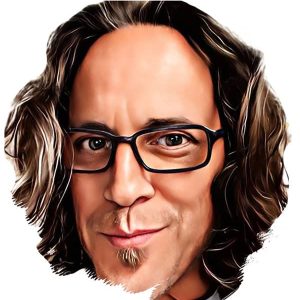


The modern path to making money and having a career is certainly different in the present “hustle” world of being a business instead of finding a job. Dr. Tamirra Lucas heads up the Center for Strategic Entrepreneurs at Coppin State University and gives Nestor an education in the strategy to a modern entrepreneurial education and degree at Coppin State. Learning about learning…
Nestor Aparicio discusses the importance of entrepreneurial education with Dr. Tamirra Lucas, Director of the Center for Strategic Entrepreneurship at Coppin State University. Both share their backgrounds as entrepreneurs from Baltimore, highlighting the lack of entrepreneurial education in their communities growing up. Dr. Lucas emphasizes the role of Coppin State in fostering entrepreneurship, particularly among students and community members. They discuss the evolving mindset of young entrepreneurs, the importance of intrapreneurship, and the challenges and opportunities in starting businesses. Dr. Lucas also mentions her co-working space, The Cube, which provides babysitting services and supports local entrepreneurs, especially women.
- [ ] @Nestor Aparicio – Collect community charity and story submissions via email (listeners to send stories to the show’s email) and follow up on received leads
- [ ] @Nestor Aparicio – Host the radio show’s scheduled community appearances next week at the listed locations (Fells, El Guapo Catonsville, Morgan/Koco’s, Pizza John’s Essex, and uptown) and record/present local charity stories
- [ ] @Nestor Aparicio – Teach a class at Coppin State (accept and coordinate details to present entrepreneurial/lived-experience session as discussed)
- [ ] Send a representative from the Cube co-working space to Koco’s next week and follow up with details about the visit and collaboration
Introduction and Community Engagement
- Nestor Aparicio introduces the show, mentioning upcoming events and community engagements.
- Nestor highlights his affiliation with Coppin State and his excitement for the upcoming events.
- Nestor mentions the Maryland lottery giveaway and thanks GBMC for keeping him healthy.
- Nestor expresses his eagerness to meet new people and encourages listeners to reach out with stories.
Entrepreneurial Journey and Background
- Nestor shares his background as an entrepreneur and business owner, mentioning his experiences with AI and social media.
- Dr. Tamirra Lucas introduces herself as the Director for the Center for Strategic Entrepreneurship at Coppin State.
- Dr. Lucas shares her personal story, growing up in West Baltimore and not being exposed to entrepreneurship as a concept.
- Both Nestor and Dr. Lucas discuss the lack of entrepreneurial education in their communities growing up.
Educating the Community on Entrepreneurship
- Dr. Lucas emphasizes the importance of educating students and the community about entrepreneurship.
- Dr. Lucas mentions her co-working space, The Cube, and its services, including babysitting.
- Nestor and Dr. Lucas discuss the impact of small businesses in their communities and the importance of supporting local entrepreneurs.
- Dr. Lucas highlights the unique position of Coppin State in West Baltimore and its role in providing entrepreneurial education.
Challenges and Opportunities in Entrepreneurship
- Nestor and Dr. Lucas discuss the challenges of starting a business and the importance of mindset.
- Dr. Lucas shares her experiences of working with students who have diverse backgrounds and interests.
- Nestor reflects on his own journey from journalism to entrepreneurship and the lack of business education in his early career.
- Dr. Lucas explains the concept of intrapreneurship and its importance in adding value within a company.
Modern Entrepreneurial Education
- Dr. Lucas discusses the modern approach to entrepreneurial education, focusing on skills, passion, and community problems.
- Nestor and Dr. Lucas talk about the differences in how younger generations approach entrepreneurship compared to their own experiences.
- Dr. Lucas emphasizes the importance of teaching students to think critically and understand the value of their skills.
- Nestor shares his thoughts on the changing job market and the importance of adaptability in entrepreneurship.
The Role of Education in Entrepreneurial Success
- Dr. Lucas highlights the role of education in providing a foundation for students’ future success.
- Nestor and Dr. Lucas discuss the impact of Coppin State on their personal and professional growth.
- Dr. Lucas shares her passion for helping students thrive and the satisfaction she gets from seeing their success.
- Nestor reflects on the importance of creating opportunities for young people and the positive impact of education on the community.
The Cube Co-Working Space
- Dr. Lucas provides more details about The Cube, its services, and its impact on the community.
- Nestor expresses his interest in visiting The Cube and learning more about its operations.
- Dr. Lucas explains how The Cube addresses the issue of childcare for working parents and entrepreneurs.
- Nestor and Dr. Lucas discuss the importance of supporting local businesses and the role of co-working spaces in fostering entrepreneurship.
Conclusion and Future Plans
- Nestor and Dr. Lucas discuss their future plans and upcoming events, including Nestor’s visit to The Cube.
- Dr. Lucas expresses her excitement about the potential for collaboration and community engagement.
- Nestor thanks Dr. Lucas for her insights and contributions to the conversation.
- The segment concludes with Nestor reiterating his commitment to supporting local businesses and entrepreneurs.
SUMMARY KEYWORDS
Entrepreneurial education, Coppin State, strategic entrepreneurship, community impact, small businesses, business ownership, student support, intrapreneurship, workforce development, co-working space, babysitting services, Baltimore entrepreneurs, business mindset, student success, local economy.
SPEAKERS


 8
8


Nestor Aparicio, Dr. Tamirra Lucas
Nestor Aparicio 00:01
Welcome home. We are W, N, S T. Am 1570 Towson, Baltimore. We are Baltimore, positive. We’re taking the show on the road next week, doing a cup of soup or bowl charity community, if you got some stories, throw me an email. Monday, we start the party down at fate leaks. Tuesday, we will be at El Guapo and Catonsville, Wednesday, maybe back into the city, over on the Morgan side of town, at Koco’s on Wednesday, Thursday, we’ll be at Pizza John’s in Essex, and Friday, back uptown. I’m wearing my Costas gear here for my Coppin State piece, because next Friday, we’ll be giving away candy cane cash all week long for the Maryland lottery, our friends at GBMC, keeping me healthy, putting me out on the road for the crab cake tour. But next week, all charities, all communities, all great stories, good people. I’m looking to meet some new people, and if you have that, throw me a note. Nest at Baltimore positive.com I’m about to meet a new person. And my friends over Coppin and Dr Jenkins and everybody over there made me feel real comfortable two weeks ago when I went over there for the South Carolina game. It’s always good to be over in West Baltimore, especially before the storm. Now they’re pushing the snow over there into the Madonna parking lot we are welcoming on for the very first time, and this is going to be great, because I am an entrepreneur at heart. I’m a business owner at heart, even though I sound like a sports guy with long hair. She’s the Director for the Center for Strategic entrepreneurship, Dr Tamara Lucas joins us here. She is a Baltimorean. So you know this snow thing and pushing this around. We’re not used to this here, but at least we got it done this time. Right class is open, right
Dr. Tamirra Lucas 01:29
class is open, and school has started today.
Nestor Aparicio 01:33
All right. Well, what the entrepreneurial side of this is that I grew up a kid from Dundalk. My dad was a steel worker, and in my home, we never talked about owning a business or what it was, even when we spent money, we didn’t think, Oh, that’s a nice business owner in Highland town who goes home to his family. It’s a small local business. Now, I’ve owned a small local business for 34 years here, give or take, and my entrepreneurial ship goes through the moon when things like aI happen, or like when social media happened to know about marketing and all of that, but as a young person, if I would have walked onto your campus the way I walked on the UB or Dundalk Community College in 1986 I didn’t even know there was such a thing you could study, like owning a business, and in the modern era, how far this has come for people like yourself, who educate young people, bring them on the campus and say you can do it. You can own your own business. That really is the American dream, right?
8Dr. Tamirra Lucas 02:31
Yep, yep. So similar to you, Nestor, I actually grew up in West Baltimore as well, right around the corner from Coppin, and entrepreneurship was definitely not something that was glorified or talked about in my community as well. I honestly did not even know the term entrepreneur, probably until my college days, because the way I grew up, it was considered hustling, right? My uncle owned a business my entire life, but I never looked at him as an entrepreneur or a small business owner, because the terminology that we would use would be a hustler. And so I’m excited to be in a position where we not only can educate our students around entrepreneurship, but we also can educate the community around us. And you know, we’re uniquely positioned in West Baltimore, right off of North Avenue. So we are a public university, so anyone can technically walk in on campus and somehow get the services that we are providing. So I’m excited to be in a position where I can take individuals like you and I that may not think entrepreneurship is something that they can obtain or start or grow or become, and really provide them with that dream. Because you are right, like we grew up not thinking about small businesses and how it impacts our economy. And I am an entrepreneur. Also, when you said Koco’s, I got excited, because my my co working space that I own is up the street from Koco, where you’re in lauraville. Where are you? Yeah, so I own the cube co work, which is that big gray building right before you get to Zeke’s coffee, and we provide babysitting services with inside of our co working space.
Nestor Aparicio 04:17
So I have done the show at Zeke’s, and I want to give a shout out to Thomas over there, who had some plumbing issues, and then the snowstorm. Go buy some pastries. Go in there. Get an omelet. Go in there, get a cup. Get take a pound or two on with you as well. And I’ll be over Koco’s next week and and doing the show there as well. When I think of those small businesses there, you know, up the street, we used to be the chameleon Cafe, and now Maggie’s kitchen, and just all of the small businesses along Bel Air Road, along Harford road as a kid growing up. You can see it in Hamilton. You see it through the city. I you making me think now, and I’m been doing this a long time, I’ll try not to think too much about anything other than the Ravens here in spring training. But you. I don’t know. The first person I even knew was a kid who owned a business, maybe Mr. Zanino, who had a super Mar, you know, the little the 711 of my neighborhood, the, you know, the Royal farms in my neighborhood, the little super at was a family owned Italian business. But I literally, and I did, I ever talked to Mr. Larry, Mr. Frank about, hey, what’s it like when I give you a quarter for the candy bar, and you buy boxes of it and like and pay taxes and pay employees and deal, you know, deal with all of that. I don’t even know where the first time I ever had a conversation with anybody about, hey, what’s it like to own your own business? Could I do that? Because where I grew up, it was about going to college to get a job. J would be,
Dr. Tamirra Lucas 05:40
yeah, Nestor, that’s so funny that you even said that, because when I think about growing up here in West Baltimore, community entrepreneurs were around me every single day. In fact, my grandmother lived on Gilmore Street, and there was a candy truck that was lit parked directly across from her house, and a neighbor that lived in that community owned the truck. And I actually used to work on a truck so I can get, like, free candy. But then he grew out of the truck into a store on Pennsylvania Avenue. You know, back in the early night, well, the 90s, early 2000s Pennsylvania Avenue was a true community business district that was thriving. And so you can see
Nestor Aparicio 06:27
8where the banks were. You can you can see who was a jeweler. You can just look at the buildings on the outside and see the character, which makes me every time I drive through Baltimore City, my wife, I’m like, Man, our city’s so cool. It really is in that way,
Dr. Tamirra Lucas 06:42
and I wish that we just embraced it a little bit more, and like really taught our younger generation that that was entrepreneurship and that was something that is feasible, which now I get to do in my role as a professor and also as the director of the Center.
Nestor Aparicio 07:01
Do you tell them you were once a hustler on a candy truck? I do.
Dr. Tamirra Lucas 07:04
I do. I do. I should. And they can’t believe it. They actually can’t believe that I grew up around the corner. But I’m like, No, I really did grow up.
8Nestor Aparicio 07:11
I delivered the Dundalk Eagle for 10 cents to my neighbors to make four bucks so I could go ice skating or roller skating girls. You know what I mean? That’s when I was 12. That was, that was the hustle in my neighborhood. Oh, there was no, let’s talk about the original hustle. When it snowed, you shoveled. That was the rich. That’s the original hustle, right? I mean, when I think about the only money I made when I was eight years old, you know, Miss Treva would need her her snow shovel, and we’d get five bucks, and we’d get five bucks, and we’d all go to Mr. Zanino and give it to him. And that’s the American dream. You make a few bucks, you spend a few bucks. I can come teach your class, Doc, I think, right,
Dr. Tamirra Lucas 07:50
you absolutely can, because what you have is lived experience, and you had the entrepreneurial mindset. And being an entrepreneur all starts with the mindset, because all of those formal things of like formalizing your business and scaling your business, honestly, there are techniques to it, but it’s all trial and error, right? So you have to try something to see if it’s going to work, if it’s going to stick and and move forward with it. See, your original hustle was shoveling snow. I certainly wasn’t shoveling snow, but I would sell frozen cups. And so if you’re not from Baltimore, frozen cups is a thing that we used to sell, like people would sell out of their homes. And I definitely sold frozen cups at some point in my in my childhood.
Nestor Aparicio 08:39
Well, you know, my grandmother made pizza in the basement before I was alive in my old neighborhood. And people would tell me that she had a hustle, you know, she sold pizzas at night in the neighborhood. She’s, you know, had the old country, and she’d make 1520, pies a night for the neighbors and put a little money in her pocket back in the 50s, you know. So Dr Tamara Lucas is here. She’s at Coppin State. But more than a tell me about students that come to you. You’re a professor there, where’s the entry point? And I think younger people, just given the amount of knowledge and the amount of internet that, I mean, I’m old. I’m Dewey, decimal system, card catalog, go down. Enoch Brad or over the library, get the microfiche. All of that right now. It’s just AI google it. You know, I think younger people come at this from a different way of maybe understanding business a little better than this mixed Hispanic kid did in a steel worker house in Dundalk 50 years ago. I think it comes at you more with money on your phone and Venmo and, you know, and everybody wants to make a little bit of money and say, how is that job market’s not that great, right? Like we we would get a job at the fast food joint down the street or whatever. Get that first job $3.35 an hour, as I remember it back in the 80s. I don’t know that those jobs are there. Some of those businesses aren’t there. And I think there’s a whole world of you. You use the word hustle, that you can hustle in all sorts of ways on the internet, buying and selling things in a creative way, that maybe people come to you a little bit more equipped than I would have at Dundalk Community College 40 years ago.
Dr. Tamirra Lucas 10:12
8Yeah, they absolutely do come a little more equipped than you and I would have ever came equipped because they have the internet at their fingertips, and where they’re coming in at is really either skill, passion or mixture of both, right? We have students that are makeup artists. We have students that are in the beauty industry, period, whether it’s hair nails, and then we have students that truly want to solve a community problem, and so the entry point, honestly at a at an institution like Coppin, starts with us as faculty members and staff members, having a conversation with our students and directing them to someone that can help really nurture their idea. So many of my students, we just start with a conversation in the classroom around business or marketing. I’m a marketing professor, so all of my classes are around marketing, but that, you know, we we go out and I have my students do hands on, like case studies with other small businesses, and that piques their interest into entrepreneurship, and then they spread the word across campus. So not all of the students, of course, that are looking to get assistance with starting a business are business students like you just said. You just had a science student that you talk to in quantum AI, you know, these type of students are coming like, Hey, I have a technology idea that I want to I want to start a business, and I need help in and here we are. So our door is always open for any student and also any community member, because the work doesn’t just sit at Coppin. One of the things that we are very proud of is how we reach the community members. And I think I’ve done a lot of work in the community for people to reach out and say, Hey, I know you. You’re the director of the Center for Strategic entrepreneurship at cap. And can you help me? And of course, because we want our community, communities around us to thrive, from those that are living in our communities, those that are invested in our communities. And so it starts there. It starts with interest, a skill or passion, and we all figure it out together and help the students figure it out.
Nestor Aparicio 12:33
You know, my personal journey, I went to UB to be a journalist, corporate communication. I was working at the newspaper. My dad thought I would get a gold watch, and I’d never have to get another job again in my life. And in the late 80s, the Baltimore Sun, right? I mean, I had, was 23 and owned the world at that point, and had a degree, knew nothing about business, and the next thing I know, I left the paper, and I started a radio show on an am radio station, and I had to go sell advertising, and I had, don’t market, and those ads in the paper that we used to make fun of because we were the ones writing the words and the ads got in the way the ads we i i took a paycheck for years as a teenager into my 20s, I went upstairs, got my paycheck at the sun, and I thought it’s because I was a great writer and I had great journalism skills. Now it’s because somebody sold advertising to Macy’s to and the car dealerships that did all the Sunday sun to make the sports section 20. But I didn’t understand any of that, and when I got into the radio business, it didn’t serve me well, not having a background in business or hiring or firing, and quite frankly, even 35 years into it, I’m wouldn’t say I’m a great I’m a great marketer. I’m not a great business owner. I’m certainly not a great hire or employer of people, I failed kind of at that part of it, but I didn’t understand it, and I certainly didn’t go to school for it. Never thought it was available to me in that way, because we were all trying to get jobs with the man or a business or find a entity larger than us to bring us in. I don’t think 18 year old kids think that way anymore. I think they’re never thinking about a job for life, a job for now, a job at all. And I remember when Deion Sanders back 25 years ago, when he was a player. I covered him here, but before that, it’s when he was prime time. He said, I’m a business man, and we’re all a business and I think we find that out when we get fired from the government, if we had a government job, or if we leave a job, or we find ourselves out like I wouldn’t know how to get a job. Doc, I mean, I literally wouldn’t. Even now I could create a resume on AI, I wouldn’t know monster.com or any of these places that I see advertised to go get a job. I know LinkedIn, but getting a job doesn’t feel like I’m 57 I’ll probably never get a job again. I’m, I’m, I’m a businessman. Doc, you know, but that part of it, I think young people come at it so differently in regard to all right, I like to do nails and hair. I’m going to own a salon. On, I’m not going to get a job. I need to learn how to pay tax, learn all of those parts of owning a business that I don’t know, that kids my age thought like that at all. And I think that’s a huge benefit. And I think from a teaching perspective, from where you are, you can meet them where they are, and they can go out and start that hustle tonight, today, right now,
Dr. Tamirra Lucas 15:18
that’s exactly that’s a great point, and that’s exactly what it is that we do. But the other side is teaching them about intrapreneurship, right? So I always tell my students, you either going to be two things, you’re going to be an entrepreneur or you’re going to be an entrepreneur at some point in your life, and that intrapreneur is having that entrepreneurship mindset and those skills with inside of a company, so that you’re adding value, right? And eventually you may say, Well, I’ve gained all of these skills and experience and even a network, and so now I want to be an entrepreneur. So I think we have students that are thinking just like that, like I’m a businessman, or I am going to be part of a business, and I’m going to add value, and then I’ll figure it out, you know, after that, right? So where you and I were probably planning for year 10 and 20 when we were younger, our students are certainly not playing in that long. They’re thinking like, what’s my two year plan or what’s my five year plan at the most, but they do understand the value of their talent as well as how they are actually thinking about things, right? So I tell them to challenge me all the time, like, Yes, I can. I’m gonna teach you all of the knowledge and expertise that I have, but you will have a different way of thinking that I want you to bring to the classroom and bring to the table, so that we can kind of really figure out, like, what, how valuable are those that thought process to you your company or someone else company, so you’re absolutely right, and so embedding that entrepreneurship mindset helps someone really to understand the why that they’re doing something right? Like you said, if I work at McDonald’s and my role is to drop the fries, when we were working at McDonald’s, we weren’t thinking about why dropping the fries was important at a certain time, but now,
Nestor Aparicio 17:16
or even how many you’re selling, or what the markup is, or what the cost is, literally, right?
8Dr. Tamirra Lucas 17:20
So now we’re teaching them that, so that they understand if they’re entering these bigger companies, or they’re entering their own business, that they can train people to understand the value as well. Because you’re right, you’re not going to be great at every aspect of business like I absolutely hate managing people like that is just not my thing that I enjoy doing. I know what you need to do, but I need to hire someone.
Nestor Aparicio 17:47
I am such a Give it to me, let me get it done. And it serves me well sometimes, but it is. It’s It’s my biggest weakness. I mean, anyone that would evaluate me, including my AI clone, does that Dr Tamira Lucas is here. She’s been coping, hey, Coppin, everybody’s up in the basketball season here, trying to stay warm. Get to spring here. Do all that. She’s the Director for the Center for Strategic entrepreneurship. Am I getting your title right? Is that correct? All right, make sure I’m getting that absolutely right over. Coppin, you know, I got me thinking, I love doing these segments because I don’t. People sometimes send me to, like, prep me for this. And I’m like, I don’t have I think of things when we’re in the middle of this. I went out on my first sales calls as a 24 year old kid with long hair in 1993 94 I started this radio show, and I had to sell ads into it. And the oldest sales guy in the radio station, little am station down on light street above the McDonald’s at light, really light in Baltimore, right in the middle of the middle of the city. And he took me out in the car in West Baltimore, down in ante Arundel County. And he was very profane, but he was very really. He was a man of God, but he cursed. And he was a man who had drank too much, but cleaned his life up. He was a wonderful guy. He was a real Death of a Salesman, kind of guy like Glengarry, Glen Ross, old school, silver haired briefcase 1970s kind of salesman. And he said something to me that I take all these years later, and I’ll clean it up for you, because we’re doing this for college. But he said, Are you an order taker? Are you an order creator? And an order taker? In my business was when you were at Bal, one of the big stations, you sit there and the phone would ring and you’d say, yes, I’d love to take your money. Yes, I’d love to take your money. Yes, I’d love to take your money for the Orioles advertising. When your little am radio station and you’re out creating something, as I created 35 years ago, there were, if I sat there and stared at the phone, it would never ring. So I had to make the phone ring. I had to create things. And I think that’s what you’re talking about, in regard to the people I employed, thought like employees primarily, and if they didn’t, they weren’t going to be with me long anyway, because they were going to learn what they learned from me and go compete with me. And I see bashati taught me that 25 years ago, that that is, you know, part and parcel of business as well. You might know a little bit, but I sort of my my competitors created by me. Most of people work for. Me now work for a big FM at Odyssey, and they get paid by the man, and like all that, that’s the way their minds worked when they came and worked for me, is they wanted to work for a big guy in a job. They didn’t want to be a creator. They wanted to be an order taker. And I think that that’s we’ve moved past that. I think if I met a bunch of young people now, they would all want to work for me for five minutes, learn everything and go compete with me. And I think that that’s a little bit scary under that because, to your point, even if it’s, let’s say, nail salon or hair whatever, the thing is, I’m going to learn this. Maybe I’ll go work at that shop for a minute, but I’m going to drop those fries and figure out how to open my own sub shop.
Dr. Tamirra Lucas 20:36
Yep, yep. That’s exactly how they’re thinking, if they’re even thinking that far, because most of them just want to go out and try it and do it on their own, which is great, because I was not willing to take that risk when I was 18, and
Nestor Aparicio 20:51
8well, you might fail. We all might fail, right? We’re afraid of failing. Right?
Dr. Tamirra Lucas 20:55
Yep. And that’s the the shift in the entrepreneur mindset, right? Fixed growth versus, you know, actually, actually understanding the mindset of, like, what does it look like to be an entrepreneur? You have to take risks, and you have to be willing to say, to fail, and understanding that failure is not is not the end of the world. Like, it’s
Nestor Aparicio 21:19
also not nine to five, and you’re not getting paid by the hour, and there’s no card to punch, and you’re you know, you’re shooting free throws in the dark, and nobody’s watching, like, literally,
Dr. Tamirra Lucas 21:28
you love freedom. Okay, if it’s nothing else these students want is freedom, and I’m not mad at them about wanting freedom of their time when they can go ahead and design what their future look like. And I think that’s the key, is that they have the flexibility to truly design their future, where we really didn’t have that flexibility before, and so that’s the unique approach now. It is a hindrance to our workforce a lot, because everyone wants to be an entrepreneur, and
8Nestor Aparicio 21:57
we do need, I can’t find anybody to work for me, right? Literally, yep.
Dr. Tamirra Lucas 22:02
So we’re trying to solve both problems here in the center, like, create jobs as well as fill the workforce as well.
Nestor Aparicio 22:12
Tell me about this cube co work like, hold on, the largest black women owned co working space in the United States that provides babysitting services. And the best part is it’s like right around the corner from Koco’s. And tell me a little bit about this, because I, you know, as an entrepreneur myself, tell me about your hustle. I want to learn about
Dr. Tamirra Lucas 22:32
810 years ago, 10 Well, this is our 10th year. We launched the cube cohort to really solve the problem for childcare, for parents who were trying to grow their careers and or their businesses. So we have office space podcast from our babysitting area, meeting rooms in an event. Space is around 15,000 square feet, and so you all definitely need to check it out, because we do a lot of we also do a lot of programming around entrepreneurship as well, and investing in local entrepreneurs, specifically, a lot of women entrepreneurs.
Nestor Aparicio 23:08
Sounds exactly like what I’m going to be doing all next week, at a cup of Super Bowl, sitting around telling great community stories that you’ve kicked it off doc, this is perfect, man, you’re like, you’re the kickoff to a couple super you’re a Baltimore girl, right? You went to college? What did you go to school for?
Dr. Tamirra Lucas 23:23
I went to school for management science, which is essentially a business degree. So I have three business degrees.
Nestor Aparicio 23:30
I can tell this from spend a little bit you. You enjoy being I mean, you’re on campus right now. Snow came, snow fell. Kids are back. What do you love about modern education and being in the role you’re in at this point? Because I think seeing young people thrive and having them come through, I know it’s as I’ve gotten older, I do take great pride in the fact that I created my competition. You know, I like to see people that I’ve done well thrive, but in a place like you’re churning through lots of people in that role that five or 10 years from now, you’ll look back and you’ll be walking the streets and city, and somebody will say, Hey, you helped me. I think that that’s kind of the neat part.
8Dr. Tamirra Lucas 24:09
That is exactly what I love most about it. I love that the students come into this place and we truly provide a foundation for their future, and just seeing them thrive like I get excited. I don’t complain about coming to campus, as long as it’s safe. From a snow standpoint, I’m gonna come because I love interacting with my students. They bring a lot of life to me. They keep me young, which is why they think I’m a student sometimes, but I’ve been around for a while, and just being in the institution that truly provided me opportunity. I graduated from Coppin State University, and I always say cop and save my life, because it wasn’t my first step as an undergraduate student, but it was certainly the place that truly fostered me. And so if I can do the same. Thing that my professors did for me, to my for my students, I feel great every single day. And it does happen. I’ve been at Coppin for 11 years, so I see students all the time, like you helped me. You’ve done this, and still call. They still ask for help. They still show up if I need them. And I love everything about it.
Nestor Aparicio 25:19
Well, I’ll tell you what, Dr Jenkins always brings me over, and I always feel the energy. And anytime I have any of you on or I visit over there, there really is some spirit about it. I even saw one of my former guests that in the middle of the snowstorm, they sent food in. And I keep thinking, lots of kids live there, right, like so when you say, you go to work, you’re going to work, and you know, they’re going to be people around there, because it’s not really a commuter school the way, maybe it once was years ago, right?
Dr. Tamirra Lucas 25:44
Yep, Yep, absolutely. So they’re here.
Nestor Aparicio 25:47
8Well, you’ve seen all the changes, though, right? Like when you come on to campus from what you saw. I know I feel that way. Look, I covered Fang Mitchell 30 years ago over there, and I used to come over to campus and talk to Fang before there was the center, before any of that was there. And it really has been. It’s a great Baltimore growth story that I think we’ve all witnessed, that we should talk more about Absolutely. Well, I appreciate you coming on keeping the young people educated over there. She is the Director for the Center of strategic entrepreneurship. She taught me some stuff here as well about the hustle on the cube over on the east side of town. I’m going to see a little building when I go by there, over by by Zeke’s coffee on my way to Koco’s next week. Thanks for your time, and I hope we get to say hello. Have you back on and please tell me more about the cube when we get over to Koco’s next week. Maybe send somebody over.
Dr. Tamirra Lucas 26:33
We’ll talk more about that. That’d be great. Absolutely, absolutely. I got you.
Nestor Aparicio 26:37
I love that. I appreciate that our friends are copping up for supporting us the way we’ve supported them as the flagship for COP in sports here for the last decade and a half. We now make the conversation a little bit more meaningful, and I appreciate the doc for stopping by and talking about me being a business man and everybody out there being a hustler at this point. I am Nestor. We are W, N, S T. Am 1570 Towson, Baltimore. More ahead Lukes and Owings Mills were just days away from spring training in the spring fall. Stay with us. We’re Baltimore positive. You.