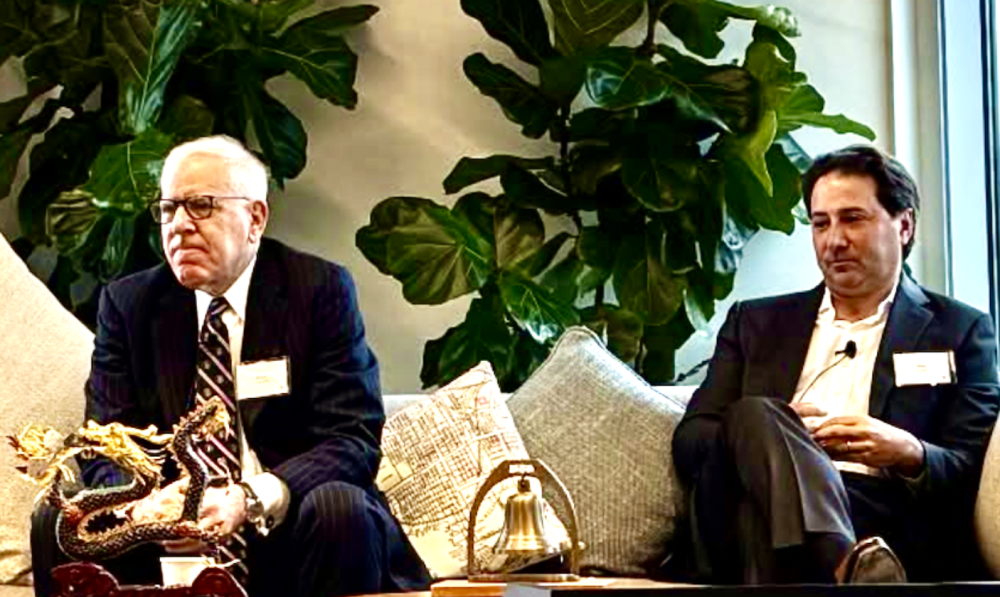


With all of the uncertainty with Major League Baseball labor and media, it’s a pivotal year for the leadership of the sport – on and off the field. Our sports business professor Marty Conway drops by for a primer on the state of MLB and what it means for David Rubenstein and Michael Arougheti in trying to heal and grow the shrinking state of the Baltimore Orioles brand locally.
Nestor Aparicio and Marty Conway discussed the Orioles’ business strategies, including recent investments in players like Chris Bassitt and Pete Alonso, and the impact of a potential labor stoppage. Conway highlighted the Orioles’ focus on premium seating and improved fan experiences, such as enhanced video and audio systems. They also touched on the challenges of attracting fans and revenue, noting the importance of winning on the field. Conway emphasized the complexities of negotiating a salary cap and the historical resistance from players. The conversation also covered the broader economic landscape of MLB and the potential impact of non-baseball revenue sources like the Battery.
Orioles’ Business and Revenue Challenges
- Nestor Aparicio discusses the Orioles’ business and revenue challenges, including the recent hiring of a new baseball manager and the spending on players like Chris Bassitt.
- Nestor mentions the lack of progress on various fronts, including media, television, and the construction of a new battery around the stadium.
- Marty Conway, a sports business professor, joins the discussion to provide insights into the Orioles’ business strategies and the broader context of the baseball industry.
- Nestor and Marty discuss the potential labor stoppage in baseball and its impact on the Orioles’ business plans.
Labor Stoppage and Ownership Dynamics
- Marty Conway explains the current state of negotiations between MLB and the Players Association, highlighting the potential for a significant labor stoppage.
- Nestor and Marty discuss the historical context of labor disputes in baseball, including the impact of previous strikes and the role of key figures like Marvin Miller and Don Fehr.
- The conversation touches on the ownership dynamics within MLB, with references to figures like Peter Angelos and the current leadership of the Orioles.
- Nestor expresses concerns about the lack of a clear plan from the Orioles’ new ownership group, including Katie Griggs and Eric DeCosta.
Premium Seating and Fan Experience
- Marty Conway discusses the Orioles’ strategy to increase revenue through premium seating and improved fan experiences, including upgrades to the video and audio systems at Camden Yards.
- Nestor and Marty debate the effectiveness of this strategy, with Nestor expressing skepticism about the market for high-priced tickets in Baltimore.
- The conversation includes a comparison to other sports markets, such as Washington, D.C., and the challenges of attracting premium customers in a smaller market like Baltimore.
- Nestor highlights the importance of winning on the field to drive fan interest and ticket sales, despite the focus on premium experiences.
Media and Sponsorship Revenue
- Marty Conway emphasizes the importance of media and sponsorship revenue for MLB teams, noting that these are the primary sources of income.
- Nestor and Marty discuss the challenges of securing media deals in a competitive market, with references to the Orioles’ recent losses of media rights to the Washington Nationals.
- The conversation touches on the potential impact of a labor stoppage on media and sponsorship revenue, as well as the broader economic challenges facing the sports industry.
- Nestor expresses frustration with the lack of transparency and communication from the Orioles’ new leadership regarding their revenue and business plans.
Future of the Orioles and Baltimore
- Nestor and Marty discuss the long-term future of the Orioles and the broader impact on downtown Baltimore, including the potential development of a new battery.
- Nestor expresses concerns about the lack of a clear plan for the battery and the broader economic challenges facing the city.
- The conversation includes references to other successful sports markets, such as Atlanta and Chicago, and the lessons that Baltimore could learn from their experiences.
- Nestor and Marty conclude by discussing the importance of winning on the field and providing a positive fan experience to drive interest and revenue for the Orioles.
SUMMARY KEYWORDS
Orioles, stadium, revenue, labor, downtown Baltimore, sports business, Georgetown University, baseball season, salary cap, media, sponsorships, fan experience, premium seating, work stoppage.


 8
8


SPEAKERS
Marty Conway, Nestor Aparicio
Nestor Aparicio 00:01
Welcome home. We are W, N, S T am 1570 towel, Baltimore. We are Baltimore, positive, positively into March. It’s almost baseball season, but it’s crab cake season. We were at it the gertrudes on Wednesday. We’ll be at Costa sand on Friday, and then on to our final crab cake tour stop of March before opening day. It’s so nice over in Perry Hall. Looking forward to that I will have two different kinds of scratch offs. They’re Harlem Globetrotters, the red, the gold, the gold, the red. They’re at UMBC this month, and we’ve had some winners as well, also our friends at GBMC and our newest sponsor at Farnan and Dermer. I promise not to mispronounce that they are the comfort guys. They’re keeping me comfortable, and hopefully I won’t have to run my AC or my heat too much, but when I do, they’re there for me. This guy’s been there for me for a long, long time. He was the one time, I don’t want to say big pub with the Orioles, but you ran things for a period of time, many years ago, in the Larry, the Kino era and the opening of Camden Yards, which seems like, oh, four decades ago, because it was Marty Conway is the good professor of all things sports business at Georgetown University and a wealth of insider business, media, tickets, sales, sponsorships, teams, ownership, but not managers. We have a new coach. We have a new baseball manager. Marty, it’s been a while since I’ve had you on. First off, welcome Happy New Year to you. Happy baseball season. How’s life for you?
Marty Conway 01:22
Everything good? Yeah, everything’s good. Look. It’s springtime. You know, next steps soon, you know, we’ve got pitchers and catchers. Soon we’ll have real baseball and also other things on other sports. So it’s a good time of the year, I think, actually, for sports.
Nestor Aparicio 01:38
8Well, we got World Cup too, when you and I have been at that a lot. But the baseball side of this, let’s get into that lane. Because I mean you and I talk football, the football season, baseball and baseball season. There’s plenty going on with the draft and the Ravens and Lamar and all that. As we get into this baseball season, we are now literally two years to the month of Peter dying. We’re two years and a month, you know, 25 months out, or 23 months out on Rubenstein taking over opening day press conferences. We’re going to do this. We’re going to do that. We’re going to have money. I get asked, because I get invited on other places, what are the Orioles really doing there? And I’m like, well, they spent money on the first baseman, they hired a new manager. They’ve taken some of the state money and thrown the Jim Henneman press box out, and they’re creating sweet seats that you and I could discuss, who the customer for a $38,000 season ticket is, but I’m waiting to see sort of tectonic plates, and I felt it from a baseball perspective when they give Chris Bassett $19 million in February, Right? They didn’t buy $19 million number three, number four pitchers back in the day. That was not an Angelos thing. And they certainly didn’t sign people like Peter Lonzo, although Chris Davis got money, and, you know, Peter spent some money here, and a couple of things that they did. But it does feel, from a fan’s perspective, like they’re running the baseball team and the budget and the way they’re going to spend money, that there is a lane for that the rest of it. I don’t know where the lane is, with media, with television, with Katie Griggs, with press, with answering questions, with ownership, with the battery that’s going to get built around the stadium that they’re alleging. I don’t see any progress on any of that. All I hear about are the battle drums of the of the labor stoppage. That’s inevitable. That’s coming in 10 months.
Marty Conway 03:22
Yeah, yeah. There’s not a person that I’ve spoken to, either in the media or in and around the baseball industry who doesn’t say that what it feels like now, 10 months out, nine months out from, from when the collective bargaining agreement ends, that they’ve been this far apart, and usually at this point they’ve been in discussions. They’re very clear on what the issues are, and the issues at some point begin to narrow. At this point, the people that I talk to feel like it’s farther apart than it’s been in several work stoppages, and in addition, you’ve had a recent transition in the head of the MLB Players Association. So all of that, I think, yes, if I were to put it in words, I think people are collecting themselves for almost a nuclear winter again in baseball, which it’s it’s really hard to imagine that with all of the progress that they have. You know, currently we’re looking at the World Baseball Classic underway, Otani, all the different story lines that are super positive for baseball, that there’s this other channel stereo of saying, Yeah, but enjoy it while you can, until October or November, because after that, we’re going to our respective camps. And in one camp they anticipate and want a salary cap, and on the other camp, you have a group who, since the days of. Marvin Miller and the advent of the Players Association have been the one associate players group that has been able to adamantly oppose the salary cap. So, yeah, I’m under the impression of enjoy it while you can, while the sun is out, because soon the sun’s going to go behind some clouds, and could be a very tough fall and winter for baseball.
Nestor Aparicio 05:21
Marty Conway is my guest. You are a different cat because you lived through all this. This isn’t you. You worked it. You’re working for George Bush in the middle of a strike in 1994 you worked for Larry, the keynote ever Bennett Williams. All of that when the battle drums were there, Lords of the Realm came out on your watch. I got to find John Hellyer at some point, catch up with him, one of the greatest books ever written about baseball, to really understand the topicality and the subject matter. After I collected the Steve Carlton and Kurt flood baseball cards, I went back and figured out how it all kind of came together. But all these years later, they’ve always wanted to break the union. The union never felt breakable. It felt much more like they were going to really come to physical blows back in the day when it was Mark Belanger and Marvin Miller and Andy Nestor Smith and all of that, like it was really nasty. And then the collusion part of things that I spent a lot of time talking to Mike Flanagan, because he was one of the guys that got swept up and got screwed, you know, by collusion costed millions of dollars. So the modern part of this is Steinbrenner is dead. Angelos is dead. Von Selig is not around. You know, like the people that were involved in all of this, Marvin Miller Don fear, we go through all the names of all the Tony Clark’s even gone. Now, my question is, where’s the appetite for the players, for a young gunner Henderson to say, I’m going to walk off the job when he has a $15 million arbitration number next year? That’s always the question in the strike fund. And I’m astonished at how squishy people are on the issue. It really reminds me of like, sort of Israel, Iran, United States, bombs. War, no war. Republican, Democrat. I see people crossing their own political lines, and they don’t realize it. They don’t realize it. I think the baseball thing, I’ve talked to people that think, well, there’s got to be a salary cap, there’s got to be a salary cap, salary hockey, but the Giants and the Green Bay Packers, there’s a salary cap, a salary cap, a salary cap. I’m like, you’re taking the billionaire side. You don’t realize it. You don’t realize it. But when I get to talking up there, then they burr up. I’m a union man. No, no, no, no, no. I’m a baseball fan, and I want it to be fair. I want the pirates and the Royals and the Orioles to be able to compete with the Dodgers and the Cubs and the Yankees, but they’ve been pocketing the money for 30 years, or scumbags like Jeffrey Lauria and Peter Angelos just put the money in their pocket for the luxury tax. They they tried to solve this amongst the owners, and then every Curt Schilling that I knew 30 years ago would say to me, this isn’t about the players versus the owners, about the owners versus the owners, because they have two different structures of how much money they have, and I know Peter’s dead, as is the mass in television network for Most, the Orioles are more unprotected than they’ve ever been when Peter went to war, he had DC, he had he had two markets, he had 6 million people, he had subs in seven states like this is a different war for Rubenstein and araghetti. And that’s where I want to get clear with you as to what these rich guys think, and that they even know two years ago, when they wanted bobble heads and they wanted to be big shots and philanthropists and all that that they were going to put on war shoes for this in eight months. And I’m not even sure that they even know what they signed up for. And I certainly know that Peter didn’t know what he signed up for, because Joe Foss told me,
Marty Conway 08:37
yeah, well, you mentioned that the important point there, which is Don Fair has said, said this when he was head of the players union, one of the best heads of labor ever, along with Marvin Miller, that it really was before the players could negotiate with the owners. The owners needed to finish negotiating amongst themselves, and that’s how he felt. He was not going to get involved, to get the players involved in an argument between big markets and small markets, wealthy owners, not so wealthy owners, whatever. What is
8Nestor Aparicio 09:07
you believe that? You believe that? I do. I believe 100% Yeah, okay,
Marty Conway 09:12
having been around the rooms, when you see very there’s just, they’re just varied viewpoints of how you run. Any industry has this, whether it’s the airline industry or hospitality, whatever it is, there are different philosophies on how you run your business and how you get additional revenue streams and how you protect yourselves and things of the sort.
Nestor Aparicio 09:34
And big guys always do it different than little guys. Well,
Marty Conway 09:37
8they have just different sets of assets, right? And in Los Angeles and Chicago and New York, you have a different set of media opportunities, and so your revenue structure is different, and you’re trying, yes, baseball has tried from bud sealing to, you know, on through Rob Manfred to try to figure out a way on the owner side to manage by revenue. Sharing and other cost controls that they could enforce along the way, luxury taxes, things of the sort. But again, it comes back to if you are committed, and you’re and you’re committed to winning championships, there’s a cost to do that, and a lot of times it takes you into the red at some point. Now, you might not be in a position. You might have to, you know, Wayne has Inga went into the red decades ago for the Florida Marlins. He had to end up deconstructing the team and then selling the team because he couldn’t afford the losses over the length of time. And so every you know, income statement for a major league baseball team is different. They’re sort of like snowflakes. They sort of group into quadrants, if you will. But each one is uniquely different, and they’re waiting. Some of them are waiting for a system to reconstitute itself so that they can be they feel like they can be competitive, while others are getting involved in the competitive Larry Latino used to say all the time to us, there’s going to be haves and have nots, and we want to be in the haves and whatever that took. Now, we were a mighty small market in Baltimore, and they were different economic conditions at the time, but that was the fighter mentality that Larry always had, which is, we’re going to do whatever it takes to be competitive. We’re going to find the places that we can leverage and pull levers on. But ultimately, yes, it comes back to that. You know, how do you feel about the Dodgers? How do you feel about the Mets? How do you feel about some other organizations? But there’s just some built in inequities in professional sports, and if you spend your life trying to dull those edges down so that everybody is equal, you’re going to end up with something like Major League Soccer, which then becomes, you know, no interest. People love winners and they love they love the zeitgeist of winner versus loser, big market versus small market. So I understand where the owners are coming from. You would like to say, as in the NBA, but even with the NBA, there’s a there’s a salary cap, there are Larry Bird exceptions, there’s other things. And look at the way it’s worked out. In order for in a world of a salary cap in the NBA, you still have teams. Adam Silver’s biggest challenge right now is to prevent teams from losing intentionally to try to get to a draft to get up. They’re not spending salary cap money to do it, so be careful what you wish for when you get a salary cap, because not everybody’s going to be like the NFL with is more media dollars than they could ever want pouring into their business to support everything that’s not capped, so trainers, nutrition, facilities and all that. When you have a cap, you can spend in other areas in order to be competitive.
Nestor Aparicio 12:53
Marty Conway is here. He is a good professor of all things business and sports business at Georgetown. He’s been my friend for four decades, and we’re talking baseball right now and money All right, let’s get out of the clouds on the work stoppage, because that’s down the line. Let’s you and me. Are Katie Griggs and Mark fine today, we’re going to run the team. We’re going to be the marketing heads. We’re going to have whatever’s the left of Madison, and they’re going to bring Ryan Ripken and Ben McDonald to market their team sitting in a studio in Hunt Valley, watching spring training baseball games without even being there and knowing what’s going on. By the way, rock Koco was the best announcer they’ve had the last three weeks because he’s actually talked to the players and actually been there. Like, there really is a benefit to that, that if Greg Bader doesn’t understand that, or Katie Griggs, they’re unqualified to own their job. Like, like, literally, there is a point where this is the time of the year, to introduce Pete Alonso, to introduce Bassett, to reintroduce gunner Henderson on the world stage of the US like this is a marketing opportunity that should get everybody salivating for March 26 and opening day. They they don’t know how to do this. They have no DNA for doing it. In regard to the Angelos family, your generation, had winter carnivals and tickets going on sale and opening the club level for people who couldn’t afford it to come down on a Christmas night meet Santa Claus and get a candy cane and buy a hat. And like all of the things that you did, that I saw happen here, that they cannot manage to bring in, and I met, I shook Katie Griggs hand two months ago. I’ve offered whatever wisdom I have, and I offer it on the air every day. But where is their big revenue coming from? Because Madison’s falling apart, the network’s falling apart. Even if the team is good, they’re basically saying this is going to come in ticket sales, right? And we saw the Cardinals pull their pants down for the $29 outfield. Come eat your chicken tenders and and everything but a beer. And I guess they’re figuring 29 bucks. I’ll buy three beers. I’ll get 80 bucks a cap out of these people before they leave. But parking, you know, all the other stuff that they’re trying to do, like a movie theater, just get people in you. Um, what are you seeing that you think they’ve done well, and where do you think they’re lacking at this point? Because I don’t hear enough about them. I don’t hear people buying their tickets. I don’t I see hats, you know, white panel hats. But I keep saying to people, have you reached for your credit card yet, because they need your money. They’re after your money, not your heart. They already have. They know I like baseball, they’re trying to get our money. I keep saying to myself, where’s the money coming from? Marty, what if they think, where do they believe the money’s coming from? Because they just spent hundreds of millions of dollars of our tax money to wipe out the press box. Didn’t even involve Janet, Maria. I have no probably gonna look like a dentist office when I get there. Office when I get there and they don’t have customers to buy those seats. They didn’t target and say, well, we need to have a $40,000 season ticket because we got a waiting list for that. We got to create. They’re creating these things, and they still haven’t figured out to sell their core product, which is really problematic for me with bobblehead night and Nellie night. What about baseball night? What about we love the Orioles, and we want to be in the baseball night? I don’t think they do that well. And I don’t think anybody during the Bader administration, going back to John Angeles, that nobody really did that part of it well, which is, we want you to love baseball, not lacrosse. Yeah.
Marty Conway 16:21
Well, when you get the kinds of money, it doesn’t matter in Baltimore, Atlanta, wherever it is, when you get that kind of state, city, county, wherever you’re getting your big wave of reinvestment from $600 million in the case of the Orioles, $600 million for the Ravens from the Maryland legislature a few years ago. The first thing you do is you put it into areas where fans will directly see a benefit. So in some cases, depending on what your history has been, I think in the case of the Orioles in Camden Yards, it’s been about the video, audio experience. That was something that had never really been that scoreboard was, we developed that scoreboard. You know, for the 1992 opening diet, it’s been that way in all that time. They were trying to do some tweaks here and there to the audio. It never really worked. So one of the things they’ve done, and I’m looking forward to seeing how that turns out, is the video and audio experience. Now, I think you’re going to go from your 12 inch, 13 inch television, to your 70 inch television. It’s probably initially going to seem really overwhelming, but people will get used to that. And then the whole audio experience. It was always hard to hear the PA address and all those things. So I think they’ve put money in there, the second wave of things that you put money in, and sometimes it’s simultaneous, is you want to put dollars into where you can get 345, 7x $8 back, and that is in the premium areas. Because what’s happening in sports, there’s a development underway at Capital One Arena in Washington, and one of their stated objectives is to take their percentage of premium revenue, which currently is at 11% so of all the seats in the arena, 11% are considered some premium level. And they’re taking that to 33% so that 1/3 of every of every opportunity inside the arena has some elevated premium spend more money experience. So it’s more
Nestor Aparicio 18:27
$200 tickets and less $40 tickets, because they think there are more $200 customers. Well, that’s boggles my mind in Baltimore. Well, Katie Griggs would come in here in this town and think they’re just going to mine money like that’s the part that, how about more $10 tickets? I hear you, and that doesn’t create revenue, but thinking this mind frame of we’re going to sell more $38,000 season tickets than $500 Birdland packages, and that’s how we’re going to get there, I don’t think they’ve identified who their customer is. That’s the problem. They have this first class. They’ve expanded the first class, and there aren’t any first class customers. People want to sit and coach. Southwest Airlines found that out in a big way.
8Marty Conway 19:07
I think also what’s driving it too, is what’s happened across the parking lot at the football stadium where they’ve done that and there, and there has been some uptake. I mean, one of the things you have to keep in mind sometimes is you should never underestimate the amount of money in a market. I totally understand where you’re coming from in Baltimore’s approach, but it’s also, how many times does some there’s kind of a science to it. How many times does some people come? How often do they attend? What do they spend? And again, rather than have coming three times, if they come twice, but their expenditure is more than if they came three times. That’s the approach now today, especially people of a certain demographic age, say under the age of 4035, and below, they are really willing to spend on a premium experience. Sometimes it doesn’t even include a. View of the game. Literally, they’re so accustomed to going to sports bars and betting parlors where there’s televisions and everything around it, they’re putting their credit card out, and they have no idea at the end what they’ve really spent now, kind of like a cruise ship when you drink exactly so the now the club that’s a different experience. You’re saying to people, you’ve got somewhere between 250 and maybe 300 total seats in there, roughly, give or take you’re saying, Is there a market for companies to buy two to buy four organizations? Whatever it is, that’s the gambit, I think. Look initially, the same thing happened. I keep referring to Capital One arena. They came out with a program called these Lexus vaults, where they’ve taken the best seats between the foul lines for basketball and between the blue lines for hockey. And they’ve said these seats are now Uber expensive, but they’re attached to this club. Well, sometimes you look at the game on television and 50% of those seats are empty.
Nestor Aparicio 21:03
Madison Square Garden said that for years, right? Yes, you can really see it in Madison Square Garden, where state would sit and the celebrities sit, and it’s empty. It’s always empty behind home plate. It at Yankee Stadium seats, they’re always empty.
Marty Conway 21:15
And that’s park right? Because there is that thing. Now, the thing about it is those seats have to be bought. Now, if somebody bought it and decided to stay in the bar area back there, that’s a different story. But those those seats have to be bought, that takes time, that takes time to reintroduce your pricing scheme into the marketplace, there will be some shortfalls initially, but I think with the expectation of what’s to come and other events that will be in the stadium, maybe an all star game. At some point, there’s going to be some inducements to why you want to buy that a premium opportunity. But again, Baltimore is a unique market. We started this conversation with each market being like a snowflake. That’s where the real work is, is to re educate people into what the experience is. But the end of the day, Nestor, you know this, you’ve got to put a winning team on the field, and you’ve now have to put a repeated winning team on the field, because when you’re selling in the offseason, people have to believe this is the year, quote, unquote, this is the year, and I want to be involved in it.
Nestor Aparicio 22:17
8And behind the backdrop of all of this is where we began, which is we lock out next year? How much do we want to spend? Where do we want to be? Let’s have a wartime plan that they have to have, but for Katie Griggs to come in here year and a half ago from another market, knowing no one having all of this data. And you give me all this science, Bs about there’s data and these data points, they think Baltimore is something that me living here. I’m wondering if they think this is a normal place, or they think it’s still attached to DC, or they think too much about the military complex and how much money there might be here, or old money that might be here. But they inherited something that had been really shelled out by the Angelos family from a corporate standpoint, from a fan standpoint, but they felt like they had good baseball players. They felt like they were going to be able to be competitive. Then last year, last place, half million fans down, revenues down. They’ve lost the Nationals as part of their media piece with mass and through the lawsuits and all of that stuff, I would say that this is really day one for them. I mean, we gave them to last year and say, This is the beginning. This is the beginning for me, of the new thing of saying, all right, press box has got it out. You’ve got some premium this and that. You’ve got your All Star game coming. You got your television and renovation. You’ve got left field where you want it now, the wall and all of that. They don’t talk to me. They don’t talk to anybody. I don’t see them do this even with their own employees. What is the grand plan? Is the grand plan? Hold on to the rails, try to win this year and do the little bit we can do, and then wait for the strike, and then figure it out after the strike. Or how are they thinking in there right now about the grand plan of Come on, let’s be honest. You’re 338,000 what do they have to sell? Because the idea was, we’re going to make the walkway this. We’re going to build a disco. We’re going to build a Comcast Center, like they have in fill in, a big super bar between the stadium. We’re going to have a gambling company. We have a hotel, we’re going to have a theater. Whatever they’re going to do. I don’t see any blueprints. I don’t see any money. I don’t see any planning. They all talked about how they were going to build a battery two years ago. And you and I have been sitting here for half an hour just trying to figure out, well, can they win 85 games this year and be competitive? And, oh, by the way, there’s a base, there’s a work stoppage. So beyond all of this, this franchise in the sky that they believe the Orioles and potentiality and downtown Baltimore and the harbor place, which is a mess. I mean, you know, I’ll get straight with that, that the fact that I was down there and they still don’t have a plan, don’t have money, don’t have a bank, don’t have anything, and it’s just sitting there. I don’t know what Eric Getty and Rubenstein make of this to think of their investment that three years from now, they wouldn’t hand the keys to some. Body and say to somebody like John Moe, flip this thing. Just sell it. Get rid of it. It didn’t work. We’re not philanthropists. We’re not here to fix Baltimore. We made a little bit of money. We had fun. We got the hot dog races. Because I don’t I feel like Eric Getty wants to own this thing for 15 or 20 years, but he doesn’t want to know anybody here. Don’t want to be a part of the thing. Doesn’t want to have a real plan. I just don’t. This isn’t a media thing, or even a radio station thing or a nasty This is just like, front facing Larry always like, we’re going to build a stadium. It’s we’re going to do it downtown. We’re not doing it here. We’re not, I don’t feel any of their absolutes about the big picture where this revenue is coming from, because it’s not coming from Dennis chairs behind home plate. I mean the and it’s probably not coming from 38,000 people packed in the stadium at their price, either anytime soon, even if they win. I just keep thinking media these these cities that they’re building, in Atlanta, that they dream of owning all of this, what Chicago’s done with the like? That’s got to be the plan, if you’re really thinking you’re going to compete with the Yankees and the Red Sox and the country of Canada, the 51st state over the next 10 or 15 years to make this thing really good, again, excellent, again, the Cardinals, or whatever that that North Star would be. I just don’t see them on the pathway to that. I mean, they signed a player, good. You got to have that. But then there’s the business and the community, and people like me and you that live here to understand, to buy into what they’re selling. That’s all. And I don’t know that that’s I don’t know what they’re selling. That’s the problem.
Marty Conway 26:35
Well, I mean, it’s good question. If that’s not apparent to people, then you know that’s one of their one of their top challenges. You just mentioned the battery. I think everybody is continuing to salivate over the opportunity. This past you can get these. These are publicly available. But in the last quarter, the organization, the entity that owns the Braves and all of that, what is called Liberty, yeah, announced that they, in their release that last year they did $95 million in revenue, profit from the battery. And so, you know, almost $100 million coming from, you know, outside the gates of your stadium, but connected to you dogs, they don’t have to sell, right? Yeah, this, well, this is, you know, leases rent for people in buildings, you know, restaurant, taking a piece of that, all those components, that clearly is where most organizations now, including this one in Baltimore, I think, probably feel like that’s the opportunity now that was supposed, as I understand it, that opportunity was supposed to follow. So you pull down the $600 million but you’re not going to get access to all of it until you commit to a long term lease, which they haven’t yet, which I presume they will in the near future, and at that point, that’s where what you’re referring to, the blueprints the stadium. What’s going to happen between the parking lots, what’s all going to happen there, but keeping in mind that they have a tenant across the parking lot that does have some say in that, because the stadium authority has to build a certain amount of parking spaces for football, all these things have to work together. But yes, ultimately, that’s what has to happen now, again, I keep coming back to this. I think the baseball Lockout and potential strike is a big part of that, because you don’t know necessarily what your industry structure is going to be after that.
Nestor Aparicio 28:32
So they can’t make any big decision. We shouldn’t expect them to make any big decisions the next nine
Marty Conway 28:36
months, right? Well, I think they probably have, internally, have some planning around that. But yes, the question is, which pieces of those revenues are going to be shared, right? Maybe at some point the players are going to say, Okay, we going to talk to you about a salary cap, but we expect that non baseball revenue to go into the pot so that we’re sharing off of those as well.
8Nestor Aparicio 28:58
At 95 million, you’re talking about Atlanta that ain’t going to players right now.
Marty Conway 29:02
It does not go to the players, because it’s non team revenue. It goes directly to the owners. It’s off the balance sheet of the team. So look the Players Association. Bruce Meyer is now the executive director. He’s a seasoned labor negotiator. I’m sure that they know all this and so again, from the standpoint of professing what you have or what your plan is, I think when you’re in a situation where you don’t know what your true economic platform is going to be, you might be reluctant. You certainly should be planning for it, but you’re not quite sure which one is going to suit you best. Where I always say to the students that we teach, I’m going to show you a stack of pennies, and that pennies is going to be 100 pennies. What I care about is not the stack, how high it is. I care about what my share is. If I’m taking 60 of those pennies and giving you 40, better for me, right? If I’m only taking 40 and giving you six. 60. I don’t care how high the stack is, so it really is about which revenues you do control and are not subject to a collective bargaining agreement, etc. So meet, but again, at the end of the day, teams, no matter where you are, drive most of your revenue from two big categories, media and sponsorship. And then after that, it comes down to Game Day revenues, merchandise and some of the other smaller things, parking and all of that. But you do pull down most of your dollars from media and corporate sponsorships at the end of the day, that’s where you have to put a lot of your energy effort and expense into raising those as big as possible.
Nestor Aparicio 30:40
Now Marty Conway is our guest. He’s the good professor of all things sports business at Georgetown University, longtime baseball insider as well. Alright, so the salary cap thing and and the war? Where do you sit as an old school guy on it that had they figured out a salary cap in 2002 like hockey did or the NBA, that baseball would be better, sir. I can’t even, in my mind, envision the Pittsburgh Pirates having a $225 million budget. And I can’t imagine the Dodgers or the Yankees ever saying, Well, we really want other teams to share in more. We’ve already given revenue sharing that they’re ever going to get a detente? I don’t. I keep thinking to myself, will I live long enough to see baseball get a salary cap, and will Bryce Harper and Scherzer and and the Orioles have one in Bassett, one of the representatives? Will they be softer than the previous generations were like Bryce Harper went after ran for the locker room last year. I I don’t I think this will get real ugly by the end of the summer, and these guys, this is the weird part. We don’t think these guys have more money than any of the other players have ever had, and they have a bigger war chest than any of the players have ever had. So going back to Lou Whitaker and Alan Trammell riding in limos and pissing everybody off 40 years ago during the middle of the strike, and I remember all this stuff as a kid and as an adult. I’ve been through this for 35 years on the air. I keep thinking to myself, how do the owners think that they’re just going to put this medicine down the players throats when they have more money than they’ve ever had, and they need the players Rubenstein and era Getty need Pete Alonso on their side a year or two from now not to be at war with him 12 months from now, in a general sense, and I feel like they only know war, Marty and you and I as fans, you being on the inside me as a media, we only know war. I cannot imagine that this isn’t going to be uglier than 94 was right, like, in a general sense, about the money. And I keep going back to this. When I talk to really smart people, I say, what if I sat with Rob Manfred, and I said, Look, what is the real plan for revenue here, for what you just said, media, media is where all the money is, and then the sponsorships and Mr. Big ticket in in town, corporate money in each municipality or region for these teams, what is the media solution, and what does the revenue look like for that? And I always use Luke’s mother as an example, because Luke’s mother likes baseball. She’s up in Pennsylvania, but has had it on cable television. When they start saying to her, you’re going to have to give me $99 or 249, or 349, for a year, or whatever. The people that are on the periphery, not you and me, that are addicted to it, the people that just want it on, but don’t want to pay for it, when they go away, they go away. I know this for sure. Though. I haven’t watched the wizards or a capitals game in seven years. I don’t even know what channel it’s on. It doesn’t come to my Twitter because the algorithm thinks I don’t want it, and it’s just like the Terps are that way. They don’t exist to me, like they just, I don’t get any of their marketing. I’ll get any information. I can’t name one player on the Maryland Terps basketball team this year. Not one I can. I could barely name a coach. Buzz. So once you leave it, yeah, once you stop watching General Hospital, you don’t watch it anymore, and that’s for me, with the baseball thing, for them to really churn this up with new ownership, I felt like that was their real opportunity to say, Angelos isn’t here anymore. You’re welcome to come back. They certainly haven’t made me feel welcome to come back. And it doesn’t feel like fans are welcome to come back at their price, at full price, because that’s what they that’s the corporate mindset that Katie Griggs and Rubens, the new people are like, we’re not family, we’re not local, we’re we’re selling you a product. Buy it at full price. Well, you
Marty Conway 34:32
8mentioned a couple things. First of all, back to the players, you’re right. They’ve they’ve been more they have more resources than ever, and it’s been historical, with the you know, exception here and there, the owners have broken before. The players would break right. The owners would get close to spring training and then realize, Wow, I can’t afford zero revenue. I can’t afford a half a season, or whatever it is. They saw what happened during the covid year, 60 games. Other things like that and that that really scares them, because not all of them have enough money of their own to continue the operation. When limited revenues are coming in, some revenues continue to come in from national contracts or something like that, but limited revenues and so yes, I’ve always seen the players you know in that regard. The second thing is, if you’re going to have a salary cap, they’re going to insist on a salary floor. And the question will be not that Pittsburgh Pirates will commit to spend, you know, 225 or two, even $200 million in a year. Will the Pittsburgh Pirates be able to afford to spend $135 million a year, if the is the makeup of the Pittsburgh market, able to afford that. So there’s going to be specific arguments on the cap, and there’s going to be specific arguments on the floor and those that’s why I say this is a you know, if you’re going to have that conversation, it’s not just capping the revenues that you pay the salaries that you’re paying to players, but what is the minimum going to be and Ken Pittsburgh and Cleveland and Kansas City and Tampa and some of these other markets that have been economically challenged? Are they going to be able to rise to that level? That is another consideration, which is why it’s a very complex situation. Now, as an observer, I sit back and I say, okay, maybe a salary cap could be beneficial in certain areas. But if you listen to the players, and you listen to people who know baseball, if you look at the last 25 years, look at the variety of teams that have actually won a World Series. Now it’s been 2015 since Kansas City won because we had covid, and then we had new ownership with the Dodgers, who’s willing to outspend others to do it. So there’s these definite periods, but when you pull back the calendar of decades, baseball, more than any other sport has had more variety of teams actually winning, or at least getting to the World Series because of the different models. Remember, the Tampa Bay Rays have been to the World Series in the last decade, but people want to sometimes gloss over that, so there are ways and methods to do it within the system that it is. And so I think ultimately, that’s why this is such a complex organism. But I do not see the players, that ghost of Marvin Miller, I say, sits on their shoulder with, Don fear, you know, pitching in from his own position, sometimes on the other side saying, Don’t do it. Don’t do it, because if you give in here, you’re going to give in there, and you’re going to have to give in there, and at some point, and so it’s
Nestor Aparicio 37:47
a non starter, right? Salary cap is we’re not even going to discuss a structure for that, because we’re just not going to agree to it.
Marty Conway 37:54
I would just say this. Have you ever seen a manager go out to the mound when Max Scherzer was pitching and try to take max out of the game, right? He holds on to the ball. He glares at him. That’s Max Scherzer as part of the players negotiating committee. You’re across the table from one of the greatest competitors in the history of baseball, and so if you think that you can somehow intellectually change Max’s mind about this when he’s been the beneficiary I saw the other day. He’s, I think, approaching 20 years. He’s 1819, years in the big leagues. He’s made close to $375 million right? Baseball has been very, very good to max Scherzer in this current environment. He’s going to say, I’m going to stand here committed for you, Gunner Henderson, and for you, Jackson holiday, who, by the way, is the is the son of Matt Holliday, who’s gone through this so many times. So you don’t think Matt Holliday is saying to Jackson holiday, no salary cap, son, you know, look what, look what you’ve benefited from, because I benefited from that. So there’s a there’s a history, there’s a tradition. There’s a genealogy now amongst the players that are anti cap and control, and I think it’s going to be very hard. It’s like taking the ball from Max Scherzer when you want to replace them on the mound, you’re going to have to, you’re going to have to arm wrestle them at the end of the day, and they’ve proven to be the winners. What have you liked about what
Nestor Aparicio 39:18
the Orioles have done? I mean, I’ve been beating them up here, and I’ve continued to beat them up because they haven’t been them up because they haven’t been good humans, but I think the Alonso thing interesting, spending money on a pitcher at the end lets me think that they’re more serious than they’ve been in 30 years. That being said, Yankees, Red Sox, spending money like Toronto that the balance schedule helps them tremendously, because they’re not going to see all these juggernauts. So for that, I give them the benefit of the doubt. And I said before the injuries, before catcher chapping this week, holiday and westburg, I thought they were capable of winning 9094 games, 96 games, like I thought they could be a really good team if the pitching holds up. I’m getting through spring training now, and I’m starting. I mean, every time somebody goes down. On and somebody gets injured. I keep thinking to myself, it’s not a good sign to have your 23 and 24 year old guys that you think are good for 1000 1200 at bats this year, be right now, maybe not good for 500 at bats, at of those kinds of quality at bats that I want to see from one ones like Jackson holiday versus Blaze Alexander or Kobe Mayo trying to, you know, kick up 35 errors at third base this year, and they’re not going to play great defense. But that being said, you know, I’ll check off on most of what they didn’t. Luke’s upset about the bullpen, and that’s fine, and they’ll and they’ll make their way but I for where they are in the market. If I’m just a fan, watching what they’re doing on the field, they’re putting a representative product on the field to say that I think they’ll play meaningful baseball games in August.
8Marty Conway 40:47
Yeah, no, look, I think when you when you get the big bomber, when you get the Pete Alonso, people love the long ball, right? So if I go out to the stadium and I see to the ballpark, and I see Pete Alonso play, and he hits a home run. Hey, that’s exciting, right? But the thing that I think people often misconstrue about baseball is they sit back and watch it, and they focus on spring training and all that. It’s such a long season. It’s way longer than the football season, and so you know, who’s on the field on week one in the NFL really, really matters. Who’s on the field on opening day for Major League Baseball matters less than football, because Jackson holiday could be back in, you know, mid April or late April, or all those different things. You know that the team that you put on the field in opening day rarely resembles the field that you go into the postseason with, because I think last year, the Orioles maybe had 60 sub plus different players come through their roster because of their different issues, and they did not finish the way they want to. But it’s about depth of the organization, which I think they have. I think they brought their best players in the minor leagues are now there, and maybe there’s a couple of others kind of, you know, in the near future. So I think on the baseball side, look, they’ve signed enough pitching it, I think one through four to be competitive. But yes, there’s some questions about the depth. There’s some questions about the bullpen. Most teams go into the beginning of the season not being sure really, what their bullpen is, you won’t know until these guys actually participate, 23456, different times. How does the manager use them? Does he, you know? Is it a buck Showalter, you know, wise about doing it? Then I think on the on the non baseball side, I think the fan experience this year, between audio, video, access, I think people are going to see that, and it’s going to really resonate with them. Look, the number one thing is, if you improve the Wi Fi access, and people can still be on their phones while they’re, you know, in front of the game, all those things go into the fan experience and the psyche of the fan that says, Yeah, let’s go back. It might not be next month. It might not be till June, with my Office group, but we’re going to go back. And so I think those are the things that they’ve done from a positive standpoint. But I think, to your point earlier, you’re right. I think the starting line for this organization and new ownership kind of begins now. You’ve gotten some of the money into the stadium, you’ve done your research, you’ve you’ve got the new fan experiences. Now, I think the measurement of how you’re going to perform as an organization probably begins now compared to the previous two years, when there was a lot of here’s what we’re going to do, here’s what we’re going to plan for. And now those all those elements should be in place. And let’s see how the let’s see how the fans and the market of Baltimore reacts to it and responds.
Nestor Aparicio 43:47
We all know the condiment races. The only thing that really matter around here Marty Conway is here. He is all things business and sports business. It’s the Georgetown University and a professor and a wise, wise man about all the industry stuff here. Hey, it’s baseball season. I’m excited about it. I I do think the team can be competitive. And I think, look, I’ve been 35 years here doing this. I haven’t had a whole lot of Marches where I could sit here and say, they can win 9095 games. This is one of those years. And I do think putting Pete Alonso out, you know, on the warehouse, and having a star player, and having gunner Henderson coming, having a new manager, you know, I’ll buy into all of that and and whenever they have band, media, hot dog race night, I guess I’ll be the guy out there, but I will be watching. And it’s always good to talk to you. Hey, World Cup is the next thing we’ll do, right?
Marty Conway 44:34
We will. We will. Next time,
Nestor Aparicio 44:37
will the world come? That’s a great question. Can they get in? Can they get in? I might be leaving the country this month, and I’m worried about getting back in. And I’ve never had to say that, because I really am an American citizen that was born here, but I’ve never been pulled out of a van and asked about it. He is Marty Conway. You can find him out. He tweets from time to time and is out on the social medias. And happy opening day to you, Marty. I hope we get to go to a ball game together this year. And what. Love to let’s do that. All right, make sure it’s a night when Trevor Rogers is pitching, so we have a chance to win or Kyle Bradish, I am Nestor. We are WNS the am 1570 Towson, Baltimore. Happy Opening Day to everybody. You.