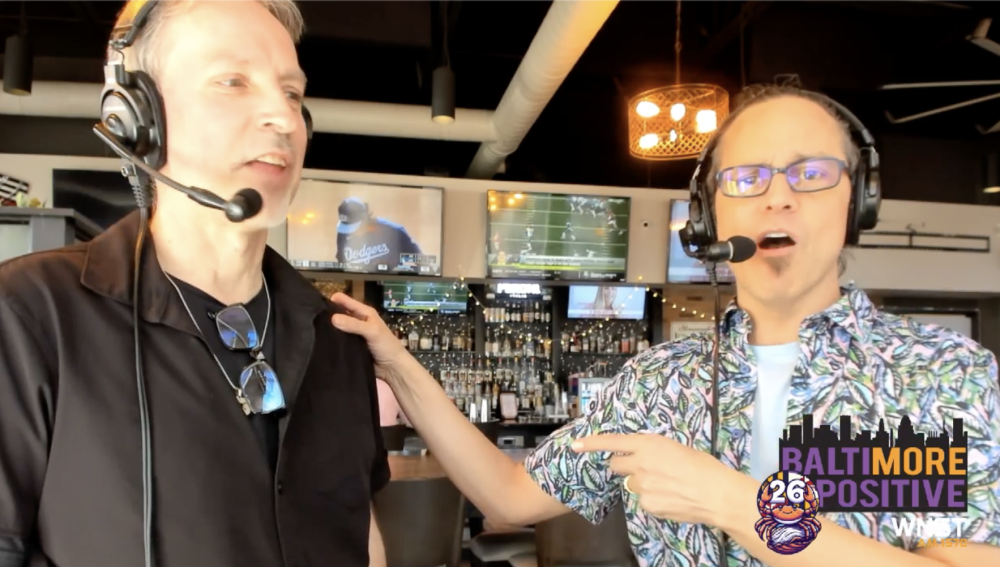


Longtime WNST listener and Baltimore autism advocate P.J. Shafer returns for “A Cup Of Soup or Bowl” at Costas Timonium and this time brings Ariyanna Anderson of Itineris to educate Nestor about helping adults with autism with inclusion and living their happiest and most helpful lives.
Introduction and Guests
- Nestor Aparicio hosts a “Cup of Soup or Bowl” segment from Costas in Timonium, highlighting community-focused organizations.
- He welcomes long-time friend P.J. Shafer, a leader in the adult autism community, and Ariyanna Anderson, Senior Director of Operations at Itineris.
- Nestor shares his past exposure to autism organizations (Pathfinders, Kennedy Krieger, Towson University’s Autism Awareness game) and reflects on how the local autism community has grown and come together.
P.J. Shafer’s Family Story and Autism Awareness
- P.J. recounts his son’s early diagnosis about 21 years ago, when autism understanding was limited and largely shaped by pop culture references like Rain Man.
- His son showed early signs such as delayed speech, repetitive behaviors, and atypical responses to sound; testing at Kennedy Krieger led to participation in a research study with strong parent training, which educated P.J. and his wife.
- P.J. notes how autism knowledge and diagnosis have exploded: from about 1 in 10,000 when his son was diagnosed to approximately 1 in 33 boys in Maryland now, due to broader diagnostic criteria and better screening.
- He points out that many people once labeled “weird,” “nerdy,” or just “engineers” might now receive a spectrum diagnosis, and that adults are increasingly seeking understanding of themselves.
Itineris: Mission and Core Services
- Ariyanna explains that Itineris exists to help adults on the autism spectrum live their most meaningful lives, which looks different for each person.
- Itineris currently supports about 185 adults across several programs, mainly serving Baltimore City and Baltimore County, with headquarters on TV Hill.
They operate through three main service branches:
- Community Services
- Residential Services:
- Create independent living settings for adults outside family homes.
- Support includes independent living skills, budgeting, healthcare and medication management, community engagement, and inclusion.
- Personal Supports:
- For adults still living with families; staff meet people at home or in the community.
- Help with chores, shopping, fitness classes, and other daily living tasks—similar to residential but less intensive.
- Itineris serves the full spectrum: some people need 24/7/365 support, others only a few hours a week. The organization does not pre-judge who can live independently; it simply adjusts the level of support.
- Residential Services:
- Meaningful Day Services
- Day Center on TV Hill:
- Offers enrichment and skill-building activities.
- A standout example is meal prep with Chef Ed from Ethel’s Creole Kitchen in Mount Washington, who volunteers weekly to teach professional cooking skills.
- Employment Services:
- Staff build relationships with businesses and community partners to place adults on the spectrum in part-time or full-time jobs, according to their goals.
- Creative Arts – Made by Itineris / Drew Putzel Studio:
- Popular arts program where clients engage in painting, photography, clay work, and simple activities like coloring as a “brain break.”
- Day Center on TV Hill:
- Wraparound Services
- Behavior Support from clinicians for individuals with higher needs.
- Additional supports that reinforce both community and meaningful day services.
- As Senior Director of Operations, Ariyanna works with program directors to:
- Ensure service quality and compliance with state standards,
- Keep staff, families, and clients satisfied, and
- Intervene and “make it right” when there are issues.
Founding and Focus of Itineris
- Itineris was founded roughly 15–16 years ago by 10 families worried about what would happen when their children aged out of the school system at 21–22 and the “school bus stopped coming.”
- They researched what strong autism organizations look like and built Itineris to fill a specific gap:
- Most local providers served multiple disabilities;
- Itineris would focus exclusively on autism, specializing in serving adults on the spectrum and understanding their distinct needs, behaviors, and communication styles.
Autism, Individuality, and Interaction
- Nestor asks how to approach autistic individuals respectfully—what to look out for in terms of sensitivities (lights, noise, etc.).
- Ariyanna emphasizes that “everyone you meet that’s autistic is a different person” and should be approached like any new person—learning what works for them as you go.
- P.J. adds some general traits that can contribute to diagnosis: repetitive motions, limited or slower communication, social differences, etc.
- Nestor notes his instinct to slow down and soften his usual high-energy “radio” persona when interacting with someone who might be overwhelmed, while Ariyanna reminds him that some people on the spectrum may actually like his natural high energy—it always depends on the individual.
Personal Portraits and Stories
- P.J. describes his son as “kind” and “sweet,” someone who wouldn’t hurt a fly:
- Loves baking,
- Enjoys building Lego sets,
- Is a huge movie buff and trivia fan who watches multiple films a day.
- Nestor shares a powerful story of an autistic boy in Arizona who became intensely focused on him:
- The boy learned everything about Nestor—birthdays, work details, etc.—and still asks about him years later.
- Nestor sees this intense focus as a gift, akin to an extraordinary database of information.
- They tie this back to the idea that many autistic individuals develop deep, specific interests or “specialized focus areas.”
Community Events and Inclusion
- Nestor recounts the Autism Awareness basketball game at Towson University, where multiple autism-related organizations tabled around the arena.
- He was struck by being in a large, energetic environment filled with autistic individuals, families, and caregivers—calling it a rare and meaningful “immersion” experience.
- P.J. notes there aren’t many large-scale inclusive events like that.
- He mentions AMC Theatres’ sensory-friendly showings (dimmed lights, reduced volume) as one example of a more accessible environment for some people on the spectrum.
How the Community Can Help Itineris
- Financial Support & Events
- Itineris’ major fundraising event is “Hot Night for Autism” on April 17, with a Casino Night theme.
- Employment Partners
- The unemployment rate for people with disabilities is extremely high.
- Itineris is always seeking employer partners, especially small businesses, to:
- Offer part-time shifts (often 3–4 hours rather than full days),
- Provide supportive, flexible work environments for adults on the spectrum.
- Collaborations and Volunteers
- Ariyanna highlights the value of collaborations like Chef Ed’s meal-prep class.
- Itineris welcomes community members who:
- Have special skills or interests (cooking, art, fitness, etc.),
- Want to run groups, classes, or activities,
- Are willing to come meet and work with their clients as part of the “Itineris squad.”
Closing Notes
- Nestor underscores how organizations like Itineris embody the community mission of his “Cup of Soup or Bowl” tour.
- He thanks P.J. Shafer and Ariyanna Anderson for their work and conversation, and notes that Itineris is “the biggest charity in Baltimore that nobody’s ever heard of.”
- The segment ends with information about upcoming show guests and a reminder of the need to support groups that help adults with autism live independent, meaningful, and joyful lives.
Action Items Identified in the Conversation
Help raise awareness of Itineris and its programs by featuring them on air and directing listeners to their website and events.
For Itineris / Ariyanna:
Continue building collaborations like Chef Ed’s class; invite community volunteers and skilled guests to lead activities at the day center.
For P.J. / Itineris leadership:


 8
8


Promote and organize the Hot Night for Autism event on April 17, including sharing venue and ticket details.
Expand outreach to employers and small businesses to create more job opportunities for adults on the spectrum.
SUMMARY KEYWORDS
Autism awareness, Itineris, community services, independent living, meaningful lives, Baltimore City, Towson University, Kennedy Krieger, developmental pediatrician, repetitive behaviors, sensory friendly, employment services, behavior support, Hot Night for Autism, corporate sponsors.
SPEAKERS
P.J. Shafer, Nestor Aparicio, Ariyanna Anderson
8Nestor Aparicio 00:00
Welcome home. We are W, N, S T. Am 1570 Towson, Baltimore. We are Baltimore. Positive. It is day five of a cup of soup or bowl. We’re out here at Costas, my homeland, as we like to say. But not on, Doc. We’re in Timonium. Today. I had the rockfish. BLT recommended the crab Imperial. I’ve recommended the Oysters Rockefeller because I want to feel like, like a million dollars. Luke’s gonna be a little later on, my pal Todd Schuler and Billy Cole, they’re gonna come by talk about all sorts of things. But as you know, a cup of soup or bowl is all about the community, all that cool organizations. This guy is a repeat offender or defending champion, depending on how you look at it. PJ Schaefer has been my friend. He’s connected to Leonard Raskin and a whole bunch of people in a community. Whole bunch of people in the community been here forever and the autism, autism space with adults. And I’ve heard your story before, but I’m gonna hear it again. Ariana Anderson is here. She is the Senior Director of
Ariyanna Anderson 00:54
the Senior Director of Operations at itinerant. All
Nestor Aparicio 00:57
right, that’s a lot. I don’t have to have a title. To have a title.
P.J. Shafer 01:01
8After all these years, owner the radio station. Owner of a lonely
Nestor Aparicio 01:04
heart, is what I had PJ’s been running itinerous for autism, for adults and and I’m gonna let you tell the whole story. But I met Ariana at the bar here when I was getting my first ice tea the afternoon. And I said to her, you know the I know the Pathfinders, folks and BJ sir often, I know there are other organizations. I think of Kennedy Krieger as a place that’s been doing this work forever. And I’ve had teachers and people in my life as well as parents who’ve had students there. And last year, I went to Towson University. Pat scary is a friend. Been a friend forever. He has a child on the spectrum as well, and that day was a big game. It was a playing game. It was like the it was an important game. They had won 15 games in a row, or whatever. It’s cold, windy, you know, I parked there, and I went in, and I knew it was an autism thing that day. But when I went there, first off, there were a lot of folks who had autism. There caregivers, family, loved ones, people in the space of working there, but all y’all had tables all the way around the top, and I’m like, wow, there’s a lot of people here. You all must be proud of each other as organizations, and I’ll let you talk about it. Dinners, of course, but and I’ve done segments when all of the above and more by groups I probably have forgotten about who have been involved with autism, but they were all there that day. And I’m thinking to myself, you know, this community is really come together out of need, out of necessity, out of love, out of the opportunity to do that, and then, of course, more people being diagnosed on the spectrum. Sometimes I think I need to get myself check that to be slightly, you know, as I get to be an adult here and thinking I’m a little too focused on some things. How are you? It’s good
P.J. Shafer 02:47
to see you. I’m well, I’m good to see you too. So you’ve just thrown out a lot of stuff out there, but it’s all good stuff, because you talk about the Autism Awareness game that the scary to put on over at Towson, and my son and I have gone there lots of years. You talk about all the different organizations involved there, I can’t tell you how many of the tables I’ve represented over the years, whether it’s Baltimore chapter, the Autism Society, whether it’s the Schaefer center, the school my wife and I really are, whether it’s itineraries, whether it’s Pathfinders, my wife sits on their board of directors. My daughter used to work there. My daughter’s now working at itinerary, because once you have a family member, that’s one of those spectrum you sort of, you know, you get I get in, you get immersed. And so, you know, I’ll tell you a little bit of the history. Is when my son was first diagnosed with 21 years ago. At this point, because he’s 24 i We got in my wife and I got involved in Baltimore chapter, the Autism Society, because they sort of had a support group for parents on of adults, of kids on the spectrum. Well, your son’s right behind us over there.
Nestor Aparicio 03:52
You haven’t enjoyed yourself immensely. What did you know about autism? And let’s say 1996 when the Ravens came to town, because I know you’re a big Baltimore sports fan too.
8P.J. Shafer 04:04
Well, it’s easy. I can tell you I had seen the movie Rain Man, so my knowledge, right? We all had so my knowledge of autism, see movies and Rain Man, right? It was having seen the movie Rain Man, and that’s what I knew about autism. But quite honestly, we were lucky enough when my son was what we got, we say his diagnosis, it was kind of a non diagnosis. So there was a developmental pediatrician at Kennedy Krieger that told my wife and I he may or may not have characteristics that put him on the autism spectrum. And we’re like, what do we do with that?
Nestor Aparicio 04:38
Well, it’s a baby, right? You’re right. He’s a three year old. He’s not even three years old, but not developing in the same way, right? Okay, he
P.J. Shafer 04:45
didn’t necessarily have speech. He, you know, he certainly had some repetitive behaviors, like the dog would bark and he wouldn’t look and like, that’s, you know, all right, so we had his hearing tested, which is very common, you know, you test the hearing. His hearing was fine. Are hearing some things but not responding in a way that you would expect. So we had, you know, we had a bunch of testing done. And one of the things that at the time, Kennedy Krieger had a research study going, and my son qualified for that research study. And so we were taking, I was taking him down there several days a week, and they had a part of that where they had a parent training component, and that’s really where my wife and I learned a lot about autism. Was through that, as well as we got very active in the autism community.
Nestor Aparicio 05:32
8How much more is known now that was known 20 years ago?
P.J. Shafer 05:36
Right? It’s infinitely more. That’s what I think
Nestor Aparicio 05:38
about all things like even cancer, even cannabis, even all of these things we study like that. I talk about having been on the air 34 years, I’m thinking to myself, I know I did autism pieces in the 90s where it was like HIV wasn’t just completely we don’t know. We’re scared. We you know, it’s, it’s unexplored. We haven’t. There was one kind of autism. There was autism, right? Like, and like, my wife found that she’s not even diabetic the other day after being diabetic for 33 because they’ve re diagnosed. What things are, right?
P.J. Shafer 06:13
And that’s really what has happened with autism. Again, when my son was first diagnosed, it was one in 10,000 I think today the number is one in 33 for boys in Maryland. Whoa, so in 20 years, we’ve gone a long way. Now, some of that, as has been, they’ve changed what they call the DSM, the diagnosis manual for they’ve broadened what the spectrum is. But a lot of it is also that we’re getting better at testing. We’re betting, you know, we’re getting better at screening for it. You know, people who were just weird or engineers or nerds back in the day may now get a diagnosis because they have these repetitive behaviors, or they’re anti social, or they’re getting
8Nestor Aparicio 06:54
old enough to want to understand themselves a little bit better, right? I mean, why am I like this, right? There’s a psychology of it for all of us who consider ourselves to be part of the functioning, you know, part of this, right?
P.J. Shafer 07:08
Well, we would call neurotypical, to use the neurotypical All right, the proper line.
Nestor Aparicio 07:12
I never because you call me names typical. I don’t know, Ariana, give me your involvement all this because I was talking to you over there, and I’m I said that was my last entree in the autism was 10 months ago. Other than, you know, I see autistic folks around, and I, I recognize it now. You have some grace, compassion, you know, all of those, those adult things you’d want to have. But that day was amazing to me, because it was just a celebration, and it was and I walked in and I thought, wow, there’s just a lot going on here. A lot of folks like you who want to give care and be a part of this, yeah.
Ariyanna Anderson 07:48
8So I have been in this field for more than 10 years at this point, and itinerants is the most amazing agency that I’ve worked for thus far. What we do at itinerary is support adults on the autism spectrum and living their most meaningful lives, and that can mean something different for every single one of those people, and we do that through three branches of service. So the first is community services. Community Services provides two service buckets. One is residential, one is personal. Supports. Residential is where we create these independent living spaces for people to be able to live outside of their family homes or their caregiver spaces. We’re providing support and independent living skills. We’re providing budgeting support. We’re providing healthcare, choice, management, all kinds of inclusion, community engagement, all the things that you would think of to live a healthy, full life. We are supporting our adults in doing that and in personal supports. You kind of get the minimized version of that, because these folks are still living in their family homes, so we are meeting them in the community or at the family home, just kind of like helping them with their chore list or completing a shopping list, or taking them to their fitness class. So similar to residential but in a less intense way,
Nestor Aparicio 08:58
I’ve known some higher functioning autistic folks that I’ve known as a child, and I’m thinking of listeners, and I Special Olympics folks, different folks that I’ve met. And I’m thinking, does that child, or do the parents have optimism or a dream or a goal of independence. That’s that probably doesn’t come right away, right, as a parent, or, you know, for anyone involved in this, but, but that’s the ultimate goal, right?
Ariyanna Anderson 09:31
For most people, some people, some people, are completely happy staying in family homes. But see, the thing about itiners is We serve the entire spectrum. So there isn’t a person that we will look at and say it’s not possible for them to live in an independent space. Independent space. It just would determine the amount of supports that we would put in place for them. So some people, we need 365 24/7 care. And then some people need three hour check ins once a day, once a week. So we kind of meet the person where they are and provide them what they need. But that’s just one of the service. Buckets that we are we helping itinerary right now? Right now, we’re sitting around 185 people across all of our programs. And is
Nestor Aparicio 10:08
that county city? How far are we going? Harford County, Carroll County. Where do we go?
8P.J. Shafer 10:12
So our headquarters is in Baltimore City, right on TV Hill, although most of our clients are Baltimore City, Baltimore County,
Nestor Aparicio 10:21
close, nearby, nearby. Well, how can folks help you? I know you’ve been fundraising, involved in this and PG, I’ll let you pick up the story about how itineraries really kind of happened off of the birth of your son, and getting involved in getting educated. Why itineraries? Why there was a lane right that you felt like wasn’t being serviced, right?
P.J. Shafer 10:41
Yeah, so, so, so they’re two different stories there, but I’ll get to both of them. So itinerary was founded by their 10 founding families, okay? That are that saw a need that said, Hey, listen, our kids are going to get out of the school system, whether they’re graduating or whether they’re just turning 21 or 22 and aging out, because that’s when law says you no longer get service. And then there’s sort of a cliff of what’s going to happen when the school bus stops coming. And so the 10 founding families said, All right, we need to put together an organization. And they did their due diligence. They looked around to say, Hey, listen, what does a good autism support organization look like, and they started it, and it started 15, almost 16 years ago at this point.
Nestor Aparicio 11:28
8And what was missing? What? What did it? What did a good autism program look like at that point that you felt like quite was a gap,
P.J. Shafer 11:36
quite honestly, what, what itinerary says focus is, is it’s purely just autism. Most of the other providers in the Baltimore area provide multiple disabilities, and they needed somebody who could really specialize and get the quirks of autism and understand what it is to serve adults on the spectrum and their peculiarities and their differences, and that was the motivation behind it.
Nestor Aparicio 12:01
What’s your son? What makes him beautiful? What’s his uniqueness? Well, I mean, he,
P.J. Shafer 12:06
first of all, he’s a very sweet kind, like, he wouldn’t hurt a fly, nicest, like, just kind he fist bump me, yep. I mean, he loves, He loves to bake. He loves to do build Lego sets. He’s a huge movie trivia. He watches multiple movies a day. He loves it, you know, and he’s just a kind, sweet soul.
8Nestor Aparicio 12:28
I met an autistic young man in Arizona about 12 years ago, and he took a shine to me, and I don’t know why, but he just took me on. And he was maybe 11 or 12 at the time, and his dad works in the sports space and in the professional sports space. And I would see his dad every year, twice a year, at the combine, at the Super Bowl, at the NFL owners meetings, and every time I would see him, he would say, will, will, like, is obsessed with you. And I’m like, What do you mean? He’s like, no, no, no, he’s obsessed with you. Will you call him with me? I’m like, does it make him feel good? I’ll do whatever it makes him feel good. And we FaceTime from a when FaceTime was just coming on 10 years ago, and I just it blew my mind. He knew every thing about me. He knew everything about me. And I was like, wow, God. I hope he focuses on something else. But I was just so I had a really special connection with this person still to this day. I mean, I think he’s in his mid 20s, that if I saw his father, he would say, How’s Nestor? I watched him last night. You know, he would just go through my birthday, just every single like a phone book, like, sort of like my AI does, my clone does, at some point. I think that’s a gift. That’s crazy. It blows my mind.
P.J. Shafer 13:58
It’s a gift. And it’s it’s not uncommon for autistic individuals to have a a couple areas of specific focus, things that they love, and really get into what some, you know, again, some, it’s train water. Sorry, it’s all right. You can spell it’s water. No worries, we’ll survive. John Harbaugh.
Nestor Aparicio 14:19
John Harbaugh dumped water all over my set at the Super Bowl 12 years ago. So I John Harbaugh, I’m sorry. It’s all right. You’re right. I’m fine. God, it all started when the seat got stuck. I’m sorry, all over the place. I told her we weren’t going to cut the editing on this. Somewhere out there. There’s the look on my face of the video. I’m sorry. So we’ll get all good. It is just water. Yeah, you’re okay, dumping cold water on someone on a 12 degree day. My god, I’m getting you some crab soup. So I’m big. I’m sorry, but you were
P.J. Shafer 14:50
8saying, Actually, he’s doing us,
Nestor Aparicio 14:53
but, but just meeting special people. I think that was the neat thing about the basketball game. That’s right. Me, because I don’t know that I’ve ever been in a room with hundreds and hundreds of autistic folks just sort of rolling around, bumping around. You know, the lights are going on, basketball is going on. They we all wore a color that day too. Shirts were all one color, right? And all of you were getting shouted out, and every all the tables were there. I just thought that that was the one place I’ve been in my life where there was an immersion part of it that makes it the first thing I want to talk to you about when I see you. You know, how many things like that are there that encompass all sorts of people in groups? Because you are trying to put people together, right?
P.J. Shafer 15:37
We are. Unfortunately, there’s not. There really aren’t a lot of those, like, I’ll say AMC movie theaters does a sensory friendly movie, like one or two Saturdays a month, where before they typically open, they’ll run, like a 10am on a Saturday morning movie. And instead of turning the lights all the way off, they’ll just dim them a little. Instead of having the sound really loud, they’ll have the sound down a little more sensory friendly.
Nestor Aparicio 16:09
But on things that go bang and flash, are I’m
8P.J. Shafer 16:12
trying to understand, right? Well, again, they’re usually the first three things I need
Nestor Aparicio 16:16
to know when I meet someone who’s autistic, because, well, I’ve always chose
Ariyanna Anderson 16:19
them that you meet that’s autistic is a different person. That is what you should remember at every turn. See, this is why we brought Ariana.
P.J. Shafer 16:25
8Okay. Now there are some generalities. The generalities are sometimes that they have repetitive motions, they have limited or slower communication skills, you know. So there are some things that you know, get you the diagnosis of Being
Nestor Aparicio 16:42
Well, the nature of me and my heart is, but I’ll just slow it down a little bit, and just, I don’t need to do radio with folks who have, you know, and just try to, like, vibe out that I’m not frightening or doing all of these crazy things that I’m usually doing that would probably freak them out and like a little bit,
Ariyanna Anderson 17:02
maybe depending on who you’re talking to. So each person has their own that might be appealing to another person that you talk to that’s on the spectrum. So it all depends on who you’re talking to them. Yeah, and I would, I would just approach each situation as if you’re meeting a brand new person, because you are meeting a brand new person, and you rob them out and figure out what they need and what works for them during your very
Nestor Aparicio 17:21
fancy Ty senior, give me all that again. Give me that your title.
8Ariyanna Anderson 17:25
Oh, Senior Director of Operations. Okay, so what I do at I think that’s what I was gonna say. I was saying earlier that we have those three service buckets. One is community, living and personal supports. Another is meaningful day. And then there’s a variety of wraparound services that we support, that we provide that supports the other two programs. And for meaningful day, I talked a little bit about residential and personal supports. But for meaningful day, we have a day center like PJ was saying up on TV hill, where some of our folks come to engage in some enrichment activities and some skill building activities. So one of the ones that sticks out to me, most recently that we’ve been putting together is meal prep with Chef ed. So chef Ed owns a restaurant in Mount Washington named ethels, and he volunteers once a week. So he comes out to our building and he leads a meal prep Is this the place that does the bayou food? Yes, Creole kitchen? Yep. He comes out once a week. He does a meal prep class.
Nestor Aparicio 18:17
Come to me. Let’s go. You’re more
Ariyanna Anderson 18:19
than welcome to come and see us and tour the building. He our folks go in and they learn different like professional cooking skills from Chef ed. So shout out to Chef Ed. Give me some gumbo dog. And then we also have employment services. So we have a team of people who go out and they talk to different businesses and business partners, community partners, and get our folks working either part time, full time, whatever it is that they desire at that moment. And then we also in those, those wraparound services, we have the made by itinerant creative arts program that’s hosted from the Drew putzel studio, where our and that’s a fan favorite. We We love the art program and itinerants, so folks go in there and they engage in all different types of art mediums. So they’re painting, they’re taking pictures, they’re doing clay work, and maybe you just need a brain break, so you go in and you do a coloring page. All of that is encompassed under our meaningful day services and wraparound services. We also have behavior support. So some of our folks have some higher needs and need some support from clinicians that’s included under our wraparound services. So we do a lot at that building to support all of our clients in different capacities. My job in that is to work with those different program directors to make sure that the service is being delivered up to par, we are in compliance with state standards, and that all of our stakeholder groups are happy. So I’m making sure that Pj is pleased. I’m making sure that the staff are pleased. I’m making sure that the clients are getting what they need, that the families are excited to continue to work with us. And if something goes wrong, I’m also the person that’s responsible for making sure that we get it right.
Nestor Aparicio 19:53
8Told a lot of sad stories this week. You know, couple Super Bowl here, but like coming out in coloring, sounds like fun, you know? I mean, you should come do it. It’s a great time. You know, it sounds like we’re creating happy folks here lives.
P.J. Shafer 20:04
That’s what it’s about. That’s what it’s about, meaningful lives in their best life. All right, well, how can folks help? Absolutely, thank you. So there are a couple different ways. Obviously, we’re always looking for financial support. Our biggest, our biggest event of the year is the hot night for autism that’s coming up April 17. Sure it’s gonna be hot that night, I don’t know, but it’ll be, I promise you, it’s gonna be higher than this today. You know, that’s our big gala. It’s gonna be a Casino Night this year’s theme, all right. Also, we’re always looking for corporate sponsors like, or corporate supporters, like, quite honestly, any place that’ll host an adult who needs, you know, who’s willing to take in an adult on the spectrum to work for them. We’re always looking for employer, partners, people who, again, we have, we have a lot of adults on the spectrum who have difficulty getting a job. Like, the unemployment rate if you have a disability, is through the roof. So if you have, you know, and it’s typically small businesses that are much more willing to accommodate. So we’re always looking for employer partners who, somebody you know, may be looking for particularly part time help, because a lot of times our adults were oftentimes better off doing three or four hour shifts as opposed to a full day, but if you can accommodate an adult on the spectrum, I mean, we’re always looking for partners for that, and open doors in that. In that respect is that
Ariyanna Anderson 21:30
all that’s everything, did I leave anything out? In addition to the community partners and employment opportunities, we’re also looking for any collaborations and partnerships, just in general. So stuff like what Chef Ed does, where he just like, comes and volunteers his time. If anybody has any, like, special interests or special skills that they want to share with our community. We’re also always open to having visitors come in, run groups and just, you know, kind of get to know our folks and be a part of the itinerary squad.
Nestor Aparicio 21:52
What’s this hot night? Where is this? Where’s this gonna be hot nights? It? Oh my god. April 17.
8P.J. Shafer 21:59
April 17. I can look it up. I got the website right here. Yeah, again, I’m blanking. It’s here in pneumonia.
Nestor Aparicio 22:04
Okay, that’s fine. I will go after itineraries. You can find them. It’s it, I N, E R, I S. It is a Baltimore based nonprofit that supports adults with autism spectrum disorder ASD through its parent organization itineraries, which provides programs for meaningful employment, community engagement and independent living skills. It’s almost like I can read. It’s pretty good. Thank you, Aaron. It’s pleasure to know you. Now you get a bowl of soup.
P.J. Shafer 22:33
All right, it’s good soup. You told me to get the soup before
Nestor Aparicio 22:37
8and I sashed your cousin’s kid behind the bar. I gave him a really hard time because we were talking about Marshall yonda And we were talking about Terrell sucks, and we were talking about Adam Vinatieri, and we were talking about Bill Belichick, and it got there he is there. We got on to cheating and how I felt about Bill Belichick, and it got on to mistreating women and how I felt about Terrell sucks. So I think honor, honor you want to honor me. I don’t if I sprayed my wife with bleach or if I cheated to have everything that I ever had, I would not expect you to honor me. So I just got into it today. So Luke, and I’m just getting warmed up for you, because Luke, Luke’s gonna want some of this today, because maybe one day, if Luke weren’t associated with me, if he could ever get rid of me, he might be the Hall of Fame voter for Baltimore, because he’s young enough and smart enough and connected enough that maybe one day he’ll get to cast that senior vote to get I don’t know Matt Burke or Anquan Bolden or somebody that fell off the thing, so Luke and I are gonna yell at each other about the Hall of Fame. So we’ll take a quick cup of Super Bowl break. Although I might have a cup of Super Bowl we’re out here. Cost us in I haven’t even grabbed my lottery ticket. You guys are gonna get some lottery tickets a minute. I get up. I have candy cane cash. Still has some left. Here it is our final day of a cup of Super Bowl. I’m losing my voice. I shaved this morning. Felt like I looked good, but then I cut myself. So I’m just trying to get to the end of this. Bill Ko’s coming by. Todd Schuler is going to come by. I was with Brother last night. It was a mess. We had the Jason los foundation on incredible group of folks here in Dowson. We’ve been doing stuff all week long, stuff like itineraries. PJ has been my friend for a long time. How long you been listening to me? Have you learned anything all these years?
P.J. Shafer 24:21
Yeah. I mean, I’ve been listening, like, really,
Nestor Aparicio 24:24
a listener, like, you’re telling me stuff. I said, I’m like, I say that, yeah, I
P.J. Shafer 24:29
listened to you back, you know, from back in the day when, you know, when I started, I was working in Towson, when I first graduated law school, you know what, 30 years ago. So, yeah, recovering lawyer. Recovering attorney, yes. And by the way, I’m sorry
8Nestor Aparicio 24:42
I don’t water all over you guys. It’s all good. We’ll let it try and off the whole time. I feel
P.J. Shafer 24:47
Yeah, I’ll be I’ll be good. By the time I go outside, I won’t be a popsicle.
Nestor Aparicio 24:50
It’ll be okay. I feel bad about letting people down or getting them soaking wet on a 20 degree no worries. It’s all good. I left every I left all this equipment, the car. Last you know, after pizza. Aunts, yeah, and I came in here, two observations. I came in here. Everything was frozen, everything. But more than that, this is really, this means the world to me as, like this show, and what it means to me for Baltimore. Monday, I was at faidley’s. And when you’re at faidley’s, I love y’all, but the place smells like crab cakes. I mean, it’s Lexington market, but, like, I generally go home and I smell like a faitlis crab cake, which is good. It’s not a bad thing to smell like my hair. I mean, my I got on the yoga medicine. Then Tuesday, we went to we were over at El cuapo, and I didn’t necessarily smell like Mexican food over there, because didn’t smell like that. And then Wednesday, we went to Koco’s, and it didn’t sweat. Doesn’t smell like crab cakes and Koco’s, it just smells like Koco’s, which is like, I don’t know, it doesn’t have a smell. Yesterday, I went to Pizza John’s, and Luke will tell you straight away, pizza John’s has a smell. It’s a little bit like oregano and a little bit like tomato sauce, like I’m half Italian, smells in my grandfather’s kitchen a little bit, right? So when I I came Tuesday to open my bag, my my my tablecloth smelled like fadeleys, and it smelled like fadeleys on Tuesday at El Guapa and Wednesday at Koco’s. It had kind of gone away, and that’s cool. Today I opened my bag up and I opened this and pizza John’s was all over Timonium, because this smelled like pizza. John and I’m like, I’m the only guy in town that could have a they could have a tablecloth that could smell like the best places
P.J. Shafer 26:31
8in Baltimore. You can go home smell it tomorrow, and it’s gonna smell like Costas. And can we
Nestor Aparicio 26:34
do the show at ecobin? I wanted to smell like my thanks to PJ Schaefer, Ariana Anderson for stopping by at itinerary. So being my friends in foils, Luke’s gonna come up. We’re gonna have some fun out here today. Talk some football. Might even get a little baseball talking. It is a cup of Super Bowl. It is Maryland crab cake to it’s all presented by our friends at GBMC. I did a very, very special segment about domestic abuse and violence with my friend Danny at Pizza John’s. That was a phenomenal segment. Also our friends at the Maryland lottery. We’re getting that on the road. I have a new sponsor. And, you know, I mispronounced the name, right? So I’m gonna hold this up here, because I really need so. I knew an ED farmer. I knew a but foreign and Dermer. I knew a Lisa Deemer, her husband’s listening. What’s up, Paul. So I would say, for me, I’m gonna learn how to say this, but I must say the comfort guys. So we have a new sponsor. Excellent.
P.J. Shafer 27:25
Thank you for letting us plug itinerous, the biggest i The biggest charity in Baltimore that nobody’s ever heard of.
Nestor Aparicio 27:31
Yep, no one listened to this show. I’ve been trying to convince. I told her that when she was nervous, I’m like, nobody’s gonna hear this. Don’t worry about it. Back for more work. Cost to stay with us. It’s Baltimore, positive. You.