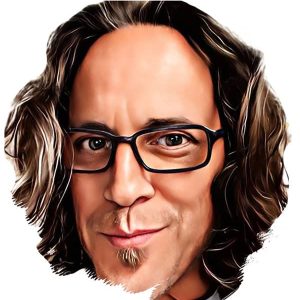


Deposed political cartoonist Kevin Kallaugher (aka KAL and KALtoons) joins longtime former colleague at The Baltimore Sun, Dan Rodricks, and sports cartoonist Ricig with Nestor at Zeke’s Coffee on the Maryland Crab Cake Tour to discuss Baltimore media power, influence and the search for truth in reporting for the people over a lifetime.
Nestor Aparicio, Mike Ricigliano, and Dan Rodricks discuss the impact of corporate ownership on media, the decline of local newspapers, and the role of journalists in shaping public opinion. Kevin Kallaugher, a cartoonist for 50 years, shares his journey from animation to the Economist and the Baltimore Sun. They reflect on the evolution of public feedback from letters to social media, noting an increase in hate mail. The conversation also touches on the challenges of maintaining journalistic integrity in a digital age, the potential of AI in journalism, and the importance of thorough research. Dan Rodricks promotes his upcoming play, set in Baltimore in 1966.
SUMMARY KEYWORDS
Baltimore media, political cartoonist, journalism, democracy, internet impact, corporate ownership, audience engagement, cartoon creation, AI in journalism, media trust, local information, hate mail, creative process, newspaper decline, public opinion.
SPEAKERS
 8
8


Speaker 2, Kevin Kallaugher, Nestor Aparicio, Dan Rodricks, Mike Ricigliano, Speaker 1
Dan Rodricks 00:00
The town of bedrock, their replacement of history. I’m
Nestor Aparicio 00:08
only
Nestor Aparicio 00:15
kidding. All right, we’re back. Poor cow is like, what the hell probably thinks something else is in the coffee here today, it’s coffee. It seeks. I knew for six got his cafe complex,
8Mike Ricigliano 00:33
my restaurant, yeah, great.
Nestor Aparicio 00:35
Dan Rodricks has decided to remain he doesn’t know why. With us the coffee, because coffee is good.
Dan Rodricks 00:40
You know, I’m enjoying myself. I really am enjoying myself. I want you to
Nestor Aparicio 00:44
8because I’ve never really met Kevin. I just know him through his work. He was deposed a few weeks ago. I was opposed. He’s definitely calling him to pose. He said, No, I walked away. So if I had made it from 19 January 6, 1986 is my employment date at the sun. If I had made it to the end all, I would have been deposed at some point as right? So yeah, of course, Kevin is here. He is the cartoonist extraordinaire. Dan was the longtime columnist racing. Just did funny sports cartoons, and all I did was get coffee for guys like this back in the 80s, and chase rock stars ran. So I brought to you by the Baltimore Maryland lottery. We’re in the heart of Baltimore, Zeke’s coffee. We’re in Laravel. We’ve been fueled by Zeke’s. I got biscuits. I got chicken sandwiches. We talked about civets that poop beans. Now we’re gonna talk about the important stuff, democracy and politics and journalism and important things like that. You do it with words. You do it with images. You did it with, you know, some semblance of whatever you did it with track magazine, but, but there is something that we all share in common, right, like and that is, I’m my guy. Had my name on it, had your name on it. My dad loved that I worked at the paper. My dad was thrilled that I worked at the paper, because he it had my name on it, he could cut it out, and it meant something. And if it has your name on it, you got to believe in it. And if it and if it has your name above that, I hope you believe in it. A lot of people I know in modern world work for people, they don’t really believe in the cause for where they work or what they do. In our line of work, when it’s got your name on it, you got to believe in what you’re doing and and I mean, hats off to you to sticking it out to the end. I think some of us may have seen it sort of coming. You’ve been there a long time. Give your whole background, because I don’t know a whole lot about you, but these guys know you. Well, I’m sure you’ve passed cross paths many times. That’s
Mike Ricigliano 02:33
cartoonist in the in the economy area. And you
Dan Rodricks 02:37
know that cow is his main his main gig, really is, for years has been with the economist, yes, exactly. The sun was kind of a side gig for a
Kevin Kallaugher 02:45
while, an interesting thing. So I started my cartoon world as a kid, drawing teachers in classroom and getting myself in trouble there. And I did a cartoon strip, and when I was in college, and my senior thesis at college was a 13 minute long animated cartoon, and I always thought that was gonna go into animation, but right after graduation, I got on a bicycle, led a bicycle tour of kids to England and then stayed in Europe for next 11 years. I played semi pro basketball for three years and was doing a lot of coaching, but I got my Yeah,
8Nestor Aparicio 03:23
510, maybe, yeah,
Kevin Kallaugher 03:25
yeah. Well, I was taller than the English weather kind of shrinks you with all that,
Speaker 1 03:30
so all the mushy pea. So what happened was,
Kevin Kallaugher 03:34
8is that I started looking for Cartoon jobs pretty early on, because the basketball team was on financial rocky ground. And my first job, believe it or not, was with the economist who, you know, this Reverend international publication. Back then, it was smaller in scope than it is today, distributed around the world. I didn’t know, I didn’t know anything about British politics, about any other politics, but I could draw a little bit, and they thought they’d give me a shot. And I was just really lucky to be there when they were looking for someone. And now
Nestor Aparicio 04:05
is this 1978
Kevin Kallaugher 04:08
Oh, wow. So I gotta have my 50th anniversary with them in a couple years. That’s a lot.
Speaker 1 04:15
Fantastic, yeah,
8Nestor Aparicio 04:17
um, can I just ask you, has anybody ever come in and said, Don’t draw it that way. Or, you know, I’ve had that in my business where somebody came in said, say it that way. That’s beginning of the end for me. You know, anybody knows me knows that I would think anybody knows a strong voice of any kind. That’s just not part of being a strong voice, literally.
Kevin Kallaugher 04:40
Well, Dan and I, you know, Dan’s a columnist, he’s an opinion maker, and he understands that, you know, we have editors and we have a audience we’re trying to connect with, so we just can’t do anything, right? We can’t do everything, you know, we have to make sure, or whatever we contribute, it’s not gonna be racist or sexist, it’s gotta be, it’s gotta be able to connect. With the audience that we have
Nestor Aparicio 05:01
this president without that? What’s that? How you gonna win a president without being racist
Kevin Kallaugher 05:06
8or sex? Well, though, yeah, you know. But anyway, so that. So that going to your point. I think you know understanding how best to push the line, get out there to make your your opinion, so that they’re challenging to people that make people think you’re gonna inevitably, particularly when you’re in Baltimore, you got one newspaper. Every column you write, every cartoon you do, is gonna piss somebody off. It’s just part of the deal. And when we were at the paper, before the internet, like 90% of our contact with the public was negative. People were writing Yeah. People
Dan Rodricks 05:42
usually didn’t write a letter unless they were Yeah sometimes, but more often it was when they were upset about something,
Kevin Kallaugher 05:51
yeah. And people just assume that you heard it, that you heard that a you know, great job, but it’s just part of the deal. We just
Dan Rodricks 05:57
editors, yeah. Editors would very rarely give a compliment to what you were doing, yeah? Which, which you think is, well, that’s not good. Aren’t they supposed to encourage you, but you’re pretty much okay on your own, I think, yeah, well, you want to connect with readers more than other journalists. Yeah. Now, I think a lot of journalists do certain kinds of work to impress other journalists. And I don’t know that it always connects with the readers, with the
8Nestor Aparicio 06:27
can I give a shout out to Jack Gibbons, who I’m sure you all know Jack. Jack is responsible for my career. Jack was the one that literally mine, gave me my job, you know? So this was literally, this is who I am. July 11, I saw this thing was my dad. Day, my dad died, anniversary that I saw this. You know, you see things on Facebook and it says the bosses we remember. Can I just read these nine things to you? Provided a safe place to grow, open career doors. Defended us when we needed it, recognized and rewarded us, developed us as leaders, inspired us to stretch higher, led by example, told us our work mattered, forgave us when we made mistakes, Grace. I wrote to Jack Gibbons said, You did all nine of these. I mean, that’s unbelievable. I said, I said, that is all you did. All right. I’m thinking to myself, I don’t know anybody else in the world. In the world who could I said, you wrote me dozens of encouraging notes in the late 1980s that you’ve completely forgotten about, but I have a copy of everyone. Yeah. So I had a different ride in that way. As a young man, I had
Dan Rodricks 07:36
Ernie Imhoff, yeah, who was the last Managing Editor of the evening sun, who,
Nestor Aparicio 07:41
by the way, covered the Beatles press conference at the civic center back in 60 did? He did? Wow.
Dan Rodricks 07:47
8I know that. I just can’t keep up with
Nestor Aparicio 07:50
it. Bernie did.
Dan Rodricks 07:52
Okay, good. All right. Anyway, I was making the point that he was that kind of guy in the newsroom the evening sun. Yeah, all those things, yeah, all right,
Kevin Kallaugher 08:04
yeah. Well, one of the things you said before about all the negative stuff we’ve got before, but now with the internet, we can get likes. I mean, that’s cool.
8Speaker 1 08:15
Get friends. Wow,
Kevin Kallaugher 08:19
trolls, though you do get trolls and my back this bit crazier. I think
Nestor Aparicio 08:22
when you’ve been doing it, as long as all of us have been doing whatever we’ve been doing, I do what I do, and I know you do what you do. You’re not trying to please anybody. You’re not even really thinking about who’s reading it so much as to what you want to say, because anybody can read it, anybody
Dan Rodricks 08:38
8can have fun, you know, yeah, but you think about your audience. You think I
Mike Ricigliano 08:41
do think about my audience, but, I mean, yeah, you have to think about your audience. But I got me, yeah, I’m I’m there to have fun in my format. I don’t
Nestor Aparicio 08:50
think you’re making the music just for one person. You’re trying to make what’s in your soul to get out, and you hope that one person sees it, and then two, and then three, and then they’ll share it, and they’ll like it, and they’ll stick around for the next column or the next cartoon or the next show or whatever. But I do think that I’ve moved to the point I do a lot of this all day, and we all make a lot of content, that it’s just what we want to say, and knowing that our audience might like it, they might hate it, but they need to hear it, and we need to say it. It needs to be said by me. If I say it, it feels like it has to come out of me.
Dan Rodricks 09:23
Can I just add something? Cal and I, we first got to the sun was in the 80s, right? I got to the sun in the 70s. Developed my column, really in the early 80s, when people wrote a letter complaining about what you your point of view, or what you had to say, or what you expressed for the cartoon. They may not agree with you, but they were civil about it. Oh, I didn’t get letters that began with, you’re a piece of shit, right? And the last 1015, years, especially the last 10 years, yes, I. The hate mail. It went from just disagreeing and providing an argument for why they disagree to You’re a piece of shit, right? And, you know, I did, I toss those. But I think what can’t the other side like, articulate what it what, what it is they disagree with me? What did I wrote a column about, I don’t know, Obamacare or something, and you’re a piece of shit. I’m sorry for using this language, but this the kind of letters I would get. But there’d be no argument. There’d be, yeah, actually worse, there’d be no arguments. No no, no constructive criticism, no disagree. You know, erudite disagreement based on facts or anything that disappeared internet is great, but you get a lot of that. Oh yeah, you get a lot of
8Nestor Aparicio 10:46
other part of that is when you write in words and your column, you know you wrote, you write shorter than I do when I write, I write long form. I’m explaining you guys, do you guys? Do you guys? Do? Yeah, this big, I look at it. I’m looking for Nick the Greek and yours down in the corner, or whatever little subliminal, little things you might put in. Great. Hopefully it’s not one of those carousels at the city fair. It’s another story. I just want to throw that one in for a cheap shot. But when you’re putting that together, pissing people off as a cartoonist, in whatever you’re doing, you’re punching dude. This is not a subtle thing. He and I he’s trying to be somewhat subtle and get people to read through it and think through it, or whatever. You’re punching people in the mouth that I think as a cartoonist, it’s got to punch, and it’s got to be strong. And then the little subtle things around that the little clouds around the outside, I look at it. Man, you got a wild art. I mean, I used to watch him do his work, and I used to come into the news American for whoever the political cartoonist was there 50 I didn’t know anyone at the Sun who did the work. It was different job, shift in a different place, but I would come by and watch your his mind work with sports, and it’s what you do, I think, to anybody that writes, it’s an amazing thing
Mike Ricigliano 12:04
when you talk about a punch, though, no one does it better than Cal, like in a small space.
Nestor Aparicio 12:09
What do you love about his work?
Mike Ricigliano 12:10
8Nine Cal is brilliant. Caricatures are incredible. Yeah, his, you know, he uses panels. I like when he uses panels, yeah, I love, I love Cal, yeah. I do know his panel work is amazing. You know, like, I all right, I don’t. I adore Cal’s work
Nestor Aparicio 12:33
mindset of this, of like, you have a topic, whatever it is, Colbert today,
Kevin Kallaugher 12:38
yeah, sure, yeah, yeah, you already drawn one. No, no, I haven’t drawn one. But, I
Nestor Aparicio 12:42
mean, let’s talk about that, and run through your mind of what that’s gonna look like, because you’re gonna have a column on it. I’ve already said
8Mike Ricigliano 12:48
my piece. I mean, I thought of Cal immediately when I when the Colbert news came through, you know, just someone that was just kind of forced out because of his opinions, you know, like, I, you know, I, I think you’re kind of hand in hand there.
Kevin Kallaugher 13:04
Well, it’s nice being used in the same sentence with Colbert. I mean, amazing thing, yeah, well, when I started cartoon, it’s probably really some similar to what Dan is when you’re doing, like, column, right? So you’re, you’re engaging with the idea, the thought, the point that you want to talk about the punch, yeah? And it’s really important. And this is, this is before you come up with the way you do it. It’s the journalism part, getting old pieces together and then formulating what you want to say.
Dan Rodricks 13:29
It means you have to read, yeah, read other people’s work. Yeah, with
Kevin Kallaugher 13:33
8that, yeah, sure. Yeah. And so the funny thing is, when people think about cartoons, they think, Oh, you’re coming with the fun stuff first. But this is all this kind of groundwork to begin with. And once you’ve established your point, then you get the satire hat on, you get the cartooning hat on, of all the different ways you can approach it. And then you start scribbling. And literally I mean my first sketch looked like hieroglyphics, and they make something to me, but nobody can read them. And you’re doing a bunch of those until you see the glimmer of an idea. And then you when you start to push the idea, you’re doing it on paper, back and forth, you’re like you’re exploring on paper. Your brain is now on a piece of paper, and you’re trying to move pieces around and add bits, take stuff out. And sometimes you go down an hour drawing, you realize you’re going down the wrong path. You got to throw that away and start all over again. Yeah? And the idea, of course,
Nestor Aparicio 14:28
rip up the lead Yeah, is the sports writer. Sometimes the game team will come back
Kevin Kallaugher 14:32
and yeah. So it’s funny, it’s this kind of dance in your own brain you’re having. Don’t you guys find that when you’re creative, you’re having a conversation with like, five people in your brain. Oh, why don’t you try this?
Speaker 1 14:46
We tried to before it sounds so good,
8Nestor Aparicio 14:47
funny. This is funnier. Like, yeah, that kind of stuff. And you have no sounding board, your wife, a friend, you know. Like, literally, yeah. Like, it’s not what I can ask. Ai. Now, what do you think? Yes, right? Or whatever. But I mean, in your. Own mind. And I asked, you know, I asked Steve rouse this last week, I had him on, and he had sort of a morning show and an FCC license and an audience that was much more broad that you’re in the car. Somebody’s got their daughter in the car. Where’s the line on a funny joke where, you know, where’s the edge on what I can get away with. I had the seven words on FCC I couldn’t get away with, right? I’ve always felt like you as you maybe even more than sports cartoonist, the political cartoonist has the ability to be really mean, make fun of things that, in words, we wouldn’t be able to get away with in certain ways, right? Portraying racism in words is ugly. Portraying racism in cartooning is a punch, you know, with the image that a word can’t put across. That one picture, pictures worth 1000
Kevin Kallaugher 15:55
words, right? Yeah, right. Well, there’s a case in South Africa during the height of apartheid that they had all these press laws, and they could really strictly control the printed part because they knew they had words. They could say, Ah, you can’t use that word, or those, you know, that thought. But they couldn’t control the cartoons. They didn’t know how to govern the cartoons. You either get rid of them all, or you let them in. So they talk about racism, they were able to kind of get away with an awful lot. Yeah, well, Cal is
Nestor Aparicio 16:22
here, Dan Rodricks is here’s here. We’re talking about journalism, and you want to talk about the state of who owns these places at this point, because it’s greatly affected your life. Certainly has affected my life, all of our lives, and what media is going to become when you get orphaned and there’s no cow to come along. You get thrown out or decide to leave and you’re after almost 50 years, and there’s no Dan Rogers coming along. There’s no Nestor doing a sports here to hold the Ravens accountable when they have a predator kicker, or when they have a head coach who would be so proud of his association with Donald Trump that he tried to hide it. I saw you wrote about that last week so or that I would be in his office and he’s saying things to me like the China virus. John Harbaugh would say those things to me, but if I took that on the radio, that would be off the record. I don’t know, you know, but we’re in a different world now with who we piss off, how we can piss them off, and how we can make a living when Stephen Colbert can’t and when 60 Minutes doesn’t have a chance, I’m worried for all of
Speaker 2 17:26
8us. Dan, no, yeah.
Dan Rodricks 17:28
You know, we’ve had corporate ownership of media for quite a while now. The last family newspapers disappeared, when 30 years ago, right? Literally, well, that was the one we had in Baltimore. But you know, when local people owned a local newspaper that’s been going away, newspapers have been folding people. I don’t know where people are getting their local information from, television, maybe even television. Local TV is having stresses. So I don’t, I don’t, I’m not quite sure where people are getting all their information. Are people reading the New York Times every day? No, but a lot, a lot of people do. A lot of people just catch a headline on a social media blast, or they see a video and they feel like they’ve got the full story, and you don’t have the full story. I spend hours before I ever write a column, spend hours reading what’s going on, or watch a video or something like that, or talk to people on the phone, read a report the other the other day, to write a column. Just yesterday, I read a lengthy clinical report about this thing called moral injury that we were talking about earlier. You know why I spent some time doing that is because I wanted to know as much about that as I could in the time that I had before I committed myself to an opinion about it. And it does. It takes time. I don’t you know, I think that’s still being done in journalism. I think journalists are still doing that job. Why people don’t trust it more? I wonder why people have such a low regard for the media. I’m not sure I understand. I think it’s because people have have gone to their silos. Conservatives go to the conservative echo chamber, if you want to call it that, and liberals go over here. And then some people are still in the middle, like weighing both sides. Some people do that. I think most people have picked a side and they they find media, media that affirms what they already
Nestor Aparicio 19:28
well, the algorithms built for that too. The algorithm is built to show you what you want to see. I mean, on your phones you are
Dan Rodricks 19:35
getting, oh, yeah, you are getting more then you get more of what you want to see. Have
8Nestor Aparicio 19:39
you guys touched any? Ai at all, in any way the last 12
Dan Rodricks 19:44
I’m sure when you Google something, you get I’m
Speaker 2 19:47
talking about, like,
Nestor Aparicio 19:48
8for the kind of research you’re talking about, yeah, on what you wrote about, yeah, AI would be helpful. And I’m only saying that as the young guy here amongst old guys, I’m 50 I’ll be 57 at the end of the summer. You. Yeah, the last six weeks, eight weeks, literally, I spent large parts of my day, every day the last six weeks learning AI. And I’m blown away. You’re all looking at me with it. I’m like, but I am blown away. And I’m telling
Dan Rodricks 20:11
you, you’re gonna get blown away, isn’t it built into Google? It’s built into Google.
Nestor Aparicio 20:15
It is. But from a research standpoint, searching on a Gemini, or searching in one of those places to build ID. I mean
Dan Rodricks 20:24
itself. You don’t trust it, no, because it can’t. It might come up with an answer. It might cite some sources, but are those the only sources it
8Nestor Aparicio 20:32
needs to be rechecked? Of course, like everything else. But you know, I’m finding it to be an inch. It’s not going away. It’s here to stay in, like, every single way where I can in with a couple of words, say, draw me an illustration of color that looks like the work of Kevin Gallagher of the Baltimore Sun and, oh, sure, and the Economist. And it will mimic you to do whatever cartoon, I would say, and it would do it in 30 it’s, it’s, and it won’t be as good, and it’s not good, yeah, but it could give you an idea. What could be good? Oh, yeah. And all I’m saying is, for me, it’s an idea generator at this point, but it it’s a scary, powerful thing that I think I’m going to go back and have my Bryant Gumble moment where the Internet, what is this thing here? I don’t want to be that guy with AI, because I see it as too. Business is going to adopt it, and it’s going to put all of us out of work. It is. I don’t think there’s any question about that. That’s not a silly existential threat. That’s something I’m trying to as a 56 year old move toward, to make it my friend instead of my enemy. That’s all and it was my enemy three months ago. I’m telling the last 90 days, I’ve started to harness it a little bit, just in this piece that we’re doing right now. Getting this to market as a video and an audio is a lot of back work, right? I put it into a transcript. Now, do you know how long it would have taken years ago to get a transcript of this conversation? Now, it happens in 10 seconds and our readers. A lot of people say, I like to read what they’re having to say or whatever, but that’s just one little use. But the last couple weeks, I would just say it is content creators being afraid of it’s bad, but being respectful of it and skeptical of it. I’m skeptical of it as well, but I, but I feel like I need to drive it, you know? I just do, yeah,
Dan Rodricks 22:14
I think it might affirm biases. So if you’re out, you talk about algorithm, right? If you’re used to searching, say information that affirms your view that the Supreme Court is way too conservative, or, yeah, yeah, you so you come up, keep coming up with stories or opinion pieces that, if that reaffirm, that reaffirm,
Nestor Aparicio 22:37
well, that was the search engine is all right leaning. Everybody knows that grok is the name of his search engine. So if you go to his you’re getting, you are getting polluted material. I don’t think there’s any doubt about
Dan Rodricks 22:50
8that. I think AI will just say, well, this person wants to see they want a steady diet of this type of steak, and I’ll keep giving it to them. Okay, yeah, that’s what I worry about with AI. I’m
Nestor Aparicio 23:00
gonna let you graduate and give one last plug, because everybody over there thought the Baltimore stickers were mine, because I’m Baltimore positive and you’re Baltimore. Have no idea. I don’t even
Mike Ricigliano 23:10
have bumper stickers. Can I just say one thing before Dan goes good. I mean, it’s awesome for me. You know, these two guys not only are great journalists, but Dan, of course, with his plays and his acting and everything. And Cal, I’ve seen him do improv stand up. He’s amazing, you know, like both of these guys are multi
Dan Rodricks 23:35
played basketball, oh
8Nestor Aparicio 23:37
my God, tell everybody when your place coming back and where to find everything. Dicks, I want to bid you with you. But he’s bid you a do. But he’s got a new schedule with he’s got a new play coming
Mike Ricigliano 23:45
out. Oh, I know, you know. Yeah, super
Kevin Kallaugher 23:48
fun. Looking forward to that. Oh,
Dan Rodricks 23:50
8yeah. So we have a website called, you have no idea.org, where you get information about the plays. The new play is called no means city, Baltimore, 1966 it’ll be on stage at the Baltimore Museum of Art Theater in March,
Nestor Aparicio 24:07
and I’ll be there, yeah, I hope so, opening night,
Dan Rodricks 24:11
and then, and then the following, December of 26 we’re doing Baltimore. You have no idea, again with some new material in it.
Nestor Aparicio 24:19
Oh, you read,
8Dan Rodricks 24:20
yeah, yeah, that’s great. Well, thank you for
Nestor Aparicio 24:23
letting me only saying that because he’s in your play, because we’re seeing
Mike Ricigliano 24:28
is the play. Cal I’m in,
Nestor Aparicio 24:31
8really dummy.
Speaker 1 24:34
I saw the beginning
Nestor Aparicio 24:36
first night I went to the play. Dan had done my show at fade least couple years ago. And we were going to, I was take my wife was cold as hell. We got there a little late. We had done the Christmas lights 34th Street, you know, we got there a little late. Walked in. I got seats right in the front row on the side, and the piano player comes out and does his little plug. Your piano player, who’s
Dan Rodricks 24:57
the matt lane, brilliant guy. Elaine’s son, yeah, yeah,
8Nestor Aparicio 25:02
small tomorrow, doing the piano thing. And it’s Baltimore, and they show in all these Baltimore images, and there’s a SIG, and I got my phone, I’m like, click, click, and I took a picture of you with the dummy, not this dummy, Bob, or say, the other dummy. Did you get it? Yeah. And I texted to him, yeah. That’s how I found it go with me that night. You’re in the show and you’re in the show in the first three
Dan Rodricks 25:24
minutes. Yeah, like overture video. I’ve always seen
Nestor Aparicio 25:28
the show twice, but I remember you, yeah, and the trench coat. Dan Rogers is bidding to do. All right, not deposed. He left. He went and yeah, dropped the mic. Just went boom to the mic. Yeah, this guy here is gonna stay after he eats a sandwich. Cal is here. Kevin colliger, as well as we’re seeing we’re gonna come back. We’re gonna talk more cartoon. I’m gonna talk we’ll talk more about coffee, and we’re gonna talk more about cartoons, and you’re gonna teach me some jokes. That sandwich is gonna make things better. I’m Nestor. It’s all brought to you by the Maryland lottery. Our friends here, the pressure looks are out now, and the Lucky Seven doublers just for a little while, the Raven scratch off some in a couple of weeks back for more of the Maryland crab cake tour. Right after this, you.