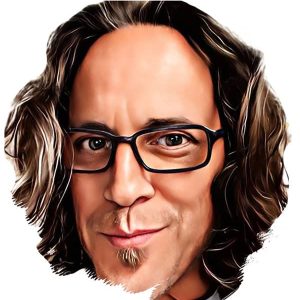


You probably don’t know what they look like but you know their work. Lifelong cartoonists Kevin Kallaugher and Ricig tell some Nasty tales about the power of an image of power, and drawing inspiration to make readers think peeling back the layers of art, language, meaning and persuasion. One of the best political conversations we’ve ever had on The Maryland Crab Cake Tour. Listen and learn about media in modern America. (And you’ll meet the person responsible for “Nasty” Nestor, too!)
Nestor Aparicio, Mike Ricigliano, and Kevin Kallaugher discuss their careers and personal stories. Nestor recalls his 27th anniversary celebration and the origin of his nickname “Nasty Nestor.” Kevin shares his journey from high school cartooning to becoming a political cartoonist, including a memorable incident in high school. Ricig recounts his experience as a cartoonist in Buffalo and his creative challenges. They discuss the power of cartoons, the impact of AI on satire, and the challenges of maintaining freedom of expression in journalism. Kevin reflects on his departure from the Baltimore Sun and his new platform on Substack.
SUMMARY KEYWORDS
Cartoonists, political cartoons, Baltimore Sun, Nasty Nestor, Kevin Kallaugher, Steve Ricigliano, editorial cartoons, freedom of expression, satire, AI impact, substack, cartooning techniques, public figures, media censorship, creative process.
SPEAKERS


 8
8

Steve Ricigliano, Mike Ricigliano, Speaker 1, Nestor Aparicio, Kevin Kallaugher
Nestor Aparicio 00:00
Welcome home. We are W, N, S, T, am 1570 task Baltimore. We are Baltimore, positive, positively at Zeke’s coffee. We’re here in lauraville, the whole over sickville. It’s like, I like to call it. We are fueled by Zeke’s coffee here today, for sure, they I told him, decaf, That better be decaf in this cup here. I don’t know what they did to
Steve Ricigliano 00:21
me. Does not seem like they gave Rogers
Nestor Aparicio 00:24
me or something pressure luck as well as Lucky Seven doubles. I’ll have these in August. Our 27th anniversary happens on August 3, beginning on August 4, I’m going to my 27 favorite places to eat and things to eat around the city. Some of them are a little bougie, like a fried lobster tail at Beaumont on the seventh of August. And some of them are going to be very humble, like an egg custard snowball, or some cookies up the street might even be peach cake involved in this before it’s all over with RACI as decided to stick around. Kevin colliger, Cal, K, a, l, Cal, political cartoonist, to pose that is like saying that because it sounds like it sounds like an overthrow from a government, and we have an overthrow by the good it isn’t directly received. I’m gonna have you introduce your offspring who is an unwilling contestant on the program. Your other kids been on your other kid has been on top, has been on pictures at top on the set, okay, up at the barn. Maybe you were in it too. It was one of the anniversaries where you did an anniversary thing, probably my fifth anniversary, probably 1997 Okay, all right. And I think I know your brother’s in it, because he’s the one who officially named me, nasty Nestor, I think. But you were a part of it, and it could be blamed on both of you. I only blame it on your brother if you want to take any acknowledgement of the story, because Cal is like nasty. Now, what? I didn’t know this, and I only know he was nasty enough, and I haven’t met Cal until 20 minutes ago. We just had our first biscuit together. We’re seeing I have known since 1984 February of 1984 I began in January. I say February generously, because rascal was one of the first people I met at sports first. And the newspaper fell apart in September, but we sort of hung around with the News America for another minute and a half, and then I went to the sun on January 6, 1986 during that period of time, I was trying to be taken seriously as a journalist and keep my gig with Jack Gibbons. We brought that up in the last segment. And there was a summer night, and I’ve looked up the date. It was in the late 1980s 88 or 89 it was 89 I think Eddie Murray had gone off to the Los Angeles Dodgers. He had played up in Veterans Stadium on a Sunday afternoon. Hit like, three home runs. You can look this up, like eight RBIs. And in that I went to that game, and I came home the pissed off Oriole fan that I that we’ve all been since 1983 this is early on, and we still thought we could win. And I came back and I said to receive who was a big rotisserie baseball player? Yeah, I said, I saw Eddie Murray hit home runs off of guys I’ve never heard of. And I and I said, these, these relief, these bums that the Phillies brought in. I never heard of these guys, I said. And he’s like, I probably heard on my play with history. And I’m like, if you know these guys are I’ll babysit your kids. Oh, yeah, this is so this is how it went. How old were you in a summer, 88 or eight? I look at the date on that, I’ll date
8Steve Ricigliano 03:19
myself six. I think I was six or seven. You were the older brother. That’s right, I was, and
Mike Ricigliano 03:23
still am, how he has maintained that one of
Steve Ricigliano 03:27
my proudest accomplishments, the
Nestor Aparicio 03:29
8right date on this because I did. There’s a whole clip thing I’ve done. People ask me all the time, why nasty Nestor, why did what? What did your friends call my first up, my childhood nickname was Jody, which I hated. Jody, see, see that, that guy, you know, why I hated it, right? So, right, exactly. So I was missing Aparicio when I was little. So I, you know, it was all sorts of things where I could fake pick my nose, where four fingered nest, then, then the Christmas donkey. Happened? Nestor the long eared Christmas donkey, right? Remember this? So Nestor is such a weird name, only made great by Nestor Shylock. Nestor Torres is the greatest flutist in the world. Was was jazz Flatus. I met him on an airplane one time. He told me I was the only Nestor he had ever met, right? Such an awkwardly bizarre names, my father’s name as well. There is a there was a Nestor who ran Argentina Nestor.
Mike Ricigliano 04:29
Nestor Smith played a character named Nestor
Nestor Aparicio 04:34
Nestor on tele television, exactly. And then there is the baseball pitcher who salvaged me and made your nickname famous, you or your brother. I don’t know which one it was, or both of you that nasty. Nestor Cortez, right? So on this particular night, I remember being on the fifth floor, and I made this challenge to receive, and the answer to the pitcher was Todd fro worth who? Became a friend of mine, the late great Todd fairworth, who became a friend of mine later as an Oriole, but he won the babysitting night with Todd. And I had a my son was born in 84 you 8182 82 and your brother was 83 and my kids, so you are one year apart. I felt bigger than that, and when you were kids. So I had a five year old kid. He’s a six year old kid. Had a four year old brother, and I’m taking on these three young gentlemen to babysit.
Mike Ricigliano 05:31
Oh, I forgot you, because my son was part
8Nestor Aparicio 05:33
of this. I lost a bet. Yeah, so I lost the bet.
Steve Ricigliano 05:36
Speaks a lot to your father and skills, that he’s the baby. So exactly,
Nestor Aparicio 05:41
probably go out with Nick the Greek or something and have dinner. Probably went up the peppers or something, went dancing. Oh, pepper, you know, I don’t know you probably going somewhere. It’s 1989 right? Yeah. So I came over to the house that night, and Terry, who was in Africa, we’re gonna give some love to, in a minute, had all this barbecue together. And she says, All you have to do is fire up the grill and do the barbecue. And we left the chicken on the grill. Do you want to pick the story up? You not remember any part of
Steve Ricigliano 06:06
8this very little recollection, but now that you say the chicken, I do, you botch the chicken. You burn the chicken, and I
Nestor Aparicio 06:11
sent you to bed. Oh, I had to get you in the tub. I mean, it was a whole thing. I mean, you gave a bath. No, they had filthy No, I mean, like, it was like, Okay, you guys are, you’re getting cleaned up and you’re going to bed. And they were pissed at me, him and his brother, and instead of Uncle Nestor and Uncle Buck was like a movie then and all that, they started calling me,
Steve Ricigliano 06:36
yeah, nasty. You’re just so he’s just so nasty, or you’re just so nasty. I remember someone saying, so it’s just so nasty. Yeah,
Nestor Aparicio 06:44
yeah. Did Terry give me that name? No, these kids even know what nasty was, and they were six. I think these are smart kids. These are accomplished kids you had.
8Mike Ricigliano 06:53
Yeah, you are so nasty. Is good, right? Well,
Nestor Aparicio 06:56
when people ask me how I became nasty, Nestor, this kid who’s now, how are you and how is your brother? The two people ask me about the nasty Nestor thing, I say it’s for six kids. And I always, you’ll always be six and four to me, right, right, or eight and six more like that. You know,
Steve Ricigliano 07:14
however old you were when you were babysitting us. I still, even I’m probably 20 years older than that now I’m still
Nestor Aparicio 07:19
823 to you. Yeah, I love that. Yeah, I would it be 23
Mike Ricigliano 07:22
to your who else loved my boys was John Steadman. He loved Steven top. He really did. He was fascinated with my my child. Well, they were
Nestor Aparicio 07:33
such smart well being, and they well behaved. Listen, they channel your your wife, more than you. You would admit, yes, mannerism wise, the way they look, the way you draw, good looking. They have that. They have a permanent smile about them. They both smile a lot, and they can’t help it. What is it? Wretching, resting bitch faces of like an internet thing, right? You have resting smile face all of you, the way your eyes are you always look
Mike Ricigliano 07:58
just the way I draw,
8Steve Ricigliano 07:59
happy, right? Exactly. You draw us as an Asian family.
Nestor Aparicio 08:04
You look like a happy Finnish Inuit family at the North Pole waiting for Santa to come down on every Christmas card.
Kevin Kallaugher 08:16
Great man. I mean, where did you come up with that visual? Fantastic, because
Nestor Aparicio 08:19
8I’ve seen 41 Christmas cards every year. I mean, he’s drawing a dozen for me, well, but
Kevin Kallaugher 08:25
these guys So,
Steve Ricigliano 08:27
speaking of Cal, I’ll sidestep talking about myself, but I will, I will tell a quick story about Cal and or really, it’s still, I guess it’s still about me, but I was at the climbing gym in Baltimore, and a friend introduced me to she was like, You’re gonna love this girl. Amy, she’s She’s so cool, she’s so fun. You guys are gonna be best friends. You got to meet this girl. So when is this? How long ago is this? Is about six years ago, six years as an adult, as an adult, as an adult. And I sure enough, she was a delight. And we, I remember, we walked around, like, the Hopkins campus. There was some crazy event going down in that Wyman Park Dell area. Oh, yeah, just some nutso event. And she was, she was super, super fun, like, wild tattoos. Anyway, wow, she’s wild too. Yeah, we started talking, and what is your, what does your dad do? That type of thing? And I’m like, Oh, my dad’s cartoonist. She was like, cartoonist. She’s like, my dad’s a cartoonist. There’s, can’t be that many of those. She was like, yeah. Like, have you ever heard of cow? Like, cow, of course, cow. She’s like, I’m Amy cowling. Or cows my father. And so we and you’re like, No wonder you’re cool. No wonder you’re cool. Exactly, kids are cartoonists. So we did, in fact, become great friends. And you know, it’s
Mike Ricigliano 09:46
we brought we broke bread together. The four of us said, Cal’s house, really, we broke crap together. When
8Nestor Aparicio 09:51
somebody comes up and says, I love your kid, and I’m like, Man, my kids great. Everybody loves my kid, me, I’m an acquired taste that you’re finding out good. Taste so far, it’s good. You’re not shocked to find out that your daughter’s lovely, right? No, that’s quite today’s her birthday too. Ah, I know we can get some cake right here. Bird seeks coffee. Steve is here, tops on it. What’s top doing? What’s it? Wait that. Did you name me nasty Nestor? Did he or did your mom like put you up to it? I haven’t spoken to you in 20 years. I want to do I want to know. I’ll say it
Steve Ricigliano 10:24
was me so we can have this competition. My friend doc
Mike Ricigliano 10:26
claims it’s him that named
Nestor Aparicio 10:28
8it. Oh,
Mike Ricigliano 10:29
really, yes, that’s a different story. So, yeah,
Nestor Aparicio 10:33
you name nasty Nestor Cortez. Now, I mean, like, I’ve never met that guy, but I’m thinking at this point, maybe this involves your your other kid. I was in New York couple weeks ago, and I thought I’d go up to like, Yankee Stadium and go into those shop stands and all that and try to find some discounted nasty Nestor gear. Oh, right, yes, I feel like he’s gone now, right? And they did all those cartoons of him. I mean, he was like, the must, the whole deal. That’s a funny he was a great guy to cartoon, right? I’ll be head on, sure. Yeah. So there’s 100 oh man, get him on the internet. But I’m like, I want to go up. Want to go up like sort of finger through, maybe find some I can’t find on the internet, but nasty. Nestor, you know, all these years later, and then my name got you served by this guy. Was a bum with the Orioles All Star game. Yeah,
Speaker 1 11:15
exactly.
8Nestor Aparicio 11:16
But I loved, you know, I love being nasty. Nestor, at this point, I introduce myself. Now, when I go to people, they say, What’s your name? And I say, ness, like Cal, like racig, and they’re like, net, like, if I’m at the coffee shop, she said, What’s your name? Nestor, N, E, S, T, E R, well, that first off, that’s not how it’s spelled. It’s weird. And if you say rhymes with Lester or, you know, whatever. But if I said my name is Wes, like, Wes Unseld, or, you know, Wes Moore, yeah, right. You say Oh, Wes, I’m like Ness rhymes with Wes, oh, okay, right. So, so that nasty Nestor, nobody ever called me Ness when I was a kid. Everybody almost calls me Nestor now, because I call you sort of my sort of, it’s what people started calling me. But the nasty thing, there’s not a day of my life. There’s not a day of my life where I don’t walk the street. I mean, I’ve already been called nasty at that table two or three times. I mean, it’s what anybody that listen calls me. It sort of delineates. There’s even a fan and a friend to some degree, you know. I mean, anybody’s a listener will call me nasty. Anybody that knows me will call me Nestor. Anybody that doesn’t know me will say, What do you want to be called? Right? But the nasty thing has open doors and any shut doors,
Steve Ricigliano 12:31
of course, time you’re welcome either way. Well,
Nestor Aparicio 12:35
the real stories I went on the radio in 91 and my boss said it was such a weird thing to say, I’m Nestor. No, you have to reset. And it just sort of, you were calling me that. And my I had a wallet that said nasty on it that may have gotten gifted to me by somebody, and it didn’t even have anything to do with the alliterative part. It just said nasty on it. Somebody gave me the wallet, and Jim Ward was my boss, and he said, You go on here. Call yourself nasty. Better damn well be named. He was a Philadelphia sports guy, you know what I mean. And, oh, he wanted you to be, wanted to throw punches, you know, like that. And I’m like, you know, it’s more like the Janet Jackson song, nasty, nasty bone it just gave me was, like, a little bit of a nasty was like, like
Mike Ricigliano 13:20
8the nasty boys for the
Nestor Aparicio 13:24
pistons. Wow, they were the bad, nasty voices. Rob Dibble, yes, that’s right, Cincinnati Reds. And, yeah. So there was a part of it that was, like, sort of a street term that was sort of like, Oh, he’s nasty, he’s fresh, he’s cool. You know, it wasn’t like being a bad human
Steve Ricigliano 13:43
right, which is how I intended it
Mike Ricigliano 13:45
at the time.
8Nestor Aparicio 13:48
Yes, exactly. That’s right. Yeah, pizza. They did not go to bed starved. We burned the chicken. It was a long story, so I took it out on the air. And then people come up to me every day with some weird story, but this is the wildest one. Last Saturday I met Costas and Paul mana, who does the trifecta Food Festival and the concerts and all that stuff. He’s a big concert promoter. He says his wife said, his wife said to me, my mother had a picture of you on her refrigerator, and it was the nasty my in my glasses. That was like a shot that Baltimore magazine. He thought. I said, How did that happen? She was a big band listener in 1992 9394 and big band a, wi t h, okay, I got my start, right, and I was on screaming nastiness. Oh, okay, and the nasty theme song? Do you remember the nasty theme song? A, do you want? Oh, right, yes, Kwame. Kwame is the artist is going into the hip hop Hall of Fame this month, and I think I’m getting them on the show. And he’s the artist of the nasty theme song, N, A, S, T, E, and he played in druid hole Park last Wow, that he did a Baltimore thing. He’s a Philadelphia now, now I can’t give.
Mike Ricigliano 15:00
The whole nasty song out of my head.
Nestor Aparicio 15:03
Always ask me about the genesis of that. Why did you call yourself nasty, Nestor? I’m like, I didn’t call me that
Steve Ricigliano 15:10
8you called like any true, good nickname. You can’t give it to yourself. You have to earn exactly
Nestor Aparicio 15:15
and then it just took off. So there we have it. How did Cal become Cal?
Kevin Kallaugher 15:19
Well, so my last name is Cal, her, but what happened was, when I was in high school, I what my I went to high school in Connecticut, that’s where I grew up. And my brother’s three years older. He’s a senior. I come in as a freshman, and my brother’s name was Cal. Everybody called him Cal, short for calaher and but when I came in as a freshman, I was little Cal. So for the first three years, I was little cow, little cow, little cow. But when he left, I became Cal, and then it was a lot more fun when I started doing cartoons, which I did do in high school, then I could sign them Cal, and that was, you know, in those days,
Mike Ricigliano 15:53
that’s where they were. They were, they editorial cartoons in high school too. Or was it kind of a
8Kevin Kallaugher 15:58
stripper? It was kind of a little bit of both. I mean, because it was commentary about your high school, yeah, stop where it was going on. But I remember one of the first cartoons I did got me in really big trouble, and kind of prepped me a little bit for the career that I am in, right? But actually, I back up even early in a fifth grade. I was at a Catholic school in Norwalk, Connecticut, and we had a music teacher who was a nun, and she would always sing with her eyes closed. And I was sitting in the back of the classroom, and I got, man, I just got to get this down on paper. So I was scribbling this thing, you’re
Nestor Aparicio 16:36
a troublemaker. This is three troublemakers right? I mean, really, right. So
Mike Ricigliano 16:43
trouble, my trouble. I also, I also did teacher drawings. Yes, they so I think a lot of
Nestor Aparicio 16:49
8cars. You know, what I do is I did, I did rock logos, like I’m wearing my belt buckle today. This is, I’m wearing my yellow belt buckle today.
Kevin Kallaugher 16:57
Yeah, so I,
Nestor Aparicio 16:57
but I did the sticks logo, the rush one was really hard, but sticks had, like, straight lines, so I was always trying to, like, yeah, Oh, my Oh, my notebook. I mean, like, journey, wings. Van Halen had the VH. I think every kid my age. I mean, John Allen, who’s an incredible artist, who you went to that concept with me, right? I mean, that was 1979 8081, I went to middle school, and it was either the brown paper bag your dad would get you the you know, or you’d want an Orioles thing you bought at the mall or something like that. But everyone drew on their blue notebook, and they were mainly rock and roll logos or angels or different sort of but rock logos, the AC DC logo, the sort of symmetry of all that that was sketchy for if I would have gone to my art class in eighth grade, she would have said, Hey, kid, you seem to like drawing a little bit. Yeah, I would want to draw a logo, rock and roll, you
Mike Ricigliano 17:55
know. Now, let’s not cow finished.
8Kevin Kallaugher 17:58
Yeah. So, so what happens is, I’m doing this sketch of the teacher, right, with a mouth the size of a battleship, and I’m having it’s for me, right? But the girl next to me sees this thing, she picks it up, has a little giggle, passes it to the kid next to her, and a cartoon starts going around the classroom. And, you know, you’re 12 years old, and the affirmation from your kids this is like, great, oh man, you know, this is awesome, until the teacher gets a hold of the cartoon, and she takes me by the ear down to the boys room and makes me take a bite out of a bar soap.
Nestor Aparicio 18:31
This is right out of the Christmas story that really
Kevin Kallaugher 18:34
is. And he says, Don’t you ever draw another one like that? And I’ve been doing them ever
Mike Ricigliano 18:40
8since, right? Exactly, yeah.
Nestor Aparicio 18:43
I mean, I guess the reason I even brought up is we’ve all scribbled in school, right, whether it was notes or this or but to have the aptitude to be a cartoonist, I mean, it’s an audacious thought right at that point, to think that your art was going to be in a newspaper, or that you would that would be a line of work. It is like being a radio just person, like, didn’t feel like a job to me that you went when you went to school, right?
Mike Ricigliano 19:09
Yeah, were you like a Mad Magazine guy too?
Kevin Kallaugher 19:11
Yeah, I enjoyed Mad Magazine. One of the curious things about all cartoonists is that there’s no school for cartooning. Yeah. I mean, maybe there’s a few places now, but, but there’s no graduate degree in it or anything. What, what happened was, is that we all learned by looking at other cartoons, other cartoonists, sure, getting books, reading through them, and going to your your phrase, which I thought was really interesting, is audacious to have a thought that you could become a cartoonist. Yeah. And for me, one of the things that really helped me in that path was I was about 14. It was an article in The New York Times said there was a new museum of cartoons opening up in Greenwich, Connecticut. Is about 20, right, 20 minute ride from the house. I showed this to my mom, said, Hey, we got to go check this place up. So we drive. We get they were obsessed with cartooning. Oh, yeah, I’ve been. Drawing and in, you know,
8Nestor Aparicio 20:01
how do you even intake cartoons were much more common than strips and stuff. Yeah, just strips, not necessarily political stuff. I see, I think of you as sports and you as political. Yeah, both of you came from Blondie and dad would right, like, and sure, like, all of that. That’s exactly I wasn’t the kid that read the comic thing. I was the kid that read the sports, right? That’s you were the ones when you got the newspaper, the comics were, yes, the most important part of the Okay, I’m learning about that because it’s, you know, people don’t have that experience anymore. That’s right. They really
Kevin Kallaugher 20:33
know, right, yeah, absolutely right. So, so you go find this place, this location, and it’s a house, it’s like in a neighborhood, it’s like no other commercial places nearby. It looks empty. And we’re wondering, have we got this, right? We drive up the travel we’re kind of looking around. It’s all black, and then a car pulls up, and it’s this guy who’s a cartoonist, and he’s getting out, and he’s got some boxes and, you know, and he’s going to be low and stuff inside the house. And then he tells us the story. And the story was, at that time, I’m talking in the 60s, that, by
Nestor Aparicio 21:04
the way, your kid just dropped the mic and roll by. I love you. See you be good. All right, there you go.
Kevin Kallaugher 21:10
8That there was a law that passed, partly because of Watergate. And what Nixon tried to do, he tried to, he built his, you know, presidential library, as they do. And he wanted to donate, say letters that people had written to them and other things and deduct, you know, 1000s of dollars for each one of these things, and Congress compound says, no, no, no, no. Instead. Now, if you want to donate a cartoon to charity or something, you can only claim the cost of the paper and the ink. Oh, okay. But the problem was, is that if you passed away, your estate would be taxed at the full market value. So I’ve done 11,000 published cartoons.
Mike Ricigliano 21:52
11,000 Wow. I thought I had a lockdown. That is a lot. You
Kevin Kallaugher 21:56
multiply that. Let’s just pick a number by 200 or 400 per cartoon. And certainly money gets serious. And those days, the estate tax was low threshold. So cartoonists were going to be if they died, they were they’re going to leave their family with this huge tax bill. So guys were burning their cartoons. They’re throwing them away. They didn’t want to have them around. So the cartoonists got together, said, No, well, hot, let’s get them using Charles Schultz doing that. And so we’ll try to figure something out. Let’s and so they were bringing in boxes of cartoons. And so I volunteered to go there. My mom would drive me there every month or every few weeks. And I was holding cartoons and looking at cartoons. I was meeting cartoonists. So suddenly it didn’t seem as so what year is this? Late 60s, okay, yeah, that kind of right around 1970 right around there. Now, mid, actually, mid 60s, mid to late 60s. And so, you know, I’m having met cartoons that suddenly became something approachable, and that was, you know, a great blessing for me. So then I went to high school. I did cartoons from my high school paper, the comic strip. I also got in trouble again my first year there. I got another serious trouble like this teacher thing that I had in grammar school. The newspaper. The editor was a friend of my brothers. He was a senior. I was a freshman. He knew I draw and say, Hey, come and draw some cartoons for us. I said, Great, we’re doing this story comparing our our school, to a pond for frogs. So everybody starts off as tadpoles, and then over four years to become a big frog. And so I was drawing all these different things, but at the end, on the back page, I decided they did. They thought it was okay that I would do a cart cartoon of the Dean of men, who is like the head enforcer, who was a priest by the name of Father. Dv, you’re about to take it power. And he was power, and I drew him as the dean of frogs. Oh, boy, look like a frog. And I in a big jutting out teeth and, you know, overlapping left. He did not
Nestor Aparicio 23:57
like your portrayal of his image. Not
8Kevin Kallaugher 23:59
only he didn’t like it. They had, like, faculty meetings to decide whether they should shut down the paper. I mean, it was just like, you know, freedom of expression. Shall we let the kids do this? This is an insult. It will undermine authority, blah, blah, blah, all of this stuff. And I’m, like, a freshman, I’m thinking,
Speaker 1 24:15
right, right?
Nestor Aparicio 24:16
Yes. So, so that first of many times you were intimidated, right?
Mike Ricigliano 24:19
8So I have one I can throw in here too. So I this is, this is now working for the courier express in Buffalo, my first newspaper job. And I have a friend who went to Canisius College, and their arch rival was st Bonaventure College, and they had a phrase there that was Buck father, which was flip it, you know, it’s F Bana, you know, that was there, that was a word. And so it was a word that was out there. And
Nestor Aparicio 24:49
late 70s here. This is late 70s, yeah. And error is important for all. Yes, right, right. It’s the context. And
Mike Ricigliano 24:56
so I ice, I slipped this word by. Fauci, Buck Fauci, which is like a nonsense word, but it had meaning to Canisius fans and to a lot of fans. I slipped it into a cartoon one time and got away with it, except for that, the editor found out about what it meant. Somebody called up and said, Hey, we know what that means, and it’s, you know, not, not for a newspaper. And so the editor calls me in and says, You will never use that word again in our newspaper, or you will be fired. And I was like, I’m a bachelor at this point. I’m not a married person with kids, so my whole thing is cartoon thing, you know, like, I got to get away with this. So I found 35 different ways to slip Buck Fauci into the newspaper going forward until that paper folded, including, like, here’s one that I did. I had an art like a like a lake was like an Artscape type of drawing that they do. And I had all the different art booths numbered, and there was, if you connected the dots in it with a big red marker. It’s spelled Buck Fauci across the entire newspaper. And nobody, nobody caught it, except for one sports guy who said it, and I said, Dude, you got to be quiet about that. Like, don’t say anything. But on the last day of the paper, they had a party, and this
Nestor Aparicio 26:21
is Austin, right? You’re doing something that only you can know about. Cal knows this.
8Mike Ricigliano 26:28
We like slip and stuff in, yeah, so
Nestor Aparicio 26:31
I do it all the time. They either mean something to somebody or they don’t.
Mike Ricigliano 26:35
So on that last day at the party, I was asked to be a speaker, and I brought out all the different ways I had slipped Buck Fauci. I’ve had every newspaper I had. I was on TV one day, and they were did a promo photo of me and I slipped Buck Fauci into the background of the photo. I found all kinds of ways to slip it in, but I revealed them all at that party, you know? So, yeah,
Nestor Aparicio 26:58
8I’ve been Bravo. Big night when the reveal part. Oh, it’s really
Mike Ricigliano 27:01
funny. And neighbor, my editor, was very mad at me, for, you know, because I defied him, basically, but didn’t matter the paper.
Nestor Aparicio 27:08
But hold on me, I defied him. Let’s go back this. Kevin colliger is here and receives here, where it does Zeke’s coffee work. Oh, and
Mike Ricigliano 27:14
I look here, here’s some Cal art right here? Everyone
8Nestor Aparicio 27:20
shock, I know all about beer, and this is Cal it’s delicious locally, just like the coffee here at Zeke’s coffee. I didn’t even meet you off the air. I met you here. One of the first things you said to me, and literally, I go back about an hour ago, was first thing you learn here is you’re gonna piss somebody off, you know, and then what you do with that once you piss somebody off. I never thought, like in my show, in my line of work, that it would be that I would get nearly the kind of hate. And it speaks to what Dan talked about, a little bit too, being modern, right? Used to be phone calls. You could call and debate with me, I can’t imagine a world taking phone calls right now, because, to some degree, you you make it for the audience. And I know Dan sort of bristled when I said you’re not writing for the audience. You really aren’t. You’re writing what you think needs to be said and not worrying about who reads it. They’re reading your truth. And I even put up a thing the other day about my truth, and somebody wants to argue your truth, the truth? No, my truth is what my cartoon is what my words are, what we say, and then the implicit meaning behind it, and the thought put behind being creative and not just spouting out on the radio in real time like I do. You guys go into a think tank with yourself, and like any writer would before you write something. Mine’s much more sort of immediate in this way. But when you start to put that together and start to think through panels, or is it one piece, how mean do I want to be? Is that racist, sexist, unfair, you know, whatever is that, is that off the top rope? Is that, is that going to cost me my job like or
Mike Ricigliano 28:56
at least cost you the chance to get your message into the paper that day? Because you want to, you will still want to get your message across, and if you know it’s going to get shot down because of one little thing that you put in there that’s distasteful, or whatever the order the editor is going to object to. So you’re, you’re your own editor. Is what it is.
Kevin Kallaugher 29:14
Yeah, I think the key term that I use is whether you can have an effective cartoon. So what does it what does that mean? Effective? It means that you want to get your point across. That’s the number one priority. And the second thing is you want to engage people. But if you engage people with either metaphor that you know is going to be a charged metaphor that’s going to get people going, or the imagery and cart for a while as president of an international human rights group for cartoonists who around the world get arrested, jailed, worse
Nestor Aparicio 29:45
8for what they do. Chris Van Hollen came on last year at Mako and sat with me and said, journalist, most dangerous job in the world. Yeah, now, most dangerous job in the world. Journalist, now. So I mean cartoonists, doesn’t say. On nearly as imposing as journalists. Cartoonists are the most powerful journalists in a lot of places where people can’t read but they can interpret, right? You know, literally, the first thing we ever learned to do is draw stick figures, right? That’s a different language that you speak in,
Kevin Kallaugher 30:16
absolutely and plus, the caricature is a real key component to that, because any person who’s powerful understands this, if there’s a person who can take their face apart, their most valuable prized possession and then reassemble it under their control, and then be them having power and wanting to control everything around that is a dangerous person, and so they will go for those people first and try to silence them again. In fact, you can we, I can judge the freedom of any country first by determining if the cartoonist can draw their own head of state. And I remember having a conversation with a bunch of
Nestor Aparicio 30:55
where it might be the most astute thing I’ve heard on this show this year. I mean, like, say that again, that now I gotta stop and write that you judge a call a country in a culture based on whether a cartoonist can draw its leader.
Kevin Kallaugher 31:11
That’s right, yeah, yeah. That’s well,
8Mike Ricigliano 31:13
bottom line, let me ask you this then, because a lot of times like say, you get a new president, yeah, and he’s Joe Biden. You know, who is? I don’t know. You have to solve him as a cartoonist, basically, I mean, and that’s,
Nestor Aparicio 31:26
you know, what do you mean by that? Well, find solve because
Mike Ricigliano 31:31
some people like Lyndon Johnson say are much, much easier to draw or caricature than someone that’s, you know, a normal looking face, you know, I guess if we so, especially someone like Cal I’m actually asking him this, yeah, because he is really much more of a caricaturist than I am. So, you know, how do you go about that? How do you do that?
Kevin Kallaugher 31:55
8Well, I, first of all, I love the face. I’ve been drawing characters my whole life. It’s one of the greatest challenges. I mean, we know, we’re all interested in people. We’re curious. I mean, one of the fun places for me to be is in the front, like of Zeke’s here. Were you watching people go behind the street, like
Nestor Aparicio 32:09
a real are you like a Parisian? Yeah.
Kevin Kallaugher 32:12
And it’s fun. I think all of us do it anyways. Like somebody walks in, we take pictures in our mind, and they suss them out, and they can make some sort of judgment, or an assessment, rather than a judgment. Some people make judgments, I guess, but an assessment of that character, who it is, and so on. When I was playing basketball, play pickup basketball till I was in my mid, late 50s, and one of the great things is showing up at a playground or showing up at a gym, and you have to get a fix on people, not by the way they shoot by what they’re wearing, the way they walk. Because when you choose a team you want to get on a team, you want to win and stay on the court, so you’re only going to pick the four or five guys that you want to have on your team, and so you judge that person. I’m not so sure about that, okay? And then you might see if they shoot, you know, whether they got it, and so on. So again, it’s very simple judgments and assessments. So faces, of course, are the most potent thing for expression for any individual, and so I always the eyes are really judged by his eyes. I was gonna say eyes are cool, but it’s, you know what? It’s one of the most important part is the shape of your head. It’s the reason why from a distance we can recognize somebody or from behind, is because the shape of the head. So you start there, get that shape right,
Nestor Aparicio 33:24
six, nodding his head. Like fun talking
8Mike Ricigliano 33:27
to a guard. Yeah, I can remember faces and I can never remember names, but yeah,
Kevin Kallaugher 33:30
that’s right, exactly right. Then I’m the exact same so, so then you go inside that, that structure of the face that you’ve established, and trying to find the inner shapes that may that are distinct to that individual. Where the cheekbones are. You know, the eyes are shapes, but some eyes are big, sometimes they’re small. Where they go? How close together, how far apart? You know, ears, their shape. They affect the overall shape. The ears go big. Do they go small? Did they make not even there. Donald Trump doesn’t have any ears from what I can see, because you never see. We don’t even think about
Nestor Aparicio 34:00
his ears. I saw one get shot off,
Kevin Kallaugher 34:03
8yes, and then, but Barack Obama, the ears, of course, are central to the shape of exactly so. But then here’s the magic bit, and this is, there’s a degree of mystery even for me, but I’ve been doing this for such a long time, is trying to capture the essence of that person within those shapes. One of my favorite quotes about caricature comes from this Italian Renaissance painter, Annabelle Carracci, who said a good caricature is more true to life than reality itself. So you’re trying to capture something that is bigger and unique. The reason why, if we had a statue here of risig, it wouldn’t look alive, but when you look at risig, he’s alive, because there’s all this subtle stuff that’s giving you these messages. So when I try to do a caricature, my goal aspiration, I don’t want to achieve it. My aspiration is to try to get something that exudes. Includes that character, even if it’s in cartoon form, maybe it’s exaggerated, all that sort of stuff. It’s trying to get to the that inner bit that makes them special. For a long time, I did caricatures on the streets. We’ve all seen those guys. Yeah,
Nestor Aparicio 35:14
my mother had one of me done at the harbor when I was a boy.
Kevin Kallaugher 35:18
It’s not easy work. It’s not, yeah, it is not. It’s magical.
Nestor Aparicio 35:22
Anytime you’re anywhere watching artists do that work, even for artists, do you
8Kevin Kallaugher 35:26
think it is? It is, I mean, I do the work. I love watching people draw. I there was this one situation when I was in the UK where three cartoonists got together with, you know, afternoon, the barbecue, hanging out, you know, beautiful weather. The, you know, the pens come out, the papers come out right. And what we did is we sat in a triangle close enough so we could see each other, and one on my left drew me. I drew the one on my right. And so this triangle where everybody was drawing each other. Then after we did one drawing, we switched directions. But the thing was that was most fun for me was watching how they drew it, because he drew differently to me, yes. And when you see a paid a pen or a pencil drag across a paper, it’s there’s no special effects. There it is.
Nestor Aparicio 36:11
Pure watch magic for hours years ago, yes, because he and I have been that close. He’s done stuff with me and done I’ve sat at his house after football games when he was creating cartoons back in the 80s, especially after which is they missed the kick Norwood, right? I mean, that was, oh yeah, the mate you had to do we I got a cartoon you did to me with the Oilers and the bills. But his were always sporty, and I understood stuff. The political stuff is much more, I think, broad to some degree. You know what? I mean, trying to get a point across, or make a point for somebody or maybe change their mind. You know what? I mean, I saw your work as a little bit more send up. You weren’t trying to make decisions as much. You’re trying to like the stuff that got you deposed weeks ago at the Baltimore Sun. By the way, the former Baltimore Sun was crossing a line, right? I mean, you know, in where they were, and also making a point that’s so strong that it felt like the banner above it, not the Baltimore banner, but the masthead. And the people there didn’t want that message to be their message, right? And that’s a strong it
Mike Ricigliano 37:19
only crosses the line for management at the time, right? I mean, your cartoons haven’t
Nestor Aparicio 37:26
8Bucha was no good for you, and it would make it onto my FCC.
Mike Ricigliano 37:30
That’s not that’s just beat me being a child, I think actually work, you know, where he’s putting it out there and getting his message out. And most people, or most normal thinking people, would not find it over that. You know, well, I think it’s
Nestor Aparicio 37:48
you down because you’re Kim Jong Un in North Korea. It’s a different thing for your publisher to want to shut you down in Buffalo because it was going to cost them subscribers or have phone calls. It’s gonna make my phone ring, legal is gonna call, right? So whatever those challenges are, and I’ve had those challenges about what goes out on this airwaves, about like, what I’m willing to have your back on, and what I’m not willing to have your back on, right? And I’ve been sued, like, all of that too, that there is a point where whatever happened to you, maybe we lead to that now, because, like, honestly, you said the mouthful and saying, My work’s gonna piss people off. You acknowledge that in the beginning, and then if I can’t draw a leader of the state, and then we get the Colbert, right? I mean, and where we are, and I own an FCC license here, right? Hey, man, I don’t we’re in a different level of being muted, being censored, not even being censored, being shut down, being intimidated, being purged, being thrown out of the Ravens clubhouse when they have sexual predators in there, and not being allowed to ask questions anymore. That the media, as Dan pointed out, has been vilified to the point where, oh, F that cartoonist, he made fun of my president. He needs to be fired. That’s he needs to be shown a lesson after 50 years of doing your work. It’s like anybody that would think I should be thrown out of the Ravens or Orioles clubhouse is a complete jackass. And I’ll say that here, there anywhere, because you want accountability. You you ask the why, and then you don’t want people having real voices, to ask questions, to get answers, to verify, to hold accountable, to hold power accountable, and your story is right along the line of Colbert and I hit you two weeks ago when Roderick wasn’t even supposed to be here. Dan was supposed to be with me. Meet deepest quality. So it wasn’t even a setup, but he I kept calling him to pose. He’s like, I quit. I wasn’t to post. I mean, you know, I was proudly fired at Sporting News Radio, you know. But I don’t know where you are in your emotions of all of this, and you seem to be taking it in stride. But it’s, did you have warned? I mean, you know, I’m gonna say that out loud, you know. I
Mike Ricigliano 39:59
mean, did you have any. Inkling of it Cal before it happened or or was, how did that actually work? So
8Kevin Kallaugher 40:07
several years before the paper was bought by our friend, I had done some pretty wicked cartoons about Sinclair, course, and one in particular, of David Smith. I mean, a really, yes, funny, you know, multi panel story thing about David introducing him to the world. You don’t know my name, you don’t know my face, but you’re about to hear my voice, which is for all these stations around the country where he was forcing all the people to spare conservative perspectives. So I did this. I mean, it’s one of my allegation. That’s a fact. It’s a fact. There’s one of my favorite cartoons, right? And then, and so the second he bought it, I said, I’m toast. I’m toast. I mean, if I get one more week here, you know that’d be, that would be amazing play me on
Nestor Aparicio 40:56
Twitter. When, when the Nazi bought Twitter? My first word of my description was journalist. I was off at Twitter within 10 days, and there was no literally. And if I say that out loud, people think that’s outright, I must have what I’ve had businesses say, What did you do to get thrown off of Twitter? It’s a journalist, and that’s the first thing that he went into purge. And if there’s any doubt three years later that that cat did that, yeah, he absolutely did that. There were all sorts of journalists at that. I had no power to fight back. I had no Baltimore Sun in front of me or Bal in front of me. I, you know, I inquired to Twitter, and they said, we’ve decided you don’t cut the standards of being on Twitter anymore. And they threw me my 10,000 threw me off, yeah. So I know, I mean, in your case, you made it you’re,
Kevin Kallaugher 41:45
oh, yeah, you’re in a bit. And, you know, and going into my my reflection upon the whole thing, and part of the reason why I feel good where I am with this is that, you know, I, I came over in 1988 the Baltimore Sun took me and my family from England to come here to Baltimore. I got to introduce to Baltimore, raise my family here in Baltimore. What a wonderful experience it was, and it was a gift that the Baltimore Sun gave to me then, oh, I’ve had so many great experiences. Met all sorts of interesting people. I’ve done award winning cartoons. I’ve, you know, great resume build up. But also saw, over the course of the past two decades, the kind of the shrinking of not only the Baltimore Sun, but newspapers around the country, there would be an end and yeah, so you got feel, so you had to kind of be prepared for that. Fortunately, the economist is great, and I feel that I have a safe place there. But also now that I’m sub stack, which is, you know, this ability to have your own basic publishing play, yes, where people come in, you can get go to visit my see now with my cartoons, I’m doing original cartoon, finishing cartoon today. It’s going to go on the cartoon that would have been in the Baltimore Sun is going to be on the Cal draws a line sub stack, and you can see, my car shifted your brand. Yeah, I shifted the brand like you’ve done so many times, right? Several, three, four times, yeah. And, but what I love about sub stack is that the Creator owns the copyright. They own, everything they own. They have on the list of people that subscribe. It’s not some social media company that’s going to take it and then affect the algorithm who gets to see this and all that sort of stuff. And so I suspect, if we’re looking as things go forward on the nature of information, where there’s going to be so much unreliable information, so much so that the more the AI gets out there when you can’t believe anything that you read on the internet. The thing about something like, it’s like substack, is that these are real people producing real content, and people, people gravitate in that direction.
Mike Ricigliano 43:51
8Dan is on it too, right? Dan,
Nestor Aparicio 43:54
I’m blown away at just where the country’s gone. I mean, I’m just, I’m as a Hispanic who thought he was white when he was a kid, you know, I’m just, I’m blown away by all of it and the purge of media and where all of that’s going, but the possibilities for moving a voice and what will be trusted. I said back in 18 and 19, one of the reasons I built Baltimore positive at heart was I was going to run for mayor. That’s first thing. Everybody knows that. But what I thought at that point when I decided to do Baltimore positive in the summer 2020, Trump’s still president. We’re all wearing masks. At some point, people are going to have to come back to something they trust and something that’s not bought off, and somebody that’s not going to bullshit them, somebody that’s not going to kowtow to you can’t say that about David Rubenstein because they’re in last place, or you can’t speak your truth, your truth, my truth, right? That I still think, at the end of all of this, I still believe, like Dan spoke about these ICE agents, and, you know, moral responsibility for their actions and the. We move toward this sort of weirdly Nazi thing that’s going on around here at this point, including Colbert, including you, including the people that own the sun, that the Sun becomes a shell, and people are going to look for another place for trust. I mean, I saw the banner. I got served an ad from the banner yesterday by some dude that looks like he’s in, you know, getting money, literally begging for donations so that we’re the day after NPR got cut, right? Public Television, public radio gets cut, all of that, and we have the banner, which is like the next thing that’s going to hopefully keep truth alive, or investigated journalism alive, as we’ve known it for the last couple of centuries, here, and they’re begging for donations in addition to give me 20 bucks a month to be a subscriber, it’s now public television, and I, I don’t know who funds truth right? In the world where, you know, Colbert can’t have a show, right? And CBS feels like they’re so intimidated that they can’t underwrite 60 Minutes anymore. Shit slipping pretty quick here over the last six months in a big way, and I still think, when this is over with if, if the halls of Justice are going to win out, they’re gonna have to trust news and people and information, and people are going to be looking five years after Trump, the first time I would have said the reason I created Baltimore positive is I thought people would want to trust people on the streets and the business owners and the people that make up this community, and even the politicians that Johnny Oh, who will come and sit with me and try to give me his truth and then back it up and be accountable to come back six months later and answer more questions. That’s the world I knew. I knew that in press conferences. I didn’t know we’d have a head coach running down and making nice with Donald Trump two weeks ago and hiding about it, right? Like, and now, if you bring that out, Chad Steele is going to call you and threaten your press pass. Nothing to do with football. What? Yeah, like, what? I mean. I’ve just seen it all slide the truth part. When you talk about your trusted and your cartoons are trusted by your audience. I think that’s all all of us, that is our, that’s, that’s our, that’s our money right now, that’s, that’s where it’s at, our trust in our word and our integrity. Yeah, that’s all we have as artists, as creators and as citizens. Yeah. I mean, I mean that, yeah. Well, one
Kevin Kallaugher 47:17
of the things that you know, people have asked cartoonists a lot, you know, AI, what does this mean for you? And so on. But one of the things about on the web now there’s more satire than ever, which is quite good. Does you know that’s healthy for democracy to have satire? There’s so much of
Nestor Aparicio 47:31
it out there. Citizen satire? Yes, citizen. Exactly. The name means, right? So one of the
8Kevin Kallaugher 47:35
differences between what I do in a meme and memes, some of them are fantastic, and the capability of AI to create these amazing imagery is amazing. None of them are signed, but the cartoon is signed, so suddenly there’s a human there. Maple may either make a connection or at least a response before that’s right. And so I think that creates a different environment, and people respond to it differently being other humans. I mean, that’s, that’s my take. Anyway, I’ve
Nestor Aparicio 48:02
talked so much about comedy, right? And you both work in mean, you’re mean, you’re nasty. But I chuckle too. Yeah, there’s a chuckle above and beyond the Oh, that was a punch. And I see this. You
Mike Ricigliano 48:15
make the nickname nasty cow.
Nestor Aparicio 48:20
8But I mean, not too late, you guys are smiling and chuckling, but you smile at your own work, right? Yeah, of course. I mean when I write a zinger, when I’m taking down somebody, when I’m writing eight pages of Pearl Jam lyrics to get after the lack of integrity. Eric Decosta has shown me over 30 years, and what a creep I think he is. I can use Pearl Jam lyrics to get after that. You guys are smiling. Don’t think at 3am when I’m having a cup of coffee and coming off the top rope about still being alive. Yeah, to make my point, you know that I’m smiling as I’m writing zingers when you’re I mean, you’ve drawn Putin a million times you’ve drawn Trump, 1000 times you’ve, you know, you drew, or say, a million times you drew Angelo, some million times. Yeah. I mean, is there a point where, like, you’re, you’re both are smiling at me, but, like, when you’re drawing it, you’re like, Ah, this is gonna make people laugh. It’s gonna make people cry. It’s gonna piss people off. It’s gonna inform people, yeah, there’s gonna be a buck muck, a muck, a muck in there. There’s gonna be a nick the Greek in there. And you’re like, entertaining yourself. I’m sure
Mike Ricigliano 49:25
Cal it’s the same. I also, yeah, tickled by some I do, yeah,
Kevin Kallaugher 49:32
oh yeah. Now, do you find, I mean, I’m sure this happens to get but you know, we’re in this business when you’re dealing with humor, and you know you’re working with humor is that you’re writing something you don’t exactly know if people are going to a get it Yes, or if it’s going to have the intended effect, yes. And so you’re giggling to yourself, I say, okay, is this everybody else thinking the same thing? When you take a walk away and you come back, you get a fresh view of it, you go, that’s working. Or sometimes it’s not working. Well, I need to change those words that you don’t think.
Mike Ricigliano 50:00
Like that, or you missed, miss it entirely, and he put it out there, and no one does get it
8Kevin Kallaugher 50:05
so, so it is a, that is a, you know, when you do most, when we do cartoons, every cartoon you do is a practice for the next one. You know, all the mistakes, right? Yeah, and that you’re starting with a blank piece of paper every day. So you get to start anew and but one of the things that happens when you’ve been doing it for a couple of decades, and we’ve done it more than a couple of
Nestor Aparicio 50:27
decades, yeah, but you read, you get a
Kevin Kallaugher 50:30
sixth sense about what’s going to kind of work and what’s not going to work, and what people are going to respond to. And sometimes, of course, you still miss and that’s where a good editor or a good person, you can bounce them off of and they can kind of help you say, yeah, that’s not quite working. Who was your bounce? Well, I’ve got most in the early days,
Nestor Aparicio 50:49
8you trust it, didn’t I that’s literally for my bounce it off. Who do you trust? I mean, literally means that. Well, the
Kevin Kallaugher 50:55
funny thing was, is that I would bounce certain cartoons off of some people and other ones off of other people. In other words, if it’s gonna be on this subject, I’ll talk to these folks, if it’s gonna be this is a humor like, like, you know, my wife, who knows my cartoons inside out. She’s seen them 1000 times. I love to wave things underneath her, but she’s a Brit, and so she’s a little, you know, she, she doesn’t, she
Nestor Aparicio 51:15
doesn’t do humor the same way. Well,
Kevin Kallaugher 51:19
no human the British, but she’s not like a boisterous, loud laugh like I would be. So when I see her, she goes, Oh,
8Nestor Aparicio 51:35
good. Kevin colliger, just on on that part of it, the humor is where the edge is, and that’s where you made fun of the campus president, and that was humor in the wrong way about the wrong person, right? And you even mentioned, and I didn’t want to be disrupted because you’re so interested, I gotta have you back. Please. Let’s do this again. We’ll stop this, because it’s interesting. Leave them want more like Stairway to Heaven. But you mentioned the face, yeah, and you mentioned that the face, both of you, you confirm this, receive, is the heart and the middle of caricature work and anything that you’re trying to draw, because that’s the identification of who, who, what, where, why, when, right? Boom, boom, boom, boom. All my journalism stuff, right? The Asian part of life, and you’ve traveled in Asia, and I’ve traveled in Asia, saving face, saving face. So when you talk about wanting to be killed for doing a political cartoon, when you make fun of someone’s face, you know, see, keeping my honor, keeping my image, keeping my brand. Don’t make fun of me. None of us like to be made fun like his. He’s done a million cartoons of me. All of them sort of make fun of me, but none of them ever hurt my feelings. You mean, there’s, there’s make fun of me, and then there’s kicked me really into balls, and then they’re saying something about my mother, yeah? And then there’s something, you know what I mean? Yeah, and we all have that
Mike Ricigliano 53:04
big figures. They have big egos too. So I think, you know, when Cal does the caricature of a president or a, you know, I think, you know, the bigger they are, the harder they fall. Like, where’s
Nestor Aparicio 53:16
the bridge? Too far for you at this point, what’s something you think that’s so effing mean. I do it all the time. I think, I think a lot of mean things I don’t say right, or that I I can write to myself in some vomit that might make it into a comedy routine, because if I start doing comedy that allows me a little different latitude than even what I do on the radio, but I take it to a stage, I can work a little more blue, right? I can take little zingers that might not, that would come across over a couple of beers in a bar differently, you know. I mean, for you, where’s the bridge too far? Because I’m sure you think, you think over the off the top edge more than you can go off the top, right? You have to rein it in always.
Kevin Kallaugher 53:53
8Oh, yeah, that’s right. Well, I mean, I guess there’s one car. A certainty for me is that I will not draw the children of a politician, right? Because often, you know, you’d have cartoons. You know, particularly when I was doing local cartoons, which I did, you know, when I was doing five cartoons a week for the sun, I usually do one a week, just on local politics here in Baltimore. You know, they would be easy targets, unless a politician dragged them into the spotlight, right? And use them as you know,
Mike Ricigliano 54:23
as now, when you say surgeon of politicians, you don’t mean Don Jr. No,
Kevin Kallaugher 54:29
I’ve done but it’s but the ideas is that there they didn’t invite themselves.
Nestor Aparicio 54:34
No, they’re public figures, though, yes, they’re public. Those guys are Trump is now a public
8Kevin Kallaugher 54:39
isn’t that something now He is funny. I would not have drawn when he was 12. That’s a few years a year ago. But now suddenly he’s turned into, right, okay, that’s it, so. But anyways, that’s that’s one of mine. And then everything else is that you have to reflect and think. What I like tell folks is that, because they say, is there something you can’t draw, with the exception of kids? I says, No, I can draw. Draw almost everything, but it’s how I draw it that becomes the important thing, right? It’s how you describe it, right? When Barack Obama came in, it was a whole bunch of consternation for the first six months. But we’ve got a black man. How are we going to draw this black man without being offensive? And I was looking at partly because I really take great care in my caricatures. I really like to get more detail in them than many people who do very simple versions. And, you know, we click quickly. Got through that, but because, oh, you know, you get into certain areas, which are mine fields, people get have, they can get very nervous, and then they just withdraw and don’t try to deal with it. I will like to approach it, but try to do it with smarts and an experience that I’ve accumulated over nearly
Nestor Aparicio 55:47
50 years right back over Coco’s, when he’s my co host, because I’m more interested in having you talk to him about cartooning. But I think the next time we get together, actually talk about the politics and talk, you know, the Colbert and the thing you have in common. So to set the record straight on your deal, yes, deposed, yes. Knew it was coming, sort of, and had a plan anyway, and there was an inevitability to the end of
Kevin Kallaugher 56:16
it. Yeah, absolutely. And in a boy, did I have a great run. I mean, I produce so many great cartoons and but the whole business is in bad shape. The cartooning business isn’t, isn’t, isn’t our ship. And that’d something else to talk about the next time. Absolutely. All
Nestor Aparicio 56:30
8right, let’s do that. We’re seeing. You got any parting questions
Mike Ricigliano 56:33
for Cal? I just, you know, it’s, it’s so fun to be here with Cal. Do you know
Nestor Aparicio 56:36
each other well or? No, we know each other at the office.
Mike Ricigliano 56:40
The most contact I’ve had with Cal was at that dinner. But I’m always been a huge fan of him. When I told him you were coming,
8Nestor Aparicio 56:48
he was like, Oh my God, look. But I want to
Mike Ricigliano 56:50
say the reason I love Cal for his cartoons, but I love Cal for Cal, yeah, he’s never the great guys in the
Nestor Aparicio 56:59
world. The first thing he said to me, when he had a whole sandwich there we sat down, was, I can’t believe I’ve never met you and you’ve never met me. And I’m like, I really because we were in the same newsroom. I was there in 8088 89/5 floor, Calvin street, you know, knew the whole way around. And I called the jack Lemmons office. You know, I knew all the evening sun guys. John came home a Big John Massey, I knew Philo, Mike
Mike Ricigliano 57:24
8lane. Did you know Mike lane? I did not know Mike not. He was also a super, yeah. I
Nestor Aparicio 57:29
mean, like, so I just didn’t frequent over there. And I knew we’re sick well, but we’re sick worked off campus. I mean, sick worked over on eastward drive. And I go over in his basement, and he’d have sketch boards out. And I always marveled, I don’t talk to you much about cartoons, because we wind up talking to our guests, whatever, crab cakes, food, coffee. That’s how we went up here. Hey, I know Thomas, come on down. That’s how this whole thing began. With you, with your show and seek. So here I am receiving but with you, I would sit in your house when I was young, even when you were making fun of my Oilers and doing funny things, and drawing my kid and whatever. And I would say, Monday, Wednesday and Friday, he would have to come up with a sports cartoon. And it’d be, have to be the Colts were gone at that time, you know, and there’s no ravens, yeah, it was just being creative, yeah, just being having an idea, having something that was spark an idea, to make a panel that could be funny for a sports crowd that, you know. And he put incredible work. And I mean, his cartoons didn’t take five minutes, and you would layer them, and he would have the amber and the
Mike Ricigliano 58:29
camera lift back. Oh, my God, exactly.
Nestor Aparicio 58:33
I mean, I watched an art, an artist and craftsman, you know. I mean, if you had to do the tan suit back in the old days, you would have
8Speaker 1 58:41
dated, that’s right. Mike
Nestor Aparicio 58:43
resigliano is received. He’s the guy in the little hat. Usually nick the Greek somewhere in the cartoon as well. Follow him out on it. What do you do daily?
Mike Ricigliano 58:50
Finally, just, I’m really, basically retired, but, I mean, I’m on I’m on job, on the internet, Facebook, I do my trivia on there. There’s a lot of cartoons that accompany that. So that’s it. That’s where I am.
Nestor Aparicio 59:02
8Kevin colliger on substack,
Kevin Kallaugher 59:04
yeah, man. So it’s Cal tunes, the K. Cal tunes, like cartoons. Dot sub stack.com, all right, the best. He’s the best. I
Nestor Aparicio 59:13
don’t want to go, but I gotta go. You gotta go. I feel like a musician at the I don’t want showed air free for me, you know, all right, well, we’ve done all the damage we can do. I’m gonna be late. I’m actually going to Coco’s for a little crab cake. We’re gonna be taking a crab cake tour on a little bit of a break for a couple weeks. We are fueled by Zeke’s today. My friends at the Maryland lottery brought us out with Lucky Seven stumblers as well as pressure locks. There’s some folks in here gonna get some lottery tickets. They don’t know it yet, but they’re about to and I’m about to head out, and Luke’s about to head to ravens training camp. All of it brought to you by our friends at curio wellness and the Maryland lottery, as I do 27 of my favorite things, the 27 days. And the good part is we can all afford them all. Yeah, they’re all kind of under 20 bucks. Is that fair? I like that. So yeah, I mean, and they’re gonna be 27 different businesses, where I’m sitting here right now in Zeke’s coffee. There are four businesses within two miles that are places you go in all the time, right, that have my favorite things, and I don’t promote them all the time. My favorite cookies are right up there. My favorite peach cakes right over there. My favorite pit beef is right over there. My favorite coconut shrimp is right over there. So I have places I’m going
Mike Ricigliano 1:00:19
Cafe complete. Did you ever get on? No, that’s sorry you didn’t. It’s gone.
8Nestor Aparicio 1:00:23
Well, you know why I didn’t go because he I saw him and his wife sitting in there two weeks ago the morning after, instead of the day before. When I come to your neighborhood, I call you,
Mike Ricigliano 1:00:32
oh, I know. I you know. And we were traveling. I thought we were friends. I meant to get you over there before it closed. Yeah, all right.
Nestor Aparicio 1:00:39
We’re sick. Is out. CAL will be back. I hope I am Nestor. We are wnst am 1570 Towson, Baltimore and Zeke’s coffee. My thanks to Thomas and everybody who made it great, including Dan Rogers. Stay with us. You.