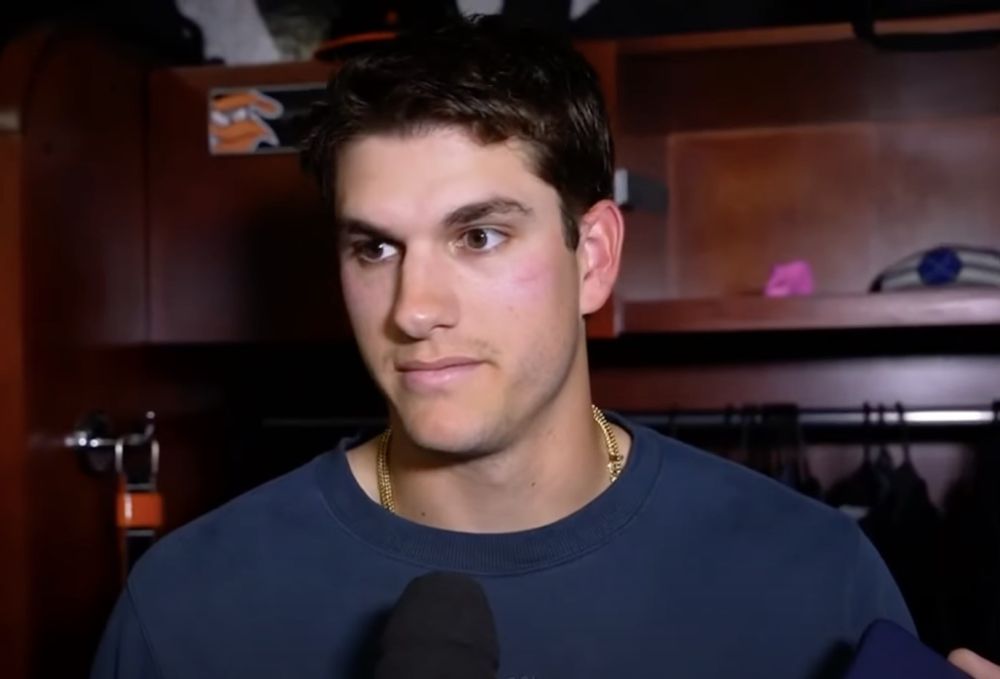


Baseball author and professor Ken Davidoff has discussed Major League Baseball and many Orioles and Yankees battles over the years with us but now in the professor stage of his career, he schools Nestor on his new book on the life lessons he learned along the way and will be signing his book at Babe Ruth Museum on June 13th.
Nestor Aparicio interviews Ken Davidoff about his book “101 Lessons from the Dugout,” which he co-wrote with pediatrician Harley Rotebart. Davidoff discusses his teaching role at Endicott College and his love for Baltimore, citing his great uncle who was a cantor at Beth El Congregation. They also delve into the challenges facing the Orioles, including ownership, labor issues, and on-field performance. Davidoff emphasizes the importance of moderation in baseball’s labor negotiations and highlights the need for strategic investments in player development and team building. The conversation also touches on the personal and professional connections between Aparicio and Davidoff.
- [ ] @Nestor Aparicio – Post the event and link to Ken Davidoff’s book and appearance on the Baltimore Positive website
- [ ] @Nestor Aparicio – Arrange to take Ken to get crab cakes while he is visiting Baltimore (coordinate logistics during visit)
- [ ] Send Nestor a copy of the book ‘101 Lessons from the Dugout’ (arrange off-air follow-up to confirm mailing)
- [ ] Appear and speak at the Bay/Babe Ruth Museum event in Baltimore on Saturday, June 13 at noon and sign copies of the book
Ken Davidoff’s Book Tour and Teaching Experience
- Nestor Aparicio introduces Ken Davidoff, highlighting his long career in baseball journalism and his new book, “101 Lessons from the Dugout.”
- Ken Davidoff discusses his book tour, mentioning his upcoming event in Baltimore at the Babe Ruth Museum on June 13.
- Nestor Aparicio and Ken Davidoff talk about teaching, with Nestor expressing curiosity about teaching as a profession.
- Ken Davidoff shares his experience as an adjunct professor at Endicott College, teaching various journalism classes and his love for helping young people.
Ken Davidoff’s Background and Teaching Philosophy
- Ken Davidoff explains his teaching approach, emphasizing the importance of experience and connecting with students.
- Nestor Aparicio shares his own educational background and experiences in journalism, comparing it to Ken’s.
- Ken Davidoff discusses the seismic changes in journalism, particularly in sports journalism, and the opportunities available to young journalists.
- Nestor and Ken talk about the challenges and rewards of teaching, with Ken highlighting the personal satisfaction he gets from helping students.
Ken Davidoff’s Relationship with Baltimore
- Ken Davidoff shares his personal connection to Baltimore, mentioning his great uncle who was a cantor at Beth El Congregation in Pikesville, Maryland.
- Nestor Aparicio and Ken Davidoff reminisce about the Giants-Ravens Super Bowl buildup in 2001, which was Ken’s first experience with Nestor.
- Ken Davidoff talks about his visits to Baltimore, including attending an Orioles-Tigers game at Camden Yards in 1992.
- Nestor and Ken discuss the evolution of Baltimore, from Memorial Stadium to Camden Yards, and the impact of the new ownership on the Orioles.
Ken Davidoff’s Book and Its Lessons
- Ken Davidoff explains the concept of his book, “101 Lessons from the Dugout,” co-written with pediatrician and parenting expert Harley Rotebart.
- The book aims to provide life lessons through the lens of baseball, targeting ages 12 and up.
- Nestor Aparicio and Ken Davidoff discuss the different aspects of baseball, from playing the game for fun to the professional level.
- Ken Davidoff emphasizes the importance of teamwork, sportsmanship, and the overall positive impact of baseball on young people’s lives.
Ken Davidoff’s Upcoming Event in Baltimore
- Ken Davidoff details his upcoming event at the Babe Ruth Museum, where he will speak about his book and sign copies.
- Nestor Aparicio encourages listeners to attend the event and meet Ken Davidoff.
- Ken Davidoff shares his excitement about visiting Baltimore and the personal significance of the city for him.
- Nestor and Ken discuss the current state of the Orioles and the challenges faced by the new ownership.
Discussion on the Orioles and Baseball Operations
- Nestor Aparicio and Ken Davidoff discuss the Orioles’ current performance, including their struggles in pitching and overall record.
- They talk about the decisions made by the current management, including the signing of players like Anthony Santander and the tanking strategy.
- Ken Davidoff compares the Orioles’ situation to the Astros’ successful rebuilding plan, highlighting the need for continued investment and good decision-making.
- Nestor and Ken discuss the impact of the upcoming labor issues on baseball teams, particularly the Orioles.
Ken Davidoff’s Perspective on Baseball and Labor Issues
- Ken Davidoff shares his thoughts on the upcoming labor issues in baseball, emphasizing the need for moderates on both sides to find a solution.
- Nestor Aparicio and Ken Davidoff discuss the financial challenges faced by smaller market teams like the Orioles compared to richer teams like the Dodgers.
- They talk about the potential impact of a work stoppage on the Orioles’ business operations and future plans.
- Ken Davidoff highlights the importance of finding a balance between player compensation and team financial stability.
Nestor Aparicio’s Personal Reflections and Baltimore’s Sports Culture
- Nestor Aparicio reflects on his long career in sports journalism and his deep connection to Baltimore.
- He shares personal anecdotes about attending games and meeting notable figures in Baltimore sports.
- Nestor and Ken Davidoff discuss the evolution of Baltimore’s sports culture, from the Ravens’ Super Bowl wins to the Orioles’ struggles.
- They talk about the importance of community and the role of sports in shaping Baltimore’s identity.
Ken Davidoff’s Final Thoughts and Upcoming Event
- Ken Davidoff reiterates his excitement about visiting Baltimore and meeting listeners at the Babe Ruth Museum.
- Nestor Aparicio encourages listeners to support Ken Davidoff’s book and attend the event.
- They discuss the broader impact of baseball on society and the lessons it can teach young people.
- Ken Davidoff shares his final thoughts on the importance of sports journalism and the role of educators in shaping the next generation of journalists.
Nestor Aparicio 0:01
Hey, welcome home. We are W N S T A M 1570 Towson Baltimore. We are Baltimore Positive, positively getting you into in the summer, man. I mean, it’s a great time of the year here. Some baseball, we got some pennant race stuff happening. The Ravens gonna be doing mandatory mini camps next week, and we’re gonna be doing the Maryland crab cake tour, getting it back out on the road. We’ll be at Sorrentos on the 10th, that’s in Arbutus. Sorrento of Arbutus is where we’re going to be. Also, we’re going to be up at Green Mountain Station in Hampstead on the 24th and a bunch of other places, including Costas Inn, where they sang Happy Birthday to my wife on Sunday night and brought her cake and surprised me. We’ll be giving away the Maryland Treasures scratch also the Maryland lottery in conjunction with our partners at GBMC and Farn and Dermer. They are the comfort guys, and I, this guy is going to be real comfortable when he gets here next week. He is a baseball guy, I’ve known him, oh man, going on three decades now. It’s been 26 and a half years since I left Sporting News Radio and one on one sports, and began now 29 years ago, and 28 years ago, for this crazy mothership here. He covered baseball better than anybody for a long, long time, Yankees, Mets, nationally on his Ink Day book on all that he has learned, and really tried to, what do they say, give it to the children and show people lessons, Ken David off is our defending champion here of all things baseball. Hey, dude, your book touring here is this one like, like horses, they put them out to stud, right? Like old athletes, they get like a microphone and they wind up doing color play by player, getting a gig or whatever. What do all sports writers do? Because I’m trying to figure this out, right?
Ken Davidoff 1:39
Yeah, I write a book, and I teach, and I’m plugging the book, so it’s been a lot of fun. The book is 101 Lessons from the Dugout, and I am coming to Baltimore to the Bay Booth Museum on Saturday, june 13. So very excited. Baltimore, in all sincerity, has always been one of my favorite places to visit, and I’m excited to come.
Nestor Aparicio 1:59
Well, I’ll get you down for a fade that’s crab cake as well, yeah. Before I get to baseball, because once we go into that trap door, it’s like Monty Hall, we pick a door and boom, we go, right. The teacher in you and the educator in you, it’s so funny that I have you on, because a lot of times what my wife and I talk about over a margarita glass of wine, we’re having dinner, winds up being what I bring into this, but I said to my wife today, I’m like, you know, I’m like 57 now. I’ve only been doing this for 42 years professionally. I’m like, I’m probably qualified to, you know, teach a semester. Eisenberg does that, all my buddies, you know, Snyder does that, like a lot of old sport that shine, and I don’t know that he’s teaching anybody. Could you teach and teach me about teaching? Because I said to my wife, I’m like, that probably wouldn’t be fun for me right now. You know what I mean? Like, I’m thinking, like, at what point would it be interesting to do it, and I don’t know if you do it virtually, because a lot of times I get, I get brought in as a lecturer virtually to do things, but I’m thinking to myself, like, is that fun for you, man?


 8
8


Ken Davidoff 3:01
Oh, I love investors, so yeah, I’m an adjunct professor at Endicott College in Beverly, Massachusetts. Now, I live in New York City, so the way we structure it, it’s a hybrid model, half in person, half Zoom. So, I’m up there about half the time during the semester, twice a week class. I have taught four different classes up there, I’ve taught sports journalism, contemporary issues in journalism, multimedia journalism, and feature writing. This past semester, I just did feature writing again. So, I love it, man. I mean, initially I, you know, I said to my superiors who took a chance on me, I said, ‘Look, I know the material, and I think I’ll be able to connect with these young people, but how do you actually teach? So, they gave me a few pointers, but really, just like anything else in life, it’s it, you need reps, you know. So, so Endicott College showed the faith in me to let me work through my growing pains as a professor, and now I truly love helping young people.
Nestor Aparicio 3:55
How many years been doing that?
Ken Davidoff 3:56
I’ve done six semesters over about three years.
Nestor Aparicio 3:59
What was your education, where did you go to school that inspired you? As such, I went to University of Baltimore, man. I would have loved to have gotten into Northwestern or Maryland, certainly Maryland, or, you know, Missouri, but, like, I was already working in the industry, kind of like I was at the News America when I was a kid, and, like, junior in high school, so, like, but everyone else who ever came in the newsroom, came at it from Syracuse, or from Penn, or you know, in different ways, and, man, I was with Rosenthal early on. I mean, I, you know, heavy hitters, people that really went on in life. I mean, Kenny Albert sort of put me on the air. I mean, just these people that went on and did amazing things, but the journalism part of has never left me of what you were about, and where I met you, and how I met you, and it’s just gone to hell, dude. I don’t know what to say, like I don’t know that I could have a 17 year old grandchild at this point and say that there’s a great path for you in sports journalism for me.
Ken Davidoff 4:54
Yeah, so to answer your initial question, I attended the University of Michigan, yeah. Thank you. Thank you. Yeah, obviously the entire journalism world, not just sports journalism, has undergone seismic changes. I mean, yeah, you and I are about the same age, so in the time we’ve been involved, seismic, and the last since I started teaching three years ago, there’s been seismic change, right? So, yeah, I, but what I, the bottom line, I’d say to my students is, look, there are more opportunities for you to get in the door than there were when I was your age, because we didn’t have this thing called the internet, you know, so there are a lot of opportunities to get through the door, that doesn’t mean you’re going to be compensated fairly, but for your work, but there are platforms for you to show your work, but it’s much harder to make a career out of it, but look, I still think I call me a cockeyed optimist, but I think journalism is still thriving in some corners of this cocktail world we have going on right now, from sports to news to feature stories and everything else, when
Nestor Aparicio 5:58
they’re not killing them or imprisoning them or throwing them out of the press box, right? Like, when they’re not doing that,
Ken Davidoff 6:03
while that I said corners of it, corners of it.
8Nestor Aparicio 6:06
Ken David, off is our guest, Professor David. Off, you’ll never be anything other than that for me at this point. You know your book, and the professor part of that, and your baseball background, which I think sells nicely, especially if you’re listening on the radio, and you’re like, Ken, who, Professor, who, you know, I know of your background in covering baseball these years and moving to journalism, and sort of I don’t know why you’re not in press boxes every day and chasing it the way we were when we were kids, and it’s all I wanted to do is be a baseball beat writer, honestly, like I was so jealous of all of that, we just buried the late great Jim Henneman, the press box named after him, just sort of like I work with Jim, you know. I was a kid there when he was the senior writer, and Ken was where Rosenthal was working his way, and like that was the path I wanted to be on. Didn’t go on that newspaper path, but I, you know, I do think there’s a point for you having done it for so long the way you did it that when you get done with it, you’re like, all right, what do I do with it. Your book kind of speaks to all, right? All those box scores, all that money, all that steroids, all those glory, all the Steinbrenner. These are the lessons, and I think that that’s sort of what your book’s about, right?
Ken Davidoff 7:14
Yeah. So, so Nestor, I, and I apologize, did I send you a copy of the book when we first did that first century back in January, I can’t remember. I didn’t know. I’ll send you one.
Nestor Aparicio 7:23
I’m not sure. I didn’t
Nestor Aparicio 7:24
scout
Nestor Aparicio 7:25
today. I’m sorry.
Ken Davidoff 7:26
Okay, it’s okay. We’ll hash that off air. But I co-wrote this book with a pediatrician, a pediatrician and parenting expert named Harley Rotebart. And so Harley is someone who’d spent his professional life dealing with young people and their challenges and their triumphs, and then he used baseball and softball as a tool to help these young people get through their those trials and tribulations, and he hardly absolutely loved baseball and softball, coached his own kids, so this book is really his baby, and then he came to me and he said, “Hey, can I want you to infuse this book with your perspective, the stuff you were just referencing, Nestor, the Stein Renders and the steroids, and everything else, and kind of just so we had this blended perspective of Harley at the grassroots level, and then me having covered the game at the elite level.
Nestor Aparicio 8:18
Well, there’s there’s two or three different baseballs, right? There’s the baseball that you play the game because you love it, whether you’re good at it or not, and play Little League like some of us did. Then there’s well, watching the big leaguers, and what I’ve been doing here for 35 years. In the first 23 years, taking phone calls, people bitching about it all day, or you writing about things that they would then read and then go and bitch about what, and I mean the drama, I mean the Real Housewives stuff that has nothing to do with even the standings or even strategy within the game of winning and losing or contracts or all the issues we’re about to talk about in about four minutes with labor and everything going on, but just the game itself and the way my father taught it to me, which was teamwork, and for lack of a better expression, the Ripken way, and Ripken’s written books on this, and lots of people have written books on this, about hitting the cut off man, sacrifice, all of those verbs, or even adverbs in the way that you hustle, and you know, and and you play fair, and you call balls and strikes, and just trying to think of all of these goofy, you know, baseball acronyms and silly things that we talk about that are just a part of our conversation, that I bet in the course of a day, how many times I talk about hitting the strike zone or hitting the cut off man or being in the dugout, or being a cheerleader, just all of those sportsy terms. I don’t know, they all come from some place, probably in my dad’s heart, that was trying to make me a better person, a better man.
8Ken Davidoff 9:51
Yeah, and that’s that’s what our book is about, you know. Our book is, you know, it’s 101 lessons from the dugout, so it’s 101 one to two page chapters. Breaking down all these elements, and Nestor, many of them you just referenced, the cut off man, and cheer, you know, supporting your teammates, cheerleading, keeping the dugout clean, literally. So clean up at the end of the game, at least. So those are the kind of lessons that we are trying to impart, and really, the overall message, for sure, is you should, you know, targeted to ages 12 and up, like hopefully you’re playing this game because you feel like it’s enhancing your life and enhancing your friendships and your relationships with everyone, as opposed to, you know, if I don’t make the major leagues or get a scholarship, then this has all been a failure.
Nestor Aparicio 10:39
My guest is Professor Ken Davidoff. He’s coming to Baltimore. You say you’re coming in here. Baltimore is one of your favorite places. Why is that? And when is the first time you came in? Because I know it was Memorial. I know you were here before Camden Yard. So, I mean, you’ve seen this whole metamorphosis of Ripken era, pre-Angelo’s, Janet Marie building the ballpark, Larry Lucchino, and then just what you’re going to find when you get here, which, if you’re coming on a bobble head day, I think you are, you might do okay, but it’s changed so dramatically, and there was so much hope for this new group, and it’s just weird, but you’re coming in. I mean, the Babe Ruth Museum, Cal Ripken here, Babe Ruth League, Cal Ripken Lee. I mean, baseball’s.. I don’t want to say we like to think we’re the cradle of football with the Colts, and you know, and the NFL championship game, 5859 but the baseball thing here, and the heartbeat of all of Brooks Robinson, and you’ll run into Jim Palmer when you’re here, if not him, Ben McDonald. It’s my last name’s Aparicio. It’s the reason I’m here, literally physically here. It’s just weird watching it deteriorate, and I think for anybody that trains in and out the way you have every year, sometimes three, four times a year, back to 9697 Jeffrey Mayor. When you know this thing was a thing, we come a long way, man. And I don’t know what’s going to fix it. It’s certainly not the labor thing we’re about to talk about. You love Baltimore, you like a strong Orioles team, you know? You don’t like a doormat Orioles team.
Ken Davidoff 12:17
Yeah, so I, my relationship with the city of Baltimore is very personal, Nestor. I have family there, or I did, at least. So, for those, for your Jewish listeners, I have a great uncle, my grandmother’s brother, who was the cantor of Beth El Congregation in Pikesville, Maryland, and he was the cantor there for probably about 40 years, and even now, there’s like a portrait of him in the lobby.
Nestor Aparicio 12:43
I’ve been there many times. What era did he leave after the fool?
Ken Davidoff 12:47
He left in the.. I’d say it was the late 1990s
Nestor Aparicio 12:51
Okay, folks of that era, like, would be old enough for abs. There are people in our audience, 1,000,000% that will respond to this, and
Ken Davidoff 13:01
yes, yeah, yeah. He started, I think, in the late 50s, probably, and then, you know, 40 year run. So I visited him often in Baltimore, and you know, he would come up. I grew up in New Jersey, would come to New Jersey, and he had his wife, my aunt Aileen, wonderful, wonderful people, their kids I’m still very close with. So that’s where I acquired my love for Baltimore. I’ll share, I’m going to share a semester. I’m pretty sure the first time I’ve ever witnessed the human hurricane that is Nestor Aparicio was the Giants Ravens Super Bowl build up. So that was, that was what, 2001
8Nestor Aparicio 13:34
Yeah,
Ken Davidoff 13:35
so I went down. I was already the Yankees beat writer for the Bergen Record, but you know, it was January, it was quiet, and they said, ‘Hey, why don’t you go to Baltimore for three or four days? You know, the matchup was set, you know, but go to Baltimore, they’re doing media availabilities, and Art Modell spoke, and, and whoever the heck, that giant guy was a Jonathan Ogden, was that his name?
Nestor Aparicio 13:53
Yeah,
Ken Davidoff 13:54
yeah, gigantic guy. So, I
Nestor Aparicio 13:56
would be like a real baseball guy, Ken, yes,
Ken Davidoff 14:00
exactly, so, but that’s when I first witnessed you, and actually I was like, “Who is this guy? Yeah, so something
Nestor Aparicio 14:08
one night
8Ken Davidoff 14:08
you were, you were, so that’s.. and I remember, like, I wrote, you know, probably six stories that week, and one of them was about Baltimore history, and I’m like, my uncle, Uncle Zell, like hooked me up with his friends who were longtime Colts fans, and so I just always, when I wrote about Baltimore, and its history was always very personal for me, because of my, my great uncle, and my, my great aunt. Now
Nestor Aparicio 14:30
you came down here during those two weeks,
Ken Davidoff 14:33
yeah, yeah, the build up, being honest, that was actually the one super wide covered.
Nestor Aparicio 14:38
I would never have asked you this, or thought we’re going in this direction, but like you’ve been coming here for years before that Memorial Stadium can’t be ours. You show up here in the dead ass of winter, it was cold, it snowed that week, I remember. And so you came in, the city was painted purple, right?
Ken Davidoff 14:54
Yeah, for sure,
Nestor Aparicio 14:55
like it was the first time, I mean, like that is such a romantic for any. One listening, they know that that first Purple Rain era with Billick and Ray Lewis and Trent Dilfer, we just had the 25th reunion. I just visited, I mean, I was with Rod Woodson and Shannon Sharpe two weeks ago in Vegas, and the aforementioned John Ogden, seeing the city in that light, that had to have changed your perception of what was to come, which is the next 25 years. Here it’s been a purple city, not an orange city, so much. And you’ve seen that every summer as you’ve come here and seen the atrophy of it, kind of. I mean, you see, you’ve been coming to Baltimore every year, at least once or twice a year. You have relatives here for 50 years, most of your life.
Ken Davidoff 15:39
Little exaggerated, but let’s go with it.
8Nestor Aparicio 15:42
You saw
Nestor Aparicio 15:42
Cal played Memorial Stadium, though.
Ken Davidoff 15:44
I did. I went to one game at Memorial Stadium, 1989 which was, you know, a magical year in its own way, right? That the rebound from the 88 disaster, and I remember Stanley Jefferson had a home run. The game I went to is Orioles Brewers in August of that year, and Jerry Royce started for the Brewers, and I love Memorial Stadium. Loved it. And then, as Fortune had it, Nestor, I was.. I mentioned I went to Michigan, but the spring of 1992 I did a semester in Washington, DC. So, all of a sudden, Camden Yards opens up. I’m reading about it in the Washington Post, so I gotta go. So, a bunch of us went to an Orioles-Tigers game that April, so you know, within there
Nestor Aparicio 16:22
wasn’t read Boswell three days a week,
Ken Davidoff 16:24
that come on, I remember who was in the, oh, was Richard Justice, was he the beat, no, he was the Redskins, Mark Maske to the Orioles, yeah, so yeah,
Nestor Aparicio 16:35
shining not too long after that,
Ken Davidoff 16:36
yeah, Dave was more when I, you know, when I graduated college, but I, yeah, so getting to see Camden Yards in its infancy, I was like, oh my god, like Camden. Anytime someone asks me, what’s your favorite ballpark, I still say Camden Yards, for sure. So, why? Why? Because it broke the, it broke the mold, right? Like, I, I went to the new Comiskey the year prior. Again, I was in Michigan. I was in Ann Arbor for the summer of 91 Went to a buddy, we got to go see this new Comiskey, and I went there, and it was Snoozeville, right? It was just nothing, it was just a cookie cutter, you know, it’s fine, but just nothing special. All of a sudden, the net very next year, Camden Yards opened. Oh my god, the warehouse, the way they use the physical footprint, and Utah Street, like, wow, this is spectacular, and obviously so many teams have copied that mold over the years, but yeah, you mentioned Larry Lucchino and Janet Marie Smith, and, and what they did was absolutely brilliant, and I think both of them belong in Cooperstown for their contributions to to ballparks and baseball culture.
8Nestor Aparicio 17:40
What are you doing in Baltimore? Like a little symposium or just book signing? What’s happening?
Ken Davidoff 17:44
Oh, but yeah, a little talk. I have my stick, you know. I tell my story, and then kind of leads into the book, and you know, hopefully sell a few books, and obviously I’ll sign those books.
Nestor Aparicio 17:55
Come on down, makes a great Father’s Day gift. And visit with Ken David, off Professor Davidoff, here to teach you the lessons, 101 like life lessons through the sport of baseball in his book, and we’ll talk more about that, and I’ll show that it’ll be up on the site, it’ll be linked up, it’ll be all of that, but go meet the real Kent Day, off, maybe watch the birds play and do battle as well, Padres in town, see Manny Machado, you can visit with him as well. All right, so the Orioles, let’s, let’s, let’s get on to the field here, and I’ve talked, and this is where, like, I think you can really be helpful to me right now, because Luke and I were arguing this morning, and the, the notion of new ownership, and the labor situation, and the debt service, and where they stand as Hawk’s bulls, or just getting run over in the middle of the road by this, because they don’t even understand it, because Peter didn’t understand it 33 years ago, when he bought the team, he took the side of the players, kind of famously, you can read about it, the Peter Principles find that at Baltimore Positive, but for me, How all of these teams, not just these two guys, and what they’re going to do with the Orioles, how they’re going to manage risk and manage reward and manage all in this year, where there might not be a next year. They have no idea what they’re doing with their television networks, what they’re doing with media. There’s, and they feel like there’s no floor. They’ve always acted as if this thing can’t shrink in some way. There’s going to be some damage. I don’t know what it’s going to be, but you and I have witnessed this as long as I apparently I’m older than you. I didn’t even realize that, like, Lords of the Realm. I was on the radio in 92 and 90.
Ken Davidoff 19:39
You started, you were like eight when you started, right? That’s
Nestor Aparicio 19:43
the 17 when I walked into the News American newsroom in 1984
Ken Davidoff 19:48
Okay, that’s unusual.
Nestor Aparicio 19:50
Yeah, very much so. And then I was at the Sun at 17, my parents signed the permission. Yeah, that was unusual. So 91 I was on the radio at 22 223 so but what I’m saying is, Camden Yards being here was the first year was on the radio. The first things we discussed were their payroll and the Blue Jays, and everybody else not having any money. And then the strike, and we got the Padres coming in. They were the first fire sale before all the other fire sales that happened. That things change for the poor franchises and the rich franchises, and we’re just going to sell off or we’re going to buy in, but they all have to be talking about labor as we start talking about trading deadline, because I don’t think it’s a straight baseball conversation this year, because I don’t think in any front office, the rich to the poor, that they’re going to have a strategy for whatever the labor issues are going to be. I don’t want to call it war, you know, work stoppage, whatever it’s going to be. It’s something that if you own a billion dollar franchise, there’s going to be some protections put in here that might not even make sense to fans.
8Ken Davidoff 20:59
What do you specifically do you have in mind Nestor. What do you mean?
Nestor Aparicio 21:02
Well, I think about contracts, and I think about taking on contracts, and I think about not having a season next year, not having an off season to sell tickets and be able to run the business the way you want to run it. The issue here in Baltimore is growth, getting people into the stands, getting people back into the habit of reaching for their credit cards that they’re not in, in a lot of other markets, and I think you can see that, and I certainly feel that here for them, that if this is going to have more Pete Alonso’s, or they’re going to be able to sign any of the Gunner Hendersons or the Adleymans, this labor thing’s a big deal for the future. This specific franchise, where it is right now, which is in a different spot than it was the last time there was a real war.
Ken Davidoff 21:45
Yeah, I agree with you. I actually think that I’ve looked at Baltimore specifically as one of the biggest disappointments in the, in the evolution of baseball, because you know when a super rich guy like David Rubenstein purchases the team, I think the hope is he’ll be willing to assume personal loss the way Steve Cohen has with the Mets, and he hasn’t, right? Like, he’s like on the team for like a week, and then he’s like, ‘We need a salary cap, like, like he just.. he wasn’t going there. Am I wrong?
Nestor Aparicio 22:16
Oh, he also made a bobblehead of himself instantly, and it was
Ken Davidoff 22:20
very,
Nestor Aparicio 22:21
very apparent the two years ago now.
Ken Davidoff 22:23
Yeah,
8Nestor Aparicio 22:23
I don’t think he wants questions about
Ken Davidoff 22:25
it, right?
Nestor Aparicio 22:26
And I think Ken, it’s a really complex issue, certainly for the fans who haven’t read Lords of the Realm or lived it or breathed it or talked about it, or I’m sure you stood outside at some law firm several times during your career waiting for Don Fear to appear, or whomever you know, Man of the Year for the MLB, MLB PA. You don’t go back to Trammell and Whitaker the way maybe I thought you did 20 minutes ago, but you certainly go back to let’s just say Bryce Harper, and you know, and this particular commissioner going after each other in the, in the recent years, I have a feeling this is acrimonious, and there’s more money than ever at stake, and from a Rubenstein Araghetti investment perspective, there’s a lot riding on what’s going on, because they’re not just all flush with money the way the Dodgers are,
Ken Davidoff 23:18
right? Let’s just make clear, you said you’re 57 yes, yeah, I’m 55 It’s just that you start, you were, you were the Bryce Harper of sports journalism, apparently. You were, you were, you were, you know, making Rookie of the Year when you were 15, and then when I was 15, I was,
Nestor Aparicio 23:31
I prefer to rob and yell, but that’s okay.
Ken Davidoff 23:33
Yeah, I was working up the confidence that, you know, talk to girls at 15, so we were just, you know, we’re similar ages of a lot more reps. But anyway,
Nestor Aparicio 23:42
but you’re much more esteemed because you’re a professor. Look at me,
8Ken Davidoff 23:45
anyway. Yeah, what? The stat, I agree with you. The stakes are huge, and yeah, I mean, I can talk about this issue for hours upon hours, because there’s so many nuances to it, but the bottom line is, I think for the sport to not take a huge hit, like the moderates have to prevail on both sides. There are moderates on both sides. We’re not hearing from the moderates right now. We’re hearing from the extremists on both sides, but there are rest assured, I’ve spoken to both sides, there are moderates on both sides, you know, moderates on the ownership side who think, okay, we don’t need, we don’t need to lower the freaking salary cap to $245 million which is ridiculous when you look at how much the Dodgers, in particular, are spending, and there are moderates on the player side, Nestor is like, hey, can we talk through what a salary cap would actually look like, you know, because maybe it’s not a terrible idea, because you know the bottom line is, you know, it’s an open market right now, but the players in general are not doing a great job of getting their bite at the apple. You know, obviously, you have the Juan Soto contract, the Ohtani contract, but you know, when you look at Peter Lonzo, he would have made more money 10 years ago than he did last winter.
Nestor Aparicio 24:56
Well, I think these money managers have come in and they have some formula. About risk and pitching as well, that will not artificially depress pitching, and might just depress pitching, because, like, they don’t like the risk, I mean, period. And they have books and numbers that would say Corbin Burns would have been a really bad idea for the Orioles a year and a half ago, right? And, and we all talk about this every day, and I think, especially when I have somebody like you on, I think in the back rooms right now, Katie Griggs and Don Roback, they manage the money and they manage the business of the Orioles in an empty stadium with revenue down, with the mass and problems with the divorce with the Nationals, with everything on the field being really messy, they were last place team eight games under 500 a week and a half ago, right? Like they had a nice little home stand here, and that’s cool, but like I don’t know what you’re going to find when you get here a week and a half from now in regard to their rotation or the hitting or the situational hitting or the defense that’s been horrific here, but they’re on another manager, they’re on the same general manager that the other guy hired. The Orioles are a massive disappointment, as I see it, as we sit here now. The Alonzo thing, just all the way around, Basset, just the money that they’ve spent, O’Neill, but they don’t, they don’t have rope here, based on the fan base, based on revenue, based on the Ravens having Lamar, and where the money thing is to sit out a season next year, or to even think about, scratch my head to say, well, do we deal Ruchman before that and try to load up for the future, because we can’t win this year, and we have all this money invested, and we’re upside down on this investment, and whether that matters to them or not, to your point, it shouldn’t, but it always money, man, for money, and this is going to be an ugly couple of months, especially if they don’t win. I guess that’s my point. They win cool, they get in the race good, they’ll, they can sell some excitement. Nobody’s expecting them to win the World Series, but nobody expected them to be where they were last year. Last year, and if that were to take a path this year, the wrong way. This is really a messed up situation for these new owners. That’s all.
Ken Davidoff 27:06
I hear you, I hear you, Nestor. And that’s, you know, I think the case you’re making is a case for, you know, can lead one to advocate for tighter salary, you know, payroll restrictions. If not a hard salary cap than more intimidating luxury tax, you know, you know, lower, a lower threshold, and higher taxes, you know, there is a way to do this, but I like, again, I support capitalism, I support a player’s right to get as much as he can, but I don’t know how you can look at, you know, take Baltimore and the LA Dodgers, and it’s like, oh, well, there’s no reason the Baltimore Orioles can’t spend $400 million that’s not realistic. You know, the Baltimore, Baltimore TV market is much smaller than the LA market, and not to, you mentioned mass and divorce, you know, I think you’d agree the Orioles took a huge hit that they’re still feeling when, when baseball allowed the Expos to move back to DC. Right, well,
Nestor Aparicio 28:02
that’s what you know. Peter Angelo sat me in 1997 He said a lot in about an hour and a half, and the one thing he said, we believe that Washington should never have a baseball. He can go listen to it. I mean, it’s, and it’s the only thing he said in there. He mentioned the Bay Area at the time, and both of those teams were struggling. You know, Pac Bell hadn’t come on really in that way. We believe, you know, but both teams will suffer. And here we are, and he’s gone, and the new guys are in trying to make a go of it with Baltimore as a Baltimore entity, where it ends in Bowie, and they won a championship recently. Now they’re a mess, primarily because of the television network and the learners, and it all getting sort of, and COVID, and all of that, but there’s nowhere to go to the North. I mean, the Susquehanna, everything Elkton North is Philly, Harrisburg’s got the Phillies now, that you know, Lancaster, they’ve all worked it, and it, you know, and that for me is about, look over my shoulder, Ken, what they’re going to build down here. They talked about this and that. They can’t build on the land because the land won’t support high like towers and the battery in Atlanta. That all of that was going to be the revenue that was going to grow the franchise, and then gambling, and the television network, and the sky boxes, and the renovation, and the big TV. Only thing that sells tickets or bobble heads, and maybe winning when they win, and they, and winning is expensive to our point, right? And I just, I worry about it, and I worry about where they are right now, because I can’t look for 33 years, you call, you call in, we talk about Peter G. Angelos and his stain on this, or whatever, you know that’s over in this, these new people are now a couple years into this post honeymoon, and it’s not going well on the field. Some thoughts about Elias and the baseball operation, and what they’ve done here, which was, we’re going to tank, we’re going to draft a bunch of guys, and then we’re going to go win and augment it, not much. Of it, as we sit here right now, has worked out the way they wanted it to work. The Brad is coming together, maybe Rogers a little bit. I didn’t dislike the Alonso signing, other than a first baseman sort of blocks at bats for Payo, or those kinds of things. You can use the first base position for, but in a general sense, it’s been an underperforming outfit here.
Ken Davidoff 30:20
Yeah, look, Nestor, me, he, Mike came from the Astros, right, and he, he followed the Astros script for parts one and two, you know, he tanked just like the Astros, made some good draft picks, just like the Astros, and got them to the playoffs, just like the Astros, but then what the Astros did was they spent some real money and continued to make very good decisions, right. Brian McCann, Carlos Beltran. We can talk about what Carlos did, that one his last year there with the sign stealing and all that, but, but he certainly solidified the clubhouse. And then they, you know, they, their pitching continued to develop. Oh, and they traded for Verlander, that was a huge one, obviously. You know, the Orioles haven’t completed that last step, right? So, they, these last two years, I agree with you, are a huge disappointment. Now, this year is, is not even close to over, and thanks to the American League being remarkably mediocre, I mean, all another good week, and the O’s will be right in the playoff conversation, right? But, yeah, I certainly can’t, can’t fight you on the notion that the Elias era to this point is disappointing.
Nestor Aparicio 31:24
Well, I mean, not just the dealings or the signings, but they’ve gone all in financially, at least in the early things that John Angelos and the Angeles family never would have done. Boz and Bisayo, you know, giving them contracts and buying some years, that these are going to be cornerstone guys for the team in a way that maybe we can’t get to Ruchman, we can’t get to Henderson, or they’re going to be too much, and the Ruchman thing would have been rocky. Now the question on him is, can’t sign him, better deal him, going to get nothing for him, especially as you’re going to see Machado coming here, and Dean Kramer was pretty much all they got out of him, and you know, so for me these kinds of decisions, if you think Elias is your long-term guy, great. We’re now in a second manager, and they were told a couple days ago in last place. We’ll see how they do with Boston and Toronto before you get here next week, but I, and the American League Central being squishy, or excuse me, American League wild card being squishy enough that they’re going to stay in it no matter what they do, just because it’s kind of sort of lousy or mediocre at best. That’s cool, and if that’s what they’re going to do, but then you got to go out and win some games, and you got to figure out who’s going to go out there every fifth day and give you the ball, and then who are you going to sign, Basa Pasaio, I mean mean, they at least did something that we had not seen here, which was that old Cleveland model and that old Atlanta model, which is lock up some guys and at least figure out who the guys you’re really betting on, at least they bet bet on those guys.
Ken Davidoff 32:56
Yeah, yeah, that’s that’s a great point, and I’m just looking at, yeah, besides playing very well, Boz is doing okay, but yeah, I think you know I’m just obviously they’re pitching needs to be better right now, right? It’s pretty much a symbol, I just did my limited homework here before we got on, so they are what they’ve given up the most runs in the American League, right?
8Nestor Aparicio 33:18
Well, they’ve been, they’ve had a couple of nineteens, you know what I mean, they’ve had, they’ve had a couple of, like, get away, bring in the, you know, the backup shortstop, the pitch, right,
Ken Davidoff 33:27
right, right, but yeah, not, not great,
Nestor Aparicio 33:29
they got swept in Pittsburgh, they got swept in New York, they got swept into, you know, so when that starts to happen, you wind up where you’re going to find them, Ken David, office here, he’s the professor of all things baseball at Endicott. He is going to be the professor of a 101 life lessons in baseball. He will be here at the Bay Bruce Museum. You’ve been to the museum before, right?
Ken Davidoff 33:49
I have. Yeah, I’ve stopped in. But first time speaking there,
Nestor Aparicio 33:52
the Casa de Bambino. What time are you there?
Ken Davidoff 33:55
Noon.
Nestor Aparicio 33:56
Noon. High noon. Father’s Day weekend. This is.
8Nestor Aparicio 34:01
this is good.
Ken Davidoff 34:02
No week before father,
Nestor Aparicio 34:03
week
Nestor Aparicio 34:03
four. I’m sorry, I’m sorry, I got, I got, I got, I’m getting there a week early, but it makes it a great Father’s Day gift. Is that fine?
Ken Davidoff 34:09
Oh, it definitely makes a great Father’s Day.
Nestor Aparicio 34:11
Yeah, you’re gonna get crab cakes when you’re coming in here. Um, any thoughts about the Yankees in the Mets in New York, in the state of what’s going on there? Because Yankees looking up at Tampa this time of year it’s kind of like a really long horse race, like the Belmont, like you don’t worry about them, I mean, as long as they stay healthy, they have the horses for sure,
Ken Davidoff 34:28
they do, yeah, no, the Mets episode in New York, because they’ve just been a, you know, we talk about very rich owners not not going well for them, you know, I mean, Steve Cohen says David Rubenstein, hold my beer, right? So, yeah, the Mets, yeah, they, they just swept the Marlins, I think they’ve won four in a row now, so maybe they’re turning it around. And I was actually there Saturday, they allowed inducted former Orioles manager Lee Mazzuli, as well as Bobby Valentine, into their Hall of Fame, which was very special. I’m friendly with both of those. Guys, but maybe the Mets are turning it around, but the Yankees, yeah, they’re they’re just a very competent organization. Obviously, they get a lot of grief. They haven’t won a World Series in 16 seasons, and they’re.. we can talk about that, but the bottom line is they usually land the plane safely in the regular season, and when they’re starting pitching, they certainly look like they can be a force in October.
8Nestor Aparicio 35:22
Lee Mazzilli was my guest at the Nasty Nice Guy Awards the day he was hired. Mike Flanagan, the late great Mike Flanagan, brought him out that night. There are pictures of all of us and Billick, I think Mike Flynn was there. Larry Bigby was the Oriole that year, I think that El Rob was always there. So El Rob was there, but and Art Donovan was there, I think the governor was there too, I think, I think Bob Ehrlich was there at the time, so Donovan gets up and he’s given a speech, hey, this new guy here from New York, I’m from New York, let me tell you, Lee Missoulie, he called him Missoula. It was the greatest thing ever on that. So, 23 years later, you’ve given me a chance to tell an Artie Diamond story, and Bobby Valentine was my favorite baseball player, 1974 7374 75 And I begged my father to take me out to see him play for the California Angels. I think Ryan pitched, or maybe Tanana, you know, I think Rich was already over there by then, so first at bat, I think he bat third in the lineup. He’ll remember the story, because when I bring it up, he remembers every part of
Ken Davidoff 36:33
it.
Nestor Aparicio 36:33
He got called out on strikes, threw his helmet, bitch at the umpire, got thrown out, and like, my dad and I just got in our seats. It was top of the first inning. I was little, I was six years. I’ll never forget it. I went out there. My dad got me a California Angels little plastic helmet, you know, because my dad got me those things, and Bobby V got thrown out, and I’m there. I’m like, Daddy got thrown out. Dad’s like, this is why this is your life lessons to take this to Bobby V, including the crewmate shoe that he broke out the other day. Tell him these are life lessons, you don’t talk back to the ump, you know, or you get thrown out of the game, right?
Ken Davidoff 37:10
Umpires was a chapter in our book,
Nestor Aparicio 37:12
dude. I love Bobby Valentine, and I told him that story all during our careers together. Love Bobby V, give my best at Lee Mozilla, or Zoe as well, and it was kind of cool to see them go in as well, so
Ken Davidoff 37:23
yeah,
Nestor Aparicio 37:24
anything they can do. I’ll see you next weekend here at the Bay Area Museum. Ken Davidoff is in the book, is in not in my hands, but it will be 100 life, 101 life lessons, and well, you can find it. You’re going to find it right out of Baltimore Positive. You’re going to find Ken down at the Babe Ruth Museum, where they always have lovely exhibits. Ken, thanks for coming on. Happy Father’s Day to you, my friend.
8Ken Davidoff 37:47
You too. Are you? No, you’re not. Yes, I’m a father. I’m sorry, you too. You too. It’s always a little awkward there, but thank you for having me on.
Nestor Aparicio 37:56
It’s always a pleasure, man. Absolutely, man. Old friends and press boxes in New York and Baltimore, and all that good.
Ken Davidoff 38:03
Baltimore, love it.
Nestor Aparicio 38:04
I love New York. So, there you have it. All right, best shirt I’ve, I’ve seen in recent times. I’m walking, I have my favorite slice of pizza. I’m walking Broadway in 29th About a month ago, I came in to see Springsteen, and a dude had on a sweatshirt, and instead of I heart New York, it was I R Heart. ny, so it was like irony. So, in other words, I love New York,
Ken Davidoff 38:28
interesting, but
Nestor Aparicio 38:29
there’s irony associate. I can give that to a writer, and I said to my wife, I’m like, oh, I just gave you a birthday idea, the guy that has nothing you can give a gift for give me an ironing shirt now. Wear that through the streets, it’ll be my New York shirt. Ira,
Ken Davidoff 38:45
very cool. All right, all right, man.
Nestor Aparicio 38:47
I just go for the pizza, and for the baseball, and for the garden. Ken Davidoff is our guest. Go support him in his book. I am Nestor. We are WNST AM 1570 Towson, Baltimore. We never stop talking, Baltimore positive.