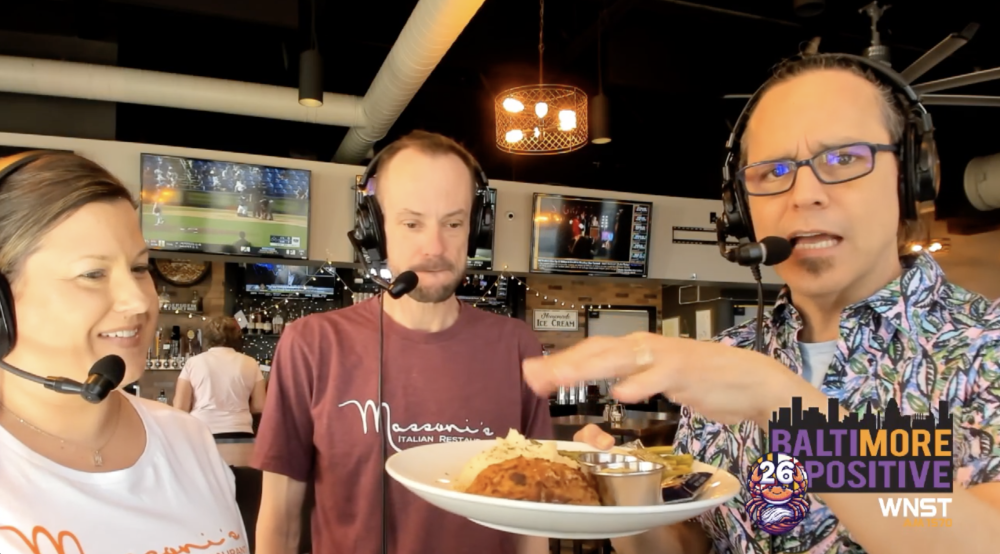


Founded in 1961 by parents who wanted their children with disabilities to have the same rights and opportunities as any other community member, formerly The Arc Central Chesapeake rebranded last year as Fello to go even deeper into its mission and serve the unmet needs of more local people. We welcomed good fellow Jonathan Rondeau to El Guapo for “A Cup Of Soup or Bowl” to update Nestor on all of the current work of the new Fello with folks in our community.
Nestor Aparicio interviews Jonathan Rondeau, CEO of Fello, an organization supporting people with disabilities in Maryland. Fello, formerly known as the Arc Central Chesapeake Region, assists 5,000 individuals across the state, providing services like personal support, job placement, and self-directed care. They help people with various disabilities, including physical and intellectual, and offer programs like the Family Fund, which grants $131,000 annually to families in need. Fello’s services are funded by Medicaid waivers, insurance, and donations, and they emphasize inclusivity and independence. Jonathan shares success stories, highlighting the impact of their work on individuals and their communities.
- [ ] @Nestor Aparicio – Deliver the bag of sponsor swag to Luke Jones on Friday as planned
- [ ] Ensure incoming phone inquiries are returned (operate a policy of returning every phone call to callers seeking information or services)
Introduction and Context Setting
- Nestor Aparicio introduces the show, mentioning the location at El Guapo in Catonsville and the cold winter weather.
- He talks about the Maryland lottery, GBMC, and Dermer as sponsors, and mentions giving away swag to Luke Jones.
- Nestor highlights the “Cup of Super Bowl” event to benefit the Maryland Food Bank and create awareness.
- He introduces Jonathan Rondeau, CEO of Fellow, and explains the purpose of the organization.
Overview of Fello and Its Mission
- Jonathan Rondeau explains that Fello was started by parents envisioning a better life for kids and adults with disabilities.
- The organization supports people with disabilities to live, work, and connect with their communities.
- Jonathan defines who can benefit from Fello’s services, including people with developmental disabilities, physical disabilities, and those with traumatic brain injuries.
- He clarifies that Fellow does not typically support people who acquire a disability later in life.
History and Expansion of Fello
- Jonathan provides background on Fello, noting its origins as the Arc Central Chesapeake Region.
- The organization expanded its services beyond Anne Arundel County and the Eastern Shore, leading to a name change to Fello.
- The mission remains the same: supporting people to live, work, and connect with their communities.
- Jonathan emphasizes the importance of inclusive and equitable communities.
Success Stories and Programs
- Jonathan shares a success story about a young woman who moved in with her boyfriend and received 24/7 support from Fello.
- Fellow supports people with disabilities to self-direct their lives, providing back-office support for those who hire their own staff.
- The organization helps people with disabilities find jobs and live independently, offering a range of services.
- Jonathan discusses the importance of providing various options for people with disabilities, including home-based earning and micro-enterprises.
Funding and Community Support
- Jonathan explains that Fello’s services are funded through Medicaid waiver programs, insurance for behavioral health, and government housing programs.
- The organization also fundraises for programs like the Family Fund, which provides financial assistance to families in need.
- Jonathan highlights the challenges of funding gaps and the importance of private philanthropy in bridging those gaps.
- He mentions the annual golf tournament as a significant fundraiser for Fellow.
Challenges and Government Support
- Jonathan discusses the challenges families face in accessing resources for their children with disabilities.
- He notes that government funding is more available for adults with disabilities than for children.
- Jonathan explains the impact of government budget cuts on services and the difficulty of paying direct support professionals fairly.
- He emphasizes the importance of advocacy to minimize cuts and ensure adequate funding for services.
Personal Stories and Impact
- Jonathan shares a personal story about a young woman who moved in with her boyfriend and received support from Fellow.
- He highlights the importance of providing personalized support and meeting people where they are.
- Jonathan discusses the impact of Fellow’s services on individuals and their families, including improved quality of life and increased independence.
- He emphasizes the importance of inclusion and community support for people with disabilities.
Community Engagement and Volunteer Opportunities
- Jonathan encourages community members to get involved with Fello through volunteering, donations, and employment opportunities.
- He shares a story about a young woman who worked at a restaurant for 10 years and changed the attitudes of her coworkers and customers.
- Jonathan discusses the importance of inclusion and the positive impact of having people with disabilities in the workforce.
- He highlights the need for more inclusive and supportive communities for people with disabilities.
Conclusion and Final Thoughts
- Nestor and Jonathan wrap up the conversation, emphasizing the importance of community support and awareness.
- Jonathan reiterates the various ways people can get involved with Fellow and the impact of their support.
- Nestor thanks Jonathan for joining the show and highlights the upcoming events and fundraisers for the Maryland Food Bank.
- The segment ends with Nestor promoting the “Cup of Super Bowl” event and the importance of supporting local charities.
SUMMARY KEYWORDS
Fello, organization, disabilities, community support, personal support, developmental disabilities, self-directed services, Medicaid waiver, Family Fund, inclusive communities, employment opportunities, behavioral health, funding challenges, government support, volunteer opportunities, equine therapy.


 8
8


SPEAKERS
Jonathan Rondeau, Nestor Aparicio
Nestor Aparicio 00:00
Welcome home. We are W, N, S, T AM, 1570 tassel, Baltimore. We are Baltimore, positive positively here at El Guapo. We’re in the heart of Catonsville, here on a cold, ish winter day. And it’s a good thing that for a cup of soup or bowl that they brought me the delicious right here, off the SOPA and ensalada menu, the chicken tortilla soup. It was absolutely delicious. We’re out here at El Guapo on behalf for friends of the Maryland lottery. We have candy cane cash. I did have a winner. Get people screaming here in the bar room having margaritas at noon. Was a pretty good afternoon. She only won three bucks, but I’m giving more of these away. It’s all brought to you by the Maryland lottery, as well as our friends at GBMC keeping me healthy and out as well as a foreigner and Dermer, our newest sponsor and our HVAC sponsor, I have a whole bag of swag that I’m going to be giving to Luke Jones on Friday. We’re talking about community and charity of Baltimore positive. This is our big week. We are not at the Super Bowl. We’re having a cup of Super Bowl to benefit our friends at the Maryland Food Bank and create some awareness. It has been a cold couple of weeks here. I’ve been waiting to get this guy on, you know, so the folks over maroon hit me a couple months ago and said, We got Jonathan rondo. What’s come on talk my fellow. And I’m like, I do this week that will be perfect. So I’m glad that you’re kicking it off. It is a pleasure to have you here. Thank you for having seen lithicum Heights around the corner. I know you’re right down by the airport, and I looked up fellow, and there’s like, an AI fellow, and then there’s, oh, the local fellow, and you are the CEO 65 year organization. You’ve been with them almost a decade. Tell me what fellow does.
Jonathan Rondeau 01:32
So fellows was started by a group of parents who envision a different life for kids and adults with disabilities. And today, we support people with disabilities to live, work and connect with their communities, and we do that for through a variety of different ways across the state of Maryland,
Nestor Aparicio 01:46
8okay, so defining who becomes someone that can benefit through fellows.
Jonathan Rondeau 01:50
So people who have developmental disability or some other barrier to life, obviously, oftentimes, people who are born with it, born with a disability, and we physical autism. It could be physical, it could be anywhere across the spectrum. So we support a gentleman who, as a kid, had a traumatic brain injury, uses a wheelchair, he’s gone to college, has multiple degrees. We provide him personal support so he can navigate throughout the day to be able to be as independent as possible. We support people who might have who have an intellectual disability live independently as possible, providing 24/7 supports around them. We help people with disabilities get jobs and sort of everything in between. It can be any disability, anything, mostly people who have been you either acquire as a child or you were born with it. So I’m just
Nestor Aparicio 02:40
thinking of people who’ve needed this sort of service above and beyond high functioning autism. People are people that have had some sort of injury that limits mobility more than maybe anything else.
Jonathan Rondeau 02:51
So we don’t do we don’t support our programs. Don’t traditionally support people who have acquired a disability, particularly later in life. Sure, we support a number of people who may have been when they were a kid in some sort of accident or that sort of thing, and then it affected their developmental miles.
8Nestor Aparicio 03:07
So it’s fellow, F, E, L, L, O, yeah, right, like good fellow, but without the W, give me the name and give me the background, because organizations 65 let’s see. I’m 57 so 65 1960 songs, 1961 all right, I’m 68 I was born. So I think of that as being a long time, certainly for any organization. Then I see people like United Way or Red Cross or Salvation paper, century and a half. Yeah, this a long time and locally based.
Jonathan Rondeau 03:35
Yes. So, so we were, we were started as, as an arc. We were up until about a year ago, known as the arc central Chesapeake region. But that’s why I don’t know the name. Everybody knows the R, yeah. So as other bowl of soup, as we’ve grown and expanded, our catchment was more than just Anne Arundel County in the eastern shore. We’ve been providing services across the state, and so we wanted to make sure that our name reflected who we were around that and so about a year ago, transition to fellow our mission is still the same. We’re still supporting people to live, work and connect with our community. We want people, we want our communities that we work with to be inclusive and equitable, where everyone can be involved and be able to live the life that they envision for themselves. I like
Nestor Aparicio 04:21
all of that you get success stories here, right? You’ve already told me one little success story. But eight years of doing this, how many people are involved in fellow how many people? How many success stories you have? So we sit here all day.
Jonathan Rondeau 04:34
8So we support about 5000 people across the state. One of our largest programs is where we help people with with disabilities who self direct their lives. So rather than getting services through a provider like fellow they hire their own staff, and we provide the back office support. We process their payroll, we make sure they’re compliant with Medicaid waiver rules. We do some HR functions, but they are their employer and they’re supporting they get to determine how they. Want their services rendered around that, and so that, what that does is, for some people, getting the support of a provider is the right option, but for other people, they want more independence and they want more control, and this allows them to be able to do that.
Nestor Aparicio 05:12
You know, I’ve talked a lot this week, and I had some folks off of Koppen last week talking about entrepreneurial stuff and just the word hustle, and being and having a hustle, I would think, in the modern world, for some people to not have to get a job in another way, that they could be self supported in some way, and maybe even work from home, maybe computer based, those type of things to earn a living, where, in the old days, you had to get it, you had to get in your car, you had to have mobility. I had to go out to have a job. There’s a lot more home based earning. And I would think in that space, maybe that’s something for people, at least with physical disabilities, that that would make things more manageable.
Jonathan Rondeau 05:53
So yeah, we I mean really, I think our focus is really about everything. That’s all the options that are available to people without disabilities should be available to people with disabilities. And so we’ve supported people who’ve started their own micro enterprise, right? So being able to do crafts and work from home and sell them at their own Etsy shop to gentlemen, it’s a hustle for yes, for 20 years, has had his own business where he actually employs people with disabilities as well, where he does secure document destruction, as well as some other sort of services, because that’s what his interest was to people who want more tradition, they want to be in the workforce, because in a workplace, because they want the relationships that go along with that, right? And so oftentimes, socialization, yeah, oftentimes, people with disabilities, a lot of times, can be isolating, right? And so they want to be able to connect with other people, whether they have disability or not, to be able to create social and other relationships. And so a lot of times, working in those environment, working with other people, just like all of us, some of us are cut out. I’m not someone that would never choose to work from home. It’s just not my, my thing, but for others, it is so we we’re
Nestor Aparicio 07:04
I used to be a people person, John, you know, now I I work in a closet, and I come out here, like, once a week. There’s five days in a row this week, so, but, yeah, I mean, I understand what you’re saying. I mean, there, but there, but
8Jonathan Rondeau 07:13
there’s that choice should be available to everyone. And that’s the work that fellow does, is making sure that people with disabilities have that choice across the spectrum. How do people
Nestor Aparicio 07:21
find you? I mean, in general sense, tripping across you. Your phone rang a lot this year. These are people that clearly had disabilities last year, the year before that, or five years ago, or whatever. But they find you, and you’re obviously seeking them through our audience to say so, somebody’s out driving around, listening, watching how good looking I look, and the heavy light on my face here at El Guapo through the garage doors. How do they reach to you and say, I got a neighbor, I got a friend, I got a son, I got a workmate. I know a person that’s having these challenges. What’s the entry
Jonathan Rondeau 07:56
so there’s a couple entry points going to our website, fellow.org, F, E, L, L, o.org, is always the best way, because right now you can connect and put in a request for information. You can reach out to our admissions facilitator or our family navigator, depending on what your needs are. We also just opened Fellow at the mall in the Annapolis mall, which is a community hub and Family Resource Center. So people, if you just happen to be wandering them all and you’re interested in needing access to services, even services we don’t provide, we have full time information referral specialists who are there to help connect you with what those pieces are. Again, trying to meet people where they are, where they’re at. You can also reach us by phone, and on our website is our phone number on how to reach us.
Nestor Aparicio 08:45
8The amazing thing the last five or six years is I’m thinking about this. Somebody reaches to you. You can literally zoom with them right away. So there’s not even the I have to get a bus. I need transportation. I have to have, like, all of those kinds of things, correct the initial consultation, because I keep thinking about mobility issues. And the reason I’m thinking about that is because I had a root canal last week, and I was sitting there and I was immobile. And I’m thinking like, all right, you know, I can’t I can’t even I can’t move, I can’t talk. I was all shot up. I’m thinking, this is the first time in a while that I can’t even communicate. I can’t do anything. But I’m thinking for people who have a challenge like that all the time. I just think about computer and digital and resource that click away that it’s it’s a lot faster for you to be able to help people now it is.
Jonathan Rondeau 09:30
So we are a family navigator in our team meets people where they’re at and so sometimes that is via phone, that is via Zoom meeting, but sometimes it’s actually us going to them, right, and having those conversations in their own environment, or like that, yep, or us or them choosing to come to us. But it’s, it is we don’t have a one size fits all approach. It’s really about what works for some some people, because some people can engage via zoom. Some people have difficulty around that, and particularly, specifically when we’re supporting adults with. Disabilities. We want them to be part of the conversation too, right? And so and how they communicate, right? Like, that’s everything. Everybody’s communicating differently, exactly, whether you have a disability or not, everyone communicates differently, right? And so it’s really figuring out and supporting people and meeting them where they’re at.
Nestor Aparicio 10:16
Jonathan Rondo is here. He’s with fellow that’s no W, F, E, L, L, o.org, so I’m out on your website here, and I’m thinking like you fill out an application. How does it work? You know, reach to you.
Jonathan Rondeau 10:27
So if you’re so there’s lots of different ways you can connect with us. One is, so if you’re interested in information or services, there’s information form that you just put up or you give us a call. We do if you’re interested in services, fruit fellow, you don’t fill out an application that starts with a conversation again. We’ll figure out what you figure out what’s the best way to meet with you around that because oftentimes we find is, we in the world, especially where you’re seeking services, we inundate people with paperwork, and a lot of times, people don’t know what they’re looking for, and they don’t know what they’re looking for, so they’re making assumptions. And so here we’ll have a conversation, and then our admissions facilitator then will then support you in filling out the appropriate paperwork. Or if we’re not the right fit for you, you didn’t fill out any paperwork, and we’re going to refer you to where is the better, better, better piece, the thing I hate
8Nestor Aparicio 11:12
in life is filling out the form before I get the touch. Yeah. I mean, like, talk to me a minute. Let me figure out if I if I should.
Jonathan Rondeau 11:18
Also, why are you asking me this information, and we also believe that we should be coming from, what are your hopes and dreams, not? What are your challenges? Right? And oftentimes, when you’re filling out paperwork for whether it’s going to a doctor’s office or services, you’re starting with what the problem is, right? Well, that’s just a piece of the journey. Big part of it is like, where do you want to go? What are your hopes and dreams? What do you want you from your service provider? What? What? How can we best support you? And asking those conversations and for us to be able to share what our philosophy is, because we believe, for for some people, we may not be the right provider, and that’s okay. We firmly believe in choice, and people should seek out all of those things. What’s the most common phone call you get? I think the most common phone call that we get right now are people who may have been families, who may have been recently having their child diagnosed with a disability and not knowing where to go, fear, fear, confusion, that sort of thing. I think close second is people having challenges in this economy with having the resources to support their child or adult with a disability, right? So how do I access keeping the lights on in my house, or how do I this specialized therapy that my son needs is our insurance doesn’t pay for it, and it’s more than we can afford?
Nestor Aparicio 12:36
Oh, I would think that’s the number one call, right? It’s something we know we need and we don’t have the means to provide this for someone we love and care about who really just can’t take care of themselves.
Jonathan Rondeau 12:49
8And so seven years ago, we created what we call the Family Fund. And so every fall saw that February 21 applications from February one through February 21 where once a year, this year, we’ll be granting out $131,000 to families who are seeking things. And last year, we gave things like $1,000 towards a communication device for someone who had limited verbal speech but just needed an adapted device to be able to communicate with their family. We’ve things that wouldn’t exist the 20 years ago. Yeah, correct things that
Nestor Aparicio 13:19
technology that I see that allows in every space. That’s, that’s the cool part of doing this, because you’re creating miracles that 20 years ago, 10 years ago, wouldn’t have existed.
Jonathan Rondeau 13:32
That’s, that’s exactly true. But they think the the unique thing about that boy people don’t realize, is that person’s health insurance would cover the the specialist to teach them how to use that device, but it didn’t cover the actual device. And so their barrier to accessing the device through their family situation was the $1,000 to get the device right. And so sometimes right, that $1,000 can go much further, because they would have just gone without or where
Nestor Aparicio 13:56
the person is using that device right this minute. Yes, even though it was a year or two ago. Yeah, that $1,000 exactly fixed,
8Jonathan Rondeau 14:03
or whatever, that sort of thing, and so that whether it’s that or giving, connecting people to camp programs or equine therapy, whatever those pieces are, and most, our average gift last year was a little over $1,000 that we were giving out. But it was really about what that impact meant for that. A lot of times it’s not incredibly expensive. What people need just to get something that they that will make their life experience better. Did you
Nestor Aparicio 14:29
say equine therapy? Yes, I’ve done a segment on equine therapy down in somebody DAVIDSONVILLE, Millersville. Had to there’s a calming thing about animals, right?
Jonathan Rondeau 14:40
For some people, spectrum, yep. For some people, it works. I would wife. It was another role. It would not be my thing. But for some, some people, it is. And so I think it’s for us, it’s again, those things are those sometimes more non traditional while they’re being more people are more aware of them as opportunities, not always funded. And. So these are ways that we can are through our donors, we’re able to support
Nestor Aparicio 15:05
8you jumping in the car. Jonathan Rondo is my guest. We’re talking about fellow F, E, L, L, O, fellow.org helping folks with disabilities here in out of linthical, but literally all over the
Jonathan Rondeau 15:16
region, right? So yeah. So we have offices in Linthicum, in several in Anne Arundel County on the Eastern Shore, but we have a statewide approach
Nestor Aparicio 15:23
everywhere, yep, all the way out to even Deep Creek, Lake, Ocean City.
Jonathan Rondeau 15:27
So we do, we support people who self direct their lives in Allegheny County and Washington County, yep, yep.
8Nestor Aparicio 15:33
I’ve been out there. Not this time of year. We get enough snow here. I’m a summertime mountain. Go to the fall, when the summertime everything, to be honest with you. So from a funding standpoint for your organization, you’re like, I’m giving away 132,000 Where does your funding come from? And over, I guess over 65 years, I’ve heard of the arc, and formerly the arc, by the way. So I mean, I’ve seen that branding forever, but I you know, I know they’re good deeds, there are events, there’s all sorts of things, yeah, in ways that every community group funds, which is why we’re doing a Super
Jonathan Rondeau 16:04
Bowl this week. So for our services were funded through a Medicaid waiver program, through the state and federal government, for people who get received services, for people who self direct. So it’s part of state, part federal. Yep, correct. And then our behavioral health program, we, you, we bill insurance for that. So we, we are therapists, work with people who have intellectual and developmental disabilities who also have mental health diagnosis. And then our housing work is a mix of government as well as people paying rent as part of that. And then We fundraised fundraise for things like the Family Fund, our holiday giving program, our information and referral program, things that government doesn’t find.
Nestor Aparicio 16:44
Ah, I was going to put your shoes in a bit of pub. All right, yeah, so let’s I would be appalled to find out what the government does or doesn’t do for people who need it. Yeah, people are calling you not because they want it, right? I mean, you’re not buying people chocolate, you’re helping them with their quality of life, right? What challenges do you see from that level? I mean, you’ve already said, well, they’ll buy the service, but they won’t buy the device, which doesn’t make any sense at all, because the device would be cheaper over the long term than the actual service would be, but whatever. And I learned this when my wife had cancer twice. You know, there were 100 people there. Everybody had different insurance, different drugs, different needs, but they all needed the same thing to stay alive, whatever their doctor or whatever would create comfort, job, ability, paying bills. But I have no idea the challenges you must see on a daily basis, and the things will make you cry, quite frankly, to say we’re not doing this for these people, and that’s why they’re at your doorstep and
Jonathan Rondeau 17:41
8fellow right? Yeah, so for people who do actually get services, Maryland, more than other states, has a robust network, where the government does fund a whole lot of services, but but for kids who have a disability and are under the age of 21 there is very few resources. Generally. They’re generally harder to get, or your parents wrong, in that case, right, and so in so that when you’re talking about families that may have limited means, or even families who are sort of the United Way, talks about sort of asset limited families who make enough to like be able to afford life, but not quite enough to be fully comfortable. And then when you have a child with a disability. It’s more expensive than raising a child without disabilities, right? And so
Nestor Aparicio 18:24
that you’re being employed yourself, like having a caregiver, yeah, right. For if you’re at that
Jonathan Rondeau 18:29
level, I have a nine year old child care summer camps, those, all those things are incredibly expensive, right? And so that the less resources you have, or the more expenses you have to support your child, the less there is. And so what that’s really those those pieces are where government, historically has not funded, and that’s where fellow or particularly, over the last 10 years, has really been working with our donors to try and figure out, how do we bridge the gap, fill those gaps? And so our children, youth and their families is heavily funded through donations, through our golf tournament, which raises about 20 that is the second Monday in May. And if you go to fellow.org you can find out more about that’s right between Derby, yep, it’s Monday after Mother’s Day, that sort of thing. So that that’s our signature fundraiser to raise money for that, as well as sort of ongoing things around that, because we firmly believe as an organization is like, it’s our job, through the funding that’s available for services, that it’s our job to keep the lights on, but where the gaps are is where we should be asking private philanthropy to fill in. What’s where
Nestor Aparicio 19:39
I want to ask again, go back to that question of, what does the government do? Yeah, say, say something good or bad. I don’t you know. I mean, what? What’s the reality of what the government is willing to do for
8Jonathan Rondeau 19:51
someone so in Maryland, anyone who has a disability has graduated at 21 from high school is automatically eligible. For day or employment services through a provider like fellow so government, Maryland does that fairly well where people, if after you’re done with school, if you have an intellectual and developmental disability, get to continue on with that, whether
Nestor Aparicio 20:14
that’s doing something well, yeah, right. So it’s good once you’re an adult, yeah, but those first 21 years can be very on the parents, on care providers, and especially if you’re at the point where you could be more functioning as an adult than maybe you were. We’re all more functioning as adults than we were as kids, right? But once you get to that point where maybe there is a place in the real world where you can be more functioning, or that’s where the government is doing a good job.
Jonathan Rondeau 20:43
So it can be and I think, but again, it takes engaged families and engage or people to be able to long 21 years. Yeah, it is. And I think the other, the piece that government has a hard time doing is paying for those services at the rate that they should be paid for. And particularly Maryland, for the last two years, has had structural deficit issues. So the disability community is again, once again, going to be hit with a cut, a potential cut that the legislature is talking about now. So obviously we’re doing a lot to try and advocate to minimize those cuts, but those affect people at the end of the day that that it means either less services or our inability to be able to pay our direct support professionals, what they what they’re worth to be able to provide that service, fellow employees, 400 people with 400 direct support professionals who support people with disabilities every day to help them live independently, work in people in our one service those 400 around that but we do serve 5000 people, 5000 people across the state.
Nestor Aparicio 21:46
8Jonathan Rondo’s here. He’s with fellow you can find them at fellow F, E, L, L o.org, we’re here at El Guapo. It’s part of our cup of Super Bowl. It’s all brought to you by the Maryland lottery. I have candy cane cash, but a lucky batch thus far had a winner here at the bar paid for part of her Margarita. I think it might have been a virgin Margarita, because before lunch, because before lunchtime, also our friends at GBMC keeping me healthy and let me know that I’m walking the earth here in 2026 with what we’re doing out here with a cup of Super Bowl. I think one of the really amazing parts every year I do this, I haven’t cried yet. I came really close yesterday. I got on the fence telling some stories yesterday about my dad and famine and like all of that, the best part of this week is meeting people who are in it. You know, really got you get your hands messy and all of this, what is, from your perspective, eight years of doing this kind of work, and when I sit talk to people that are coming to me with stories about today, we’re going to talk about animals, we’re going to talk about the community. We’re going to talk about community groups. Yesterday, I wound up talking about all sorts of things here. You’ll hear it all week, but every person like you that serves this and comes in front of me for half an hour tells story. What’s the most rewarding part for you? I mean, a lot of things we could do in life with our degrees or at work. What’s the best part of running fellow for you?
Jonathan Rondeau 22:58
I think the best thing is, I think, in many ways, is the story. So my first year, I met a young woman who we provided living supports to, and she was like, I so nice to meet you, but I’m going to be leaving. And I was like, Why tell me more about because I’ve met my boyfriend. We’ve been dating for several years, and I can’t live with him if you provide me supports. And I said, Well, why? Why is that the case? And it was just sort of her misunderstanding or previous leadership saying that that couldn’t happen. Fast forwarding, a year later, her and her boyfriend moved in together. We provide them both 24 hours, seven day a week, support, because that’s the support they need, but they want to spend their life together. That was six years ago. They’re still spending their
Nestor Aparicio 23:44
life so you made me cry. See you’re trying. You’re trying here, right? But I’m not going to let you just out. People can help you a golf tournament, donations, volunteers.
Jonathan Rondeau 23:53
They can volunteer, that sort of thing. So they can, if they’re an employer, where our workforce development team is always looking for other employment opportunities for people with disabilities, I think the other story I was going to tell was we have a we highlighted a young lady who, for 10 years has been working at the same restaurant. And what, what was unique about that story was that that young lady changed more about the attitudes of the people that go to that restaurant and work at that restaurant then, then she even knew, right, like just listening to the story about how her desire to do more, from moving from bussing to now working in the kitchen over those 10 years, and sort of living out her dream, and with our job coaches, getting that support to be able to do
8Nestor Aparicio 24:40
that, you know, I’m sitting here in a Latin American restaurant listening to beautiful Mexican music, and my buddy Scotty, who passed away a number of years ago, that a nacho mamas, had a fellow that always worked behind the bar with him, that had some some who was on the spectrum in a way. And I just remember how much pride the young. Man had being there, and how much love scone he had for him to bus tables and hang out and break balls and be a part of something and be behind the bar that feel like you’re part.
Jonathan Rondeau 25:09
And that is inclusion, right? Because not only did what in that example or the example I was giving, are they part of that workforce, but they’re also part of that community, right? And they’re now be being seen for what what they provide. But it
Nestor Aparicio 25:22
also says a lot about whoever that employer is to say we we want that, because that’s part of our family and part of what we
Jonathan Rondeau 25:30
8do here, yes, and it’s part of life, right? I think more and more I think what has changed that joint, by the way, you better tell me where it is changed over the last 20 years is that that we all know someone with a disability, whether that’s an intellectual or developmental disability, like it’s not as hidden as it once was, and so I hope we’ve all helped somebody like, yes at that moment, yeah. And I think in a So, I think it allows us to, I think, sort of be able to navigate in a different way, and for us to really be more inclusive,
Nestor Aparicio 26:03
we need people to be nicer. Jonathan, do we not? Yes, and being in general, is that good? Yes, it’s really nice to meet you, man, thank you for having me. I’ve waited to have you on a couple of months. Go help this man with his golf tournaments. Fellow F, E, L, L o.org, is the way to get out there. They’re all over the area. If you know someone with an intellectual disability or somebody just needs help or maybe some information, maybe some information, right? But basically, just call you. That’s all you got to do. Go to the website. That’s it. Absolutely you return every phone call. We do return every I returned every phone call here the last couple months booking you want, and it’s pleasure to have you. Adam, glad we could move to this side of town, but we could organize all this to make it happen. I’m recommending you try that pina colada shrimp while you’re here, if not the chicken tortilla soup that I had that’s going home with me, and I’m going to be eating tomorrow at Koco’s. Thursday, we’re going to be out at Pizza John’s in Essex, and that means cricket cut french fries. That means gravy, probably means a cheese steak, my way with double provolone. And Friday, we will be at Costas in in Timonium, telling good stories, giving away the candy cane cash $3 tickets that are lucky tickets for the Maryland lottery and our friends at GBMC, we’re doing it all week long. In the next week, we used to do radio row and that football game, the Super Bowl. Instead, we’re doing a cup of Super Bowl to create some awareness for our friends at the Maryland Food Bank as well. We’re gonna have them on later in the week talking about feeding people. And it’s really the kind of the original idea doing this is like a lot of the pantries and food shelters dry up here in early February, right around Valentine’s Day, Super Bowl, we want to make sure we get awareness out there. I mean, heck, we couldn’t even leave the house last week. It’s good to see that they’re plowing out here at Frederick road. I am Nestor. We are W, N, S T. Am 1570 Towson, Baltimore. Back for more from El Guapo back for more on a cup of Super Bowl and crab cake row. We are W, N, S, T am 1570 Towson, Baltimore. We never stop talking Baltimore positive. Stay with us.