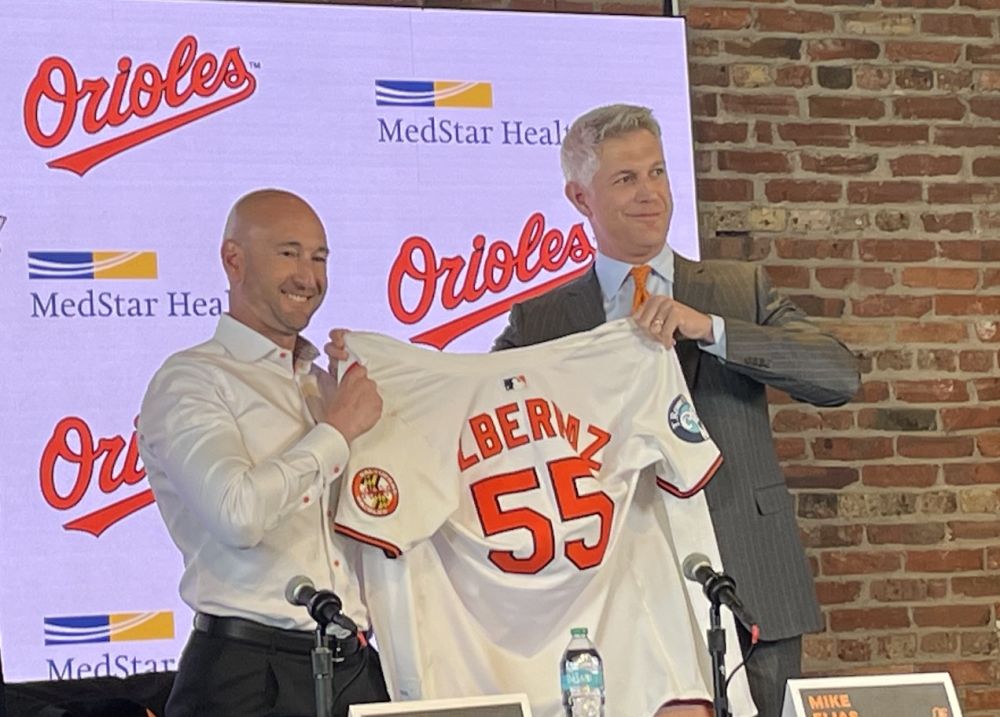


It was a gathering of self-proclaimed nerds and STEAM teachers Dave Brelsford of Mervo, John Bachman of Western and City and Brian Watson of Poly join Nestor at Koco’s Pub to educate him on bringing city students together with science, math and arts programming to excel in robotics, prepare for college and excel in the real world with solutions to problems.
Nestor Aparicio discusses the integration of STEAM (Science, Technology, Engineering, Art, and Math) education in Baltimore schools, particularly at Mervo High, with engineering teacher Dave Brelsford. They highlight the importance of including art in STEM to create STEAM, emphasizing problem-solving and teamwork. Dave shares his experiences with early adoption of 3D printing and AI in education, noting the evolution of technology in classrooms. They also discuss the competitive nature of robotics competitions, where students from different schools collaborate and compete. The conversation underscores the significance of practical, hands-on learning in fostering critical thinking and career readiness.
- [ ] Invite host (Nestor) to upcoming robotics/STEAM events and provide event details so the host can attend and cover them
- [ ] Promote the Baltimore City Engineering Alliance (BCEA) by directing listeners to the BCEA Facebook page and sharing fundraising/donation information
STEM Education and Robotics in Baltimore
- Nestor Aparicio introduces the show and mentions various community events and sponsors.
- Nestor discusses his involvement in a robotics club and his interactions with Ray Lewis.
- Dave Brelsford, an engineering teacher at Mervo High, joins the conversation.
- Dave explains the importance of including art in STEM, renaming it to STEAM.
Personal Experiences and Early Adoption of Technology
- Nestor shares his background in journalism and his lack of interest in science and math.
- Dave and John Bachman discuss their early adoption of 3D printing and other technologies in their classrooms.
- John mentions his transition from teaching in Harford County to Baltimore City.
- The conversation touches on the evolution of technology and its impact on education.
Challenges and Rewards of Teaching STEAM
- Nestor and Dave discuss the challenges of teaching STEAM to students.
- Dave emphasizes the importance of problem-solving and teamwork in robotics.
- The conversation highlights the competitive nature of robotics competitions and the camaraderie among students.
- Dave shares examples of student projects and the impact of 3D printing on their learning.
Integration of Art and Technology in Education
- Brian Watson, an architecture teacher, joins the discussion.
- Brian explains the integration of art and technology in his classes, including the use of SketchUp and Revit.
- The conversation explores the benefits of 3D design and printing in both architecture and engineering.
- Dave and Brian discuss the practical applications of their teaching methods in real-world projects.
Competitions and Collaboration in Robotics
- Dave explains the structure of robotics competitions and the role of the VEX V5 robotics league.
- The conversation highlights the friendly nature of robotics competitions and the importance of collaboration.
- Dave shares his experiences of working with students from different schools and the dynamics of teamwork.
- The discussion touches on the impact of robotics competitions on students’ college prospects and career opportunities.
Impact of Robotics on Students’ Lives
- Dave and Nestor discuss the long-term impact of robotics on students’ lives.
- Dave shares stories of students who have gone on to pursue careers in engineering and other fields.
- The conversation emphasizes the importance of making STEAM education fun and engaging for students.
- Dave and Nestor reflect on the personal satisfaction of seeing students succeed in their careers.
Community Support and Fundraising
- Dave introduces the Baltimore City Engineering Alliance, a nonprofit organization that supports STEAM education.
- The organization helps fund field trips, equipment, and speakers for STEAM programs.
- Dave shares examples of field trips and collaborations with companies like Amazon and Northrop Grumman.
- The conversation highlights the importance of community support in enhancing STEAM education.
Personal Connections and Future Plans
- Nestor and Dave discuss their personal connections and experiences in education.
- Dave shares his background and his mother’s role in sports journalism.
- The conversation touches on the importance of mentorship and support for teachers.
- Dave and Nestor express their excitement for future events and collaborations in STEAM education.
Final Thoughts and Gratitude
- Nestor thanks the participants and expresses his gratitude for their contributions to STEAM education.
- The conversation concludes with a discussion of upcoming events and opportunities for collaboration.
- Nestor highlights the importance of community involvement in supporting STEAM education.
- The participants express their commitment to continuing their work and making a positive impact on students’ lives.
SUMMARY KEYWORDS
STEM education, robotics, engineering, 3D printing, problem-solving, competition, teamwork, Baltimore City, Mervo High, Western High, Poly, AI, curriculum, STEAM, nonprofit.
SPEAKERS


 8
8


Brian Watson, Nestor Aparicio, John Bachman, Dave Brelsford
Nestor Aparicio 00:00
Welcome home. We are W, N, S, T am 1570 taci, Baltimore. We are Baltimore, positive, positively out here at Koco’s. We were in lauraville, in beautiful Baltimore City. It’s all brought to my friends at the Maryland lottery. I have candy cane cash giveaways. We’ve had winners today. I’ve scratched them, I’ve I’ve screened them. I get the confetti that says, Congratulations, you’re a winner. Also our friends at GBMC for putting us out and keep me alive and well as well. And we’re doing a couple Super Bowl. We’ll be at Pizza John’s on Thursday. We’re gonna be on Friday at Costas. We’re telling all sorts of fun community stories. I’m a D level celebrity in Baltimore, such a D level celebrity that when Ed Mullin is looking for people to go out on special stem events, he doesn’t want a stem student. He wants a failed stem student to be a really, really good MC. There is a robotics club here in Baltimore that I’ve been a part of for going back to the time when I kicked Ray Lewis’s ass with the rock of soccer robots. I got it on video. Believe me, he was very displeased with me and my wife that night, but rather like losing it, tiddlywinks. You like losing anything?
Dave Brelsford 01:10
Well, you know, he did stand there on the sideline wearing his wearing his Super Bowl, and I
Nestor Aparicio 01:14
beat him in his Super Bowl ring too. Is what I did. Dave brasfort is here. He is a
8Dave Brelsford 01:19
engineering teacher at mervo, you don’t look
Nestor Aparicio 01:22
like a teacher. Have you heard that before? Like any teacher I had, I feel like, mostly like a student these days, well, student of life where it is. Oreo had his John Belushi college shirt and his pal John, who’s a rival, right? Your mervo and Western or we rivals, friendly competition girls at your school, right? Great. Girl. Oh, absolutely, I didn’t I. I covered breezy bishop in basketball and Western and Dana John back. I’m talking 3040, years ago here. I know Polly got integrated with girls at a period of time, but Western remains all girls, all girls. Girls robotics. Yes, absolutely, man, I get my butt kicked by a girl in a STEM program. Wow, man. You know, we’ve come a long way, smart kids. STEM. Let’s start with STEM. Dave, what does stem stand for?
Dave Brelsford 02:09
Well, it’s science, technology, engineering, math, and really all the things I was a c minus dude. And we love to put we love to actually consider it STEAM these days, because you like to include art. Art is a really important part of engineering, and so I think art is something we should include, and it should be steam, really, from now on.
Nestor Aparicio 02:26
8All right, Steam, not stem. Yep, I like that. I will never call it stem again, robotics. And let’s just start at the beginning. I mean, I’m an old fart way at Dundalk High School, and I, I had my science teacher on, George Shulman was on at Christmas time over it, and he only taught 46 years. But not never me, because I was never smart enough to take his biology, physics, all that stuff. Um, that just wasn’t my track. I was, I was verbal back in the day, and I’m as a writing guy, you know. So I was gonna be a journalist. I was going to be a writer. I took speech. I took writing classes, things that were easier for me, anything that involved the periodic table of elements, or cutting up mice, was nothing. I was going to be a part of science, technology, math, all of these things kind of coming together to create robotics. And I’ve learned some AI lately. But the robotics part of this was something that became a curriculum, sort of, kind of when,
Dave Brelsford 03:27
well, after I got out of high school, so I graduated high school in 1990 and right around there is when we started, I think seeing some of these, like robots you could use in a classroom, probably 9596 is when it started becoming much bigger. That’s how bigger. That’s 30 years now. Oh yeah, yeah. I mean,
Nestor Aparicio 03:45
how old I am talking about. It is a new thing. I am I
Dave Brelsford 03:49
started teaching in oh three. So, you know, and robotics was a minor thing, especially in Baltimore City. It wasn’t something that was really big yet. And I was an early adopter with 3d printing and things like that. So early
8Nestor Aparicio 04:02
adoption was 3d printing. Was that early adoption? Oh yeah, teaching kids.
Dave Brelsford 04:06
Yeah, yeah, absolutely. And you were the, probably the first person I know, that was doing all that. And, yeah, I think I was the only one in the city that had a 3d printer at one point. Now, you were
John Bachman 04:14
a teacher at the time too. John, yep, I was, I started an oh four in Harford County in Joppa town. I was there for six years, and then came moved to the city to start teaching engineering,
Nestor Aparicio 04:22
8basically science teacher you are. I was a math teacher,
John Bachman 04:25
what they call tech ed, and so it was like, to me, lost, no, to me, it’s more like replacing the wood shop. Yeah. Like, really was like the end of the era around when I came in, like I was the young blood. I mean, I’m not now, but like, they weren’t making bird houses anymore, and it was hard for some of those people to kind of let that I
Nestor Aparicio 04:40
wasn’t gonna make a horse head book end. But a horse head book end. We all did that,
John Bachman 04:44
didn’t we? Maybe the CO two car that might have been like the I
8Nestor Aparicio 04:49
say this all the time. You know, my son’s 42 now, hard to believe, but if he made a baby right now, and I had to become happiness, I don’t even know where I would begin with tablet. And children and pencils and pens and cursive and math and the new math. And I, I would be lost in an elementary school, let alone at your level, with kids that are making my head spin with the things that I see them do. And I’ve come out. I come at this segment really honest, because Ed Mullen, and you want to talk about Ed, and talk about his tent Council, all the stuff that he does. He invites me out to these nerd things where I meet guys like, you bring it, you bring a bunch of kids in, and you impress us with all the cool stuff that they can build with robotic education. And these are 14, 1516, year old people. And here’s the weird part, and then this is really going to freak out my sports audience. Marcel was watching too. They have teams like mervo versus Dundalk football. That’s one thing, but mervo versus like a bunch of upscale, erudite private school kids and kicking their ass and robotics is probably a lot of fun for you guys, right?
Dave Brelsford 05:58
It is fun. It is fun because it is competitive.
Nestor Aparicio 06:02
It is us against you, our school against your school. I never qualify for its academic, but I wanted to. But, I mean, this is the extension of its academic, but not just, do you know the answer to the quiz? Can you build something that works, that impresses me, that can, that can compete at that level?
Dave Brelsford 06:19
8Yeah. And I think for us, like, we’re both engineering teachers. I’m at merva, obviously, he’s at Western and so lot of our kids are in the engineering program. So they’re, you know, they’re kids that have already been pre qualified, playing with robots, but not always, but not always. We have a lot of kids that just sort of show up like, Hey, this looks cool. How do I how do I do that?
Nestor Aparicio 06:35
And we, I did that in a logic class in college, and it was not cool. Worst class I ever I’m like, That looks like fun. Oh, my God, that was not fun. No, that was not fun. But to make it fun or make it compelling for 14, 1516, year old kids, I’m sure, to some degree, they have parents that may be a little bit on the edgier side of nerding, to say you’re going to go to college, and this is going to be a J, O, B and a career, yeah. And this is going to survive AI or whatever, it’s going to be to give people not just critical thinking skills and the science, but pragmatism that will lead to a career, right?
Dave Brelsford 07:11
Yeah, I mean, I think that robotics, and if you agree, I’m sure you probably do, but robotics really is all about problem solving, and that’s really what the competition does. Like you have, like, this year’s competition, they have these, like, 12 sided balls, and they have to pick them up and put them inside of, like, different containers and things and and different tubes. And so they have to devise a way to get those balls out, get them into the robot, carry them around, and then put them back where they need to be. And so that’s the essentially the problem right there. We’re just all about teaching kids how to solve problems. My father is a longtime engineer. He’s retired now, but worked for Johns Hopkins and APL and Lockheed Martin and stuff, and designed, like, rockets and missiles and, like, we’ll be driving down the road and he’ll be like, Oh, I’m almost out of gas. I can actually see him working through, like, the problem in his mind. Like, okay, I’ve got this much gas. I’ve got to go here where, you know, like, I can see him,
Nestor Aparicio 08:07
Project Engineer, getting into the mind of my wife.
8Dave Brelsford 08:10
Yeah, and that’s the kind of thing that, like, it’s all about, like, our entire curriculum is all about solving problems, real world problems, but like, solving an issue and working with others. Because engineering these days, you used to be, I would go work on their project by myself. Now you have a team of people from all over the world. You can’t just work by yourself. You’ve got to work with the team. And so I think a lot of our kids like the teamwork. They like having fun with their friends. You know, it’s just and just a bunch of delightful nerds hanging out, which is, you know, nerds are having all the fun these days. You can be a pro athlete like, you know, or you can be a nerd, and you make a lot of money and no one’s trying to shoot you, and you have a great time. And it’s like a wonderful kind of a gig, I think, you know, but
John Bachman 08:53
I think with especially with the competition, you could have the best robot there, and your wheel falls off, so you’re disabled, and so all your other robot needs to kind of come in and balance you out. And so it is a partnership.
Nestor Aparicio 09:03
And communication, right? You know what I’ve had with Mullen. He gives me the half bed dead battery.
Dave Brelsford 09:08
8That’s how he keeps himself on.
Nestor Aparicio 09:10
Gotta get my battery right. At least curriculum wise, I would think that this was set by the curriculum gods 20 years ago we we talked about the horse hood bookends in the carpet. That didn’t change from 1942 but curriculum for this and sort of the acceleration of science and where you are, and the first things you taught 20 years ago, I guess nerd 101, or engineering was steam, 101, or whatever it is. How much is that? Part of it change, and then on the other end, where you are with seniors or even in after school programs, or the gifted and talented, you know, version of steam or stem for what you’re trying to do, how much has it changed in your time being a teacher for 20
Dave Brelsford 09:55
I mean considerably. I think I mean micro controllers, Arduino. Raspberry Pi that is, that’s, they’re just, it’s a microcontroller, just a little mini computer, and it’s, you can buy them for $5 on eBay or whatever, and you can hook up sensors to it. And you can write a little program that says, if the temperature of this temperature monitor goes above this, do this. If the light comes on and it senses it do that like it’s just a really simple program. I have three TVs on my classroom that run on a Raspberry Pi, and they have, one of them has Home Alone playing on it. And as soon as Home Alone ends, it restarts and it’s playing 24/7, 365, every day in on one of my TV one or two, one good Trump it’s the, it’s because it’s a great engineering movie. And, you know, because he comes up with plans, he executes them, he draws out, you know, I just love it and and I don’t, it doesn’t have any sound on it, exactly right, and so, but it’s just a really simple little computer, and those didn’t exist 20 something years ago. So that’s a complete new thing. Now, AI, this has been a huge come up with Home Alone
Nestor Aparicio 11:05
as an engineering platform to foil the bad guys, right? I mean, great
8Dave Brelsford 11:10
movie, yeah, you know, and so. But I think, you know, we teach a lot of AI stuff now, like for making logos for our company, our teams, companies that they come up with, and for some of the projects that we do, the AI has been a huge change. I think I don’t know if you would agree. Can I have one
John Bachman 11:26
other friend jump in, either with us, or I can swap out?
Nestor Aparicio 11:29
Well, you have to swap out because, oh, we got, we have more teachers here. I didn’t realize we had people. He’s a poly guy. Oh, poly. Let me get to get Polly. And we’ve had Western here as well. Come on in. What’s up? Man, good to see you. Good to see you. Man, pot up. Let’s go. Man, introduce your, introduce your, your teachers here. I would have had another headset put
Dave Brelsford 11:46
8that also. So this is Brian Watson, Hi, Brian Watson, how are you?
Nestor Aparicio 11:49
All right? How you doing to see you? Man, friends, we don’t hold it.
Dave Brelsford 11:52
We don’t hold it against them. We’re having a
Nestor Aparicio 11:55
nerd conversation. They’ve already taught me that STEM is not steam, and steam is better than stem agree?
8Brian Watson 12:08
Yeah, I’ll go with it. You go that, yeah, I do. I do think art has this place in
Dave Brelsford 12:12
Absolutely, yeah. I mean, there’s a lot of art in math, you know, fractals and stuff like that. But, like, it’s a, you know, it’s an important part. So what’s the first thing you teach kids? I teach them how to draw in my class. Now you teach, he’s an architecture teacher, so he teaches you, probably does a little bit of that too, but my kids first learn how to draw. That’s the first thing you learn as sophomores, how to actually draw. What they see.
Nestor Aparicio 12:32
What is an architect? So architecture teacher? What would be architecture 101? At a high school level,
Brian Watson 12:39
8there is a basic understanding of how things look from different views, and like, how to draw that, not only in 2d but also in 3d so in our class, we still do some things by hand, like taking out T squares and triangles and stuff like that, and drawing them by hand, but also pencil. Yeah, okay, good.
Nestor Aparicio 13:02
Also, they had pencils in schools on a tablet.
Brian Watson 13:06
Right now we still use that stuff and their ability to sketch so like drawing what they see, but also integrating technology into it, so they learn how to use a different couple different like platforms like SketchUp, which is like a 3d modeling program. And then we also have them using some of the same software that architects are using to, like, draw buildings and create construction documents, like you guys use
Dave Brelsford 13:30
Revit, right? Which is, that’s a really powerful 3d design program that professionals use.
8Nestor Aparicio 13:35
Let’s talk about three you mentioned 3d design and I’m befuddled by I mean, it’s just my mind doesn’t work that way. In regard to 3d printers, right? Like there was a guy at one of your events who had me sit still, and he had the little camera go around me, and he had the little thing of Brook Lehrman. It looked like a little mini Brook Lehrman, you know? And I see that, but I’m trying to get the pragmatism of being a high school student to learn that. Like, what can you do with the D printer? I mean, I hear about 3d guns. I mean, they hear about crazy stuff. I don’t understand how that even works well.
Dave Brelsford 14:11
So we one of the neat things that really helps us out with the 3d printing is our seniors take their senior design class. Is basically a year long class where they come up with a problem in the world, and they have to create something to solve that problem. And so the nice thing is, I’m not telling them what to do. So like, in the past, I had, like, I had one kid who’s his father was 101 and his mother was 48 so figure that out, which is odd to me to begin with, but Ray was a great kid, and his father had a walker, and he and his father didn’t like it, because he would push the walker forward, he’d have to hold the brake and then walk up to it. And so Raymond redesigned it so the brake was always on and he could just release the brake when he needed to, so he could it was easier to hold, easier to and to me, that was a perfect project. Well, that created most. Ocean instead of stop, start, right, exactly, right. So it just, it just made everything easier for him. And so that project, he worked on it for about five months, and it was fantastic. And Ray was, was not one of our smart kids. He was, you know, just a typical just like, I’m kind of here to do whatever. But this project was important to him. And that’s the great thing about the senior project that, like John and I do, is that they get to choose what they want to work on, right? And we’ve had all kinds of really bizarre and really interesting problems, but they spend all this time working on it. Now, 3d printing, they that allows you to make prototypes. It allows you to, like, I’m going to draw something on paper, I’m going to put it into a 3d design program, I’m going to slice it, and I’m going to slice it and I’m going to print it and I’m going to see if it works. And you can do that in a day, which is incredible. So now kids, they can draw something online, but now they can 3d print it and take it home with them. Mom, I drew this. I made this out of nothing. This is purely out of my brain, and now I have it in my hands, and that, to me, is really just an incredible thing. I think that’s a really important sort of takeaway, literally a takeaway from what you’re doing. Your kids can design a house in Revit, and there are programs that allow you to export that, and they could be print that house and, like, here’s my design, because the old days is building it with sticks and paper and stuff like that. Now you can 3d design.
Brian Watson 16:19
We still do that, yeah, but to kind of speak on what you’re saying about threed print stuff, like in the architecture and construction realm, like their actual houses that are being printed now out of cement, yeah, they’re using concrete as the filament. And, like, there’s literally this giant robot that’s like, just pouring, yeah, at least a foundation.
Dave Brelsford 16:41
8No, no. The whole house, the whole house, but they leave holes for the windows. You put a window in it, you put you can do some texturing on the walls, but like that, it’s ready to go.
Nestor Aparicio 16:50
I want to entertain my audience just a little bit with what I’ve seen when I’ve come out to the robotics thing, just as a crazy MC that I’ve learned about teams and I talked about, we talked about Dundalk versus mervo Because you’re a mervo guy, Dave and mervo Beat Dundalk. I don’t admit that to the mayor, but I do every, every time he sees me, that’s it to me. I tell Brandon I remember I saw him a couple weeks ago. He still wants me to wear the damn mervo at but competing from a team standpoint. Explain, everybody understands when mervo and Dundalk get together, it’s football, basketball, volleyball, with robotics and competitions. And I know it’s, it’s a big thing, right? I mean, you know, you put the mervo shirt on and you’re work, you’re, you’re trying to beat city, beat Polly, beat whoever it is, right? Teams, what is the competition? I mean, I know what a tennis thing looks like, one on one and teams and doubles or whatever. What is a robotics meetup? What do we call them? There are there? Are there 66 schools, eight schools.
Dave Brelsford 17:52
I think it, well, depends on how many schools. It’s a robotics meet. It’s just a yeah, it’s just competition. But how many schools participate in such a thing. I think in Baltimore City, there’s probably 15 at least. But counties too, right? Everybody? Counties, yeah. So we have a Baltimore City league that we we compete with amongst Baltimore City, and then the winner of that league goes to the state championships, which is used to be at Dundalk High School for many, many years. I think this year it’s gonna be University of Maryland. But it took you out of Dundalk? Yeah, it took us out of Dundalk. We liked, I like to go on there too. It was nice. Yeah, well, we’ll invite you out to some stuff. We’ll get you some more stuff. But, you know, the nice, the real difference between, you know, football and lacrosse and stuff like that, is that the robotics competitions are really friendly. You know, if you’re, if you’re a team and you need a part, I got that, you can, you can borrow it. And how do you, kiddo, come up? How do you do this? Oh, I need help with that. Like, it’s all about fostering it’s just really a great problem. Yeah, it’s all about problem solving, but it’s, how
Nestor Aparicio 18:50
do you win, and what’s the competition? That’s, yeah, give me an example of what you do, and when’s the next one you’re doing? How many do you do? I You called it a league. I think of a bowling league. You play every Friday night or whatever. Yeah, but I don’t, I’ve never been a part of it, but I am privy to know that it exists. I just don’t understand how you win, or what the competition is, or what you’re trying to solve and who comes up with the problem. Yeah.
8Dave Brelsford 19:11
So, so we, we all participate in a Vex v5 robotics League, which Vex is a company that makes, you know, sort of plug and play robotics equipment
Nestor Aparicio 19:19
and a gaming system, per se or No, no, it’s, it’s
Dave Brelsford 19:23
all, it’s all about design and building, you know, building a road gaming part of something you come up with, yeah, well, they come up with the problem, which is, here’s a field, it’s a 16 by 16 foot field. And there are, there’s some problem to solve, picking up this, you know, picking up the balls, putting them in a thing. Okay? We had last year was one that really resembled frisbee golf. They had a frisbee golf thing, and he had to launch the things into their frisbee golf, you know, goal, okay, and then the more you would get in the goal, the more points you’re getting. So do that with Papa shot. Yeah, exactly right. Same kind of idea. And so. So every year, they come up with a new competition, and then we spend a month or so, all right, let’s look at the rules. Let’s figure out what rules can we take advantage of? How do we what should our robot be able to do? Let’s build a robot, and it’s never that smooth, taking apart and a lot of rebuilding. And then, you know, the kids come up with their solution, which is their robot to go and do whatever they’re going to do. And then on game day, on robotics, robotics day, we we get mixed. And the neat thing about it is, I’m mervo, and we have one team at mervo, but we’ve had, in years before, past, we’ve had three or four teams. You have a team too, right? Polly has a team has like, seven or eight teams.
Brian Watson 20:39
8I think they have a few different teams. And like, I think, within the last couple years, is not just like the robotics class and like the club that sends teams, but also our ROTC is also started, yeah,
Dave Brelsford 20:50
as well. And so the neat thing is, is, I’m mervo, but I have to get partnered. There’s four, four teams on the on each on each field. So I might be with mervo or with with Western for one round, and then the next round, I’m with a team from Poly, and then the next round I’m with a different team, and they’re my they’re my teammates for that round. We’ve got to work together. But then the next competition, they might be on the other side, and I’m going against them. So you’ve got to be able to work together with teams. You got to be able to be able to work against teams. It’s a really neat concept. I think it’s really cool, because it’s not like, typically, like football, like it’s just mervo versus Western, or just mervo versus poly. It’s always getting mixed up. And then when you go to states, it could be mervo versus, you know, with some team from Howard County versus a team from PG County and a team from Calvert Hall. How many people are on a team. There’s three that are allowed to be standing at the, you know, the field side, like, you know, helping out the driver. But then the rest of it, you know, we have 12 people that show up regularly for our practices, usually. And you know, Polly has probably 50 kids, because they have a whole bunch more teams than we do.
Nestor Aparicio 22:00
So from a college perspective and moving on, this is obviously a very attractive place for universities to look at your students. I mean, 90% of your students are college bound,
Dave Brelsford 22:13
yeah, yeah. I mean, I’d say about that, yeah, yeah, maybe a little bit higher, but I mean, I’m, I’m 80 90% probably about Yeah, like, one of my kids just got accepted to Maryland engineering yesterday. Just found out, which is really exciting. So, you know, just,
8Nestor Aparicio 22:27
I think it’s just neat from my perspective, of, like, growing up playing baseball, playing sports and things like that. I was a good student. I was a smart kid and all that. It’s academic. Was something like, you know, Jeopardy kind of trivia kind of thing would be involved. I never thought of the spirit of competition through science in a way. Other those kids really smart, they’re gonna make more money than let’s get a better job, get more scholarship money. But the fun, the part where you’ve made it fun, I think it’s different than my era.
Dave Brelsford 22:54
And I think part of it is, you know, a lot of kids there, there’s a there’s a segment of kids that respond well to competition. Like, I want to go compete. I want to beat them. I want to, you know, I mean, I remember, we had a competition once years ago, and we’re going up a middle school group, you know. And like, you know, we’re a bunch of high school kids. And I walked up to our captain was like, hey, remember, you know, these kids are in middle school, and then I lean in, is like, step on their necks. And then I walked away, you know, like, you know, and they had a great time and everything. It was fun, and there’s no real animosity or anything like that. But it’s just a neat what’s all teaching, right? Yeah, and, and, you know, the neat thing is, like, like we were saying earlier, a lot of these kids are our engineering students, so they’re kids that we have really great relationships with. We’ve, I work with my kids for three years, you know. So by the time they leave the seniors. I know them really well. They’re, they’re, they’re almost as much friends as they are students to me, by then, you know, and I won’t, I don’t friend anyone on Facebook until after they graduate, but then, you know, that way I can keep up with them and see what they’re up to. And, you know, you have kids come back and visit, which is always awesome. And, you know, it’s just a just a bunch of really good kids that go off and do some really fascinating stuff.
Nestor Aparicio 24:01
Well being teachers need anyway. You see the light in their eyes when they when it comes on, right, when, when you, when you see that moment where, where they get that aha moment. That’s, that’s, what’s, what’s special, yeah,
Dave Brelsford 24:11
8and I think it’s really neat, because some of the stuff we teach is really complicated stuff. And you know, when these kids are, I mean, they’re, I have kids that can go out and get a job doing 3d design for a company.
Nestor Aparicio 24:22
I wouldn’t make it three days in your class, and there’s no, I don’t, you know, I just come
Dave Brelsford 24:26
on by. We’ll teach you something. It’ll be fun anytime. Just show up and say, I need to go to miss you.
Nestor Aparicio 24:30
Better start with the remedial program. You know, you gotta you got a 100 program over there?
8Dave Brelsford 24:35
Well, we’ll take care of you. It’s not a poly
Nestor Aparicio 24:37
mervo Western. Who else in the city?
Dave Brelsford 24:41
We have Patterson. Yeah, we have a guy at Patterson and Carver.
Nestor Aparicio 24:47
8Yep. Are those in the counties, almost every school, most schools
Dave Brelsford 24:51
like I know that my son’s gonna go to Mount Hebron next year in Howard County, and they have a Project Lead the Way engineering curriculum that would seem gonna be a Viking, huh? So, yeah, he’s gonna. Be a Viking. I went, I went to wild lake. So it’s hard for me to it’s hard for me to understand how he’s going to be a Viking. But you know, is what it is. Did Bobby Nick teach you a wild Lake? Oh, yeah, Bobby Nikki fortune is good old friend of mine.
Nestor Aparicio 25:10
Yeah, we lost pub. Yeah. He’s a great DJ. Picture him yesterday, and literally, with my wife smiling. He DJ at all my whiskey, Joe’s all of our parties, and sat in my section. So, man, you say wild Lake to me? What year wild Lake were you? 1990 Did you know Chris Berg? Chris Berg, yeah, she played on the basketball, volleyball tonight. I remember after right up, she was like, all state. She was a great player. Went to Dartmouth. Yeah, remember the name? And she was his star player when he was doing the triangle offense. I was there, you know, he was running the Dean Smith offense down at Wild Lake.
Dave Brelsford 25:43
Yeah, I was there with Coach Doug Duvall. He’s a, you know, Doug’s a legend, legend, and absolutely, you know, that’s great. And my mother was actually the, was the one of the sports editors for the Columbia flyer. So she was a big time, she knew everybody in Howard, your mom’s name, Karen bros Ford, so she can do your mom, yeah, she was your mom, big time sports, right? And the thing was great about her is she would always write about the girls, you know, they should always make sure the girls got as much coverage as the guys. And that was really cool.
8Nestor Aparicio 26:08
So I covered all that back in the late 80s as well. So, yeah, you know, look at this man, small tomorrow, right? Absolutely. I will see you at the next robotics event that Ed, mother, Ed does too, because I want to give up. I know what
Dave Brelsford 26:19
Ed does. That works for, go now he works for, for let’s go robotics, and which is a nonprofit that focuses on, you know, getting kids into robotics and steam and things like that.
Nestor Aparicio 26:29
So every time he invites me to event, there’s beer, yeah, there’s food. And I’m always the dumbest guy in the room.
Dave Brelsford 26:37
8You’d be surprised. You’d be surprised. There’s a lot of us fooling you
Nestor Aparicio 26:40
out there. I’m overwhelmed by not, not by your college sweatshirt, by the immense intellect of
Dave Brelsford 26:47
your your contemporaries here, these guys, these are the guys I look up. Well, I appreciate
Nestor Aparicio 26:51
Give me your name again, because I just got you on here. Brian Watson, Brian Watson, all right. And John Bachman, correct, absolutely. Ray Bachman, right. B, A, C, John B, but Ray was my producer, B, A, C, H, M, a, n, c, if you would have written that down, I would have never forgotten
8Dave Brelsford 27:06
that. Yeah, so. And Dave
Nestor Aparicio 27:08
Brailsford always from mervo, and I want to make over with that state championship
Dave Brelsford 27:14
for four years ago, I was a tough game, drove all the way down
Nestor Aparicio 27:17
8to Annapolis. The worst part about that night is I’m, you know, I’m friends with the mayor. He was just the new mayor at the time. I remember, and I was, I was shit talking to him at halftime, text I was saying, and then when the game ended, suddenly, my my self service one
Dave Brelsford 27:34
until I ran into, it’s funny, because Brandon is, he’s a St Mary’s grad. That’s where I went to my undergrad, and so we talked about that as well. It’s really fun to have just have connections with people.
Nestor Aparicio 27:43
Nobody in St Mary’s listens to me, but ain’t nothing down there. I don’t know what you all were thinking going down there. You know,
Dave Brelsford 27:48
there is a beer and sailing.
8Nestor Aparicio 27:49
Since you guys are hard scrabble public educators here, I’m giving you a chance to win candy cane cash for everybody, from Poly to mervo to Western all the way around, Lucky. 38 for you. 37 for me.
Dave Brelsford 28:05
Can I plug something real quick? We do here. We We are a group of so there’s a group of us. I think there’s four or five of us now. And we are. We started many years ago, the Baltimore City engineering Alliance. That’s our 501, c3, that we’re gonna plug this. And so if you look us up on Facebook, we are on the internet, you know, we are. We do some fundraising things like that. Our whole goal is to get kids out of our classrooms as much as possible. So it helps pay for things like field trips equipment, you know, speakers coming into our classroom, field trip for STEM programs. You know, I love taking kids Air and Space Museum, because everyone can get a everyone can get behind an airplane, and they can just, they know what an airplane, dc, dc, or in Virginia, they’re both fantastic. Is that the Trump says, One of these days, it’ll end up being that I’m
Nestor Aparicio 28:52
still he’s under a prison, yeah, that his name’s coming off all that.
Dave Brelsford 28:55
8But Ed, Ed is, you know, Ed took, used to take kids out too, and I was never able to go on this trip. But I want him to reset, when you’re listening, reset this trip, he would take kids out to the company that builds the jaws of life, and they would go out into the parking lot and cut up a car, you know. And like, to me, that’s, you know, that would be an awesome field trip, too. But we’ve gone to Amazon, you know, to see all the robots moving boxes around and doing all the shipping, just all kind of you’ve been been on a bunch like we’ve been ocean nearing, which is really cool, underwater stuff, you know, been building underwater ROVs. And what’s really cool is one of my students works there now, so she’s an engineer with them, which is awesome. And, you know, we have kids at Northrop Grumman, we have kids at Apple. We have kids at Boeing, so, but basically, we just exist. The reason we started a 501, c3 is, you know, we talked to companies like UPS at one time, was one of our sponsors, and they’re like, oh, we’d like to, we’d love to give this stuff, but we, I just can’t give it to you. It’s got to be to a to a nonprofit. So we started our nonprofit years ago to sort of facilitate that. Engineered it. Yeah, we engineered that to make that happen. And so now here we are. Are, you know, and so if you you know, direct people to bcea, and you know, Baltimore City engineering Alliance on Facebook. And, you know, we do some fundraising campaigns there. We’re pretty small budget, but, you know, we it works out. It’s good enough.
Nestor Aparicio 30:13
My fun part about this whole week, doing people together and all sorts, we’ve done her resiliency today. We’ve talked about all of these things. But there’s so many people that care in our community. Whatever they care about, they care a lot. And a lot of times it really is about listing people that less fortunate, younger than them, giving people I had helping up mission here. So like, I just think there’s so many good things going on the city. Nestor, positive is all about. So it’s good to meet some teachers here doing good things, east side, west side. Here in the city. We’re in the city right now. We were at Koco’s Pub, one of my favorite places. Get the cream of crab soup and don’t sleep on a coconut shrimp. I’ve told everybody that everybody’s getting a crab cake here. They know about that. Get the coconut shrimp here. It’s all brought to my friends at the Maryland lottery. I have candy cane cash to give away. I hopefully have three lucky gentlemen here, and we’re going to be on Thursday at Pizza John’s at Essex. Friday, we’re going to close things down at Costa sin and Timonium. It is the Maryland crab cake tour. It’s all brought to you by our friends at GBMC as well as the Maryland lottery. We’re going to come back continue things on. We’re going to be talking Well, I got one last guest here today at Koco’s, and I might even sneak Marcel in here before it’s all over with I am Nestor. We are W NSD. Am 1570 Towson, Baltimore, not smart enough for Steam, but I’m blowing my steam off Maryland crab cake tour. Stay with us.