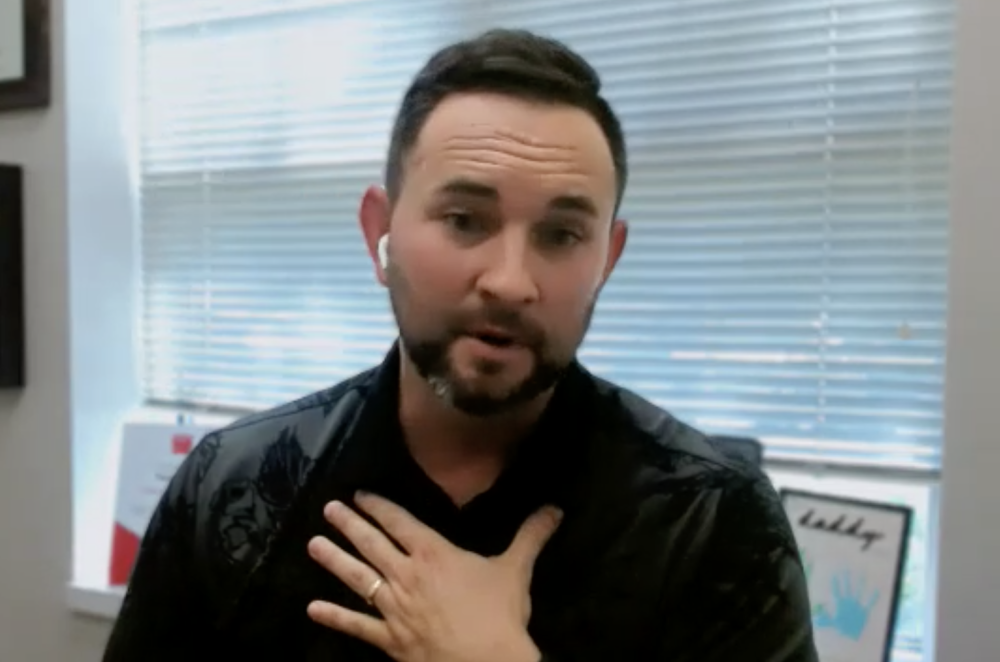


Getting back to the best version of you is always the goal of our friends at GBMC and with many friends going through hip and knee replacements, we reached to Dr. Ronald Delanois to get Nestor hip to the facts about knee replacements and better joint health as we age.
Nestor Aparicio discusses the Maryland crab cake tour and upcoming events, including a visit to GBMC for a checkup. Dr. Ronald Delanois, an orthopedic surgeon at GBMC, emphasizes the importance of comprehensive orthopedic care, focusing on injury prevention and quality of life. He highlights advancements in hip and knee replacements, including the anterior hip approach and robotic technology. Dr. Delanois stresses non-surgical treatments and lifestyle adjustments to maintain patient activity. He also mentions ongoing research into cartilage regeneration. Nestor shares his personal experiences with joint issues and the importance of staying active.
- [ ] @Nestor Aparicio – Host the Maryland Positive event at Planet Fitness in Timonium this week (promote show presence and represent Baltimore Positive on-site).
- [ ] @Nestor Aparicio – Organize and run the crab races event in advance of the Preakness Stakes on Thursday next week at Lexington Market.
- [ ] @Nestor Aparicio – Provide Maryland Lottery ‘Maryland Treasures’ scratch-off giveaways at Fayley’s next week (prepare and distribute prizes onsite).
- [ ] @Nestor Aparicio – Host the Maryland Positive appearance at Fishmonger’s Daughter in Catonsville on the 21st (reserve table and represent the Faithless family new location).
Outline
Maryland Crab Cake Tour and Upcoming Events
- Nestor Aparicio introduces the Maryland crab cake tour, mentioning events at Planet Fitness in Timonium and the crab races in advance of Preakness Stakes.
- Nestor talks about the 47th year of the crab Derby at Lexington market and mentions Ivan Bates will discuss law and order.
- Nestor mentions the Yankees are in town and hopes they won’t sweep the series.
- Nestor promotes Maryland lottery scratch offs to be given away at Fayley’s and the fishmonger’s daughter.
Nestor’s Health Checkup and Introduction of Dr. Ronald Delanois
- Nestor shares his experience of having a real doctor’s appointment, including a colonoscopy six months ago.
- Nestor introduces Dr. Ronald Delanois, an orthopedic surgeon at GBMC, and mentions his own health checkup.
- Dr. Delanois explains his French name and prefers to be called Dr. D for simplicity.
- Nestor describes Dr. Delanois as having an old-school vibe and mentions his own experiences with joint and knee issues.
Inclusive and Comprehensive Orthopedic Care at GBMC
- Dr. Delanois emphasizes GBMC’s inclusive and comprehensive approach to orthopedic care, focusing on injury prevention.
- Dr. Delanois discusses the importance of staying active and healthy as people age, especially the octogenarians.
- Nestor shares his memories of having his appendix removed in 1986 and his fear of doctors.
- Nestor mentions friends who have had knee and hip replacements and the positive experiences they had.
Advancements in Orthopedic Surgery and Technologies
- Dr. Delanois explains the evolution of orthopedic surgery, particularly hip replacements, and the various approaches used today.
- Dr. Delanois discusses the use of robotic technology in knee replacements to achieve a normal knee feel.
- Dr. Delanois emphasizes the goal of providing patients with pain-free activity and quality of life.
- Nestor shares his personal experience with knee issues and the improvements in surgery over the years.
Non-Surgical Techniques and Patient Education
- Dr. Delanois highlights the importance of non-surgical techniques to maintain patient activity without surgery.
- Dr. Delanois mentions various non-surgical treatments like cortisone shots, gel shots, and alternative medications.
- Dr. Delanois discusses a Stanford study on injecting substances to regrow cartilage in the knee.
- Dr. Delanois emphasizes GBMC’s focus on preventing the need for knee replacements and maintaining patient activity.
Athletes and Orthopedic Care
- Nestor discusses the unique challenges athletes face and the importance of getting them back to their activities.
- Dr. Delanois explains that athletes heal faster due to their younger age and the nature of their profession.
- Dr. Delanois emphasizes that surgery is not always the first line of defense and that education and physical therapy are crucial.
- Dr. Delanois mentions the importance of managing pain and the evolution of rotator cuff surgery.
Patient Behavior and Lifestyle Adjustments
- Nestor shares his experience with bad habits affecting his health and the importance of lifestyle adjustments.
- Dr. Delanois discusses the importance of changing behavior and educating patients on safe habits.
- Dr. Delanois emphasizes the need for a comprehensive approach to patient care, including nutrition and fall prevention.
- Dr. Delanois highlights GBMC’s team approach to orthopedic care, involving various specialists to provide complete care.
Nestor’s Personal Health and Future Appointments
- Nestor shares his recent health checkup results and the need for lifestyle adjustments.
- Nestor jokes about his active lifestyle and the potential need for future orthopedic care.
- Nestor mentions his participation in GBMC’s “Walk a Mile in Their Shoes” event.
- Nestor thanks Dr. Delanois for his expertise and expresses confidence in GBMC’s care.
Promotion of GBMC and Upcoming Events
- Nestor promotes GBMC’s sponsorship of the Maryland crab cake tour and the Maryland lottery.
- Nestor mentions upcoming events at Planet Fitness, Lexington market, and the fishmonger’s daughter.
- Nestor thanks GBMC and the Maryland lottery for their support.
- Nestor concludes the segment by promoting the Maryland treasures to be given away at upcoming events.
SUMMARY KEYWORDS
knee replacements, joint health, orthopedic care, GBMC, hip replacements, anterior hip approach, robotic technology, non-surgical techniques, physical therapy, pain management, patient quality of life, aging population, activity maintenance, sports injuries, patient education

 8
8


SPEAKERS
Nestor Aparicio, Dr. Ronald Delanois, Speaker 1
Nestor Aparicio 00:01
Welcome home. We are W, N, S, T, am 1570 Towson, Baltimore. We are Baltimore. Positive, positively getting the Maryland crab cake tour back out on the road. We’ll be at Planet Fitness in Timonium this week, on Thursday next week, we’re doing the crab races in advance of Preakness Stakes. We down at Lexington market. It’s like the 47th year they’ve done the crab Derby down there. Ivan Bates is going to come by and talk law and order, also the Yankees in town. Hopefully I don’t have the brooms out for us again. I will have these out. These are the Maryland treasures, Maryland lottery scratch offs. We’ll have those to give away next week at fayley’s, also on the 21st in Catonsville, at the fishmonger’s daughter, as we christen the new location for the faithless family out on Frederick road, I got my own special table out there, also brought to you by our friends at GBMC, where I walked a mile in their shoes last month. They are our partners. I had a real checkup, and if I showed Dr Dylan, while my I actually I took a needle right here they she told me I had beautiful veins. I’m like, get me out of here. I actually had a real doctor’s appointment last week. I had a colonoscopy six months ago. So Christina, Greg, everybody over GBMC trying to save my life and keep me on the up and up. So this week we’re gonna do orthopedics. We have Dr Ronald de Lenoir say it the French way, because it rolls off of you. I just came back from South America. I’m working on my Spanish, Doc. You know,
Dr. Ronald Delanois 01:25
that’s all right. That’s all right. The French pronunciation is de la moi.
Nestor Aparicio 01:29
8That is
Dr. Ronald Delanois 01:29
very difficult. Yeah, it’s close very, very difficult to say. So most people just call me Dr D. That’s probably the simplest way to remember my name is dr d. Well,
Nestor Aparicio 01:38
for anybody listening out on AM, 1570 you’re driving around. You need to go to the video on this, because you have a, you know, you have a you have a vibe. You have, like, a total old school, you know,
Speaker 1 01:51
guy,
8Nestor Aparicio 01:52
old school vibe about you, yeah, orthopedics is not fun, and it usually involves a lot of pain for the guy on the other end, like me, I’ve been called in on joint this and knee this and elbow that I’m 57 I’ve never fallen out of a tree and broken anything, but so many of my friends are seeing folks like you about Knees And Joints And hips and things where they’re just miserable in their golf game or injured in their pickleball game, or just trying to get them down steps, like I was five years ago. And, I mean, it’s scary coming to the doctor. And I think part of the fun is what we’re trying to do here at GBMC saying, Hey, man, you got to get this. It’s not fun, but you got to do it. You got to get in. You got to, you know, you got to get your body checked out.
Dr. Ronald Delanois 02:33
I agree. 100% 100% I think that what we’re trying to do here at GBMC is to take a more of a inclusive, comprehensive approach toward orthopedic care and the prevention of injury for our patients, and that’s the entire spectrum. When people talk about knee injuries, they tend to focus on the young athlete. And we all think that we’re still young as we get older, but we want to consider ourselves continuing to be active. So how do we stay active? How do we stay healthy? How do we prevent ourselves from injury? And that we’re looking at that from the entire spectrum in GBMC, because we think that’s what’s really, really important. Our population is getting older. We recognize that the baby boomers are accelerating. The fastest growing population is actually the octogenarians. And believe it or not, you know what they want. They want to remain active. They want the same thing you’re saying right now, which is, they want their knees to work. They want to have pain free. They want to be able to play pickleball and be active, because that’s what life is about. Life’s about quality. We can’t determine quantity. That’s up to the good Lord. If those of you who have faith and the rest of it is all about us. How do we maintain our quality?
Nestor Aparicio 03:42
You seem like you’ve been at this a couple of years. And I would think that when I was a kid, I remember when I had my appendix taken out, 1986 we’re going back, was 40 years ago. This month, I had my appendix taken out. I mean, I got a scar this big across my stomach and doing sit ups for years, and I was 18 years old when it happen. I’m just thinking like, of all of that, and maybe that’s one of the reasons I try to avoid doctors that there every person that I know, and I know a lot of old people that have had knee and hip replacements, and I mean, Rick Vaughn’s coming on next week, old Oreo PR guy. He a couple weeks ago, he’s like, I’m having my my and I’m like every person I know, Marvin Lewis, my dear friend, head coach, they’ve all said to me, is the best thing they’ve ever done after they’ve done it, because you guys are better at doing it than you were 30 or 40 years ago, and getting you back to full health. And I did PT last week. We should be doing PT every week, but the notion that we know how to do this, and it’s going to hurt like hell for a minute, we’re going to give you this. You’re going to do this, but you’re going to do that, and hey, by the end of summer, you’re going to feel better than you feel right now, which is creaky, and I think a lot of people fear that part of. It, but I’ve heard so many on the other end of people even older than me, who’ve been been overjoyed at the experience they’ve had by finally putting themselves through when they have insurance and have all of these things that modern technology and doctors like you, you’re doing it differently than maybe you did it in med school.
Speaker 1 05:18
8Well, there’s
Dr. Ronald Delanois 05:18
no question. First of all, we didn’t do it in medical school because we weren’t allowed. So we’ll just say that. Weren’t allowed. So we’ll just say that. But you know, as we as the profession, has evolved as everything has evolved as time goes on, right? The RP operation has improved in many ways, specifically hip replacements. We have a multitude of approaches that really try to address the patient specifically. You know, patients like to think, you know, the most popular approach today is what’s called the anterior hip approach. People have a misnomer of what that actually means, but that really means it’s a muscle sparing approaches. There’s at least two to three and maybe even four, muscle sparing approaches that surgeons utilize based on patients overall anatomy. And we have to emphasize that, because I think patients come in looking for a procedure, what they should really be looking for is the right operation to give them exactly what you said, which is quality, right they want to return back to activity and what they view as normal living. So that’s number one in terms of hips in knees. Knees have done a tremendous evolution. We’ve changed the plastics. We’ve changed the materials. The approach actually hasn’t changed so much, but we now incorporate robotic technology to help facilitate so we have a lot of different ways as we’re continuing to chase what we call the normal knee. The normal knee is what we want. The hip is an easier joint where patients feel normal after the operation. They forget about it. Knees not always the same way. So we, as academic orthopedic surgeons, as people who are interested in this topic, one of which is myself, and I’ve published quite a bit in this space, I think we really are trying to understand is, how do we recreate that patient experience similar to the hip, where that knee feels essentially normal? And robotics is going to help us get there, not quite there yet, but it’s going to try to help us get there as we try to and as we I can go on in terms of all the different technologies, different approaches, different ideologies, in terms of how to approach a knee replacement, but the goal is to give somebody a need that they don’t have to think about, that they can go on and be fairly active right now, there’s always limitations. I’m not, I’m not a fan that you can go back and, you know, ski 55 miles an hour down downhill ski like Lin Yvonne Lindsey Vaughn did, but you know, God bless her. She’s, she’s, she’s an unusual individual. She’s a beast, and, you know, God and she’s, she’s, in many ways unstoppable. But that’s not the normal person. The normal person, what they’re looking for is increased quality. They want to return back to being able to be active and have a and have a good, a good remaining portion of their of their life.
Nestor Aparicio 07:59
Dr Ronald Delano is here. He is with GBMC. He is an orthopedist and orthopedic surgeon, and as well as for joints and knees and things like this, I had Condor Malaysia, my right knee. I played a lot of tennis. I was a catcher in baseball, so lot of squatting and that sort of thing. I’m I’d like to think I’m in the best shape of my life now, because I’m smarter and much more dedicated to being in shape than I was when I was 25 but normal knee when the weather gets weird, you know, like my mom would talk about arthritis back in the day, when the clouds would come, or when the barometric pressure changes, or those kinds of things, my knee feels better. Knock on wood, knock on anything I can find than it has in years. In regard to me walking through cities, and I just did this South America tour, I’m walking 15 miles a day, everywhere but hills, weird things, cobblestone, things that moved me a little bit. I feel it, but I don’t want to come see you and talk about replace this and that I don’t know what normal is, or what point I’d say, Well, I’m uncomfortable. I’m going to take a couple of Advil or take a little bit of this to get the swelling down, or whatever, if I walked a little funny, or if I turn it a little funny. But the difference between having that surgery now 20 years ago, for me, was June of 2006 that I had that to thinking like, maybe one day I would really need you. I’m cool right now, at least I feel that way, but I’m not even sure what the normal aging process is for these kinds of things, because I’m not afraid of having it done now that I’ve had so many friends say if it ever gets bad, but I’m not looking to downhill ski. I’m not looking to run a marathon anymore, you know,
Dr. Ronald Delanois 09:38
right? I think that that’s the right approach. I mean, I think people have a fear of of physicians because they think especially surgeons, because they think that the only thing the surgeon wants to do is actually operate. We’re like, you, right? We have families. We have loved ones who are at different age points in their lives, and we’re not. No one’s chasing an operation. At least I like to believe that for the majority of orthopedic. Surgeons out there, and what that means is that, essentially, what we want to do is the right thing for you, and sometimes what that means is just simply educating you on what your problem is and what activities you can do differently to be to remain active. So what I tell people is, you know, some people are avid runners, but running is getting harder on their knees, well, then you transition. Or you transition to trail running, which is a little bit easier, easier on your feet. Or you get different shoe wear. Maybe you transition to walking, walking briskly. You know, you can still remain active and evolve and change, because we all do. That’s the part of normal process that’s aging, right? It doesn’t necessarily mean that you have to have surgery. So coming, don’t be afraid to come and see us in orthopedics at GBMC, because really the reality is, our goal is to keep you active and not and I will tell you the majority of patients that we see, we do not offer or recommend surgery. We actually emphasize non surgical techniques to make sure that you can remain active, and that’s our goal. There’s a plethora of new things that are coming out. Great. You know, we everyone’s heard of cortisone shots that’s very common. People have heard about gel shots that’s very common. People are now thinking of alternative medication. There’s some debate on that, and I’m happy to expand. I don’t think we have time. You know, there was a Stanford study that just came out that is very much in the preliminary stage. As I spoke to the Vice Chair, he’s a good friend of mine at Stanford, and I said, Tell me about this. I see one of your PhDs is has actually developed the ability to inject stuff to make your cartilage regrow and with on the actual knee right now, I think that’s gonna be something we can potentially use for young people more so than old people who have other bony changes, but that’s an evolution that’s going to happen at some point in time where we’ll be able to, hopefully prolong the knee, as we’ve done in other areas. Just think of it as a cancer. There are certain cancers in the past that were fatal very quickly. Today, people are living with those types of cancers for a long, long time, you know. And there we can go on and on. In terms of that, we see arthritis as the same thing. We’re just on a different spectrum. We have good solutions today, good replacements today, but our goal at the end of the day is to hopefully prevent the need for a replacement and allow you to remain keep you what you have, and allow you to remain active. And that’s our model here at GBMC, is really, how do we keep you doing what you want to do?
8Nestor Aparicio 12:24
Well, I don’t want to throw a baseball at the you know, 101 miles an hour, but I would think guys in your line of work, and I’ve had Dr Frank Joe beyond back in the day, I’ve done sports for 35 years. So most of the time when I’m talking orthopedics, it’s about, how do we get this football player or this baseball player back to doing what they do, but the soldier part, or the shoulder part of this, and I had a rotator cuff issue maybe about 25 years ago, when I was a young guy on my left side, and I’m right handed, and I had the rubber thingy that on the attached to the doorknob and strengthening and all of that. When you see what athletes put themselves through, stuff that in your line of work is sort of like, you know, they’re just going to be coming to see somebody like you. Pitching is one of those things that I think, from a sports perspective, for my audience, it’s not normal, right? What these guys do?
Dr. Ronald Delanois 13:15
Well, exactly. I mean, I think that when we try to compare ourselves and say, Wow, that professional athlete was able to return back to activity much more rapidly than I was. Does that mean he had a better doctor, a better therapist? Not necessarily. And I’m not necessarily sure that that person should have returned back to activity as quickly as they did. They’re in a business, right? We have to recognize that. And sometimes there are things that happen behind return back and state that they’re normal when they may not be normal. We see that all the time, right? The reality is that the human body heals at its own rate. Yes, the younger you are, the faster you heal. Most athletes are young men and women who have, still that ability to heal more rapidly than the majority of us who are now seeing orthopedic surgeons. The average orthopedic surgeon is not seeing the 15 the 20 year olds. Yes, some of our sports physicians, who are dedicated to sports athletes, will be seeing more frequently those injuries that do oftentimes require surgery. We have a surgeon here, Dr malagari, who does that as well, does a fantastic job, absolutely 100% but again, the majority of us are trying to, you know, maintain activity and stay active and stay healthy without surgery. Now I will tell you surgery, when done and done properly is a fantastic operation. We like to do that because we like to give patients back that pain free activity that that’s why they’ve come to see us. But that isn’t our first line of defense. Our first line of defense is education and then giving you a plethora of modalities to include physical therapy. Sometimes, you know, today in orthopedics, we’re talking about the psychology of pain. How do I help you manage pain better, so that you aren’t looking for surgery? You were taught, you mentioned rotator cuff shoulder surgery. You know, the evolution used to be every rotator cuff operation, every rotator cuff tear should be fixed. Today, that isn’t the case. We don’t look at that as the as the absolute end all be all, because not every rotator cuff should be fixed, because the data doesn’t support that. So there’s it’s again, as you mentioned earlier, the specialty is ever changing. We like to believe that GBMC, we’re at the forefront of that change, and we think that we can provide the, you know, the best care possible to the patients of Baltimore, Towson and all of Maryland.
Nestor Aparicio 15:44
I got to make you laugh here. Doctor, Dr Ronald Delano is here from GBMC, so I’ve seen an orthopedist once, maybe in the last 15 years, and it was because I was having an issue with my right arm in picking up pots and pans. I had like, like
Speaker 1 16:02
8in
Dr. Ronald Delanois 16:02
the latest
Nestor Aparicio 16:03
exactly I knew you would know. So I went in and the doc said to me, like, literally, was examining me. Says, How do you sleep? And I’m like, I sleep balled up. I sleep on my stomach exactly the way my chiropractor tells me not to. So everything I was doing were these dumb habits. And he said, You’re sleeping on your elbow. You’re curling your arm up underneath of you. Gave me like, this thing that spring steam wears, this, this wristband thing when he plays guitar to, like, lock in. And I looked at the doc like me with a bad habit. How could that be possible? But I just wanted to give you a little bit oxygen to talk about that laugh at me because like habits and like the kind of shoes we have and the way we’re walking and the way we do things will affect all of this. And even after my right knee surgery, I had no idea about left and right balance, but it took me about two years after I had surgery 20 years ago, to just get my right and left organized again, to get my strength back, because I got so whacked out. But for me, the part of bad habits, sleeping on my stomach, just doing all of these things that were wrecking my body that when I was 25 didn’t bother me. When I got to be 45 it started to wreck me a little
Dr. Ronald Delanois 17:18
bit, right? And that’s what you’re describing is exactly what we’re focusing on here at GBMC, which is the total patient, right? The total patient is not just the injury located in your elbow. It’s really about your as you described many other aspects. How do we change behavior? How do we educate you and the elderly you talked about hip and knee replacements. How do we teach them to have a safe home so that they don’t fall because fall risk is a catastrophic issue as you get older, because it really could change your life significantly. How do we ensure that we give you the right nutrition so that you don’t develop early onset osteoporosis, osteopenia? Those are the types of things that we’re trying to focus on. Build a structure here at GBMC that allows us to take care of the patient from from from the beginning to end, and really provide that complete service. And so I think that’s what, that’s what we’re excited about. We’re excited about taking on orthopedics very differently, what than the rest of the community in Baltimore is, which is very isolated. We’re going to you’ve got a knee problem, go see a knee doctor. We’re going to see you’re going to hear at our facility, you’re going to see us as a team. And our team is not just the orthopedic surgeon, it is everyone. It is the it is the physical therapist, it is a social worker, it is the psychologist, it is the the endocrinologist, it’s the entire team of people who are focused on returning that the patient yourself back to the quality of life that you choose, that you want.
8Nestor Aparicio 18:44
I’m not breaking any HIPAA violations here because it’s my medical record, but I had my real checkup last week. I gave real blood, and the next day, I got right on my chart, which I’m getting all hipped up to my chart now, and stuff. The first word from the doc was unfortunately, and it led to we need to make some lifestyle adjustments. So I’ve already been spanked once this week, Doc, so I’m going to let you hit the road and get back take care of your patients, but I ain’t afraid of you. I’m letting you know this back, if this shoulder, if this because it’s all been messed up at some point. So I know it’s only a matter of time, because I am active, but I’m trying not to overdo it and trying to avoid you
Dr. Ronald Delanois 19:24
keep doing what you’re doing. I love the energy. I’m sure you’ll be fine. I’m going
Nestor Aparicio 19:28
to get a shirt that fits me as well. I did the 11th annual walk a mile in their shoes with GBMC last month. Danny’s going to come on and talk about that right now. We have Dr Ronald Delano with the great hat and the great bow tie joining us here on the Zoom. Always a pleasure to have all the docs on. Keep up the great work and helping people. And I just will let you know I’m not afraid of you. And if I have to come see you because of this knee, I’m going to come. And I have a feeling that you’ll be there to help me absolutely
Dr. Ronald Delanois 19:54
8100% we all will, my entire team. No questions about it from machinists,
Nestor Aparicio 19:59
and I won’t be afraid. Great if you want zoom or otherwise. Dr, Ronald, that one wise here. I hope I’m pronouncing that. I think we’re doing fantastic. Over 25 minutes, you can find him and the great team over GBMC. They are sponsoring our Maryland crab cake tour, along with our friends at the Maryland lottery. I will have the Maryland treasures to give away this week. Will be a planet fitness where I’m trying to get stronger all the time. We’ll be in Timonium for that this week, on Thursday next week, on Wednesday, we’re fadeleys at Lexington market for the back end of the Yankee series. And then on the 21st at fishmonger’s daughter also brought to you by Farnan and Dermer. They are our HVAC partners in plumbing, 410, 367777, to find them. And of course, they sponsor all of our sports stuff, including all those injuries that the Orioles have right now that Luke will keep us abreast of, I think sometimes our wnst tech service brought to you by Call Roofing and Gordian energy is an injury report list, certainly hoping to get some of these Orioles players back out on the field. I’m back for more on Baltimore positive. Stay with us. We’re am 1570 Towson, Baltimore. We never stop talking Baltimore positive.