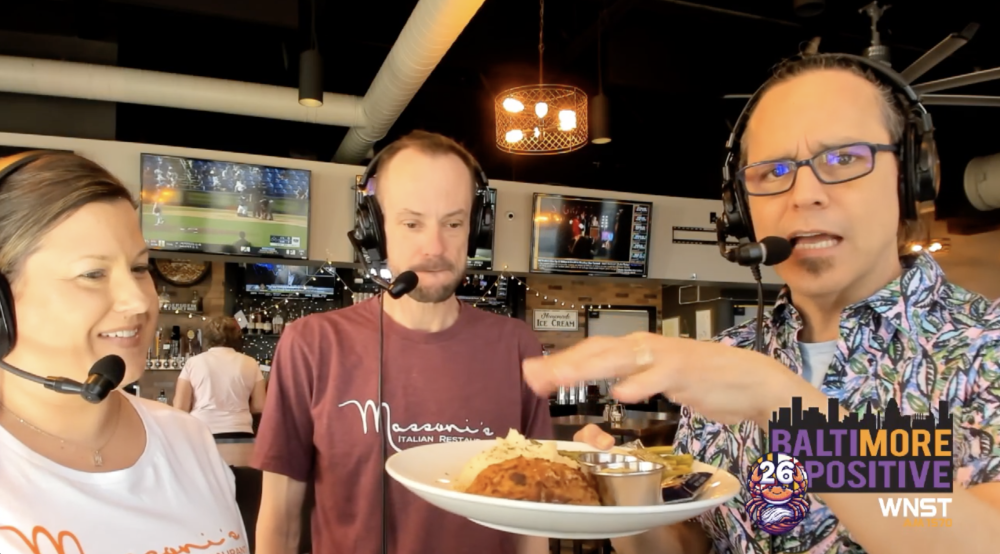


Natasha Guynes, CEO and founder of the HER Resiliency Center, joined Nestor and Andy Kobus of United Rentals at Koco’s Pub on “A Cup Of Soup Or Bowl” to discuss the organization’s mission to support women survivors of trauma, particularly those in marginalized communities, highlighting the challenges women face in being believed and the systemic issues that perpetuate abuse.
Natasha Guynes, CEO and founder of the HER Resiliency Center, discussed the organization’s mission to support women survivors of trauma, particularly those in marginalized communities. She highlighted the challenges women face in being believed and the systemic issues that perpetuate abuse. Guynes shared her personal story of overcoming poverty and trauma, emphasizing the importance of providing economic independence through their workforce development program, the Triple Crown Academy. Andy Kobus from United Rentals discussed their partnership in providing job opportunities in the construction industry. They also addressed the need for societal change to better support and believe women who have experienced violence.
- [ ] Meet with Natasha to discuss how United Rentals and industry partners can support the Triple Crown Academy and workforce development program (explore partnership, sponsorship, and in-kind support).
- [ ] Continue developing and coordinate partner build-out of the Triple Crown Academy training center at 306 West Franklin with DPR, Depot, Reynolds, labor unions, and other construction partners (manage construction, partnerships, and program readiness).
- [ ] Schedule and offer training sessions for organizations and community groups on identifying sex trafficking and related support services (deliver training and awareness sessions upon request).
Nestor Aparicio’s Introduction and Segue to Natasha Guynes
- Nestor Aparicio welcomes listeners to WNST AM 1570, mentioning various local attractions and sponsors.
- He introduces Natasha Guynes, CEO and founder of the HER Resiliency Center, and expresses his admiration for her work.
- Nestor shares a personal anecdote about his mother’s abuse in the 1950s and 1960s, highlighting the lack of support systems during that era.
- He emphasizes the importance of believing women who come forward with their experiences of abuse and victimization.
Natasha Guynes on the Importance of Believing Women
- Natasha Guynes discusses the systemic issues that prevent women, especially marginalized women, from being believed.
- She mentions the cases of Bill Cosby and P Diddy, where powerful men were protected by their entourages.
- Natasha highlights the role of societal norms and the lack of support for women who cannot vote or donate to organizations.
- She stresses the importance of listening to victims to prevent the perpetuation of abuse.
Andy Kobus’s Role and the Workforce Development Program
- Andy Kobus introduces himself and his involvement with the HER Resiliency Center.
- He discusses the challenges faced by women in marginalized communities and the need for support and advocacy.
- Natasha explains the workforce development program, the Triple Crown Academy, which helps women gain skills and employment in the construction industry.
- Andy shares his experience of supporting the program and the importance of providing opportunities for marginalized women.
Natasha Guynes’ Personal Story and the Founding of HER Resiliency Center
- Natasha shares her personal story of overcoming poverty, drug addiction, and sexual exploitation.
- She explains how her experiences inspired her to found the HER Resiliency Center to help other women in similar situations.
- Natasha describes the center’s street outreach program, which engages women in high-risk neighborhoods and provides them with support and resources.
- She emphasizes the importance of empowering women to advocate for themselves and break the cycle of trauma and victimization.
Challenges and Successes of HER Resiliency Center
- Natasha discusses the challenges of securing funding and support from government agencies.
- She shares success stories of women who have graduated from the Triple Crown Academy and gained economic independence.
- Andy highlights the importance of providing accessible resources and opportunities for marginalized women.
- Natasha and Andy emphasize the need for continued advocacy and support to help more women achieve self-sufficiency and break free from the cycle of trauma.
The Role of United Rentals and Community Support
- Andy Kobus explains the role of United Rentals in supporting the HER Resiliency Center and the construction industry’s need for skilled labor.
- He shares his personal commitment to supporting marginalized communities and providing opportunities for women in the trades.
- Natasha and Andy discuss the importance of community support and the role of various organizations in helping the center achieve its goals.
- They emphasize the need for continued collaboration and advocacy to address the systemic issues faced by women in marginalized communities.
Natasha Guynes’ Call to Action and Final Thoughts
- Natasha Guynes calls for increased attention and support for women who are victims of violence and abuse.
- She emphasizes the importance of believing women and providing them with the resources and support they need to heal and thrive.
- Natasha shares her frustration with the lack of accountability and support from government agencies and elected officials.
- She encourages listeners to support the HER Resiliency Center and other organizations that help marginalized women.
Nestor Aparicio’s Closing Remarks and Segue to Next Segment
- Nestor Aparicio expresses his gratitude to Natasha Guynes and Andy Kobus for sharing their stories and insights.
- He emphasizes the importance of continuing the conversation and advocating for the rights and support of marginalized women.
- Nestor transitions to the next segment of the show, highlighting the importance of community support and engagement.
- He thanks the sponsors and listeners for their continued support and encourages them to stay involved and informed.
SUMMARY KEYWORDS
HER Resiliency Center, women in distress, sex trafficking, victim advocacy, workforce development, Triple Crown Academy, economic independence, street outreach, trauma-informed care, victim support, labor unions, construction jobs, Maryland lottery, GBMC, Epstein files.


 8
8


SPEAKERS
Andy Kobus, Natasha Guynes, Nestor Aparicio
Nestor Aparicio 00:00
Welcome home. We are W, N, S T. Am 1570 to Baltimore. We are Baltimore positive, positively doing our cup of soup or bowl. We are Koco’s. There’s parrots everywhere. The smell of crab cakes are in the air. I’m gonna get some coconut shrimp a little later. I actually had a burger today. I went boring burger. It’s not even burger night here Koco’s, but it is a cup of Super Bowl week. So brought to you by the Maryland lottery and our friends at Candy Cane cash. I’ll be giving these away. Feel like Oprah. You get a ticket. You get a ticket. Our last visitor on the show from the Workforce Development Center at East Point. $10 winner. So good job there for Renee. We’re moving about town in all sorts of ways. Talk about charity, talk about good things going on. Also, want to give a shout out to our friends at GBMC for putting us out on the road, keeping me healthy and alive so that I can do that colonoscopy. November had it. Had it. You know, they found things that they shouldn’t have found with me. So thank you, GBMC for keeping me safe. I have been hearing about the her resilience, Resiliency Center from this guy for a long time. Andy Koco’s is at United Reynolds. He’s on the board at her resiliency. I am also a 100 points of a debate listener. I listen to you bruh art and her was featured last year. I have not had Natasha wines on even though I now know how to pronounce her last name, I really it’s spelled differently. It absolutely is, how are you pleasure having me? Everybody’s good. Andy, it’s been a little while coming out. This guy is maybe your biggest, oh, advocate of all advocates. You know, he’s great to have. I will tell the people united rentals, but it’s almost like he works for you, to be honest with
Natasha Guynes 01:36
that’s the joke. At least
Nestor Aparicio 01:40
8I’ve heard so much about you and your organization. I’ve heard it all peripherally, and I know you’re the CEO and founder. Let’s talk about a purpose and where you are. I’ve been staring at the Epstein files the last five days, so I’m pissed off. So I do want to hear when people come and say this has happened to me, or that people would even deny that it had ever happened. But, you know, my mother was abused, so I take it to heart in a completely different way, and that was in the 50s and 60s, where she didn’t have her Resiliency Center or any escape hatch. When husbands would save you, leave me I’ll kill you. That was all cool in the 40s and 50s. I mean, something that was cool in Epstein island, but none of this works for me. So the work you’re doing, you’re doing God’s work. So you know, welcome,
Natasha Guynes 02:27
thank you, and I’m so glad you started with this framework, because there is so much to say and and can and our work connects to even though they’re not working with the same women. But if you’re ready, I can jump in, and then I definitely want to make sure we tell Andy’s story about how he got involved and how involved and how he’s been supporting our work. But to what you just talked about, a lot of people keep bringing this to me in the Epstein vials and the conversation. And here’s the thing is, we don’t believe women, and we don’t believe women who are disproportionately or marginalized in our communities, and then you add a victimization on to it, regardless of where they started from, and they start saying things that just go against what we want to believe about powerful people. And so then that adds no Cosby, yep, and even, like the afro had called me a year and a half ago about P Diddy and asked for a quote on his case. And the thing is, is that there are systems that and people around them that make sure that enable this behavior to continue and protect it, and when no and when we don’t listen to victims, then that is how it continues to perpetuate. You know, this perfect
Nestor Aparicio 03:35
guest today. Let’s go stop everything. Everybody’s all we’re gonna talk about today. I’m blown away, blown away by the ignorance of people just in my own space on Facebook in the last five days that I had somebody I like and I care about, literally, on the program the other day, and I brought it up, and he’s on the other side of the fence, and he said, Stop. And I’m like, No, right? That’s what she said. She said, stop. I’m not stopping. So, so I hate to break you up, but I’m no, I was up at three in the morning reading about this this morning, not your but the Epstein thing is first, it brings you right into the light where you need to be for this topic.
Natasha Guynes 04:18
And even before I start talking about like, what this looks like for the women I serve, and not being believed, and how even as a service provider, not always getting the support we need. Because, again, we don’t care about women. We don’t care about black women, we don’t care about women, we don’t care about people who can’t vote for us, who can’t donate to us, and these are the people who remain silenced. And that when I say we I don’t mean her Resiliency Center. We do believe. But there it, we’re having to push against these societal norms of what we think rich people, powerful people, what they what they do and don’t do, and you know,
8Nestor Aparicio 04:52
their morality, or their morality, right, right? Or money means more morality. Yeah, I have not found that to be the case. And. Like I found the case to be more money, more power, more likely to abuse that, even in the most subtle ways.
Natasha Guynes 05:06
So this weekend, I want to just real quickly before I talk quickly. No, no, no, no, I just want to, because this one’s really important. It kind of sets an example, and I hope that I’m not going to be over sharing here. But this weekend, I spent with my good friend, Elizabeth Kucinich, former she used married a former congressman, Dennis Kucinich, and presidential candidate. And I spent the weekend with her, and also spent the weekend with her and Natasha stoinoff, who testified in E Jean Carroll’s case, who
Nestor Aparicio 05:34
was raped by Donald Trump, that’s
Natasha Guynes 05:35
8it, who sued Donald Trump
Nestor Aparicio 05:37
for rape, was raped by Donald but that was found guilty, right? This isn’t, this isn’t internet conjecture. This was, this was the United States court system, right?
Natasha Guynes 05:47
That found him great. So this is nothing about pub. This is about violence against women, correct? And, and so I was, I spent the weekend with her, and we and she was seeing e Jean Carroll, who sued Donald Trump for rape and, and in this conversation, she’s sharing a little bit about her own story, which is public. She Natasha stoinoff had testified at At her trial, at E Jean, at the trial with for Eugene and and some years ago, and it’s public, Donald Trump had pushed her against a wall, kissed Natasha, made advances towards her, and then the next day, she is where were they? I think they I think they were in Mar a Lago, and she’s going for a massage, and she’s late for this massage, and when she gets there, the massage therapist is really upset with her, or just really worked up in general, because Donald Trump had been there waiting as if to come into the room where Natasha was going to be having a massage. And it’s, it’s people like that, the massage therapist, it’s hotels, airlines who aren’t acting with more curiosity and concern that are allowing these levels of abuse to continue. And I know, and I don’t know if it like, if it’s nationally or just in this area, but I know that there are laws changing so that for restitution for sex trafficking survivors, lawyers are starting to go after hotels, airlines, restaurants, places like that that are making money off of the selling of women and young girls.
Nestor Aparicio 07:13
Well, we had someone stand up front United States in the last 48 hours and said that it wasn’t a party. It was. It wasn’t a crime to party with Jeffrey Epstein on his island.
8Natasha Guynes 07:24
It’s a crime to rape young women. It’s a crime to
Nestor Aparicio 07:27
be a party to that and know that it’s going on and be there. There is. It’s absolutely complicit by law, not by, my opinion, by law, that if you’re witnessing child trafficking, you’re in on it, right? You’re in on Right, right, right,
Natasha Guynes 07:42
right, absolutely. And you know, yesterday I got a cause, and I’d like to back up for a second talk about her Resiliency Center, and how I have some of this knowledge too. So I her Resiliency Center is a survivor led nonprofit. I founded her in May 2015 in Washington, DC, expanded her to Baltimore in 2019 and when I say survivor led, what I mean is that I grew up in poverty with a drug addict father who beat us and a teenage mom who left me and my sister and the violence on, excuse me, the poverty left my sister and I susceptible to more violence and neglect. No one wants to hear a female of any age cry. We just don’t want to. So we put a band aid on it. We send them on their way. Well, they didn’t ask hard questions. And trauma on the developing brain, it causes defiance. It acting out whatever it is, because trauma survivors often don’t see tomorrow. I’m going to be dead today anyway. So, like, they just, there’s just a level, a higher risk level of life. And so for me, I told my parents at 20 I was moving to Washington, DC. I’m originally from Louisiana, and then Oklahoma.
Nestor Aparicio 08:43
8They said the southern. I got a little bit of Southern, yes, glad you pointed that out before I asked
Natasha Guynes 08:48
Yes, and so I bought a one way plane ticket to DC. They said, Never call us again like F you. I was 20, all right, and this isn’t unlike what we see with the women we serve complex trauma in their homes, abuse, violence. You know, parents run away right run away, but if they’re running away, they’re running away from something. They’re not just bad kids. And so for me, I said, I’m out, and I took it to heart when they said, Never call us again. And what happened was, I ended up selling my body to wait as a way to make money. I picked up crack and whiskey as a way to cope, and within a year, was living in a homeless shelter in DC, in DC, and fortunately for me, I got clean in the program of Alcoholics Anonymous 24 years ago in DC. And I’m so grateful for my community that raised me because of them. I’m one or two people in my family to go to college, serve in AmeriCorps, went to work for the former Senate Majority Leader Harry Reid and some other senators. Before I take my little bit of money, my reputation, all my contacts, leverage it to start her and then bring in people like Andy who can help us promote the message of what we’re doing in our work, so that more women can have stories like mine, that that find that have the support around them, so that they can use their voice and they can elevate the platform of the needs of women. We’re just ignoring and so what this, what I wanted to lead into here is that some of our work, we run a street outreach team in seven neighborhoods in Baltimore City, engaging women on foot in the neighborhoods. We talk to everybody. You don’t know who the gatekeepers are. My staff are known for talking to the drug dealers on the corner. Because, again, you are
Nestor Aparicio 10:19
going into the roughest neighbors. We are going into the roughest neighbor because that’s because that’s where you’re going
Natasha Guynes 10:24
to find. That’s we’re gonna find those who we want, who need our help and want our help. I want to say they want it to people think there’s this conception that those on the streets just don’t want to leave that life. But here’s the thing, if we don’t offer them the option, they don’t know their options exist, and that is super important well, and you know
8Nestor Aparicio 10:43
that more than anyone, because when you were on the street in that circumstance, what was your mind frame then? And how do you put your mind into that to say where that option is and something that came and saved you?
Natasha Guynes 10:55
And that’s what makes victimization and survival so complicated, is that at the time, I felt empowered, powerful. I have money. I can buy my own clothes. I can buy my own drinks at the bar. I can buy somebody else’s drinks at the bar. I can buy my own crack like I’m not dependent on somebody. And that’s what makes it so complicated, because the reality is, is I was hurting. I was self medicating. I was dying. I mean, I was in the hospital for seven days with an IV in my arm before, like two days after, right before I got clean because I was about dead. And that’s what makes it concatenate, is we’re we have to tell ourselves we’re strong, because if we don’t, we’re gonna there’s a break in psychology that we literally just won’t make it, and that’s part of being trauma informed is not telling someone their reality. Because if we go and tell a woman on the streets that she’s being sex trafficked versus helping her come to see it, that creates a break in psychology, and she realizes she doesn’t have power. And when you realize you have given up your power and or you never had it. That’s um, it screws with your mind. And so that’s part of what makes it so complicated, and that’s why, you know, it doesn’t just look one way or another, like I’m sad, I’m a victim. I can’t help myself, versus what, not only what we’re told by outside influences, like You caused this, you wanted this, you you put yourself in this situation, but also then the self talk that we have
Nestor Aparicio 12:24
to tell ourselves, the Epstein thing, those those girls put themselves in a position
Nestor Aparicio 12:31
8to be there were kids. There were children. There were kids. Yeah, Natasha wines is here. Andy’s here. He’s usually with the United rentals, but he’s with her resiliency today, we’re at your Koco’s today, trying to create some some conversation, and certainly make you think a little bit about what’s going on. So her resiliency, for I’ve heard a lot about it is, and every time I’ve talked to like, House of Ruth people, they’re like, We don’t want you to know where we are, because we’re housing women that are at risk of having people come and try to hurt them in some way. So I know a lot of this is like HIPAA with the Ravens when there’s an injury, Andy private, it to some degree. Where can we find you, other than on the internet? And if someone knows someone in this circumstance, obviously, do you tell them? Call the police. What do you tell people when they they get in a circumstance with those a young lady, because I think a lot of the women that are in this position are afraid of getting arrested, too, on top of everything else that they’re breaking the law, right?
Natasha Guynes 13:28
So, and I definitely want to get to Andy in the workforce development program, but I want to so if we get a call, we start case providing case management. Essentially, even though we don’t use that term in her, we start identifying the gaps, and then we start we go with her to the police station. We’ll go with her to wherever, to court. We’ll go with her. Because here’s the thing, like she can take those steps, but it’s terrifying when you don’t have somebody go with you. And that was something that I learned early in recovery, is that that 10,000 pound telephone, it’s there, but can you access it by yourself. Do you need someone to help you lift it? And so that’s how we do things with the women. You need
Nestor Aparicio 14:05
somebody to care on the other end, right? Right, right, finding somebody that cares about us, that’s the first thing that saves everybody,
Natasha Guynes 14:12
and that’s the advocacy part. Part of what we do is demonstrate to the women we serve how to advocate for themselves. So we’ll do it for them with their permission the first time, maybe the second time, but then it’s for them to try it too. So they have, let’s say, training wheels, as they’re learning to use their own voice and so to continue this, like just our programming, sure street outreach roadmap to success. It’s a 24 month wraparound services that includes intensive one on one support, case management, skill development workshops and mentorship. And then where Andy came in and now is involved in everything, is our workforce development program called the Triple Crown Academy.
8Nestor Aparicio 14:51
That’s the next thing you need a job, right? Once we get you in and get you settled. A lot of these ladies have children too.
Natasha Guynes 14:57
Oh, absolutely. And that’s one of the things that. I think differentiates her Resiliency Center from a house of Ruth or other organizations we are focused on helping women exit the not just the social services cycle, but the victim services cycle, so that she’s not continuing to be victimized and continue and then her kids be victimized, so it stops a cycle of trauma in the family and she go, take care of ourselves. And let me, for example, like for victim to survivor, right? Not into survivor, but thriving like just a woman, just, Hey, move from victim to Jane, like she without a label, because those labels are what keep us, you know, not having good thoughts about ourselves.
Andy Kobus 15:38
No one asks for it. No one plans for that type of life, and it’s the availability of resources. Is not the problem. It’s accessibility. There are plenty of resources that are out there and available someone does not know may as well not exist to them. So that’s our job is in the street outreach team is to make them accessible to the people that need them. And so
Natasha Guynes 15:59
8to Andy’s point and the story I circle back to later, when we have, if we have time, is that we had a woman who went through, who I met during street outreach. You should definitely interview her at some point, Marcia. I met her through street outreach in October 20, November 2021, I had been out passing out flyers me and my team. We were hosting these Friday lunches in Park Heights, on garrison at a church. The church had invited us to do the street outreach and use their facility. And so we would do these Friday lunches where the women would come. We were banking on them to be kind of defeated, because we could get them to treatment like if they’re feeling low. And so Marcia, I approached her, and she’s like, I’ll go back to treatment one day. This is just during the weekly outreach. And she said, Give me some of those flyers. I will pass them out. And I’m like, okay, and I hand her a stack of flyers. Friday came. Every single woman who showed up was there because of Marcia, but Marcia wasn’t there. Marcia had been picked up by a John that night. Had been locked in the basement by a John for a week, stripped of her clothes, told she wasn’t pretty enough for the handcuffs. Had to escape through a mid level window, and the next door neighbors, the women on the porch, saw her escaping, and were like, Oh, you’re getting away. And so she tells the story so much better than me. When her feet hit Garrison, I’m dropped, we have a vehicle that’s branded wrapped in her Resiliency Center, branding, orange, purple, white, pink, and our phone number and our logo. She says she sees the vehicle, and I bust an illegal U turn, and we roll down the window, and I’m like, Where have you been? And she starts telling me what happened, and she gets in the car because she laughs that she had told me she wanted to go treatment by the end of the year, and I heard by the end of the week, because I’d already had a place set up for her to go to treatment at Ashley addiction treatment center. They provide her Resiliency Center with 28 day stays for the one we serve at $32,000 scholarships. Marcia went for five months, and when she came back to the city, because we tried to encourage them not to come back to the city, she was going to and she did, and she was insisting on working for us at her Resiliency Center. And at the time, I didn’t really have a job for her, but I knew the importance of keeping her within the community, of her actively. And so she did some intern work, then she became an admin, then she became a street outreach associate, then she became a street outreach coordinator, and in May, she took a job with another organization. You should definitely check out safe exit. And now she is like the program manager for their drop in center, and she makes $80,000 a year. And I’m saying it like this because we she is part of the solution. She is a tax paying citizen. She has taken care of her family. Her kids are back in her lives. She has her own housing and she called me yesterday very upset, asking for my guidance. And she was saying, Natasha, what’s this beef between Ivan Bates and Brandon Scott arguing over who is impacting the crime rates? Because we had a woman that came into our drop in center, who you know for the last few months, who was found dead, like two weeks ago, bound and gagged and they ruled it an overdose. She’s like, What do I do with this was and that is what I’m talking about when we don’t care about women. And she says, I wouldn’t want either one. Neither one of them should be fighting over lower murder rates in the city. It’s just what murders are they counting that matter? And going back to the Triple Crown, that was pretty, excuse me, going back like, segue now to, like, not just Marcia or other women that we’ve seen grow. You know, there’s a woman I helped you off the streets before, Marcia, who’s now a program manager at a treatment center. And have her to grace or in Bel Air at Maryland recovery program. Same thing she was, had been on the street. She’s now a program manager there. She’s involved in her kid’s life. She’s getting married next year. These are the outcomes that her Resiliency Center has been able to make and then knowing that we wanted more women to be able to have their economic independence, because that’s where real, real freedom lies, is not having to live in survival or be dependent. Dependent on someone else to take care of them, because when that when, when you’re in the like below poverty, having to live in survival, there’s greater chances for victims, yeah, and so, but when your income raises, that’s when you can really be self sufficient on your own. And so we started towards creating the Triple Crown Academy, and in a minute, I would definitely want Andy to get into this, but it was the trouble. Crown Academy is an 18 month workforce development program. We help women go go through an eight week general construction pre apprenticeship, and in this time, they’ll learn how to read a tape measure the basics, use power tools, but then after the second class, because they get their OSHA certification the first two classes, and after the second class, we’ve partnered with 10 labor unions who have agreed to allow them to come and be helpers on their jobs. And what this does is is that they’re earning, on average, about $20 an hour while in this pre apprenticeship program and creating their own they’re showing their work ethic, they’re showing that they care about the job. And so when it’s time for the eight weeks to be done, it creates a streamlined process to the labor unions, where they can then go into their apprenticeship programs, and you can finish an apprenticeship program making about $100,000 a year with no debt on no college debt, nothing like that. And then, you know, and that is what we want for the women we serve right now, we know there’s enough infrastructure projects in the United States that if they start working right now, they’re going to have careers for the rest of their lives. Also, there’s a need with like tax credits and benefits for developers, specifically for women and black women. And most of the women we serve in this area are black or African American identifying. And then there’s also the component about so much infrastructure work that has to be done in Baltimore City and Baltimore City residents. So we’re hitting all these targets. And she in wanting to help each one of them to grow in their profession, in the trades that they choose. And then Andy saw something about the Triple Crown. There’s so much more to the Triple Crown Academy, but Koco’s
Nestor Aparicio 22:00
is here. Natasha wines is here. She’s with her resiliency. I’ve known Andy from around town, and you’ve been trying to get Natasha on for a long time. Tell me about the the work part of this, because I’ve been over on your campus in West pub. You see the big United rental sign. That’s where Andy works. And I see people over there the notion that we have all of these construction jobs and job to get people into the workforce with unions and with job placement. That’s some people get dirty over at United rentals. This is, yeah, it’s a rich Mike, my dad’s kind of work, real work, right? That’s right,
Andy Kobus 22:34
that’s right. We you’re out there building the future building and making it happen. It’s people that make it happen. And one of the alarming statistics we have in the construction industry that predicted within the next five years, more than 40% of our skilled labor force will be retiring, or at a retirement age. Okay? So that means there is a gap, because four to five years is your average apprenticeship. So we we have a gap and a need for labor to fill that. I’m glad you said
Nestor Aparicio 22:58
apprenticeship, because everything she was talking about was like apprenticeship. That’s what I was, the word I wanted to
8Andy Kobus 23:03
use, how you begin. And when I saw it was, it was an August 22 of 2024, that burned into my memory, that I just came across Natasha’s post on LinkedIn, and you say the importance of that tool that I read the story about, we’re starting a new workforce development program for the skilled trades to help women who’ve been trafficked. And I said, not that I’ve never been supportive, but I’ve never really paid attention. And said, there’s so many different things that we can do here. There’s so many needs that we can fill. And what an incredible way to go about that. So I just blindly, you know, send it out there. Natasha, you don’t know me from anyone, but I’d love to get together with you. I’d love to discuss how our company can help, and how we’re in that position of being able to work with so many of our customers and our industry partners we could support this week,
Nestor Aparicio 23:52
it’s all ladies. It’s all ladies. Yeah, yeah. So you know, it’s, I see people think of construction, men, men, men. There’s plenty of jobs for ladies in your industry, absolutely.
Andy Kobus 24:04
And there’s other organizations that I’m a part of actually recently became the first non female member of NAIC, the National Association of Women in construction. They let you the very first member that is not female. So that’s it, right? So we start the new thing. There’s plenty of men supporters, many allies. But you know, what can we do to get the next generation more involved? And what better way to go about it than to say, let’s talk about marginalized people. Let’s talk about people that may have not been given those opportunities. I’ve always believed that the only thing you can give someone in life is an opportunity, and this is what it provides. So Natasha and I sat down over that coffee in Fells Point, we decided, You know what I thought through that whole process, and I’m like, as I hear your story, and you tell it in a way that I know you have your lived experience, and but when you hear it for the first time, and it’s not told in quite a dramatic way, and you think about, My God, what did she just say? That really happened. This happened on garrison. This happened. Here in our neighborhoods. These are the streets that I know. These are people that I know. These are our sisters. These are our mothers. These are our cousins, our daughters that are out there that are calling for help, and they just don’t realize that they can get it. They don’t know that there’s another life that exists. They don’t understand their opportunities are way beyond the limits that they set on themselves or that have been pushed onto them. So once they break through that, and they see that there’s some type of hope out there. And I know I always joke about this is not the face of diversity or inclusion, but you know what it’s it takes. I can help you. I can get you. I can get you there, because we know the way to go about it. And it’s incredible the amount of people that are just in a quick second will change a conversation, whether it’s in the sales role or in the construction industry, that will, will just tell me more about that. And that’s where we focus our attention. I want to support that. I want to be a part of that. And it’s, it’s amazing that, right? How many people have come out for open houses, for some fundraising events, so much more ahead that really just want to, how can I help
Natasha Guynes 26:01
8depot and you know, Reynolds and kiwi construction, DPR construction and several labor unions coming to help us build out our training center on 306 West Franklin.
Nestor Aparicio 26:11
So how can my audience help you, other than maybe knowing a woman in the circumstance, obviously, you’ve you’ve got that handled and but gifts, giving, volunteering, writing a check, providing a job, all the above, right?
Natasha Guynes 26:29
You mentioned 101, the bay debate at the start of this. And you know, we’d been running commercials on the bay, and we started getting calls from like locksmith companies offering employment opportunities, a different kind of training. Not everybody wants to go to the trades, and we get that, but it’s still in that same industry where she can earn a real living wage and and so that employment opportunities are great opportunities to come and speak about the needs of women, opportunities for us to come and talk about identifying what sex trafficking looks like, because we have A great training on that. Definitely contributions. We need contributions. There’s we, you know, in a little bit of a heavier, sadder note is that, you know, we get funding from the governor’s office of crime prevention and policy at this in the state of Maryland, and we’re having difficulties because they keep saying, when we we have a contract with them. And there are certain things in the line items that they say we can pay for. And when we’re spending money in those line items, they’re saying that’s not what a victim needs. And so that’s slowing down our
Nestor Aparicio 27:29
ability to get you down to Annapolis. Then, right? Yeah, if
8Natasha Guynes 27:33
you want to talk about that, please, because we’re talking about it
Nestor Aparicio 27:36
everywhere, yeah. Well, her resiliency. Get, give the phone number the website. Give all that because I do. I have something as an aside that I want to not spike the ball, but certainly ask you about
Natasha Guynes 27:47
so so you can find her Resiliency Center at her resiliency.org That’s R, E, S, I, L, i e, n, C, y, so her resiliency.org 484-443-7669, that’s 844, for her now is what that spells. You can also email me at Natasha, N, A, T, A, S, H, A, at her, H, E R, R, E, S, I, L, i, e, n, C, y, dot, O, R, G,
Nestor Aparicio 28:13
8or you can find me Nestor Baltimore, social media. I’ll get you there. All right, we’ll wrap with this because I, I swear to God, this morning, I almost walked into my radio station and just opened the mic and just did like a Mahatma Gandhi, like I’m gonna sit here and scream bloody effing murder, because that’s what it was on the Epstein thing. I cannot believe that this country is going to turn the blind eye to this. I i and I don’t do this for a living. I don’t take those calls. I’ll talk to I mean, I’ll have Van Hollen on. I’ll have, you know, Johnny, oh crisis coming on next week, representation. This guy should not be running our country. This guy should be under a prison. And I from sitting next to you, my mother was in the industry that you were drawn into as a young lady. And, you know, I’ve admitted that before, my mother’s been dead over a decade, but I can’t imagine. This isn’t you know, in the 60s and 70s that my mother was involved in that sort of thing when I was born. After I was born, some rich guy picks you up on the street in Washington, takes you back to the wherever, the St Regis or whatever, and says, I got an island you want to come at the time, right? That would have been you. Right? That absolutely would have been you. Nobody would believe you now right at all, right, right, right. And in regard to these women that are forgotten about, many of them standing up with lawyers, ready to speak, ready to testify, these creeps in DC who call themselves Christians. Who call themselves leaders, who call themselves representatives, will not even allow it to be heard, and this pig yesterday screaming at the woman from CNN about not smiling, I’m I want you to speak about the Epstein thing from your perspective, that when this Trove gets released on Friday and you see these emails, you see these code words, you’re a cookie, you’re a pizza, you know, just I can’t stop reading it, and I can’t stop thinking about it, and I can’t stop thinking that like they’ve gotten away with it, that’s enough. They’re gonna get away with it. That’s unacceptable.
Andy Kobus 30:47
The silence is acceptance, and the acceptance breeds enabler, and it allowed to continue. And what one thing that I point out, especially to a lot of my female friends, is, please stop saying you’re sorry. Don’t say you’re sorry, even for the smallest things. Don’t apologize for taking up the space that you’re in, because you belong here. You’re there is no difference in Don’t say you’re sorry. Just don’t make that a part of your speech pattern anymore. You know, don’t, don’t live in that way. But Natasha, bring it.
Natasha Guynes 31:17
There are a couple of thoughts that I have on this, and one is that, you know, late last year, early this year, I I was spinning. I was really in this place of like, what, what the hell. And I’m trying to watch my language, yeah. And so part of me has been feeling like there’s so much toxicity in Maryland, and there’s so much toxicity in DC, and I’m like, Can I stay Can I stay here and feel this toxicity? And what I mean is is in Washington, DC, we have an elected leader, Trump, okay, who is in the underbelly of what is happening, of the Violence Against Women, of allowing sex trafficking and and rapes to continue because, not only whether he’s continuing to do it, because we know he has been accused and found, you know, and his accused, he’s guilty. Yeah, have been valid. Yes, guilty of,
Nestor Aparicio 32:13
I bet my FCC license against that of rape
8Natasha Guynes 32:17
and and then, like he’s not holding this, you know, this accountability for others. And then I think about the state of Maryland, and one of the issues that I’m having with the governor’s office crime prevention and policy is that that agency, the governor’s agency, saying that the women we serve on the streets, the women being locked in basements, women being gagged and murdered, aren’t victims, and so they’re not willing to pay my staff’s time for this, and so we can look at it. Of course, the attention is going to Epstein, and it went to, you know, the ME TOO movement, those, those movements don’t impact the women I serve because we’re not paying attention to them, because they’re not raising to that level, because they don’t have their voice yet, and that is why I go around beating my drums so often. Is because it’s my job right now to help them find their voice so that they can be heard and they can do it for somebody else. And I just ask whoever’s listening is, you know, just keep in mind, whether you believe women or not, is recognize that no giving up your power is so painful. And so when someone says this happened to me, it is not an easy thing for them to acknowledge, and it’s definitely not an easy thing for them to say, because the stigma that we have isn’t stigma of sex, isn’t stigma of the activity, it is the stigma of the vagina, and I just asked that we start paying attention to that.
Nestor Aparicio 33:44
All right. Well, I’m glad I had you here so that I could vent a little bit. I don’t know anything but, and I don’t know that I’ve changed anyone’s mind, but don’t tell me to stop. Don’t stop. I’m not gonna stop. That’s how we silence victims. Andy, I appreciate you, man, give me love everybody over at United rentals and help the folks at her resiliency is a cup of soup or bowl. We’re out here doing it with the Maryland lottery at GBMC candy cane cash giveaways at a $10 winner. You know, the fun part about doing this is, I give these away, and people come over like, I don’t know how to play the game. I’m like, give it to me. I got the MD lottery download, yeah, soup. And I’ve so I’ve had, I don’t get any of the money, but I get the balloons in the confetti. So when I do this little Zapper, I’m the one that gets the congratulations. You’re a winner. I get all the confetti. So I’ve done a little bit of that, so I might feel like, Oprah, you get a ticket. You get a ticket. Everybody gets ticket here for six gonna come on a little bit. We’re gonna talk a little bit of sports around here, a little bit of Africa and his wife as well. Marcel is here. We’re gonna talk about some crab cakes as well as some coconut shrimp bowl. Of cream of crab soup before I’ll get out of here and as well, gonna get a Greek salad, because that’s what I do when I’ve already had the burger. It’s not even burger night. I look forward to a Greek salad too. We’re back for more Koco’s. We’re doing a cup of soup or bowl on behalf of the Maryland lottery. GBMC. It is all part of everything we’re doing here this week for the Maryland. Crab cake tour. It’s better than being in San Francisco, and I don’t even care about the game. Back for more from Koco’s Right after this, stay with us. You.