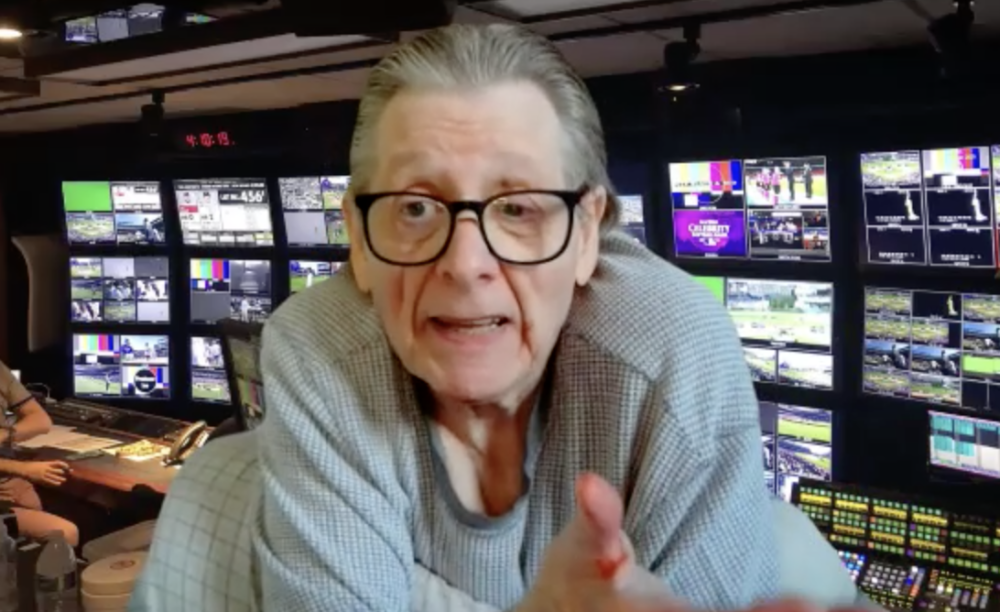


It’s an unthinkable circumstance that we don’t talk about enough but when women or men are the victims of domestic violence, police and hospitals are always involved. Dani Imbragulio of GBMC tells Nestor what really happens after the incident and what options the victim might have if they have no other option than returning “home” again. This is a tough talk on “A Cup Of Soup Or Bowl” during a week when we discuss the topics we need to address in our society.
Nestor Aparicio and Dani Imbragulio discuss the aftermath of domestic violence at GBMC. Dani, a domestic violence Advocacy Coordinator, emphasizes that for victims, domestic violence is a normal part of their lives. She highlights the challenges victims face, including societal victim-blaming and the difficulty of leaving abusive relationships due to financial constraints. Dani explains GBMC’s role in providing 24/7 advocacy, safety planning, and resources. She notes that in Maryland, arrests require physical injury or strangulation. GBMC’s annual “Walk a Mile in Their Shoes” event on April 17 aims to raise funds for their services, which are free to victims.
- [ ] Create and maintain emergency room resource packets (English and Spanish) containing general domestic violence and sexual assault resources for patients to take when they decline immediate one-on-one advocacy
- [ ] Perform follow-up contacts with patients who received advocacy or resource information so they have ongoing support and options after leaving the hospital
- [ ] Coordinate community outreach and presentations about domestic violence, sexual assault, and related services for GBMC (respond to presentation requests and schedule outreach through the hospital program)
- [ ] Organize and run GBMC’s annual Walk a Mile fundraising event on the GBMC campus on Friday, April 17 (manage logistics and fundraising outreach to increase turnout)
Domestic Violence Awareness and Advocacy
- Nestor Aparicio introduces the topic of domestic violence, mentioning the involvement of GBMC and the Maryland lottery.
- Nestor discusses the prevalence of domestic violence and the role of hospitals in dealing with trauma.
- Dani Imbragulio, the domestic violence Advocacy Coordinator at GBMC, explains that for victims, domestic violence is a normal part of their lives.
- Nestor shares his personal experience with domestic violence, mentioning his mother’s situation and the societal norms of victim blaming.
Challenges of Disclosing Domestic Violence
- Dani Imbragulio highlights the societal victim blaming that still exists in 2026.
- Nestor and Dani discuss the difficulty of disclosing domestic violence due to societal discomfort and shame.
- Nestor shares his observations of public disputes and the reluctance to intervene due to perceived privacy.
- Dani explains the importance of talking about domestic violence in general terms to make it less taboo and encourage disclosure.
Police Involvement and Legal Constraints
- Nestor and Dani discuss the role of police in domestic violence cases and the challenges of getting arrests.
- Dani explains the legal constraints in Maryland for arresting abusers, such as the need for physical injury or strangulation.
- Nestor and Dani talk about the aftermath of police involvement and the fear victims feel when they return home.
- Dani emphasizes the importance of safety planning and the challenges of leaving an abusive relationship without financial resources.
Safety Planning and Advocacy
- Dani explains the process of safety planning for victims of domestic violence, including the average number of times a victim can leave before it becomes permanent.
- Nestor and Dani discuss the importance of having a plan in place before leaving an abusive relationship.
- Dani describes the role of advocates in providing resources and support to victims, including 24/7 availability and forensic examinations.
- Nestor and Dani talk about the challenges of mental and emotional abuse, which can be just as damaging as physical abuse.
Community Outreach and Education
- Dani discusses the importance of community outreach and education to reduce the stigma around domestic violence.
- Nestor and Dani talk about the role of advocates in providing information and resources to victims.
- Dani explains the process of delayed reports for sexual assault and the importance of having evidence for arrests.
- Nestor and Dani discuss the challenges of getting legal help and the financial barriers that victims face.
The Role of Advocates in Supporting Victims
- Dani explains the role of advocates in providing emotional support and resources to victims.
- Nestor and Dani discuss the importance of advocates in helping victims navigate the legal and medical systems.
- Dani describes the process of creating resource packets for victims and the importance of providing information in multiple languages.
- Nestor and Dani talk about the challenges of mental and emotional abuse and the importance of addressing these issues.
The Impact of Domestic Violence on Victims
- Dani discusses the long-term impact of domestic violence on victims, including the fear of leaving and the challenges of starting over.
- Nestor and Dani talk about the importance of addressing the root causes of domestic violence, such as financial dependence and emotional control.
- Dani explains the role of advocates in helping victims create safety plans and find support in their communities.
- Nestor and Dani discuss the importance of addressing the societal norms that perpetuate domestic violence and victim blaming.
The Role of Law Enforcement in Domestic Violence Cases
- Dani explains the role of law enforcement in domestic violence cases and the challenges of making arrests.
- Nestor and Dani discuss the importance of training law enforcement officers to better understand and respond to domestic violence cases.
- Dani describes the process of working with law enforcement to provide support and resources to victims.
- Nestor and Dani talk about the importance of community involvement in addressing domestic violence and providing support to victims.
The Importance of Community Support
- Dani emphasizes the importance of community support in addressing domestic violence and providing resources to victims.
- Nestor and Dani discuss the role of advocates in connecting victims with community resources and support networks.
- Dani explains the process of creating safety plans and the importance of having a support system in place.
- Nestor and Dani talk about the challenges of addressing domestic violence in diverse communities and the importance of cultural sensitivity.
Upcoming Events and Fundraising
Nestor and Dani discuss the role of advocates in raising awareness and providing support to victims and their families.
Dani discusses upcoming events and fundraising efforts for GBMC’s domestic violence program.
Nestor and Dani talk about the importance of community involvement in supporting the program and its efforts.
Dani explains the process of fundraising and the importance of community donations to keep the program afloat.


 8
8


SUMMARY KEYWORDS
Domestic violence, GBMC, advocacy, trauma, victim blaming, safety planning, police involvement, strangulation, mental abuse, financial abuse, community outreach, sexual assault, human trafficking, intimate partner violence, resource kit.
SPEAKERS
Nestor Aparicio, Dani Imbragulio
Nestor Aparicio 00:00
Welcome home. We are W, N, S, T. Am 1570 tasks in Baltimore. We are Baltimore positive continuing our cup of soup or bowl. I am in pizza land in beautiful Essex, Maryland. We’re here on behalf of friends at GBMC and the Maryland lottery have scratch offs to give away the candy cane cash. Been a pretty lucky batch here. Thus far. Did have a $20 winner over Koco’s, and you will get one year Danny momentarily. But our friends at GBMC have brought us together on a lot of topics. This is going to be the first one here at Pizza John’s today. We have a bunch of them, and I’ve talked about domestic violence. I’ve talked about all sorts of things involving children. We all know the Epstein files are out, and we’re it’s in the news, and I think it’s one of those things that we don’t talk about enough. It’s not front and center. And when it happens, usually police are involved, or the government is involved in some way. And then there’s a reference to a hospital and people that find themselves in trauma, whatever that trauma is. And I talked some folks at UMS earlier this week about what happens in that moment, and I remember that, but trauma happens, and then there’s humans who come along who have a smile on their face, even in the toughest of times, that that are the first people you meet, that are there that to be your advocate and help you, Danny, and I’m gonna get this. I, Lord knows, I’m Bergoglio. Is I get it right? I got it soon to be married, and name button right. Last name will be domestic violence Advocacy Coordinator at GBMC. I don’t know where to begin and asking you about this. I hope that I don’t meet you in a, you know, a professional environment other than this. People come to you in the hardest circumstances every single day, and you find the really tough side of life to even talk about on my show, right?
Dani Imbragulio 01:52
8I do. But the thing to remember with our patients, especially intimate partner domestic violence patients, is, even though to the rest of the world. When they’re coming to see me, it seems like it’s their worst day. It’s actually their normal day. Domestic violence is so pertinent in their life that it’s normal for them. So when they’re coming to us, it’s usually an exaggerated normal, or someone else noticed it, someone else called the police, something else happened, but it is their normal. So we need to start at their level, which is violence is their day to day. I think,
Nestor Aparicio 02:24
first off, my mother was involved in all sorts of things like this back in my childhood, so I’m familiar with this from a child’s perspective, and trying to normalize my life after, you know, having I grew up around here, and it was rough circumstances in the 70s. I don’t if my mother had called at that point in life, I don’t know that. Do we believe you did you drink too much? Is it your fault? Shame, blame all the things you already had when it was going on, and the reasons you never told anybody, or the reasons that you didn’t even tell your sister, or you tell somebody else in your family to say this is happening to me. There’s literally no one you can tell, right? This is your secret.
Dani Imbragulio 03:06
It is. We still, even today, 2026 we still live in a victim blaming society where it’s a lot of you should have known better. You know what triggers them? You know where you can and can’t push that line, we still live in that world where, like you said, it’s hard to talk about we don’t talk about it. That’s one of the reasons why people don’t bring it up, because it’s uncomfortable for the person they’re disclosing to. So that’s one of the things that we’re really trying to do at GBMC, is we will talk about it, whether it be the domestic violence, whether it be child abuse, human trafficking, sexual assault, we talk about it because the more you talk, the more other people are prepared to hear it. So we talk about it in a more general, broad aspect of teaching and learning and what to expect and what we do that way, if someone does disclose what’s happening to them and it’s personalized, people aren’t as quick to like, pull back and go, oh so sorry. And then walk away because we say, how are you as like a general greeting. And then, if someone actually is honest, we get uncomfortable, versus good, how are you? Bye. If we can put it out there in the community, if we can put it out there as not, not a taboo, we’re hoping people will come forward more, because it’ll it makes it a lot easier to hear it if you’ve heard it in a general aspect from your day to day. Because we don’t, we don’t talk about it. We absolutely do not
Nestor Aparicio 04:31
feel like in the modern era, if any whisper or wind would come to someone, anyone, and I think even in a public thing, we’re here pizza John’s. If I saw someone having a dispute at a table and saw it go to sort of over the line, male versus female in that circumstance, we’ve all been in a circumstance to see a bicker, a fight at a game. I don’t mean a fist fight, I mean a disagreement somewhere where we got made uncomfortable and said, that’s their family’s business. You know? Like, I’m not getting in the middle of that. I don’t know what that’s about, but they’re clearly, I mean, I’ve been a concert, seeing girls crying and fighting with their boyfriend, just those kinds of things. And you wonder, I always wonder in the mind saying, you know, is that a one off? Is that just a misunderstanding, or is that, you know, she’s crying out in the middle of Hershey Park here, you know, wherever I am, you know what I mean, and thinking to myself, I wonder what’s really going on there, and I wonder who else knows about it. And I think especially younger people in circles of friends, where disagreements would happen, you’d say, well, they just drank too much. The Ray Rice situation, I cannot begin to tell you, I’ve talked about this publicly. I was at Costas antimonium, just talking about Justin Tucker and Ray Rice and somebody like, literally, 12 years later came up and gave me the whole she deserved it. Like, I’m like, you know, she hit him first, like, literally, and I, I just, I don’t know what to say to that person, but women aren’t being heard.
8Dani Imbragulio 06:00
No period. The bystander effect is huge. The we see it, it’s their business, but it’s also everyone sees it. So someone’s going to step in if it, if it crosses the line, which the line is different for everybody, and when you’ll step in, but it’s if there’s a whole group of people. We either have gang mentality that if one person jumps in to stop, then you’ll see others, but we also have someone else will be the one to kind of step in if it gets too far again, too far.
Nestor Aparicio 06:27
But step in usually means call the cops, right? Cops, right? And then the next step is cops come and you have a woman in front of you, that is you’re saying, Tell me the truth. And they have never told the truth in their life.
Dani Imbragulio 06:42
Yeah, right. And I do trainings with police officers, with high schoolers, politicians, everyone. And I say, what happens when that door closes or there is no arrest or she has to go home? What does that violence look like behind closed doors? If it was that obvious out in public, what’s it
Nestor Aparicio 06:59
8look like the minute she walks home, right? Literally, the minute she he’s waiting for her. They haven’t talked. She’s been with authority, yeah, right now she sort of has the upper hand, right, going back into some degree that’s scary thinking about it, and I don’t talk about it, you know, a lot or enough. But I think anybody that’s squirming listening to this or watching this, or in their car, male or female, that’s not a circumstance. So what? What then happens? What they come to you at what point can there feel any safety about going back? At that point, the my sister, my daughter, I say, don’t go back. Right? Don’t go back. All my stuff’s there. Hold on, right.
Dani Imbragulio 07:38
Literally, what people are typically so crazy to hear is the majority of my job as an advocate and the Advocacy Coordinator is to prepare someone to go back into a violent relationship in that home in a safer way. So it’s safety planning. The average is seven times that someone can leave before they can actually leave. One thing I tell everyone, do not just say, Go, pack your stuff and go, unless you plan to bankroll their existence for the next year, two years, indefinitely. Because even if someone does take six months a year to save 234, $1,000 without it being noticed by the abuser, how quick does that go? When someone actually leaves? You’re talking hotel stays. You’re talking fast food to, you know, transportation, absolutely sure, all of that. So that that little bit of money that is huge in the moment lasts a week, two weeks if you don’t have kids. So saying leave and not having the, you know the unlimited resources to have them, housed, clothed, bathed, fed, all of that they have to go back,
Nestor Aparicio 08:49
but all of that is first and foremost in the conversation. Above and beyond the violence itself, is the reality of this event happened. These series of events have happened, but this is where your life really is your job, your family, your home, your bed, your clothes, all of that. What is that mechanism that starts in a hospital at GBMC with a conversation after chaos to calm the situation? I don’t know what happens to the male figure or the other person, because it could be male or femaleizing here, but the other person, the abuser, the bully, that person’s been with the police, at the very least, if not, we have handcuffs or
Dani Imbragulio 09:31
been We hope so. In Maryland, most people don’t know. In order to arrest there has to be physical injury, there has to be stated strangulation was used as the assault, or there has to be use of a weapon, everything else, pushing, shoving, if it is not done in front of an officer, they cannot arrest. If both parties have injuries, that one person was assaulted and the other person scratched them in self defense, both people have injuries, but. Of people are being arrested. One person may be strangulation, but it’s not told to the officers that there was strangulation, but the abuser has scratch marks from the victim’s self defense. The victims being arrested, the abuser is not because they’re going to be listed as the victim, because they have parameters for arrest. So it is our job to one, explain why officers have certain priorities when it comes to their list of questions that they have to ask. Two, why was he not arrested? And we say he knowing that, you know, it’s just ease of conversation, right? But it could be two men, two women, the female could be the abuser, the to the mail, but we have the okay if, no matter what, if you come back here, there’s always someone who will be here to speak to you. We are 24/7 365 with our advocacy for forensics when it comes to sexual assault examinations, strangulation examinations, with the domestic violence, we are 24/7 with nursing care as well.
8Nestor Aparicio 11:02
If you’re that’s the evidence you’re going to need to arrest someone, right? Literally. Okay, all
Dani Imbragulio 11:07
right, so the strangulation evidence is just that. It’s evidence when police are already involved. So that’s where sexual assault we can do, what’s called a delayed report, so someone knows that they want evidence taken but they’re not ready for police yet. We can do a delayed so police aren’t involved. Basically, their their safe kit, or their sexual assault forensic exam kit, is just given a number. Their name is not associated. They can decide to press charges later. They can decide they never want to press charges, but they have that option for strangulation, for intimate partner violence. We need police. That’s where it kind of gets a little on the blurry side, where I don’t want police, that’s okay. You can still have medical treatment, you can still have an advocate talk to you, but we’re not having evidence taken. So it is a little it is a little convoluted that way, but we are able to at least break down you still have an advocate. We can still discuss resources, what’s available, if you’re not ready, that’s okay. We can either provide you information, and then you can call me. I’m the one who does all the follow ups. We can just kind of talk about it. I can give you all these resources, and you can take time, reach out to whoever you’d like on your own time, or we can work to find additional safety measures. Now, sheltering is always our last because in Baltimore County, we only have less than 30 beds for the entire county, for family, not just individual. So less than 30 beds total. That includes kids involved everything. So we do friends, family first, who’s available to help you?
Nestor Aparicio 12:40
What are you looking for? An exit strategy. Okay, we
Dani Imbragulio 12:43
8start it, and then we explain. It takes time. We are we are planning the seed. And if someone says, You know what, Danny, this isn’t my first, second, third time. It is my 10th time trying to leave it, I’m done and I’m ready. All right, let’s go. If it’s I don’t know, it’s not safe yet. I’m not ready. Okay, then we’re gonna start laying the hardest thing in the hardest
Nestor Aparicio 13:01
thing in the world for you is when somebody comes back to you the second time or the third time or the fourth time, because you’re never going to say no to them. Correct, right? This happens. Correct, absolutely. What are we talking about in your case of seeing someone who’s had this trauma and then seeing them again? How often does that happen
Dani Imbragulio 13:18
for the actual hospital? Probably a little bit more frequently than most agencies, but a lot less than the police. The police are going to have the what’s called frequent flyers, way more than us, because someone has to agree to see myself or the forensics team,
Nestor Aparicio 13:34
the cops may have come three or four times before.
8Dani Imbragulio 13:37
No injury visible, nothing like that. They decline going to the hospital, they’re going to see them more and more, whereas they have to agree to see us if they come into the hospital because we are at patient requests, we say patient, just because we are in a hospital setting, it’s a lot. It’s a lot more neutral than victim, survivor, whatever. Someone doesn’t like to be called, wants to be called, we just say patient, but yeah, they have to agree to see us, which is also, again, them taking control. It’s huge, because we do not force myself, my team, the forensic team, we are not forced on a patient. They are able to make that decision. I do make emergency room packets, stuff those packets that way, if they’re like, You know what? I just want to make sure, physically, my body’s Okay. I want to make sure that, you know, I have all the medical necessity, but I don’t want anything extra. I’m not ready for that. I just want to make sure I’m okay and go home. Okay. Can I at least provide you a resource packet that our Advocacy Coordinator created? You can take it, you can throw it away. You can read, what does that mean? It’s a package. It’s basically everything that I would have the one on one with a patient with in my office, and then I say, Okay, so we’re going to go through this pamphlet, this piece of paper, this resource, this, this, and this, I basically make a whole big one so that has a little bit of everything. So it might not be specific to this patient, but everything else in there is I’m. I make it for English and Spanish for intimate partner violence and sexual assault. That way, it kind of covers all bases. And then they can, they can decide what if anything they’re ready to do on their own time, and they’re also not in the middle of medical necessity. They are not being watched by an officer. They can truly take their time and make that decision, but if they’re ready, we’re here. We’re 24/7, 365, call in. We can help them.
Nestor Aparicio 15:27
Do people often call you and say, I’m not getting beaten, I’m just being mentally abused. And that I would think that it doesn’t always come to blows in that way, because that’s pretty obvious. You know, when I’ll use male and female, because that’s just what I’m going to use. But male strikes a woman. It’s you see the you see the bruise, you the cops see it. They come to you. That’s obvious. When they come in and say, this is, this is mental I have nothing to show you, other than I can’t deal with this, and I have three kids, and I’m not the one with the job. Yeah, and I need to leave, but I don’t know how to leave, and I don’t have a lawyer, and I don’t have and I’ve called the cops once or twice, but I don’t he’s not hitting me, so the cops come and they don’t arrest that person, find you and come to you, and I would feel like it’s harder to go to a hospital when you don’t have scars or whatever that way. And that’s just me scratching the surface here. I guess I get
Dani Imbragulio 16:26
those calls to the office because I am located in the hospital. We are the hospital domestic violence sexual assault program, so the majority of what we work with is internal that people are calling us. Hey, this patient said this, and they said they didn’t want anything, but it just kind of made it so that I want to call and talk to you about it, and then that way, when they come back for their next appointment, they come back for their post op, whatever it is, they can kind of be prepared and say, Hey, we have this person, if you would like to talk with them. But when the public Googles us and they get my phone number or office line, that is the majority of what I hear that, you know, I’m not being hit, but financially, I have nothing. You know, I’ve been psychologically, emotionally, financially, you know, abused. I have no access to finances. Everything that I have is, you know, been put into their name.
Nestor Aparicio 17:16
8I’m afraid to go to a lawyer and come in and say, I want out, right? Nothing, not being okay?
Dani Imbragulio 17:22
Yeah, that I want to go to a lawyer, but the retainer is $500 to go meet with the lawyer. Like we said, it takes months and months and months to save up that. Two to three, $4,000 500 is a lot right now to just have a retainer to go have a conversation with somebody and not know if anything’s going to go with it. That is going to go from
Nestor Aparicio 17:40
knowing it’s the first step toward the fear that they already have, which is he’s going to hit me right? Like that’s always the fear, whether it happens or not typically, or that maybe I’m going to hit him and he’s going to hit me, or it’s going to come to blows. Whatever it’s going to be,
Dani Imbragulio 17:54
usually it’s he’s going to kill me, like he’s always said, if I try and leave, he’ll kill me. But he’s never heard
8Nestor Aparicio 18:01
a family member say this to me in the last five days that they had grandfather, you know, many, many moons ago, and they were telling me about their family, and said that he always told my grandmother that he’d kill her if she left.
Dani Imbragulio 18:15
If I can’t have you, nobody can. And they mean it. Usually people think of it as the next sexual partner, the next intimate partner, but they truly mean anyone, friends, family, police. That’s why, when it comes to intimate partner violence, police involved shootings are huge. With strangulation abusers that if I can’t have you, no one is taking you. You are not going to be useful to them. If you’re not useful to me. You’re my possession, sure possession. That’s that’s at the root of it. So we say all the time, if that has ever been said, Believe them, that if I can’t have you, no one can. You’re not going to leave me. No one else is going to be with you. They mean it. Because even if there’s been no physicality at this point, we see it again. I go back to strangulation, because it is the highest indicator of lethality later on with the firearm. If someone is strangled one time, they’re 750 times more likely to be killed with a firearm by that person later on, and that’s a 72 hours after fleeing. That’s another reason
Nestor Aparicio 19:14
why it’s not if I would hurt you, I would kill you. Is this essential? Okay? Or I’m
Dani Imbragulio 19:18
8not going to do that yet, because you’re still mine. Why would I ruin what’s mine? As terrible as it sounds, it takes too much time to train a no one type conversation, but when you leave, that’s you’re not taking what’s mine. You’re not taking my possession. So we we do see that a lot as well, that, you know, he’s never hurt me, but he has said X, Y and Z, so we’re believing it.
Nestor Aparicio 19:39
Anybody in this audience, especially on my side of town and my background, would have known of a circumstance somewhere along life’s highway where there was an imbalanced relationship, maybe fueled by anger, employment, liquor, drug, whatever it would be, somebody has known. Somebody that has been in this circumstance, and you always wonder, Where do I have a friend? Where do I have an advocate besides just calling the cops and they won’t believe me, right? Right? That would be the old way of thinking. Modern policing is different, right? I mean, you are completely connected very, very quickly that if any of this happens out in the real world that GBM sees their standing by 24/7
Dani Imbragulio 20:23
so modern policing, yes, like I said, for Baltimore County, we have recently done all of Maryland Transportation Authority police and natural resource police. They’re in service training. We work with their academy classes to teach victimization, why someone isn’t able to leave. Why they may be aggressive towards officers if they’re not arresting the abuse, or why is the victim being aggressive?
Nestor Aparicio 20:47
Well, they’re angry. The cops showed up because she called the cops right like a neighbor that
8Dani Imbragulio 20:51
I’ve done that where before I was here, I was a law enforcement advocate for another program, and I would go out and do high danger home
Nestor Aparicio 20:59
visits, by the way, when’s the right time to call 24/7, I know when’s right time to call the cops. When your neighbor feel it, when it’s your instinct
Dani Imbragulio 21:06
to do, yeah, right, do it if you have concern for physical safety, absolutely.
Nestor Aparicio 21:11
8And you’re anonymous, when you call next door neighbor, right? The majority of the time, they know what’s up.
Dani Imbragulio 21:17
Yeah. If they’re recording, that’s very different. Stops the death. It stops the death.
Nestor Aparicio 21:24
Well, that’s that’s the advocacy we need. All right, I’m gonna get your last name right here, and I have Danny in Bergoglio. Yes, high five. We’re pizza John’s. We’re here on behalf of our friends at GBMC as well as the Maryland lottery, talking about a really tough situation. I guess it’s so tough that it certainly would have been ensnared me with my mother and my circumstance in the 1970s there’s no question about it. Phone number, website, getting in touch with you. I don’t want to be in touch with you, right? People that need to be in touch with you. Let’s get in touch with you.
Dani Imbragulio 21:55
No one ever wants to talk to us, but when they do, we are GBMC safe. So if you just type in your search browser, GBMC, safe, slash, dv, domestic violence, it comes up with all of our resources, everything that we offer. It has a quick escape option so that it’ll wash the browser history for safety. But our our office line is 443-849-3323, and there’s usually someone in office Monday through Friday, but our voicemail is confidential, so after hours, if there’s not an actual case, there’s no one in so we always say 911, after hours, we do have resources on our voicemail, but I check my email all the time, so if something comes Through, typically, whoever’s in the office will email me the questions, but we’re always here, and if anyone has anything that they want us to do presentations on, reach out to us. We have a community outreach coordinator. She met with you last year, Kelly. She coordinates everything in the community.
8Nestor Aparicio 22:55
I was on time for her, just so you know, it’s okay. It’s fine.
Dani Imbragulio 22:59
So Kelly is wonderful. So she does all of our coordination for outreach pizza down here in Essex list. But she only does cheese, and you didn’t like that.
Nestor Aparicio 23:07
Well, I love cheese. I’m cheese today. I’m gonna get on a yoga mat. So just one last follow up. Yeah, someone or their wife gets in a fight. It’s a one time thing. She said this. She played whatever happens this woman winds up in your care, the man winds up wherever, in the precinct, or this or that. And there comes a point. Does that? Does the aggressor, male or female, ever come in on be in front of you? Or is that a different counseling place that both of them could wind up in front of you to create. I don’t want to say a one time fix. That’s silly, but let’s say it was, I’ll use Ray Rice as an example, because it was a public thing. Maybe the only time in the world that maybe that ever happened, and maybe they were drunk beyond all means, on a trip and something like literally, maybe it only happened once. I don’t ever want to say that, but for the two people that had the problem. Does that ever come to you in
Dani Imbragulio 24:03
8that way? Not us. There’s a lot of agencies that do long term care. We’re more the crisis side, and because we’re a hospital, we work with the victim party. But there are other programs that are longer term that courts deal with. They’re called AIP abuser intervention that works specifically with the abuser. But state county, what is that? It’s county to county spoke. We do have at least two here in Baltimore County that do work with them. We are not with that program, but they are court appointed for abuser intervention. But as a domestic violence advocate, first and foremost, couples counseling, we never recommend because it puts, you know the whole thing about officers leave. What’s that safety look like, if not, if no one’s arrested, what happens if you’re in a therapy session and the therapist is picking apart his side and her side, she may be able to self internalize. Okay, this is what I’ve done wrong. He is never going to self internalize. You have just now put two people against him, and that’s going. Make him angry. So we never recommend couples counseling.
Nestor Aparicio 25:04
That’s fascinating. It Like It
Dani Imbragulio 25:06
is fine to argue and disagree and bicker with your partner.
Nestor Aparicio 25:10
I don’t know whether to fix it or not, right? Like, if I because I’ve seen these circumstances, I’m like, You should not be together, right? But they’re together because they need to be together for financial, families, kids, religion. I mean, also there’s all sorts of family pressure, you know, all of that sort of thing that they feel like there is no exit strategy at all, even when you sit in front of them and say, You should exit. Here’s how to exit. Let me help you exit, and then they wind up back with you a second or third time. I’m trying to figure out how the other side, the male side. What happens to that person other than them rotting in hell and going to jail for Yeah, I mean, that’s what you think, like that, but that process rehabilitate, or rehabilitation
8Dani Imbragulio 25:50
as well. So again, abuser intervention, if it’s court appointed and they are required to do it, I don’t work with it specifically, so I can’t tell you the back end of it, but when it comes to couples therapy, couples counseling, we don’t ever do that if each party wants to have individual therapy, that’s completely on them. But the way that we talk about it is, if you’re in a healthy enough relationship to safely and comfortably argue, disagree and bicker with your partner, it’s probably not abusive. If you are afraid to be able to stand up and bicker and voice your opinion, that’s when we need to be concerned, because it’s completely healthy to not like your partner. 24/7, it is completely healthy to disagree. My wife likes me all the time.
Nestor Aparicio 26:30
I can tell you better, like me today. She’s not getting pizza. Pizza. John, oh my goodness, she’s gonna have to do but, but I you know, in all sincerity, yes, this is, it’s such a sensitive topic, and I would think that you would say all these things that you just said, and then that woman’s back in your office in four months, six months, eight months and a week. Sure, sure. It doesn’t take that long, right? Maybe day, one hour, one literally, right?
Dani Imbragulio 26:56
Yeah. Where do I go when I leave here? Well, my only option is to go home. Okay, then we work on how to stay safe in that home, the bedroom and bathroom.
Nestor Aparicio 27:05
8You don’t work with him at all, though. No, see, that’s the part that I’m trying who is working. That’s the part that I’m trying to figure other than lawful people, not, you know, not even I, you know, I, I don’t want to make light of it at all. But I’m thinking of what again? Ray Rice, where did what happened there? What happens to that person? What are they hearing while the abused person is hearing from you?
Dani Imbragulio 27:33
They we get that question a lot, and it’s not
Nestor Aparicio 27:38
all right, good. It is thinking like I’m thinking here.
Dani Imbragulio 27:42
We don’t ever want the patient or victim party that we’re working with to go in and point the finger back at him, because it’s not safe. So if he thinks he has done nothing wrong, he has done nothing wrong. And again, we say he but it could be anyone. Our 100% goal is the victim safety so if you have to pacify him, pacify him, do what you have to do while you’re working on that safety plan, because cycle of violence says there’s going to be a honeymoon phase after a blow up or a violent outburst. If you have to pacify him during that honeymoon phase while you work on going and living with your mom, packing up those belongings, getting those you know, necessary medical forms, birth certificates, medications, kids needs, whatever, if you have to say that you’re the problem to keep him from hurting you more, do what you have to do in that time frame. No one is going to say that you were in the wrong to him. Of course you are in the wrong. So we’re going to do what’s safest for you, but just know you have but
8Nestor Aparicio 28:49
everybody in the family is in on this. If there is a family, right? I mean, the fast boys, like, everybody on both sides knows something, something happened. The neighbors know when the police, like, literally, that’s, it’s hard to keep it quiet. I would think too, right? Yeah, there’s a lot of pressure, right? Right?
Dani Imbragulio 29:09
Pressure. You know, there’s, you know, we don’t do divorce or, you know, that’s your husband. You make it work. That’s your wife. You stick with the mother of your kids. You know, you guys
Nestor Aparicio 29:21
have you’re not the only one giving them counseling, right? Right? There’s professional counseling, correct?
Dani Imbragulio 29:25
8Well, we say, we don’t counsel, we inform. So a lot of parts of being an advocate is being completely honest, even when it’s hard. So there’s not a lot of hand holding, not a lot of back rubbing it is being completely honest. Tomorrow is probably going to be worse than today, and the day after that’s going to be worse than tomorrow. But here’s what you expect, here’s what your options are. We have street a, street B, street C.
Nestor Aparicio 29:46
Is counseling is part of that, though, too,
Dani Imbragulio 29:48
right? Okay, it’s, yeah, this
Nestor Aparicio 29:50
isn’t a one stop shop. I mean, you’re, you’re giving them that resource kit and saying these are trying to get you all your options, yeah, literally, and
8Dani Imbragulio 29:57
if it is to stay. Let’s talk about how you stay in a safer manner. Let’s talk about those violent situations in the home. Let’s talk about staying out of the bathroom and out of the kitchen, because every surface is a weapon. Everything on those surfaces are weapons. Let’s talk
Nestor Aparicio 30:11
about what that’s doesn’t sound like a home at all.
Dani Imbragulio 30:15
Sounds like a prison, yeah, yeah. But it’s something that is a safety planning is the majority of what my job is when it comes to intimate partner violence.
Nestor Aparicio 30:24
8Well, keep them safe. I think we talked, did I leave anything out? You got some events happening? We have ways for like the Baltimore positive people to help you out here of a cup of Super Bowl.
Dani Imbragulio 30:33
So at GBMC, for our safety V Program yearly, we do walk a mile, walk a mile in their shoes. It will be at the GBMC campus Friday April 17, in the afternoon. We have
Nestor Aparicio 30:45
a good weather that day. Friday April 17, it will not be 41 degrees.
Dani Imbragulio 30:48
Please tell last year it was rainy, it was cold. We were all under the tent. This year we’re gonna have 60 and hot chocolate maybe. Yeah, 60 and Sunny is what we’re saying. It’s gonna be 60 and sunny. So we do it. It is our biggest fundraiser. We even though we’re in the hospital, we are grant based. We do most fundraising ourselves to keep us afloat, so that way victims of sexual assault, human trafficking, intimate partner violence, do not have to be charged for our services. So we fundraise it. So we are hoping that this year’s turnout is bigger than the last. This is our 11th year. Last year was our 10th anniversary with the rain, unfortunately, but this year, we are hoping for an even bigger turnout.
8Nestor Aparicio 31:27
Given your title, domestic violence Advocacy Coordinator, GMC smart, give me the whole program. Give me the whole title,
Dani Imbragulio 31:35
sexual assault forensic examination. Domestic violence Advocacy Coordinator,
Nestor Aparicio 31:39
Danny Amber goulio, soon to be button here, pizza John’s in Essex, talking about a really, really tough topic. But that’s what a cup of Super Bowl’s all about. Not first time we take it on a tough topic, this week, we’re going to continue to do that and create advocacy for people things that are going on that maybe don’t get a light shed upon them in the way they should. And you know, last time I did a GBMC piece, I had the colonoscopy segment. So this one, you know, I go, I it’s, it’s a big hospital. There’s a lot going on over there. They have people, babies being born, lives being saved, people being helped. You go there every day and do this.
Dani Imbragulio 32:11
8I do I do something. We give you the day off to come over here. Yes, yes. So good pizza. We like it here. All right, we’ll
Nestor Aparicio 32:18
keep helping people. Boy, I just can’t imagine going to work every day. But I mean very rewarding when you do help ladies, right? I’m sure you have ladies that call you back months, years later and say, Actually, no difference maker in my life.
Dani Imbragulio 32:31
We hope we never hear from somebody again. Oh, really, okay. We hope we never hear from them.
Nestor Aparicio 32:36
They never call and say, Thank you. They don’t run in the community. I’ve met Baltimore here the small tomorrow, meeting people in the you know, like when my wife was ill, you know, hospital people, it’s very personal when they help you. I’m gonna thank Dr scary next week. Yeah, let me save my life a couple months ago. So there we go. Yeah, absolutely. Family, cancerous polyps, and I’m like, Exhibit A of scaredy cat. Fraidy cat was afraid of my root canal last week and next week all. I don’t like any of that, but you know what I would have liked a whole lot less is a diagnosis three months from now that I’m shut down because I’m battling cancer. So my mom
8Dani Imbragulio 33:14
next week, next Friday,
Nestor Aparicio 33:16
doesn’t taste nearly as bad as they told me. Strawberry Banana stuff. Strawberry banana. That’s what’s good. I mean, it’s fine, listen, anything that saves my life, even though I didn’t like any part of it. And I’m gonna tell Dr ruscari that he knows I didn’t like any part of it. I don’t think people like coming to the hospital, but I do think when I’m there, there’s just I don’t want to get too but there’s a bunch of saints hanging out. There’s people like you, like darkest hour, that I’m meeting some calm person that wants to help me. That’s, you know, you don’t get that everywhere. I get that at Pizza John’s, because I know the girls behind the counter, but, but seriously, you know, you’ll find it. So I did think people will come back and but that is a good point. They don’t call you, right?
Dani Imbragulio 33:54
If they don’t call us, chances are it’s a good thing that if they call us, something has triggered them to reach out. So we hope we don’t hear from them. My My goal is I bump into them at the supermarket and they they gave me the quick wave, and they just keep on walking.
Nestor Aparicio 34:10
Well, I hope you win when I give you the candy cane cash ticket here, number 70, Lucky seven year Lord Donovan there for you. We’re down here at Pete’s John’s in Essex. We’re telling the some tough tales, some triumphant tales, some tales people doing good things out in the community. But moving along, we’ve had about 20 guests of all different kinds. It is called a cup of Super Bowl. It is Maryland crab cake tour. We’re here at Pizza John’s fist bump. I hope I see you again at the walk on April 17. Right. Hope to see you there. All right. Good weather, plus 60 degrees windbreaker. We have to serve snowballs, but I don’t want hot chocolate back for more from pizza. John, stay with us. We appreciate it. You.